


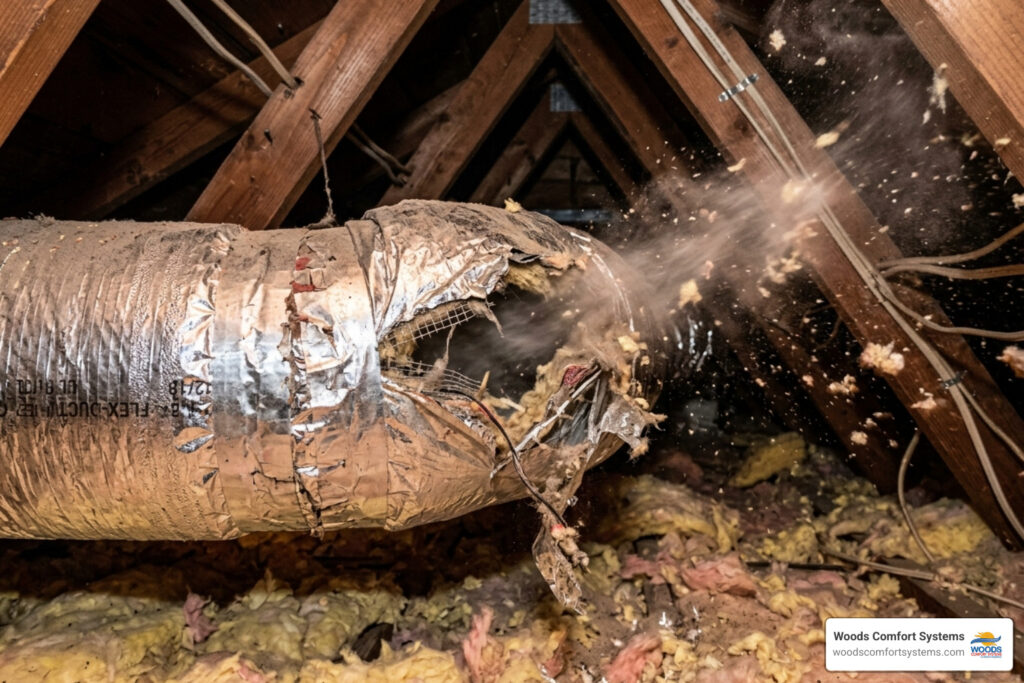
Your AC Duct Leak Is Costing You More Than You Think
An AC duct leak is one of the most common, and most overlooked, reasons your home feels uncomfortable and your energy bills keep climbing. Here’s what you need to know right away:
Quick answers about AC duct leaks:
- What it is: Conditioned air escaping through holes, gaps, or loose joints in your ductwork before it reaches your living spaces
- How much air you lose: 20–30% of conditioned air, according to ENERGY STAR
- Top signs: High energy bills, uneven room temperatures, excessive dust, and stuffy rooms
- How to fix it: Seal accessible leaks with mastic sealant or UL-listed foil tape; call a pro for hidden or major leaks
- What NOT to use: Regular duct tape, it deteriorates quickly and won’t hold
That air isn’t disappearing into thin air (well, technically it is). It’s seeping into your attic, crawlspace, or wall cavities, spaces you’re paying to condition but never actually using. For Central Texas homeowners running their AC hard through long, brutal summers, that waste adds up fast.
This guide walks you through exactly how to find, fix, and prevent duct leaks, whether you want to tackle it yourself or know when to call in a professional.
I’m Chris Woods, owner of Woods Comfort Systems, a third-generation HVAC company serving Central Texas since 1956, and over the decades, I’ve seen how a hidden AC duct leak can quietly drain a homeowner’s comfort and budget season after season. Let’s make sure that doesn’t happen to you.
The Impact of an AC Duct Leak on Your Home
When we talk about energy efficiency, most people think about high-SEER air conditioners or smart thermostats. But even the most advanced AC unit is only as good as the delivery system attached to it. If you have an AC duct leak, you are essentially paying to cool your attic or crawlspace.
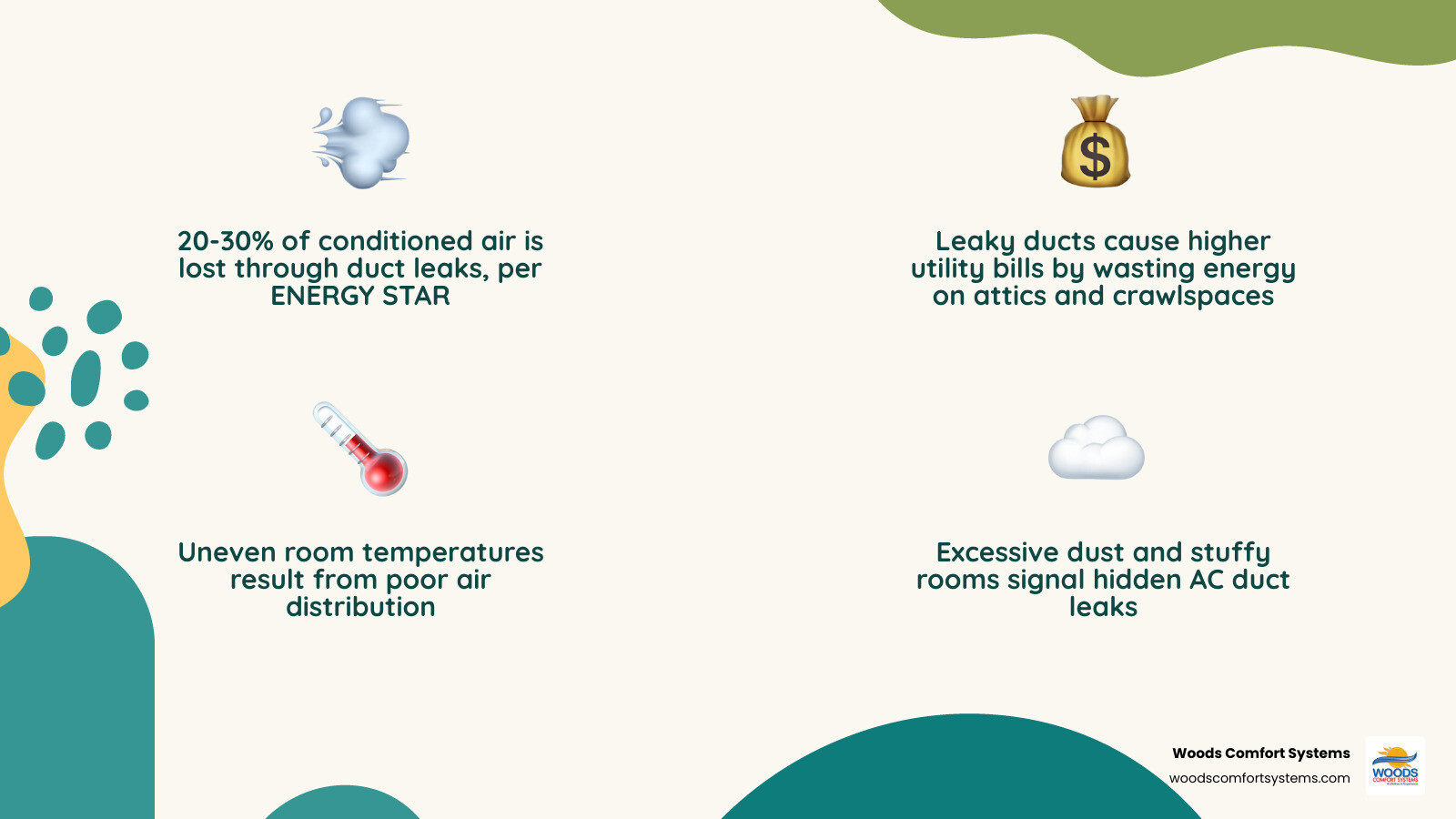
According to ENERGY STAR®, a typical home loses 20% to 30% of its conditioned air through holes, leaks, and poorly connected ducts. In some cases, independent research has shown that homes in warmer climates, like ours here in Texas, can experience leakage as high as 30%. This isn’t just a minor “hiss” of air; it’s a massive energy drain.
The EPA statistics on duct leakage highlight that this loss forces your HVAC system to work significantly harder. When air escapes before reaching your bedroom, the thermostat keeps the system running longer to compensate. This leads to:
- Sky-High Utility Bills: You’re paying for 100% of the cooling but only feeling 70%.
- HVAC Strain: Constant cycling wears out your compressor and blower motor faster, leading to premature common ductwork problems.
- Uneven Temperatures: That one “hot room” in the back of the house is often a victim of a disconnected duct joint.
- Stuffy Rooms: Poor airflow makes rooms feel humid and stagnant because the air isn’t being properly circulated or filtered.
In the San Marcos and Austin heat, a 30% loss of cooling power is the difference between a relaxing afternoon and a miserable, sweaty one. Fixing these leaks is often the most cost-effective home improvement you can make.
Telltale Signs and Hidden Causes of Duct Failure
Ductwork is usually “out of sight, out of mind,” tucked away behind drywall or high up in the attic. However, your home will tell you when there’s a problem if you know what to look for.
The Dust Factor
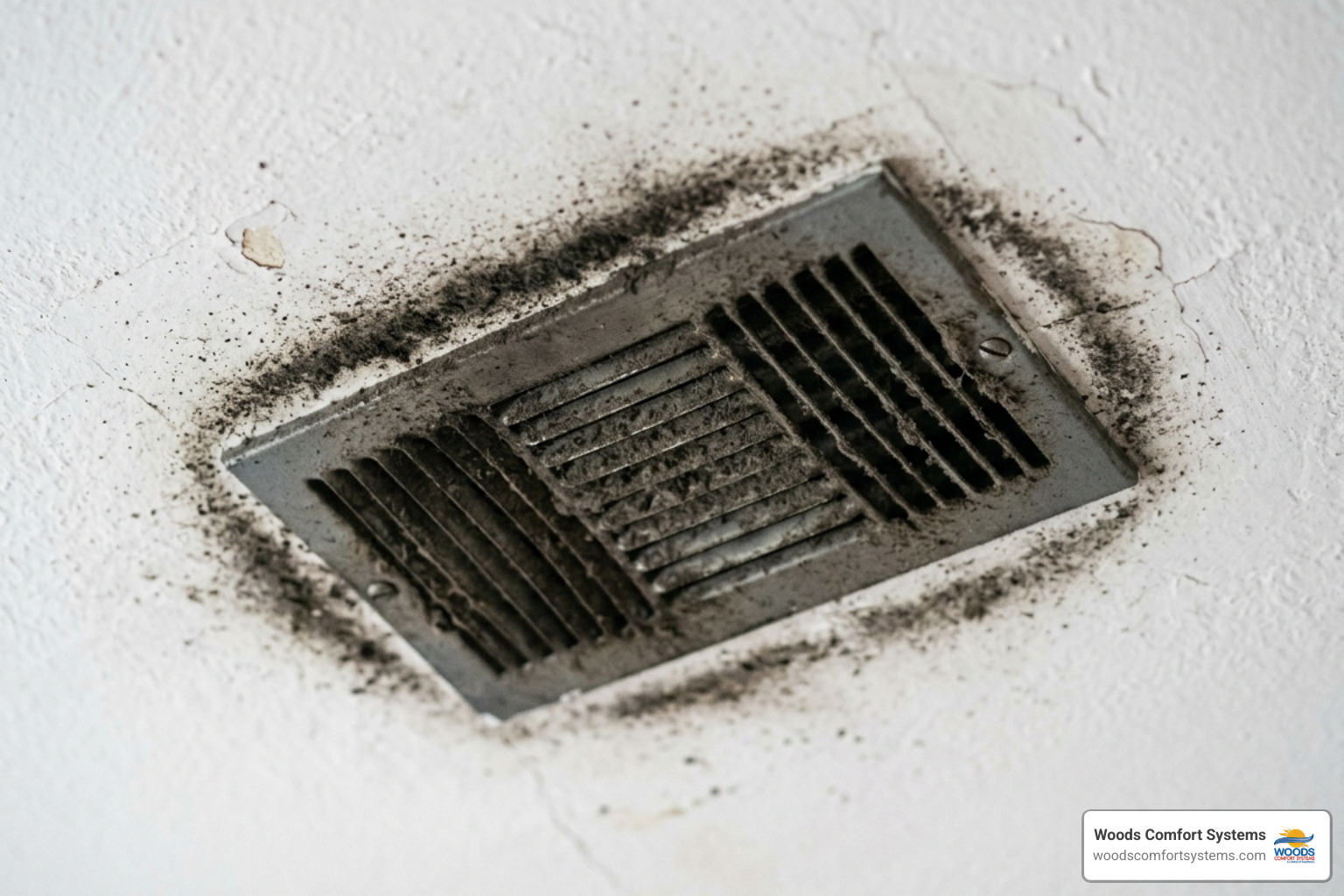
Are you dusting your furniture every two days? An AC duct leak doesn’t just let air out; it also lets dirty air in. When the system is running, leaks in the return ducts can create a vacuum that pulls in dust, insulation fibers, and allergens from your attic or crawlspace. If you notice a dark, dusty ring around your ceiling vents, that’s a major red flag that your ducts are pulling in contaminants.
Common Causes of Leaks
Ducts don’t just fail for one reason. We often see a combination of factors:
- Poor Installation: Many systems were never sealed properly from day one. Some contractors rely on tape that isn’t rated for long-term use.
- Pests and Rodents: In Central Texas, squirrels and rats love the cool (or warm) environment of an attic. They can chew through flexible ducting or tear apart joints to build nests.
- Age and Corrosion: Over time, the adhesives and materials in ductwork break down. Most duct systems have a lifespan of 10 to 25 years before they need significant attention.
- Thermal Expansion: The extreme temperature swings in a Texas attic cause ducts to expand and contract, which can eventually pop seams open.
- Foundation Settling: As homes shift in the Texas soil, the rigid ductwork inside the walls can pull apart at the connections.
If you’re noticing these issues, it might be time to check for signs you need new ductwork rather than just a simple patch job.
How to Identify and Locate Airflow Gaps
Finding an AC duct leak requires a bit of detective work. Because ducts are often located in unconditioned spaces like attics, crawlspaces, or garages, you’ll need to be prepared for some tight spaces.
Start with a visual inspection. Look for ducts that have become completely disconnected or flexible ducts that are kinked and tangled. Check the “plenum”, the large box connected directly to your AC unit. This is a high-pressure area where the most significant leaks often occur. If you see old, peeling tape or gaps where the metal meets, you’ve found a primary culprit.
For more detailed guidance, you can read about how to find leaks to ensure you don’t miss the subtle spots. We cannot overstate the importance of duct inspections, especially before the summer peak.
DIY Steps to Find an AC Duct Leak
You don’t always need high-tech gear to find the big holes. Here is our favorite DIY toolkit:
- The Hand Test: Turn your AC to “On” (not “Auto”) so the fan runs constantly. Walk along the ductwork and run your hand over the joints. You’ll feel the “ghost” of a breeze where air is escaping.
- The Smoke Test: Hold a lit incense stick or a smoke pencil near a duct joint. If the smoke begins to swirl or is blown away violently, you’ve hit a leak.
- The Toilet Paper Test: A single square of toilet paper held near a joint will flutter even with a tiny pinhole leak.
- Mark Your Spots: Use a grease pencil or a piece of bright masking tape to mark every leak you find so you can come back and seal them all at once.
Professional Testing for an AC Duct Leak
While DIY methods find the big “gushers,” they often miss the small, cumulative leaks that add up to that 30% loss. Professionals use specialized tools to get an exact measurement:
- Duct Blaster Test: We seal off all your registers and use a calibrated fan to pressurize the system. This tells us exactly how many cubic feet of air are escaping per minute.
- Infrared Thermography: Using thermal cameras, we can see “hot spots” or “cold spots” behind your walls where air is leaking out of the ducts.
- HERS Rating: In many new installations or major retrofits, a third-party rater verifies that leakage is below 6% (for new systems) or 15% (for existing ones).
- Ultrasonic Detection: This tool listens for the high-frequency “hiss” of escaping air that the human ear can’t detect.
Sealing the Gaps: Materials and Techniques
Once you’ve found the leaks, it’s time to seal them. But before you reach for that silver roll of “duct tape,” stop! Despite its name, standard cloth-backed duct tape is the worst thing you can use for an AC duct leak. The adhesive dries out and fails in the heat of a Texas attic, often within a single season.
| Material | Best For | Durability |
|---|---|---|
| Mastic Sealant | Joints, large gaps, plenums | Extremely High (40+ years) |
| UL-181 Foil Tape | Small seams, flat surfaces | High |
| Fiberglass Mesh | Reinforcing large holes | High (when used with mastic) |
| Standard Duct Tape | Temporary fixes ONLY | Very Low (Do not use) |
Understanding how ductwork gets damaged helps you choose the right fix. Always clean the surface of the duct with a damp cloth first; sealants won’t stick to 20 years of attic dust.
Materials for Sealing an AC Duct Leak
Mastic Sealant: This is a thick, gooey paste that you apply with a paintbrush or a putty knife. It stays flexible even after it dries, allowing it to move with the duct’s thermal expansion.
UL-181 Foil Tape: This isn’t your hardware store variety tape. It’s a heavy-duty aluminum tape specifically rated for HVAC use. It’s great for flat seams, but for corners and irregular joints, mastic is king.
Aeroseal Technology: For leaks hidden inside walls where you can’t reach them, we use a process called Aeroseal. We block the vents and inject a specialized aerosolized sealant into the ducts. The particles stay suspended in the air until they hit a leak, where they collide and “build” a seal from the inside out. It’s incredibly effective and can reduce leakage to almost zero.
When to Choose Repair vs. Replacement
Not every duct system can be saved with a bucket of mastic. Most ductwork has a lifespan of about 10 to 25 years. If your home was built in the 80s or 90s and the ducts have never been touched, they may be beyond a simple patch.
You should consider need for duct repair services if the damage is localized. However, replacement is often the better choice if:
- The ducts are over 15-20 years old and showing widespread failure.
- There is evidence of mold growth inside the insulation.
- The ducts are undersized. Many older homes have ducts that are too small for modern, high-efficiency AC units, leading to “choked” airflow.
- Manual D Design: If your home has always had “hot rooms,” the original design might be at fault. A full replacement allows us to use Manual D calculations to ensure perfectly balanced airflow to every corner of the house.
Knowing what to expect during professional repair can help you plan. A professional assessment will look at the “airflow balance” to ensure your system isn’t just sealed, but actually performing at its peak.
Frequently Asked Questions about Duct Sealing
Does duct tape actually work for sealing leaks?
Ironically, no. Standard cloth duct tape is not approved for sealing ducts. The heat in attics causes the adhesive to turn into a sticky, useless mess, and the tape eventually peels off. Only use UL-181 rated foil tape or mastic sealant for a permanent fix.
How much money can I save by fixing my ducts?
The U.S. Department of Energy estimates that sealing and insulating ducts can save the average homeowner between $140 and $190 per year. In Central Texas, where our cooling season is longer, those savings are often even higher. Beyond the monthly bill, you also save money by extending the life of your AC unit.
Can leaky ducts make my family sick?
Yes. Leaky return ducts pull air from “unconditioned” spaces like attics and crawlspaces. This air can contain mold spores, insulation particles, dust mites, and even droppings from pests. This contaminated air is then blown directly into your living spaces, which can worsen asthma, allergies, and other respiratory issues.
Conclusion
An AC duct leak might be invisible, but its effects on your wallet and your comfort are very real. By taking the time to identify gaps and seal them with the right materials, you can reclaim that lost 20-30% of your cooling power. Whether it’s a DIY afternoon with some mastic or a professional Aeroseal treatment, your home will feel better and your AC will last longer.
At Woods Comfort Systems, we’ve been the trusted name for San Marcos HVAC experts for over 60 years. As a family-owned business with deep roots in Central Texas, we treat every customer like royalty. Whether you need a simple inspection or a full system redesign, we’re here Prompt for emergency repairs and expert service.
Ready to stop the “Great Escape” in your attic? More info about duct work services is just a click away. Give us a call, and let’s get your home back to peak efficiency!