


Stop Summer Spikes by Catching Attic Leaks Early
Hidden leaks in your attic can cause big problems right before the summer heat hits. Attic spaces in Central Texas are exposed to long hours of strong sunlight, so they get very hot and stay that way. When there are small air or water leaks up there, they quietly waste energy, stress your AC and plumbing, and can damage your home long before you see a stain on the ceiling.
Poor attic insulation, loose ductwork, and unnoticed moisture often show up as comfort issues in the living spaces below. You may notice musty smells, higher bills, and rooms that never feel quite cool enough. That is because attic air leaks and plumbing leaks work together, pulling hot, dusty air in and letting cool air and water drip out. Catching those attic issues before the first big heat wave is one of the best ways to protect both your HVAC and plumbing systems.
How Poor Attic Insulation Hurts Comfort and Plumbing
When attic insulation is thin, patchy, or missing in spots, cooled air from inside your home slips right through. The AC has to run longer and harder to keep the temperature steady. That means more wear on your system and higher electric bills all summer.
Attic heat also impacts plumbing. In many Central Texas homes, parts of the plumbing system run through or near the attic. When that space gets very hot, it can cause:
- More stress on water supply lines
- Extra heat on plumbing vents and fittings
- Added strain on water heaters that are near attic areas
Poor attic insulation often starts a hidden cycle. Gaps let hot and cooler air meet, which can cause condensation on pipes and ductwork. That moisture can:
- Soak nearby insulation so it stops working well
- Collect around plumbing joints and speed up corrosion
- Turn small plumbing leaks into bigger water problems over time
Common signs around the house include uneven room temperatures, especially between floors; high summer power bills; noisy AC cycles that feel constant; and faint mildew smells or dampness when you peek into the attic.
HVAC Red Flags Hiding in Your Attic
Many AC problems start in the attic long before the equipment fully breaks down. Some warning signs you may notice inside your home include:
- Hot or stuffy upstairs rooms
- Weak airflow from a few vents, even when others feel strong
- Dusty air or more allergy symptoms
- AC that seems to never shut off
Often, the cause sits above your head. Leaky or disconnected attic ductwork lets conditioned air escape into that super-hot space. Poorly sealed air handlers can pull dusty attic air into your system and blow it into your rooms. If the ducts run through poorly insulated areas of the attic, they get even hotter, so the cool air inside them warms up before it reaches your vents.
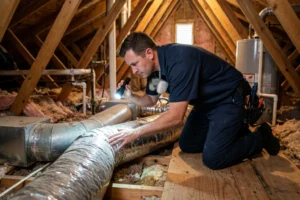
A focused attic check for your HVAC system usually includes:
- Duct leak testing and sealing
- Inspecting flex ducts for kinks, gaps, or disconnects
- Checking the air handler cabinet and refrigerant lines
- Looking at insulation coverage and depth around ducts and attic floors
Cooling equipment will last longer and run more smoothly when the attic is sealed, insulated, and dry. For more about how attic insulation ties into comfort, you can look at our attic insulation services.
Plumbing Leaks and Moisture Risks Above Your Ceiling
Plumbing issues in the attic can go unnoticed for a long time. By the time you notice a brown spot on the ceiling, the leak may have been going on for weeks. Common attic-related plumbing problems include:
- Slow drips from water supply lines or fittings
- Leaking water heater tanks or relief valves located near attic spaces
- Cracked or clogged drain and vent lines
- Pipes that sweat and drip due to temperature swings
Those leaks can soak insulation, weaken drywall, and feed mold growth. You may notice a musty odor in closets or upper rooms before you see any clear water damage. When insulation is too thin or pulled back from pipes, the attic can swing from hot to slightly cooler as air moves, which encourages condensation. Poor attic ventilation also allows humid air to linger, which accelerates corrosion of metal fittings and joints.
Storm season adds extra risk. Roof leaks or wind-driven rain can find their way in around vent stacks and roof penetrations. Water can pool around plumbing and HVAC parts in the attic, turning a small drip into structural damage or larger mold problems.
DIY Attic Checkup and When to Call for Help
If you want to take a quick look in your attic before the heavy heat arrives, safety comes first. Try to go up in the cooler morning hours, not during the hottest part of the day. Wear a mask and gloves, use a strong light, and step only on joists or secure decking, not directly on the ceiling below.
A simple attic checklist includes:
- Dark or soft spots on the ceiling below
- Damp or matted insulation
- Rusted pipe fittings or wet marks on wood near pipes
- Corrosion on AC drain pans or puddles near the unit
- Water marks around roof penetrations or vent stacks
- Kinks, gaps, or loose connections in ductwork
To spot signs of poor attic insulation and air leakage, you can:
- Feel for hot drafts around attic access doors
- Notice big temperature jumps between floors
- Look for bare spots where insulation is missing or looks much thinner
If you see any active dripping, feel warm air blowing from supply vents when the AC is running, hear frequent AC cycling, or smell strong musty odors, it is time to have both HVAC and plumbing checked by a professional. Since both systems often share that same attic space, having one team handle both can save time and guesswork. You can see the full range of help available on our services page.
FAQs About Attic Leaks, Insulation, HVAC, and Plumbing
1) How do I know if poor attic insulation is affecting my AC?
Your AC may run for long stretches, some rooms may stay hotter than others, and your summer electric bills may climb compared with past seasons. A look in the attic can show thin, uneven, or compressed insulation that is not doing its job.
2) Can a plumbing leak in the attic damage my AC system?
Yes, steady moisture can rust metal ductwork, damage electrical parts near the air handler, and encourage mold growth on and around HVAC equipment. Wet insulation around ducts also loses its ability to keep cool air cool.
3) What are the most common attic leaks in Central Texas homes?
Many homeowners deal with leaky AC condensate drain lines and pans, loose or separated ducts, small drips from plumbing supply lines, and roof leaks around vent stacks and other penetrations.
4) How often should my attic HVAC and plumbing be inspected?
A yearly check, especially before heavy AC use, is a good habit. If your home is older or has a history of leaks, more frequent inspections can catch problems earlier.
5) Will improving my attic insulation really lower my energy bills?
In many homes with poor attic insulation, adding proper coverage and sealing air gaps can reduce cooling costs, improve comfort, and ease the strain on your AC. The exact savings depend on your current attic condition.
6) What should I do if I see a ceiling stain under the attic?
Treat it as a possible leak and avoid poking or cutting into it. A professional should inspect plumbing lines, HVAC components, and the surrounding roof area to identify the source of the water.
7) Is it safe to store items in the attic if I have HVAC and plumbing lines up there?
Only if stored items do not crush insulation, press on ductwork, or bump pipes and fittings. Heavy boxes and clutter can hide early signs of leaks and make it harder to move safely.
8) Can one team handle both my attic HVAC and plumbing needs in a single visit?
Yes, when HVAC and plumbing services come from the same provider, an attic inspection can address air leaks, water leaks, and insulation concerns simultaneously, so your whole system works more smoothly together.
Get Started with Your Project Today
If high energy bills or uneven temperatures have you worried, let us inspect whether poor attic insulation is costing you comfort and money. At Woods Comfort Systems, we evaluate your attic, explain our findings in plain language, and recommend only the improvements you truly need. We will walk you through clear options, pricing, and timelines so you can make a confident decision. To schedule a convenient appointment, simply contact us today.