

When a Pipe Bursts, Every Minute Counts
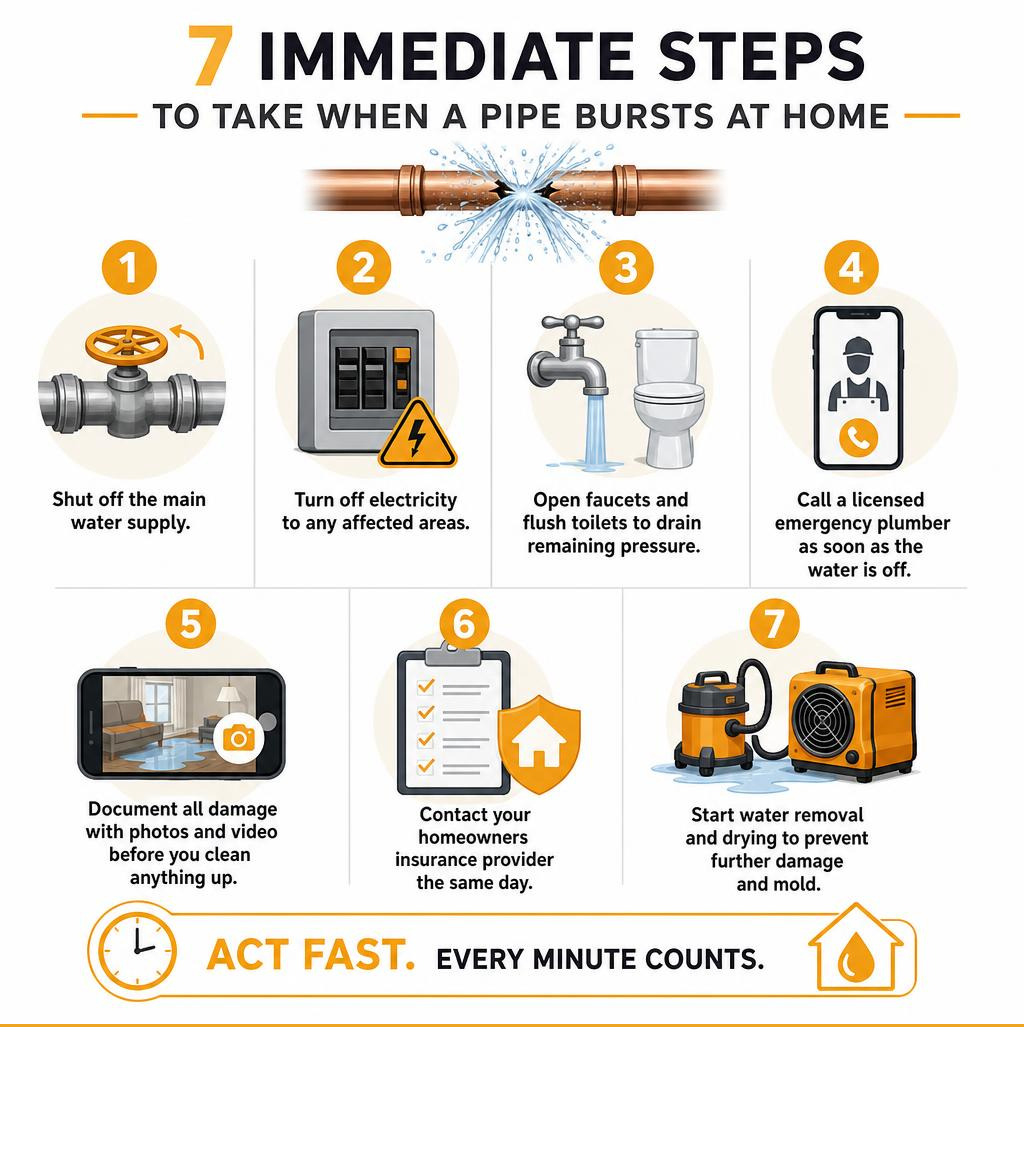
Knowing burst pipe what to do can be the difference between a quick repair and thousands of dollars in water damage. Here are the most important steps to take right away:
- Shut off the main water supply immediately
- Turn off electricity to any affected areas
- Open faucets and flush toilets to drain remaining pressure from the pipes
- Call a licensed emergency plumber as soon as the water is off
- Document all damage with photos and video before you clean anything up
- Contact your homeowners insurance provider the same day
A burst pipe can release hundreds of gallons of water per hour. Acting fast in the first 15 to 60 minutes limits structural damage, protects your belongings, and helps prevent mold, which can begin growing in as little as 24 to 48 hours.
This guide walks you through every step, from the moment you hear that rushing water to getting your home fully dried out and repaired.
I’m Chris Woods, owner of Woods Comfort Systems, a third-generation home services company serving Central Texas since 1956, and our team responds to plumbing emergencies including knowing exactly what to do with a burst pipe to stop damage fast. If you need help right now, our professional plumbing services are available when you need them most.
Common burst pipe what to do vocab:
Immediate Action: Burst Pipe What to Do in the First Hour
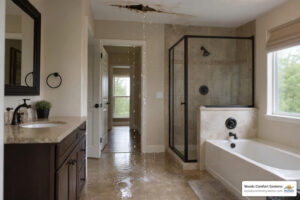
When a pipe ruptures, the first hour is a race against the clock. A single burst pipe can release hundreds of gallons of water per hour, rapidly flooding crawlspaces, ruining drywall, and destroying flooring. To minimize the devastation, you must act systematically.
Your absolute first priority is stopping the flow of water. Do not waste precious time trying to locate the exact crack or hole in the wall while water is actively pouring into your living spaces. Instead, head straight for your main water shutoff valve and close it completely.
Once the main water supply is shut off, you must relieve the remaining pressure in your plumbing system. Go to the lowest faucet in your home (such as a basement utility sink or an outdoor hose bibb) and turn it on completely, then open the faucets at the highest points of your home. This allows gravity to drain the remaining water out of the pipes and away from the break, rather than leaking into your walls. Flush all your toilets to empty their tanks as well.
With the water stopped and the pipes draining, your next step is to contain the mess and call for professional help. Use buckets, mops, and old towels to catch dripping water and pool it away from carpets and wooden furniture. If you are dealing with a severe plumbing emergency in San Marcos, TX, or surrounding areas, contacting our team for prompt plumbing repair services ensures a licensed professional is dispatched to your property immediately.
How to Safely Shut Off Water and Electricity
Dealing with water inside your home is stressful, but safety must always come first. Water and electricity are a lethal combination. If water is pooling near electrical outlets, light fixtures, major appliances, or your circuit breaker panel, do not step into the wet area or attempt to touch any electrical devices.

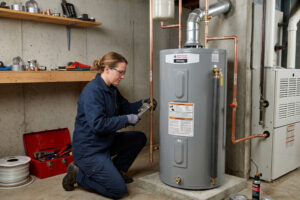
Finding and Operating Your Main Water Shutoff Valve
Every adult in your household should know the exact location of the main water shutoff valve. In Central Texas homes, this valve is typically located in one of three places:
- Inside a utility closet, garage, or laundry room where the main water line enters the house.
- Outside on an exterior wall, often near the outdoor hose faucet closest to the street.
- In a buried plastic or concrete box near the street curb, close to your water meter.
To operate the valve:
- Gate Valves (Wheel Handle): Turn the wheel clockwise (righty-tighty) until it cannot turn any further. These older valves can sometimes be stiff, so turn them gently to avoid snapping the handle.
- Ball Valves (Lever Handle): Pull the lever a quarter-turn so that it is perpendicular to the pipe. When the handle is parallel to the pipe, the water is on; when it is at a right angle, it is off.
For more detailed safety protocols and emergency planning tips, you can review Progressive’s guide on burst pipe safety.
Cutting the Power Safely
If water is leaking into walls containing electrical wiring, or if standing water is threatening to reach floor outlets, go to your main electrical panel (breaker box). If the breaker box is located in a dry area, safely flip the individual breakers for the affected rooms, or shut off the main breaker entirely to cut power to the whole house. If the breaker box itself is wet, damp, or located in a flooded area, do not touch it. Leave your home immediately and contact your local utility company or emergency services for assistance.
Identifying the Warning Signs of a Broken Pipe
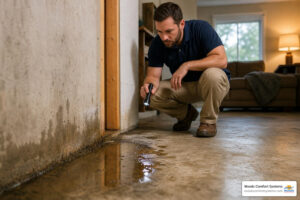
Not all burst pipes present themselves with a dramatic roar of rushing water. Often, a pipe will suffer a small split or a slow crack behind a wall, slowly weeping water into your home’s structure. Recognizing these early warning signs can help you catch a leak before it turns into a catastrophic flood.
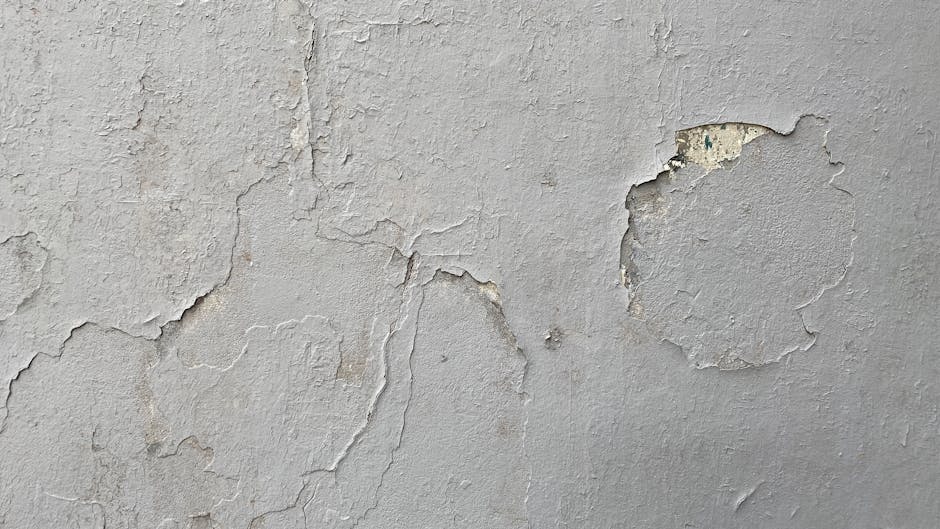
Here are the most common signs that you have a broken or leaking pipe:
- Sudden Drop in Water Pressure: If your shower or kitchen faucet suddenly has a weak trickle, water is likely escaping from a ruptured line elsewhere in the system.
- Unexplained Wall Stains and Bulges: Soft spots, bubbling paint, peeling wallpaper, or dark, damp patches on your drywall or ceilings are classic indicators of a hidden plumbing leak.
- Strange Noises: If you hear hissing, bubbling, whistling, or dripping sounds behind your walls when no faucets are running, water is escaping under pressure.
- Unusually High Water Bills: A sudden, unexplained spike in your monthly utility bill is a clear sign that water is constantly running somewhere in your home.
- Musty Odors: Standing water trapped behind walls or under floorboards will quickly begin to smell damp and musty as mold begins to take hold.
Ignoring these subtle signs can lead to severe structural damage and costly repairs. To protect your property, you should read about the dangers of leaky pipes and learn how to identify a hidden plumbing leak before the damage spreads.
Preventing Mold and Minimizing Water Damage
Once the water supply is shut off and the plumber is on the way, you must shift your focus to drying out your home. Mold can begin growing in as little as 24 to 48 hours in wet conditions, making rapid water extraction and dehumidification absolutely essential.
Start by moving your furniture, rugs, electronics, and valuable items out of the wet zone. To prevent wooden furniture legs from staining your wet carpets, place small squares of aluminum foil or plastic wrap under them if the furniture is too heavy to move immediately.
Next, remove as much standing water as possible. Use a wet/dry shop vacuum to suck water out of carpets and off hard floors. Open your windows (if the outdoor humidity is low) and set up high-powered fans and commercial-grade dehumidifiers to keep the air moving. Do not rush this process; even after a pipe is repaired, the surrounding framing and drywall must dry out completely to prevent deep-seated rot and mold growth.
| Water Extraction Method | Best Used For | Equipment Needed | Efficiency Level |
|---|---|---|---|
| Wet/Dry Vacuuming | Standing water on hard floors & low-pile carpets | Wet/dry shop vac | High for shallow pools |
| Mops and Buckets | Small puddles in kitchens or bathrooms | Standard mop, bucket | Moderate for small areas |
| Submersible Sump Pump | Deep flooding in basements or crawlspaces | Utility pump, discharge hose | Extremely high for deep water |
| Towel Blotting | Damp spots and lingering surface moisture | Microfiber towels, heavy blankets | Low (supplementary only) |
Navigating Insurance Claims and Professional Repairs
Filing an insurance claim for water damage can feel overwhelming, but keeping a cool head and documenting everything will make the process much smoother. Most standard homeowners insurance policies cover sudden and accidental water damage from a burst pipe, but they almost always exclude gradual damage caused by deferred maintenance or neglected leaks.
Before you begin cleaning up or throwing away damaged items, document everything thoroughly:
- Take clear, high-resolution photos and videos of the burst pipe, the standing water, and all affected structural areas (walls, ceilings, floors).
- Take detailed photos of any ruined personal property, including furniture, electronics, and clothing.
- Keep a written inventory of all damaged items, noting their approximate value and purchase date if known.
- Keep all receipts for emergency supplies you purchase, such as fans, buckets, or plastic sheeting, as well as the invoice from your emergency plumber.
When a plumbing disaster strikes, always call a licensed plumber first to stop the emergency and perform the permanent repair, then contact your insurance agent to file your claim. If you are dealing with a broken line, our team of experts is ready to provide reliable plumbing services to get your home back in working order quickly.
Root Causes and Long-Term Prevention Strategies
Understanding why pipes burst is the key to preventing a repeat emergency in the future. While freezing winter temperatures are the most common culprit, several other factors can cause your home’s plumbing to fail.
- Freezing Temperatures: When water freezes inside a pipe, it expands. This expansion creates immense pressure between the ice blockage and the closed faucet, eventually causing the pipe material to split. Pipes can freeze and burst in as little as 6 to 8 hours when outdoor temperatures drop below 20°F.
- Corrosion: Older metal pipes, especially galvanized steel, thin and weaken over time due to rust and chemical reactions with your water. This gradual thinning makes them highly vulnerable to bursting under normal water pressure.
- High Water Pressure: Standard residential plumbing systems are designed to handle water pressure between 40 and 80 PSI. If your pressure is consistently above 80 PSI, it puts constant stress on your pipes and joints, leading to sudden failures.
- Clogs and Blockages: Severe clogs can cause water pressure to build up to dangerous levels behind the obstruction, stressing the pipe walls until they crack.
Fortunately, most of these issues are preventable. You can protect your home by learning how to winterize pipes before the cold weather hits. If you live in our service area, knowing what to do if your pipes are frozen in San Marcos, TX can help you thaw them safely before they have a chance to burst.
Frequently Asked Questions About Burst Pipes
When dealing with a frozen burst pipe what to do first?
If your pipes are frozen and you suspect one has already burst, immediately shut off your main water valve before you begin the thawing process. If you thaw a frozen pipe while the water supply is still active, water will pour out of the newly exposed crack as soon as the ice melts, causing instant flooding.
If you cannot find the main shutoff during a burst pipe what to do?
If you cannot locate or operate your indoor main shutoff valve, look outside near the street curb for your water meter box. Inside this concrete or plastic box, you will find a street valve. You may need a specialized tool called a water meter key (available at local hardware stores) to turn this valve a quarter-turn to shut off the water to your entire property. If you cannot turn it, call your local water utility company immediately for an emergency shutoff.
How long does it take for mold to grow after a pipe bursts?
Mold spores can begin to germinate and colonize wet surfaces in as little as 24 to 48 hours in warm, humid conditions. This is why immediate water extraction, continuous air movement, and dehumidification are critical steps in the cleanup process.
Does homeowners insurance cover water damage from burst pipes?
Yes, most standard homeowners insurance policies cover sudden and accidental water damage caused by a burst pipe, along with the cost of tearing out walls to access the leak. However, they typically do not cover the cost of the plumbing repair itself, nor will they cover damage caused by slow, neglected leaks that you failed to address.
Can a frozen pipe burst after it thaws?
Yes. The physical split in the pipe wall happens while the water is frozen and expanding. However, because the ice acts as a temporary plug, you may not notice any leaking until the ice thaws completely and water begins flowing freely through the damaged section again.
What are the first signs that a pipe has burst?
The first signs include a sudden, unexplained drop in your home’s water pressure, damp or discolored stains on drywall, hissing or dripping sounds behind walls, and a water meter that continues to spin rapidly even when all faucets are turned off.
How long does it take for pipes to freeze and burst?
Pipes can freeze and burst in as little as 6 to 8 hours when the outdoor temperature drops below 20°F, especially if the pipes are uninsulated and located in unheated areas like attics, crawlspaces, or outer walls.
Can I temporarily patch a burst pipe myself?
You can use a temporary pipe repair clamp, a rubber patch, or specialized waterproof silicone tape to slow down a minor leak in an emergency. However, these are temporary fixes designed to buy you time until a professional arrives and should never be used as permanent solutions.
What temperature should I keep my home to prevent frozen pipes?
To prevent your plumbing from freezing during extreme cold snaps, you should keep your thermostat set to at least 55°F, even if you are planning to be away from home for an extended period.
Why do pipes burst in warm weather?
In warm weather, pipes usually burst due to internal corrosion, high municipal water pressure spikes, soil shifting around underground lines, or accidental punctures during home renovation projects.
Conclusion
A burst pipe is a stressful plumbing emergency, but knowing how to react quickly can save your home from devastating water damage. By shutting off your water immediately, cutting power to affected areas, and calling in professional help, you can keep a bad situation from getting worse.
At Woods Comfort Systems, we understand that plumbing disasters do not wait for business hours. That is why we offer 24/7 emergency service to homeowners in San Marcos, TX, and the surrounding Central Texas communities. As a family-owned company with over 60 years of local experience, we are dedicated to resolving your residential plumbing problems in San Marcos, TX with speed, expertise, and royal customer treatment.
Whether you need fast plumbing repairs, professional leak detection, or help winterizing your home, our experienced team is ready to help. Schedule your professional plumbing service with Woods Comfort Systems today to protect your home.