

What Does Drain Cleaning Cost in 2026?
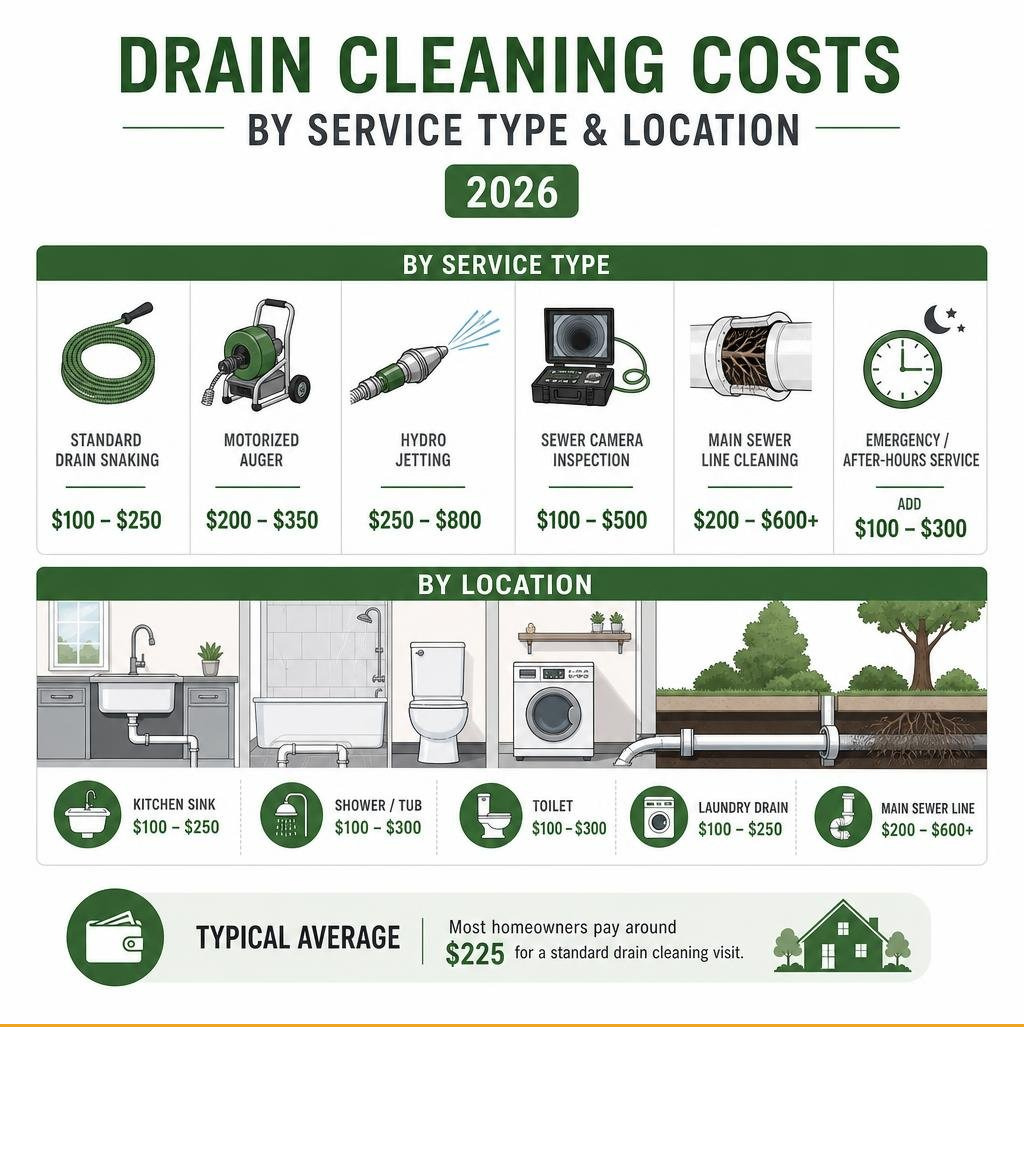
Drain cleaning cost typically falls between $100 and $600 for most homeowners in 2026, depending on the method used, the drain location, and how severe the clog is.
Here is a quick breakdown of what you can expect to pay:
| Service Type | Typical Cost Range |
|---|---|
| Standard drain snaking | $100 – $250 |
| Motorized auger | $200 – $350 |
| Hydro jetting | $250 – $800 |
| Sewer camera inspection | $100 – $500 |
| Main sewer line cleaning | $200 – $600+ |
| Emergency/after-hours service | Add $100 – $300 |
Most homeowners pay around $225 on average for a standard drain cleaning visit. Simple clogs at a single fixture often land on the lower end, while main sewer line issues or emergency calls push costs higher.
A clogged drain is one of those problems that rarely gets better on its own. Whether it is a slow kitchen sink, a backed-up shower, or a gurgling toilet, the cost of waiting almost always ends up higher than the cost of calling a professional early. And with so many companies advertising rock-bottom prices like $69 or $99, it can be hard to know what you are actually going to pay when the technician shows up at your door.
I’m Chris Woods, owner of Woods Comfort Systems, a third-generation home services company serving Central Texas since 1956, and helping homeowners understand fair drain cleaning costs before they commit to a service call is something I care deeply about. In this guide, I will walk you through everything you need to know, from average prices by drain type to the warning signs that it is time to stop reaching for the plunger and call a pro.
What is the Average Drain Cleaning Cost in 2026?
When you call a professional plumber to clear a clogged pipe, the final price is largely determined by the specific method required to resolve the issue. In 2026, standard plumbing rates across Texas reflect a market influenced by material inflation and high demand for skilled trade labor.
According to the latest 2026 plumbing cost benchmarks, service call-out fees typically range from $85 to $295 just to get a fully equipped truck to your door. From there, the actual labor and equipment costs are added depending on whether the technician performs basic snaking, uses a motorized auger, or deploys high-pressure hydro jetting equipment.
Standard Snaking vs. Hydro Jetting Drain Cleaning Cost
The two primary methods used to clear residential blockages are traditional drain snaking and modern hydro jetting.
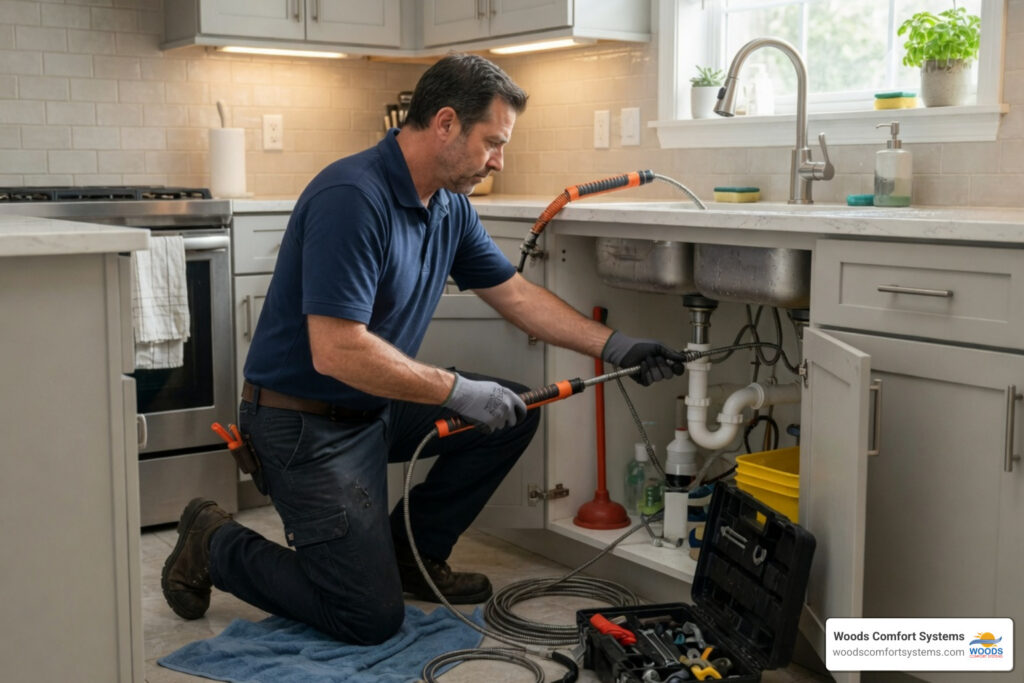
A standard drain snake, also known as a cable machine or plumbing snake, is a flexible metal cable that is fed directly into the pipe. The plumber rotates the cable to physical break up the clog or hook onto debris, such as hair or wet wipes, to pull it out. A basic hand snake or a smaller motorized auger is highly effective for simple, localized blockages and usually costs between $100 and $350.
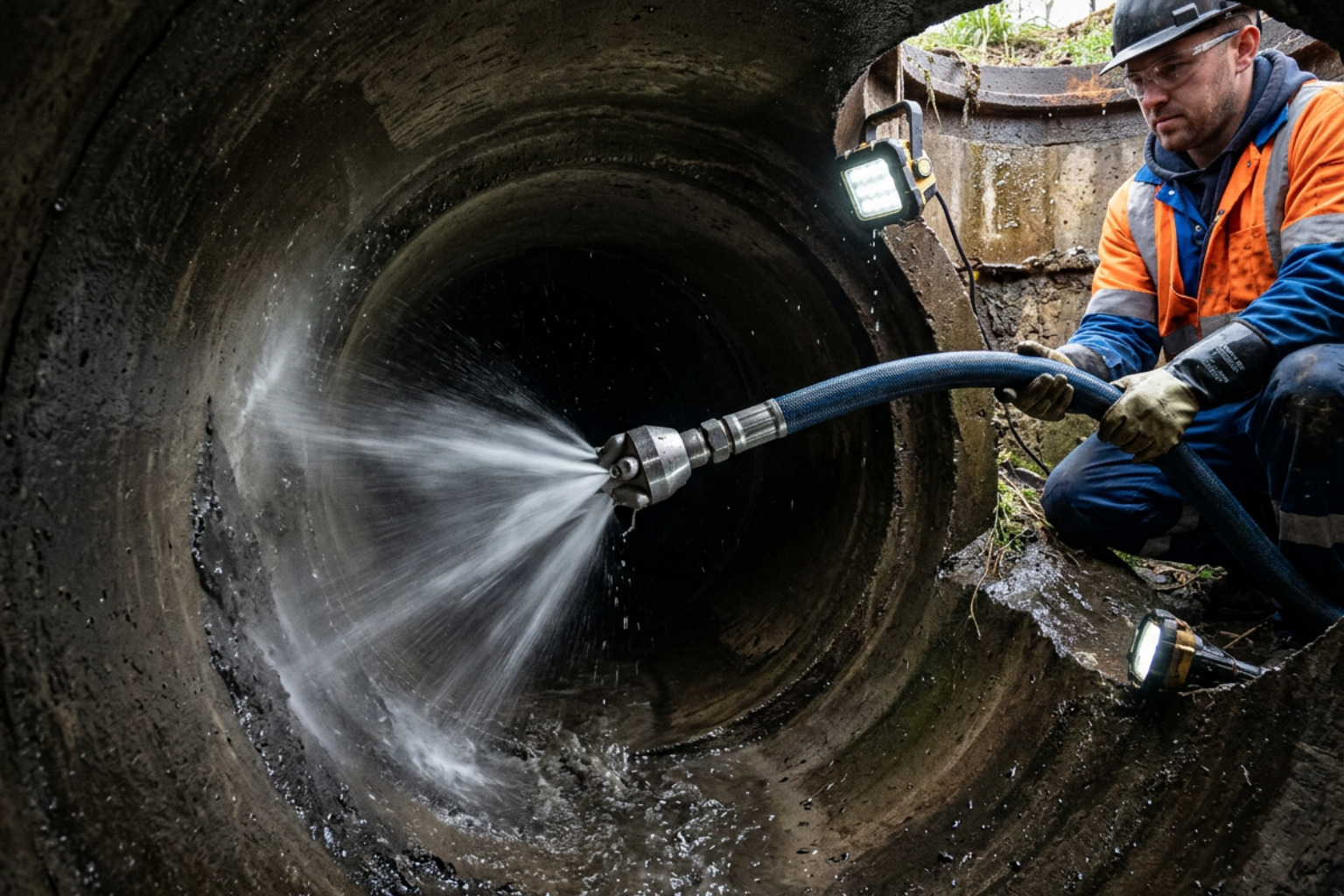
For more stubborn, greasy, or recurring blockages, hydro jetting is the superior option. This method uses a specialized machine to blast water through your pipes at pressures up to 4,000 PSI. While a snake merely punches a hole through a clog, hydro jetting scrubs the entire interior surface of the pipe walls, removing grease, mineral scale, and even tree roots.
Hydro jetting typically costs between $250 and $800, with some complex residential projects reaching up to $1,300. While the upfront investment is higher, the benefits of professional drain cleaning using hydro jetting are clear, as it leaves the pipe completely clean and prevents clogs from reforming for one to two years, whereas snaking only offers a temporary fix.
Sewer Camera Inspection and Diagnostic Fees
Before a plumber can recommend the right clearing method, they often need to see exactly what is causing the blockage. This is where a sewer camera inspection comes in.
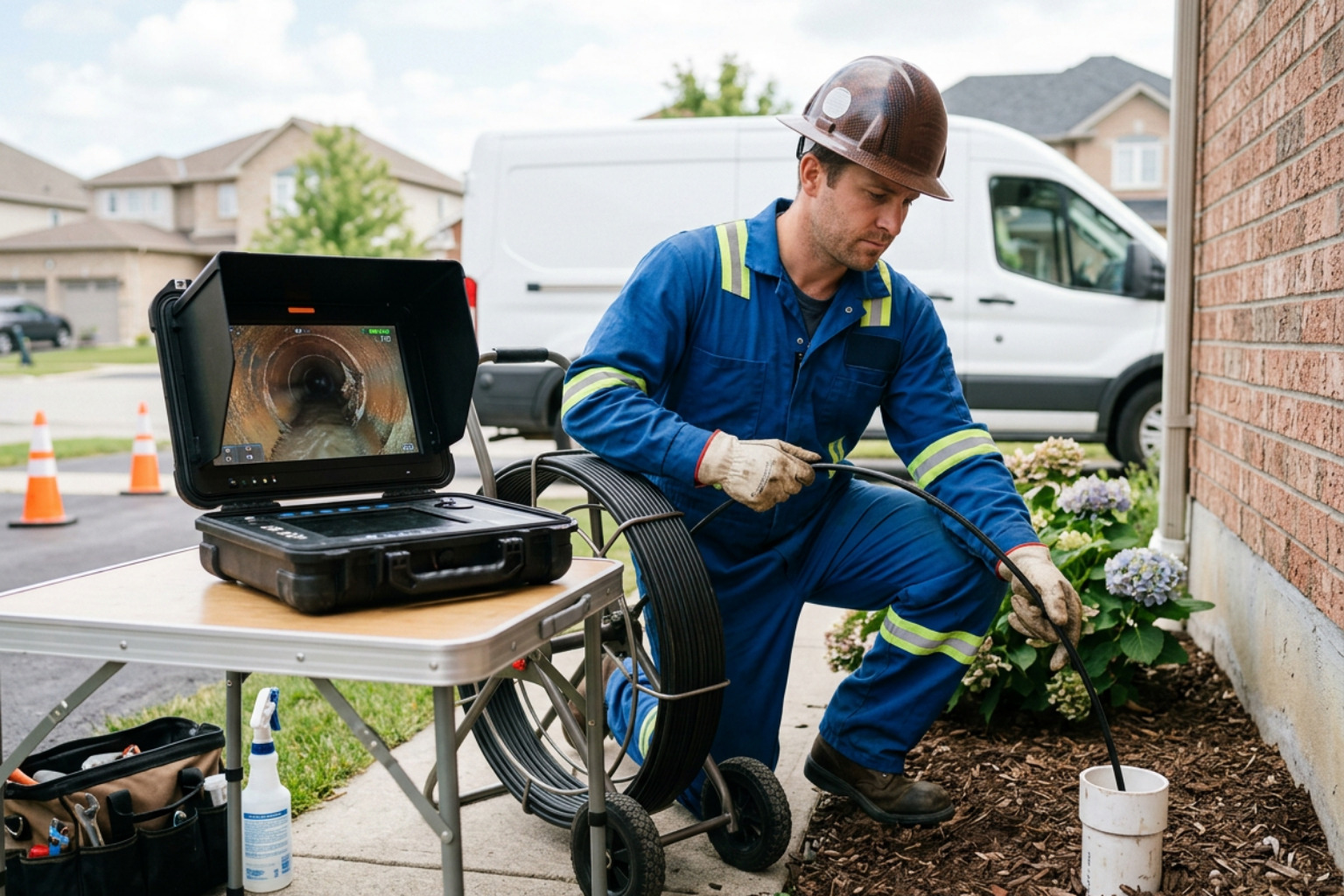
A sewer camera inspection involves feeding a high-definition, waterproof video camera attached to a flexible fiber-optic cable down the drain line. This allows the technician to visually inspect the condition of your pipes in real time. Plumbers can identify offset joints, collapsed sections, grease buildup, or tree root intrusions without digging up your yard.
A standalone video camera inspection generally costs between $100 and $500, with most homeowners paying about $250. Many plumbing companies charge a diagnostic fee to cover this service. However, if you have easy cleanout access, which is an easily accessible opening to your main sewer line located outside your home, the process is much faster and less labor-intensive, which can keep your overall diagnostic costs on the lower end of the spectrum.
How Drain Location and Clog Severity Impact Your Bill
Not all drains are created equal. The location of the clog in your home heavily influences the final drain cleaning cost because some pipes are much harder to access than others.
| Drain Location | Common Causes of Clog | Standard Clearing Method | Typical Cost Range |
|---|---|---|---|
| Bathroom Sink / Shower | Hair, soap scum, toothpaste | Hand snake or small cable | $100 – $225 |
| Kitchen Sink | Cooking grease, food particles | Motorized sink machine | $150 – $250 |
| Toilet | Excess toilet paper, non-flushable wipes | Toilet auger | $125 – $300 |
| Floor Drain / Laundry | Lint, soap scum, dirt, debris | Motorized drain snake | $150 – $300 |
| Main Sewer Line | Tree roots, heavy grease, scale | Hydro jetting or large auger | $250 – $600+ |
Clearing Individual Fixture Drains
When you are dealing with a single clogged fixture, the repair is usually straightforward and affordable. In the bathroom, the primary culprits are hair and soap scum binding together in the P-trap or just past the drain pop-up. Kitchen sinks are highly susceptible to cooking grease, fats, oils, and fibrous food particles that bypass the garbage disposal.
If you are experiencing these common household plumbing problems, a technician can usually clear them within an hour using a standard motorized sink machine. Because these blockages are close to the fixture and easy to reach, the average cost to clear them stays between $100 and $250.
Main Sewer Line Clogs and Root Removal
When the main sewer line is blocked, every drain in your house is at risk of backing up. A main sewer line clog is a major plumbing emergency that requires immediate professional attention. The most common cause of main line blockages in older Texas homes is tree root intrusion. Tiny tree roots find their way through small cracks or loose pipe joints in search of moisture, eventually growing into thick, pipe-blocking root masses.
Clearing a main sewer line is significantly more expensive than clearing a single sink. Standard sewer line cleaning using a heavy-duty motorized auger typically costs between $200 and $600. If the roots are dense or the pipe length is long, hydro jetting is often required to cut through the roots and wash them away, which can easily push the price past $800. If the roots have caused severe structural damage to the pipe, you may need to prepare for sewer line repairs or replacement, which can cost several thousand dollars.
Key Factors That Influence Your Total Drain Cleaning Cost
When a plumbing technician evaluates your home, they look at several distinct variables to calculate a fair quote. Understanding these factors can help you avoid surprises when you receive your final bill.
- Clog Severity: A simple soft clog made of hair or organic waste is much faster to clear than a hard clog consisting of mineral scale, calcified grease, or tree roots.
- Access Points: If your home has an easily accessible outdoor cleanout, the plumber can work quickly. If they have to remove a toilet, climb onto your roof to access a vent stack, or crawl under a pier-and-beam foundation, the labor costs will increase.
- Equipment Needed: Standard cable machines are cheaper to operate than high-end hydro jetting rigs or sewer cameras, which carry higher equipment maintenance costs.
- Timing of the Service: Booking a standard appointment during regular business hours is always the most economical choice.
Emergency and After-Hours Plumbing Surcharges
Plumbing emergencies rarely happen at convenient times. If your main sewer line backs up on a Saturday night or during a major holiday, you cannot afford to wait until Monday morning.
Most professional plumbing companies offer 24/7 emergency service, but this round-the-clock availability comes with additional costs. An emergency or after-hours service call typically carries a flat surcharge of $100 to $300 on top of the standard repair rates. Some companies may charge up to double their standard hourly rate for late-night or holiday dispatches.
Regional Price Variations Across Texas
Where you live in Texas also plays a role in what you will pay for plumbing services. Labor rates, business overhead, and regional economic factors cause prices to fluctuate between major metropolitan areas and smaller towns.
For example, the average drain cleaning costs in Austin, TX tend to be slightly higher, ranging from $125 to $350 with an average of $200, due to high living costs and strong demand.
In surrounding communities like San Marcos, TX, Buda, TX, and Kyle, TX, prices are often more stable, but local factors still apply. For instance, the hard water common in Central Texas leads to rapid mineral scale buildup inside residential pipes. This scale catches debris and accelerates blockages, making professional clearing a frequent necessity for homeowners dealing with clogged drains in Buda, TX.
The Truth Behind Cheap $99 Drain Cleaning Advertisements
We have all seen the eye-catching advertisements online or on local billboards: “$99 Drain Cleaning Special!” or “$83 Clog Clearing with Free Camera Inspection!” While these promotions look incredibly appealing, especially when you are stressed about a backed-up sink, it is vital to read the fine print and understand how the plumbing industry operates.
Common Bait-and-Switch Tactics to Watch For
Many discount plumbing operations use ultra-low pricing as a foot-in-the-door tactic. Once the technician is inside your home, the advertised price can quickly vanish due to various hidden fees and exclusions. Some of the most common tactics include:
- Footage Limits: The fine print may state that the cheap price only covers the first 25 or 50 feet of pipe. If your clog is located 75 feet deep in your main line, you will be charged a steep rate for every additional foot.
- Access Exclusions: The promotional rate might only apply if you have an easily accessible ground-level cleanout. If the plumber has to pull a toilet or work from a roof vent, they may add significant access surcharges.
- Equipment and Trip Charges: Some companies will charge a separate “truck fee,” “trip fee,” or “equipment rental fee” that is not mentioned in the original advertisement.
- The “Unclearable” Clog: A dishonest technician might run a snake for five minutes, claim the clog is too tough to clear, and immediately try to upsell you on an expensive sewer line replacement without actually attempting to clear the blockage properly.
Why Quality Professional Service is a Better Value
When you hire a reputable, licensed plumbing company, you are paying for an honest, complete job. A true professional will perform a thorough cleaning that restores the full diameter of your pipe, rather than just punching a quick hole through the blockage to get the water draining temporarily.
Furthermore, established companies back their work with written estimates, clear upfront pricing, and robust warranties or clog-free guarantees. Investing in an honest, comprehensive service prevents you from having to call another plumber back out to your home just a few weeks later, saving you money and stress in the long run. If you want to understand more about the risks of cheap, rushed work, it helps to read about why DIY drain cleaning is a bad idea and why cutting corners on plumbing maintenance always costs more over time.
DIY vs. Professional Drain Cleaning Cost and Effectiveness
When faced with a slow drain, many homeowners immediately head to the local hardware store to buy chemical drain openers or cheap hand snakes. While the DIY route is tempting because of the low upfront cost, it is rarely the most effective or safest choice for your plumbing system.
The Hidden Risks of DIY Chemical Cleaners
Liquid chemical drain cleaners are highly popular, but they are incredibly destructive. These products rely on harsh, caustic chemicals like sodium hydroxide or sulfuric acid to generate intense heat and dissolve blockages.
Unfortunately, this heat and chemical reaction can easily damage your plumbing. If you have older metal pipes, the chemicals will corrode the interior walls, leading to thin spots and leaks. If you have PVC pipes, the heat can soften the plastic and compromise the glued joints.
Additionally, chemical cleaners are highly toxic, bad for the environment, and pose a severe safety hazard to you and any plumber who has to work on the line after the chemical has failed to clear the clog. For these reasons, we always advise homeowners to look at the reasons to avoid DIY plumbing repair before pouring harsh liquids down their fixtures.
When to Call a Professional for Your Drain Cleaning Cost
While a plunger or a simple hand auger can safely resolve minor, surface-level toilet or sink clogs, deeper issues require professional intervention.
You should stop DIY attempts and call a professional licensed plumber immediately if you experience any of the following warning signs:
- Recurring Clogs: If you have to clear the same sink or shower drain every few weeks, you have a deep-seated blockage or structural pipe issue that a DIY tool cannot resolve.
- Multiple Slow Drains: If your kitchen sink, guest bath, and laundry line are all draining slowly at the same time, the blockage is deep in your main sewer line.
- Sewer Backups: Water backing up into your bathtub or shower when you flush the toilet or run the washing machine is a classic sign of a main sewer line emergency.
- Foul Odors: Persistent sewer gas smells coming from your drains indicate a major blockage or a broken sewer vent pipe.
How to Save Money and Prevent Costly Drain Clogs
The best way to manage your drain cleaning cost is to avoid clogs altogether. By adopting a few simple habits and investing in routine maintenance, you can keep your plumbing system running smoothly and prevent expensive emergency service calls.
Simple Home Maintenance Habits
Preventing clogs is surprisingly simple and requires very little effort. Here are a few highly effective habits you can start practicing today:
- Use Drain Screens: Install cheap mesh drain screens in all your showers and tubs to catch hair, soap chunks, and debris before they enter your pipes.
- Practice Proper Grease Disposal: Never pour cooking grease, fats, oils, or butter down your kitchen sink. Let them cool in a container and dispose of them in the trash.
- Perform Regular Hot Water Flushes: Once a week, pour a kettle of boiling water down your sink drains to help melt away any minor grease or soap accumulation on the pipe walls.
- Use Baking Soda and Vinegar: A monthly flush of baking soda followed by vinegar and hot water is a safe, natural way to keep your drains smelling fresh and clear of minor organic buildup.
Professional Maintenance Plans and Service Contracts
If you want complete peace of mind, consider enrolling in a professional plumbing maintenance plan. Many homeowners do not realize how preventive maintenance helps you avoid costly repairs by catching minor issues before they turn into major plumbing disasters.
A professional maintenance plan typically includes annual plumbing inspections, water heater flushes, and sewer line camera checks. As a member, you also get access to priority service scheduling, discounted rates on repairs, and reduced dispatch fees. This proactive approach keeps your pipes in excellent condition and ensures you never have to deal with a sudden, costly sewer backup.
Frequently Asked Questions About Drain Cleaning Cost
1. How much does professional drain cleaning cost on average?
The national average for professional drain cleaning is approximately $241, with most standard residential plumbing jobs ranging from $147 to $344. Simple clogs in single fixtures like a bathroom sink are cheaper, while main sewer line blockages or emergency calls will increase the total cost.
2. Is hydro jetting worth the extra cost compared to snaking?
Yes, hydro jetting is highly worth the investment for stubborn, greasy, or recurring blockages. While standard snaking only punches a temporary hole through a clog, hydro jetting uses high-pressure water to completely scrub the pipe walls clean, providing a long-term solution that lasts for years.
3. How much does a sewer camera inspection cost?
A professional sewer camera inspection typically costs between $100 and $500, with most homeowners paying around $250. This diagnostic tool is invaluable for identifying the exact cause and location of deep clogs or structural pipe damage without invasive digging.
4. Why do some companies advertise $99 drain cleaning specials?
Some companies use ultra-low promotional pricing as a marketing tactic to get technicians into your home. Once there, they may add extra fees for access difficulties, extended pipe footage, or specialized equipment, which can quickly drive up the final price.
5. Does homeowners insurance cover the cost of drain cleaning?
Standard homeowners insurance policies do not cover routine drain cleaning or maintenance. However, if a sudden sewer line backup causes accidental water damage to your floors or drywall, your policy may cover the cost of the water damage restoration, though not the plumbing repair itself.
6. What are the typical emergency or after-hours plumbing surcharges?
If you require emergency plumbing services during nights, weekends, or holidays, most companies charge an additional flat surcharge ranging from $100 to $300 on top of their standard service rates to cover the cost of dispatching a technician after hours.
7. Can chemical drain cleaners damage my home’s pipes?
Yes, chemical drain cleaners can cause severe damage to your plumbing system. The caustic chemicals generate intense heat that can warp PVC pipes, dissolve joint glues, and corrode older metal pipes, leading to costly leaks over time.
8. How often should I have my home’s drains professionally cleaned?
Most plumbing experts recommend scheduling professional preventive drain cleaning every one to two years. Regular maintenance is especially important for older homes or properties with large trees near the main sewer lines.
9. What are the warning signs that I need professional drain cleaning?
Key warning signs include multiple slow-draining fixtures, gurgling noises coming from your toilet or sink, persistent foul odors, and water backing up into your shower or bathtub when you run your washing machine.
10. How do regional price variations affect drain cleaning costs in Texas?
Local labor rates and operating costs cause plumbing prices to vary. Homeowners in major urban centers like Austin, TX may pay slightly higher rates due to high demand, while surrounding areas like San Marcos, TX offer highly competitive, stable pricing.
Conclusion
At Woods Comfort Systems, we believe that transparent pricing and honest service are the foundation of great plumbing care. For over 60 years, our family-owned business has provided homeowners in San Marcos, TX, and the surrounding Central Texas communities with reliable, royal-treatment service. Whether you are dealing with a minor kitchen sink stoppage or a major main sewer line emergency, our licensed plumbers are ready to help you 24/7. Don’t let a slow drain turn into an expensive emergency. Schedule professional drain cleaning with our team today and keep your home’s pipes flowing smoothly!