


What Every Homeowner Should Know Before Starting a Plumbing Installation
When you embark on a new home build or a major home renovation, the plumbing installation is one of the most complex, critical, and consequential systems you will address. Getting this system right from the very beginning saves you thousands of dollars in future repairs, protects your home’s structural integrity, and ensures daily comfort for your family. A 2024 HomeServe survey highlighted that 3 out of 4 U.S. homeowners faced a home repair emergency in the past year, with plumbing problems ranking among the most common and expensive culprits.
Quick Overview of the Plumbing Installation Process
To help you visualize the journey ahead, here is a quick overview of the standard plumbing installation process:
- Plan and permit: Finalize fixture locations on blueprints and pull required municipal permits before any physical work begins.
- Underground rough-in: Lay drain, waste, and vent (DWV) pipes beneath the slab before the concrete foundation is poured.
- Above-ground rough-in: Run supply lines, vent stacks, and drain pipes through wall cavities after framing is complete.
- Inspections: Pass required rough-in inspections from local building officials before closing up the walls.
- Trim-out and fixtures: Install faucets, toilets, appliances, and shut-off valves after walls and flooring are finished.
- Final inspection: Confirm code compliance and system integrity before occupancy.
Whether you are building a custom home in Central Texas or renovating an existing property, understanding the full scope of a plumbing project helps you communicate clearly with your contractor, avoid costly surprises, and make smarter decisions at every stage. Pricing can vary depending on home size, fixture count, and project complexity, so getting a professional estimate early in the planning process is always a smart move.
I’m Chris Woods, owner of Woods Comfort Systems, a third-generation home services company with deep roots in Central Texas. While our team is best known for HVAC expertise, we work closely with the full spectrum of home systems, including plumbing installation, and I have seen how poor planning or unlicensed work can turn a straightforward project into a costly nightmare.
The Three Core Phases of Plumbing Installation in New Construction

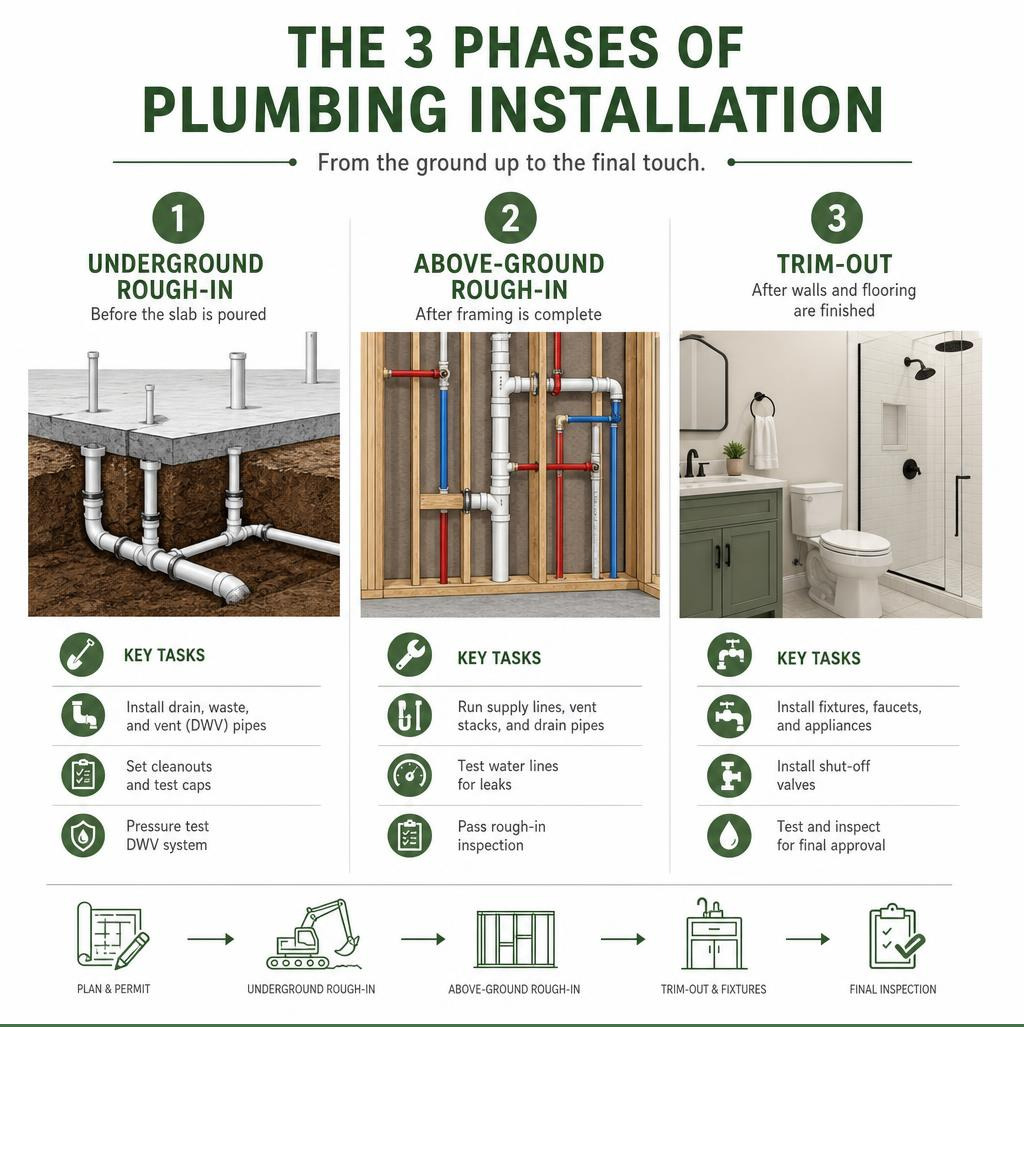
When building a new home or undertaking a major addition, the plumbing system cannot be installed all at once. Instead, the process is divided into three distinct phases that align with the overall construction timeline. Coordinating these phases properly ensures that pipes are protected, inspections are passed, and finished fixtures are not damaged during the heavy construction process.
For home builders and renovators in San Marcos, TX and the surrounding areas, scheduling our professional plumbing installation services at the correct times keeps the entire construction project on schedule. Let us look at what happens during each of these three critical phases.
Phase 1: Underground Rough-In
The underground rough-in phase is the very first step, occurring before the foundation is poured. For homes built on a concrete slab, this is the only opportunity to install the main drain lines and sewer connection. Once the concrete is poured, making changes to these lines requires jackhammering the slab, which is incredibly expensive and structurally risky.
During this phase, plumbers excavate trenches according to the architectural blueprints. They lay heavy-duty drain-waste-vent (DWV) pipes on a carefully prepared gravel bedding. This gravel bedding is crucial because it supports the pipes and prevents them from shifting or sagging when the heavy concrete slab is poured. Plumbers must establish the correct pipe slope to ensure wastewater flows smoothly toward the municipal sewer line or septic tank using gravity.
Before the slab preparation is completed, the entire underground system undergoes rigorous pressure testing. The pipes are filled with water or air, and a pressure gauge is monitored to ensure there are absolutely no leaks. Once the system passes this initial test, the concrete slab is poured, leaving only the pipe stubs sticking up through the ground to mark where future toilets, sinks, and showers will go.
Phase 2: Above-Ground Rough-In
The above-ground rough-in phase, also known as the top-out or stack-out phase, takes place after the home framing is complete but before the drywall is hung. During this stage, the wall cavities and ceiling joists are completely open, allowing plumbers to run the extensive network of water supply lines, vent stacks, and drain pipes throughout the entire house.
Plumbers drill holes through the wood or steel framing to route the pipes. They install the main vent stacks, which run vertically up through the roof to vent sewer gases and maintain proper atmospheric pressure in the drainage system. They also run the pressurized hot and cold water supply lines, often utilizing a modern manifold system that acts as a central distribution point for the water.
This phase requires close coordination with other trades, particularly HVAC and electrical installers, to ensure that pipes, ductwork, and wiring do not interfere with one another. Just like the underground phase, the above-ground rough-in must undergo pressure testing and pass a municipal rough-in inspection before the builder is allowed to hang drywall and close up the walls.
Phase 3: Finishing and Trim-Out
The finishing and trim-out phase is the final stage of plumbing construction. It occurs late in the project, after the drywall has been finished and painted, the flooring has been laid, and the cabinets and countertops have been installed. Because the heavy construction is over, there is minimal risk of finished fixtures being scratched, dented, or covered in drywall dust.
During trim-out, plumbers install the actual visible fixtures and trim kits. This includes mounting faucets, setting toilets, installing sinks, and hooking up major appliances like dishwashers, washing machines, and water heaters. Plumbers install individual shut-off valves for each fixture, connect the supply lines, and seal the fixtures to the walls and floors with professional-grade silicone caulk.
Once everything is connected, the water main is turned on, and the hot water system is introduced. The plumber runs every fixture, flushes every toilet, and operates the appliances to test for proper operation, water flow, and drainage. A final inspection is then conducted to verify that the entire system is safe, functional, and fully compliant with local building codes.
Understanding Your Home’s Plumbing Subsystems
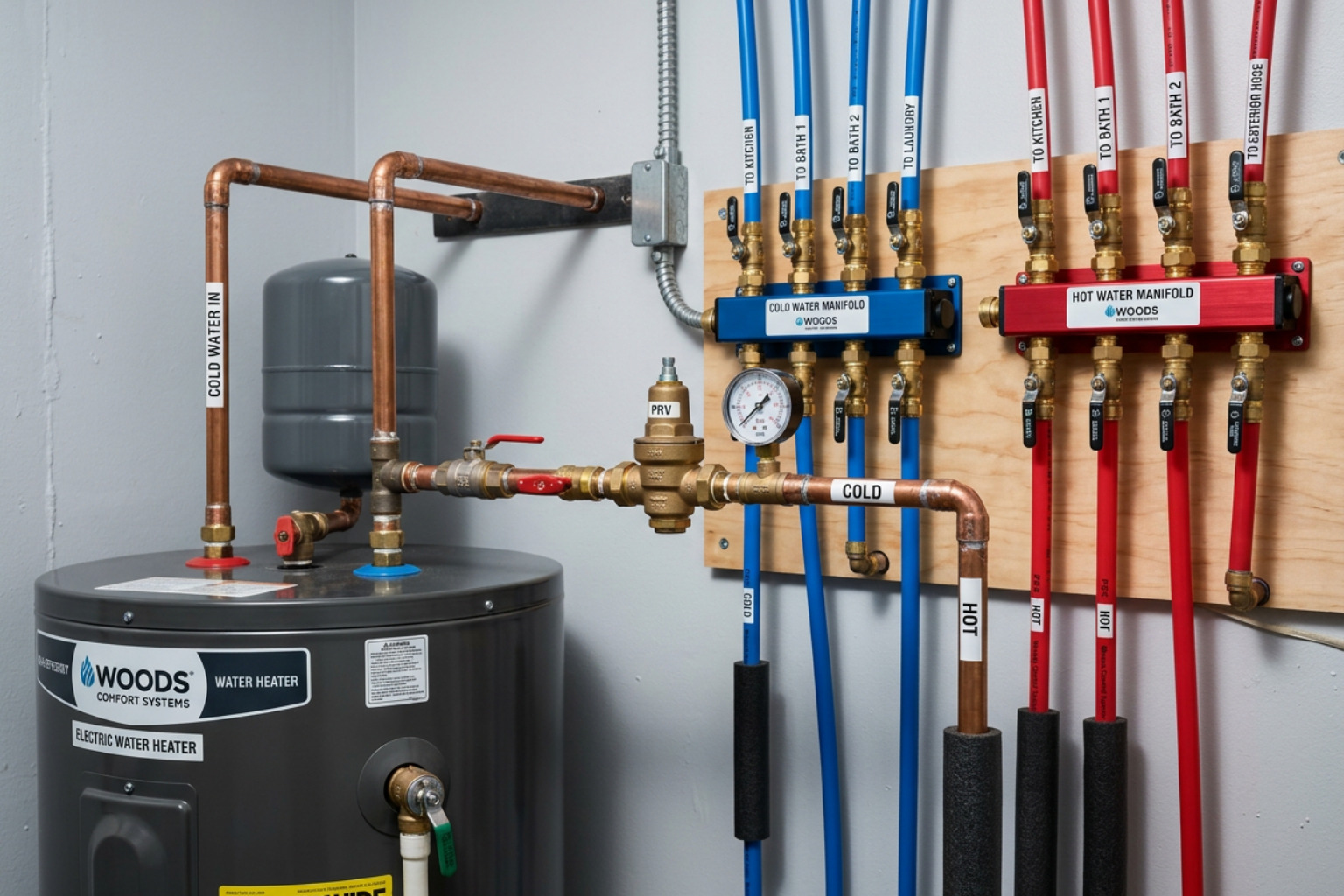
A residential plumbing system is actually a combination of distinct subsystems that work together to deliver clean water, remove waste, and provide utility services. When you invest in expert plumbing services, our licensed professionals design and balance these subsystems to work in perfect harmony.
Water Supply Lines and Plumbing Installation Requirements
When planning a new plumbing installation, the water supply system is a pressurized network that delivers clean, potable water from either a municipal water main or a private well directly to your fixtures. Because municipal water mains often deliver water at very high pressure, a pressure-reducing valve (PRV) is typically installed where the main water line enters the home. This valve keeps the internal water pressure at a safe level, protecting your pipes and appliances from premature wear.
Another critical component is backflow prevention. Backflow prevention devices ensure that non-potable water from irrigation systems or outdoor spigots cannot flow backward into your home’s clean drinking water supply during sudden pressure drops.
Finally, the supply system is responsible for hot water delivery. Whether you use a traditional tank system or a modern tankless water heater, the hot water lines must be insulated to prevent heat loss as the water travels through the walls. Every home must also have an easily accessible main shut-off valve, allowing you to turn off the water supply instantly in the event of an emergency.
DWV Systems and Proper Venting in Plumbing Installation
While the water supply system relies on pressure to push water through the home, the drain-waste-vent (DWV) system relies entirely on gravity to carry wastewater away. The DWV system consists of three main parts:
- Drain lines: Pipes that carry wastewater from sinks, showers, and toilets.
- Waste lines: Larger pipes that transport solid waste toward the main sewer.
- Vent lines: Pipes that extend up through the roof, venting sewer gases safely outside.
Proper venting is absolutely critical to the function of this system. Vent pipes introduce fresh air into the drainage system, maintaining equalized atmospheric pressure inside the lines. Without this air, rushing wastewater would create a vacuum, siphoning the water out of the P-traps (the curved pipes under your sinks).
These P-traps hold a small amount of water that acts as a physical barrier, or trap seal, preventing dangerous sewer gas from entering your living spaces. Additionally, all horizontal drain lines must be installed with a precise downward pipe slope (typically a quarter-inch of drop per foot of pipe) to prevent standing water and clogs.
Optional Systems: Natural Gas and Greywater
Beyond the standard water and waste lines, many modern plumbing installations include specialized optional subsystems. Natural gas piping is incredibly common, with about half of U.S. households utilizing natural gas for heating, water heating, or cooking. Installing gas lines requires specialized licensing and materials, such as black iron pipe or corrugated stainless steel tubing, to ensure the system is completely leak-free and safe.
Water conservation is another growing priority for homeowners in Central Texas. Greywater recycling systems, which align with the EPA WaterSense guidelines, capture relatively clean wastewater from washing machines, showers, and bathroom sinks, filtering it so it can be safely reused for toilet flushing or landscape irrigation. Incorporating these optional systems during the initial build or remodel is an excellent way to boost your home’s energy efficiency and lower your monthly utility bills.
Selecting the Right Materials and Fixtures
Choosing the correct materials for your plumbing installation is vital for the long-term durability and safety of your home. Using the wrong pipe material in the wrong application can lead to premature corrosion, chemical leaching, or catastrophic leaks. Understanding these materials can help you make informed decisions and explain why you shouldn’t ignore a small leak if an older pipe material starts to fail.
Supply Line Materials: PEX vs. Copper
For water supply lines, the two primary choices are cross-linked polyethylene (PEX) and traditional rigid copper.
| Feature | PEX Tubing | Rigid Copper |
|---|---|---|
| Flexibility | Highly flexible, bends around corners | Rigid, requires elbow fittings |
| Freeze Resistance | Expands slightly, highly resistant | Can split when water freezes |
| Corrosion & Scale | Completely immune to scale and corrosion | Can corrode over time in acidic water |
| Installation Speed | Very fast, uses crimp or expansion joints | Slower, requires soldering with a torch |
| Lifespan | Up to 50 years | 50+ years, highly durable |
PEX tubing has become the industry standard for modern residential installations due to its flexibility, which allows it to be snaked through walls with fewer joint connections. Fewer joints mean a lower risk of leaks. Copper remains a premium choice for exposed lines, water heater connections, and areas where absolute rigidity and maximum fire resistance are required.
Drain and Vent Materials: PVC vs. ABS
When it comes to the DWV system, plastic piping has completely replaced traditional cast iron and galvanized steel. The two main plastics used are polyvinyl chloride (PVC) and acrylonitrile butadiene styrene (ABS).
PVC is a white, rigid pipe that is highly durable and chemically resistant. It requires a two-step solvent welding process involving a purple primer and a specialized cement to chemically fuse the joints together. ABS is a black pipe that is slightly more flexible and offers excellent resistance to cold temperatures, making it less brittle in freezing conditions. Unlike PVC, ABS can be joined using a single-step solvent cement without primer.
Both materials feature incredibly smooth interiors that resist scale buildup and prevent clogs, making them ideal for modern sanitary drainage systems.
Permits, Codes, and Professional Standards
Plumbing systems are strictly regulated to protect public health and safety. Clean drinking water and sanitary waste disposal are basic necessities, which is why municipal governments require strict adherence to established plumbing codes. Attempting to bypass these regulations can lead to severe structural damage, failed home inspections, and legal issues.
Navigating Building Codes and Inspections
Most jurisdictions in Texas follow either the International Plumbing Code (IPC) or the Uniform Plumbing Code (UPC). These codes dictate everything from the minimum diameter of drain lines to the exact spacing of pipe hangers. Before any plumbing installation begins, a detailed set of plans must be submitted to the local building department to obtain the necessary building permits.
During construction, the project must pass two main inspections:
- The rough-in inspection: Occurs while the walls are still open. The inspector verifies that all pipes are properly sized, sloped, supported, and pressure-tested.
- The final inspection: Occurs after all fixtures are installed and the water is turned on. The inspector checks for leaks, proper water pressure, functioning hot water, and backflow prevention.
Passing these inspections is mandatory to receive a Certificate of Occupancy for a new home.
Why DIY Plumbing Risks Costly Rework
With the abundance of online tutorials, it can be tempting to attempt a major plumbing installation as a DIY project. However, the risks of DIY plumbing are substantial. Unlicensed work often results in minor errors that lead to major consequences, such as slow-draining sinks, gurgling toilets, or hidden joint leaks that rot wall framing and encourage mold growth.
Furthermore, if you ever decide to sell your home, unpermitted plumbing work will likely be flagged by a home inspector, forcing you to open up finished walls to bring the system up to code. If you are looking for local professionals, you can consult resources like the Texas State Board of Plumbing Examiners to verify licensing and find qualified technicians in San Marcos, TX who understand the local municipal regulations.
Planning, Costs, and Long-Term Maintenance
A successful plumbing installation requires careful planning long before the first pipe is cut. Proper layout design ensures that your home functions efficiently, while a solid maintenance plan keeps the system running smoothly for decades.
Crucial Decisions Before Rough-In Begins
Once the framing is complete and the rough-in phase begins, changing the location of a toilet, shower, or sink becomes incredibly expensive. To avoid costly rework, you must finalize several design decisions on your blueprints early:
- Appliance locations: Decide exactly where the washing machine, dishwasher, and refrigerator ice maker will go.
- Water heater type: Choose between a traditional tank water heater and a tankless water heater, as they require completely different venting and gas or electrical configurations.
- Shower and tub configurations: Freestanding tubs, walk-in showers, and multi-head shower systems all require unique drain and valve placements.
- Future-proofing: If you plan to finish a basement or add a bathroom in the future, have your plumber install rough-in stub-outs now to save thousands of dollars later.
It is also helpful to understand common household plumbing problems so you can design your layout to minimize long-run clogs and water hammer issues.
Maintaining Your System After Installation
Once your new plumbing system is up and running, consistent preventive plumbing maintenance is the key to preventing emergencies and maximizing the lifespan of your fixtures.
[New Installation] ---> [Annual Water Heater Flush] ---> [Winterization of Spigots] ---> [Visual Leak Checks]
Regular maintenance should include checking under sinks for slow leaks, testing your main water shut-off valve, and flushing your water heater annually to remove sediment.
For homeowners in Central Texas, winterization is another critical maintenance task. Even though our winters are generally mild, sudden hard freezes can burst unprotected pipes. Be sure to disconnect outdoor hoses, insulate exterior spigots, and drain lines leading to outdoor kitchens before freezing weather arrives.
If you need professional assistance maintaining your system or setting up a regular inspection schedule, you can contact our team directly to keep your home safe. Familiarizing yourself with the most common residential plumbing problems in San Marcos, TX can also help you spot warning signs early.
Frequently Asked Questions About Plumbing Installation
What are the three phases of plumbing installation in new construction?
The three phases are the underground rough-in, the above-ground rough-in, and the finishing or trim-out phase. Underground rough-in involves laying the main drain and sewer lines beneath the foundation before concrete is poured. Above-ground rough-in occurs after framing, running water supply lines, drain pipes, and vent stacks through open wall cavities. The trim-out phase happens after finished walls and floors are installed, involving the mounting of faucets, toilets, and appliances.
How much does plumbing installation cost for a new home?
Plumbing installation pricing can vary significantly depending on the square footage of the home, the number of bathrooms, the layout complexity, and the quality of the fixtures selected. Because every custom build and remodel is unique, homeowners should always request a comprehensive professional estimate from a licensed plumber to get accurate pricing for their specific project.
Why is proper venting critical in a DWV system?
Proper venting introduces fresh air into the drain-waste-vent system, which equalizes the atmospheric pressure inside the drainage pipes. Without proper venting, rushing wastewater would create a vacuum that siphons water out of P-traps, allowing dangerous, foul-smelling sewer gases to enter the living spaces of your home. It also ensures smooth, consistent drainage.
What is the difference between residential and commercial plumbing?
Commercial plumbing systems are much larger in scale and complexity compared to residential systems. They must handle higher usage demands, which requires larger pipe sizes, specialized fixtures, and complex water pressure regulations. Additionally, commercial installations are subject to stricter building codes, more frequent inspections, and complex backflow prevention requirements.
Can I change fixture locations after the rough-in phase?
Yes, but doing so causes costly rework and construction delays. Moving a fixture after the rough-in phase requires tearing open finished drywall, rerouting water supply and drain lines, and scheduling new rough-in inspections with the local building department. It is always best to finalize all fixture locations on the blueprints before construction begins.
What are the benefits of PEX piping over copper?
PEX tubing is highly flexible, allowing it to bend around corners with fewer joint connections, which significantly reduces the risk of leaks. It is also highly resistant to scale buildup and corrosion, and its ability to expand makes it much more freeze-resistant than rigid copper. Additionally, PEX is faster to install, making it a highly cost-efficient option for modern home builds.
How do I prepare my plumbing system for winter?
To prepare your system for freezing temperatures, perform winterization by disconnecting all outdoor hoses and installing insulated covers over exterior spigots. If you have exposed pipes in unheated crawlspaces or attics, wrap them in foam pipe insulation. For vacant properties or outdoor kitchens, shut off the water supply to those areas and drain the lines completely.
What permits are required for a new plumbing installation?
Most local municipalities require a specific plumbing permit before any new installation or major remodel begins. This permit must typically be pulled by a licensed master plumber. The permit ensures that the project will undergo a rough-in inspection and a final inspection by a certified local building inspector to verify code compliance.
How does a backflow preventer protect my water supply?
A backflow preventer is a mechanical device that only allows water to flow in one direction. If a sudden pressure drop occurs in the municipal water main, the device prevents non-potable water from irrigation systems, pools, or outdoor spigots from being siphoned backward into your home’s clean drinking water system, preventing contamination.
When should I hire a professional plumber instead of doing it myself?
You should hire a licensed professional plumber for any project involving underground lines, gas piping, water heater installations, or whole-home rough-ins. Professional plumbers possess the specialized tools, training, and code knowledge required to ensure your system is safe, efficient, and fully compliant with local laws, protecting your home’s warranty and resale value.
Conclusion
Mastering a plumbing installation requires careful planning, a deep understanding of structural subsystems, and strict adherence to local building codes. While minor repairs can occasionally be handled by an experienced DIY enthusiast, whole-home installations and major remodels involve complex pressure dynamics, precise pipe slopes, and safety standards that require professional expertise. If safety concerns arise, specialized tools are required, or you are simply unsure about performing a task correctly, it is always best to consult a professional.
Whether you need a complete system layout for a new home build, a professional upgrade to a tankless water heater, or seasonal maintenance to protect your pipes, our experienced team is here to help. We bring decades of Texas-bred expertise, Prompt emergency availability, and royal customer treatment to every single job. Keep your home running smoothly and protect your investment by choosing Woods Comfort Systems for your next project. Schedule your professional plumbing service with our friendly team in San Marcos, TX and the surrounding areas today!