

Why a Dirty Pilot Tube Water Heater Leaves You With Cold Water
A dirty pilot tube water heater problem is one of the most common reasons homeowners in Central Texas suddenly find themselves taking cold showers. The fix is often simpler than you think, but knowing what you’re dealing with makes all the difference.
Quick Answer: How to Fix a Dirty Pilot Tube on a Water Heater
- Turn off the gas supply completely and wait at least 5 minutes
- Remove the burner access panel to reach the pilot assembly
- Disconnect the pilot tube carefully using two wrenches
- Flush the tube with compressed air to clear dust, soot, and debris
- Soak the tube in white vinegar for 15-20 minutes if mineral deposits are present
- Hold the orifice up to light to confirm the pinhole is clear
- Reassemble, check for leaks with soapy water, and relight the pilot
If the pilot light still won’t stay lit after cleaning, the thermocouple or gas control valve may be the issue, not the tube itself.
A properly functioning pilot light should burn steadily and indefinitely. When it starts going out repeatedly, or refuses to light at all, the pilot tube is often the first place worth inspecting. This small copper tube acts like a tiny straw, delivering a precise stream of gas to the pilot burner. When dust, soot, mineral deposits, or debris partially or fully block that passage, the gas flow weakens or stops entirely, and your hot water disappears with it.
The frustrating part is that a clogged pilot tube doesn’t always announce itself with an obvious warning. Sometimes the flame just gets weaker. Sometimes the pilot light goes out every few days. And sometimes the water heater simply stops heating altogether, leaving you wondering whether you need a full replacement when all it really needed was a good cleaning.
I’m Chris Woods, owner of Woods Comfort Systems, a third-generation comfort company serving Central Texas since 1956, and over the years our team has diagnosed more dirty pilot tube water heater situations than I can count. In most cases, a thorough cleaning restores reliable performance without the need for costly part replacements or a new unit.
Simple guide to dirty pilot tube water heater terms:
- dirty thermocouple water heater
- gas water heater pilot tube
Understanding Your Gas Water Heater Pilot Assembly
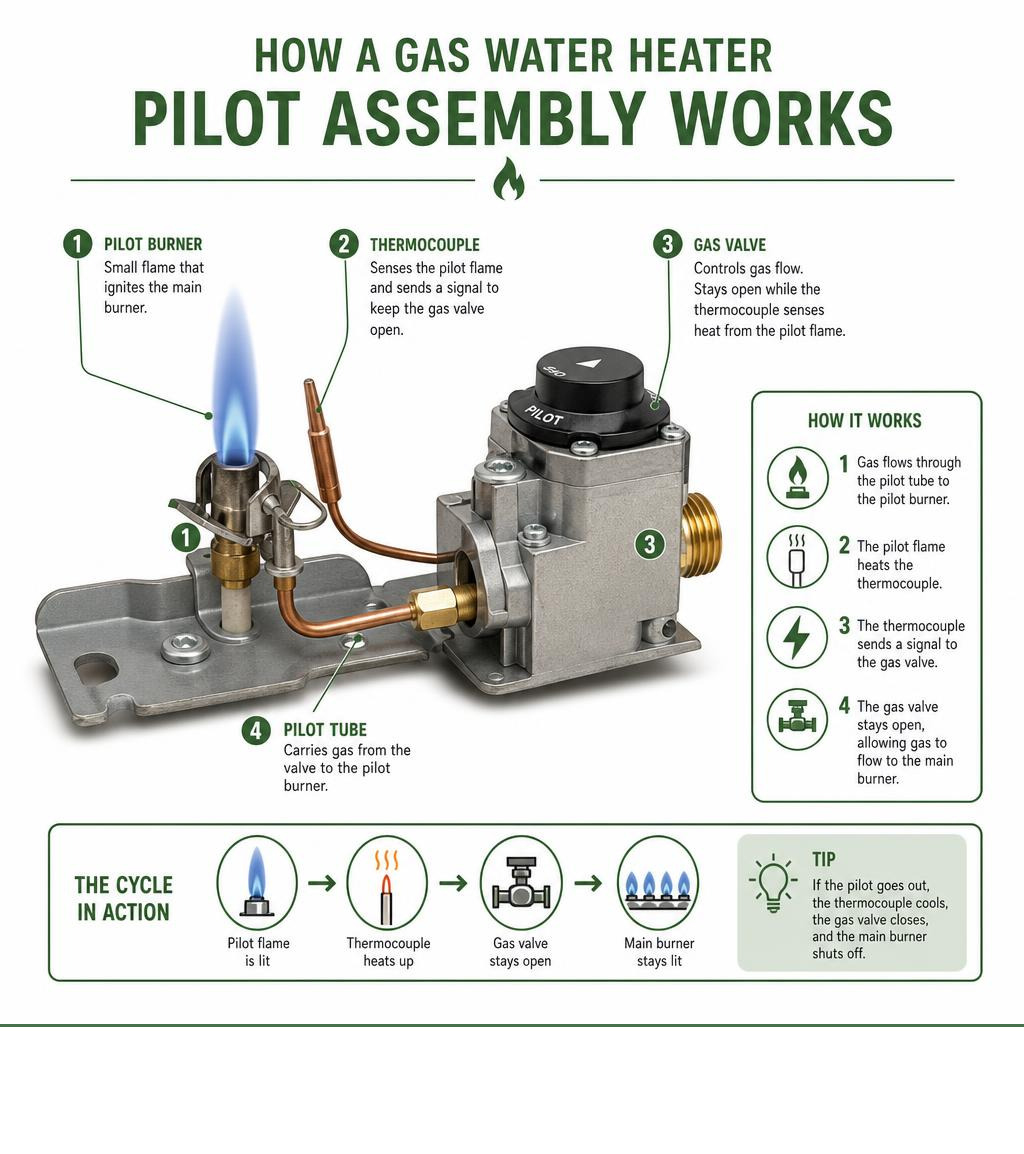
To successfully troubleshoot a dirty pilot tube water heater, it helps to understand how the components of your burner assembly interact. Your gas water heater relies on a closed-loop safety system where several parts must communicate perfectly to keep the gas flowing safely.
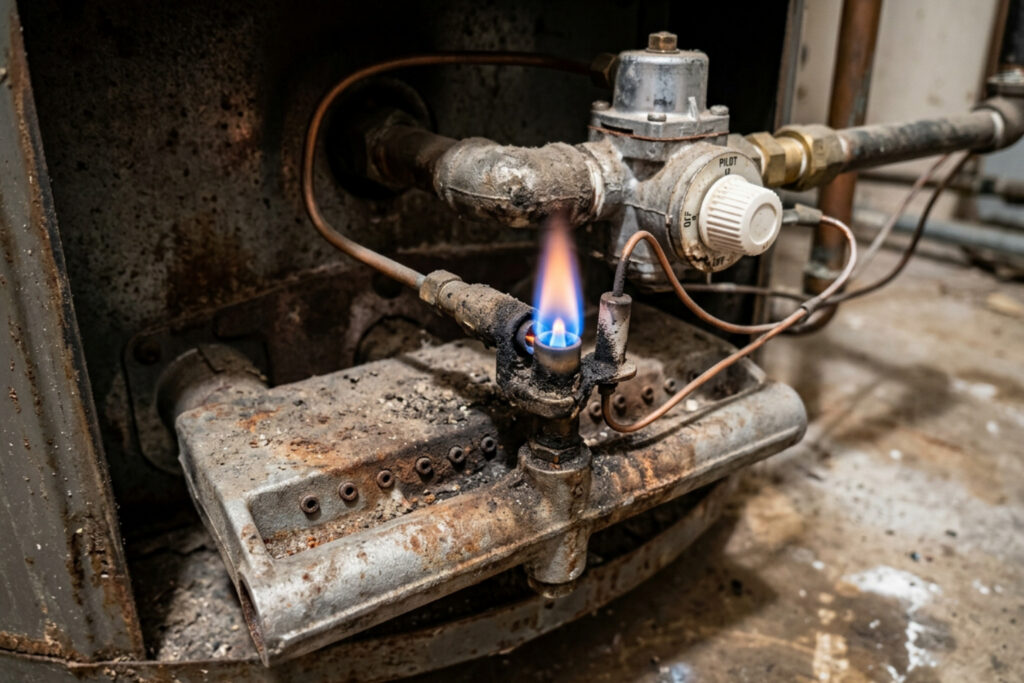
At the center of this system is the gas control valve, which acts as the brain of the water heater. It regulates the flow of gas to both the main burner and the pilot assembly. The pilot assembly itself consists of three primary components: the pilot burner, the pilot tube, and the thermocouple. You can learn more about how these parts interact by reading our guide on navigating your gas water heater pilot assembly.
The pilot tube is a narrow copper or aluminum line that delivers a small, continuous stream of gas from the control valve to the pilot burner. Once ignited, this gas produces the pilot light. The pilot light is not just there to light the main burner; it also serves a vital safety function by heating the thermocouple.
The thermocouple is a safety sensor positioned directly in the path of the pilot flame. When heated, the thermocouple generates a tiny electrical current (around 25 to 30 millivolts) via the Seebeck effect. This electrical signal tells the gas control valve that a flame is present. As long as the valve receives this signal, it keeps the gas line open. If the pilot flame goes out, the thermocouple cools down, the electrical signal stops, and the gas control valve immediately snaps shut to prevent dangerous gas from leaking into your home.
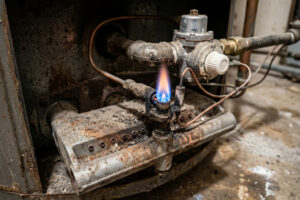
If your pilot tube becomes dirty or clogged, the gas flow is restricted. This leads to a weak, dancing, or misplaced flame that cannot sufficiently heat the thermocouple, causing the safety system to shut down the entire unit.
Troubleshooting a Dirty Pilot Tube Water Heater
Over time, the combustion environment inside your water heater burner chamber can cause debris to accumulate. A dirty pilot tube water heater is rarely the result of a single event; rather, it is a gradual buildup of various environmental and combustion byproducts.
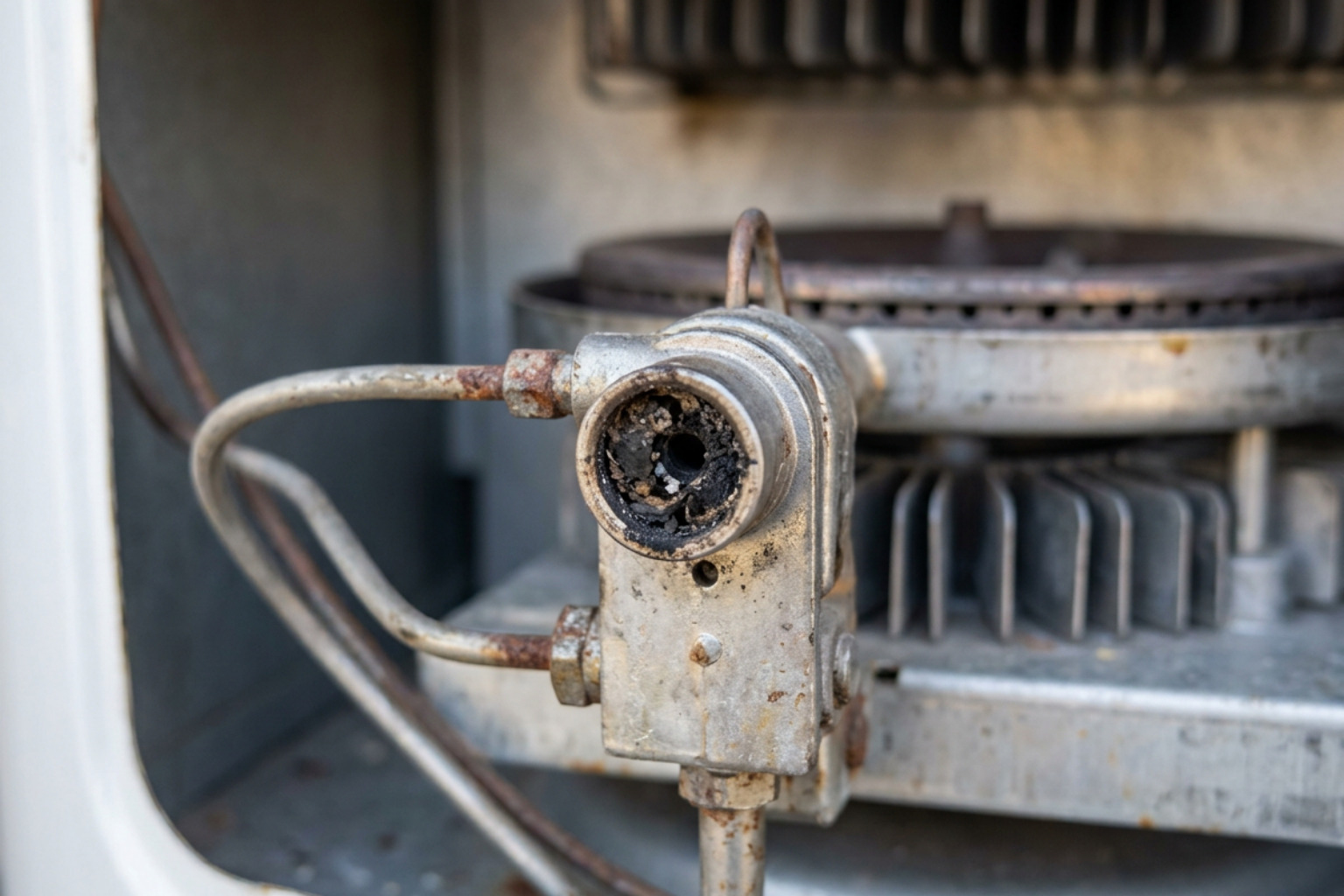
Soot buildup is one of the primary culprits. If the gas-to-air ratio in your burner chamber is slightly off, incomplete combustion occurs. This produces fine black carbon soot that settles on the pilot burner and inside the pilot tube orifice.
Dust, pet hair, and household lint can also be drawn into the combustion chamber from the surrounding room, especially if your water heater is located in a garage, closet, or utility room in San Marcos, TX. These airborne particles quickly bake onto the hot metal components of the pilot assembly.
Additionally, impurities in the gas supply itself can leave behind oily residues or fine particulates that clog the microscopic opening of the pilot orifice. In areas with hard water, airborne mineral dust can also contribute to scale buildup on the exterior and interior of the burner parts.
Symptoms of a Dirty Pilot Tube Water Heater
When your pilot tube begins to clog, your water heater will exhibit several classic warning signs. Recognizing these symptoms early can help you resolve the issue before you are left completely without hot water.
- A Weak, Yellow, or Orange Flame: A healthy pilot flame should be a crisp, steady blue cone with a small yellow tip. If the flame is lazy, flickering, or entirely yellow or orange, it indicates incomplete combustion caused by restricted gas flow or a lack of oxygen.
- Frequent Pilot Light Outages: If you find that your water heater pilot light keeps going out in San Marcos, TX, a clogged tube is a highly likely suspect. The restricted gas flow makes the flame highly sensitive to minor drafts or pressure fluctuations.
- Difficulty Lighting the Pilot: If you have to hold the gas control knob down for several minutes to get the pilot to light, or if it goes out the moment you release the knob, the weak flame is not generating enough heat to activate the thermocouple.
- Intermittent Hot Water: You might experience moments of lukewarm water or find that your water heater short cycles, shutting down before the tank reaches the set temperature because the pilot flame failed mid-cycle.
Dirty Pilot Tube vs. Thermocouple and Gas Valve Issues
Because the pilot tube, thermocouple, and gas control valve work in unison, diagnosing the exact cause of a pilot failure requires a bit of elimination. It is easy to mistake a dirty pilot tube for a broken thermocouple or a failing gas valve.
A thermocouple issue typically manifests as a pilot light that ignites easily and burns with a strong, blue flame, but goes out the second you let go of the gas control knob. If the flame is hitting the thermocouple tip directly and burning blue, but the valve won’t stay open, the thermocouple is likely worn out or dirty. You can find detailed steps on how to address this in this guide on how to clean the thermocouple on a water heater.
A gas valve failure is less common but much more serious. If you have verified that the pilot tube is perfectly clear and the thermocouple is generating the proper millivolt output (tested with a multimeter), but the gas still will not flow to the burner, the internal electromagnet or regulator in the gas control valve may have failed. Gas valve replacements should always be handled by a licensed professional.
A dirty pilot tube, by contrast, is distinguished by the physical appearance of the flame itself. If the flame is visibly weak, yellow, split, or failing to touch the thermocouple altogether, the issue is almost certainly a physical blockage in the pilot tube or its orifice.
Safety First: Preparing for DIY Maintenance
Working with gas appliances requires strict adherence to safety protocols. Natural gas and propane are highly flammable, and improper handling can lead to leaks, fires, or carbon monoxide exposure. Before you attempt any maintenance on your dirty pilot tube water heater, follow these preparation steps.
First, locate the main gas shutoff valve on the gas line leading to your water heater. Turn the valve perpendicular to the pipe to shut off the gas supply completely. Next, turn the knob on the water heater’s gas control valve to the “OFF” position.
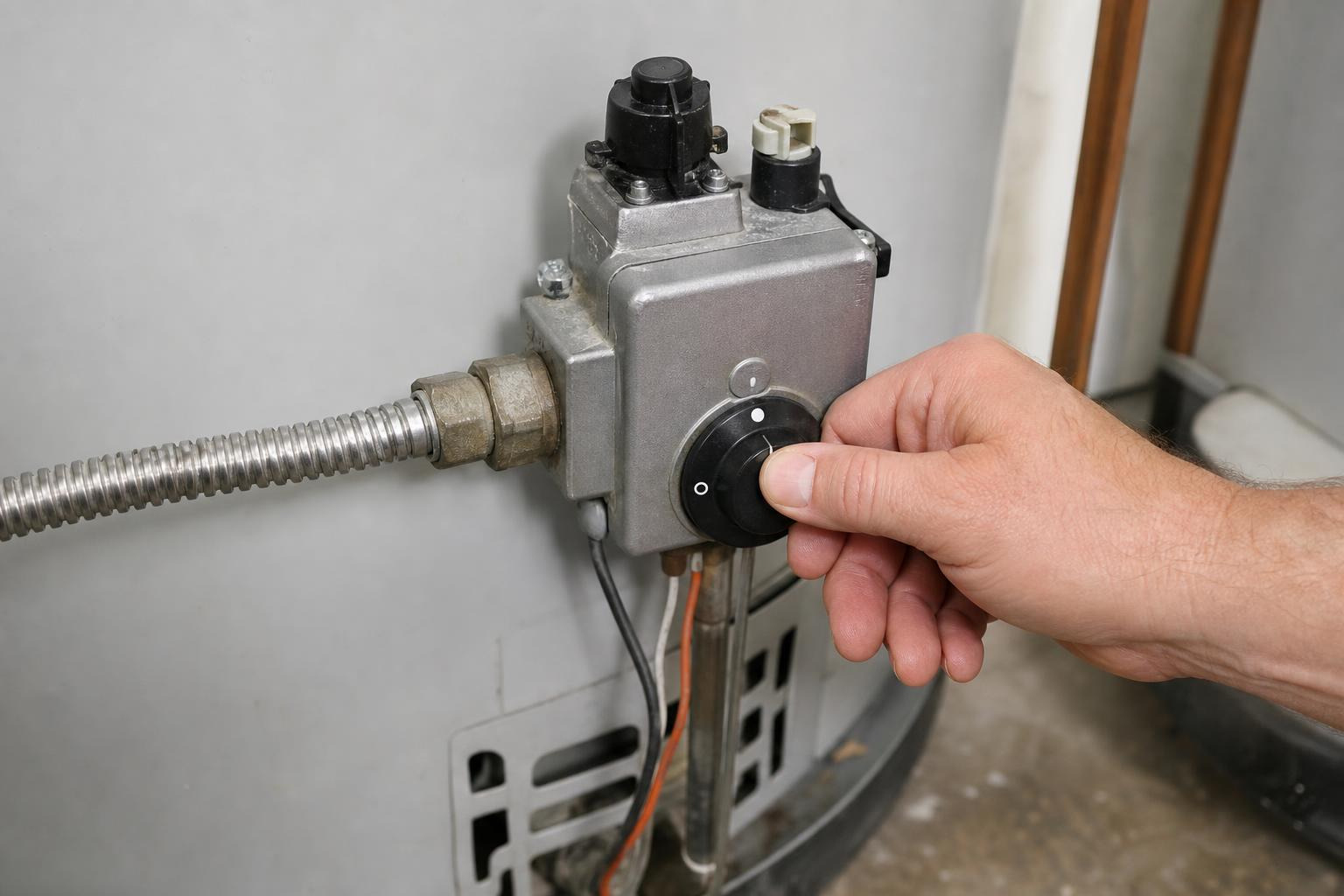
Once the gas is shut off, you must allow the water heater to cool down completely. The combustion chamber, burner assembly, and surrounding metal plates can remain hot enough to cause severe burns for quite some time after the unit has shut down. We recommend waiting at least 15 to 20 minutes before touching any internal components.
Ensure the area around the water heater is well-ventilated. Open any nearby windows or doors to allow any residual gas vapors to disperse. Keep a fire extinguisher nearby, and never use open flames, matches, or lighters near the unit while it is disassembled.
Lastly, prepare a simple leak check solution by mixing a few drops of liquid dish soap with water in a spray bottle or small bowl. You will use this later to verify that all your gas connections are completely airtight after reassembly.
DIY Maintenance: Cleaning the Pilot Assembly
If you are comfortable with basic hand tools and feel confident working around gas connections, cleaning your pilot assembly is a straightforward DIY project that can save you the cost of a service call.
Tools and Materials Needed
Before you begin, gather the following tools and materials:
- An open-ended wrench set or two adjustable wrenches (for disconnecting the compression fittings)
- A screwdriver (to remove the burner access cover)
- A can of compressed air (with a thin straw attachment)
- A soft-bristled brush (an old toothbrush works perfectly)
- White vinegar (for dissolving stubborn mineral deposits)
- Safety glasses (to protect your eyes from flying debris and compressed air)
- A flashlight or headlamp to illuminate the dark burner chamber
- Optionally, a replacement 1/8-inch pilot tube with fittings if your existing tube is kinked, corroded, or damaged beyond cleaning
How to Clean a Dirty Pilot Tube Water Heater Safely
Follow these step-by-step instructions to safely access, clean, and reinstall your water heater’s pilot tube.
- Access the Burner Assembly: Remove the outer and inner metal access door at the base of your water heater. Some models have doors that slide up, while others are secured with screws.
- Disconnect the Pilot Tube: Locate the thin copper pilot tube connecting the gas control valve to the burner assembly. Using two wrenches (one to hold the control valve steady and one to turn the compression nut), carefully unscrew the pilot tube fitting. Repeat this process at the burner end of the tube. Avoid bending or kinking the copper line, as copper becomes brittle over time.
- Inspect the Tube and Orifice: Pull the pilot tube out of the chamber. Hold it up to a bright light and look through it. If you cannot see light clearly through the tube, it has a significant blockage. Locate the tiny pilot orifice (a small brass cap with a microscopic pinhole) at the burner end of the assembly.
- Flush with Compressed Air: Insert the straw of your compressed air can into one end of the pilot tube and blast it several times. This will blow out loose dust, soot, and spider webs. Repeat this process from the opposite end of the tube.
- Clean the Orifice: Spray compressed air directly through the pilot orifice. If the blockage is stubborn, do not force a metal wire, needle, or paperclip through the pinhole. The brass orifice is highly delicate, and scratching or enlarging the hole will alter the gas flow, creating a dangerously large or irregular flame. Instead, use a soft-bristled toothbrush to gently clean the exterior.
- Perform a Vinegar Soak: If you suspect hard water mineral buildup or baked-on soot is clogging the orifice or tube, submerge the parts in a small cup of warm white vinegar for 15 to 20 minutes. The mild acid will safely dissolve mineral scale without damaging the metal. Flush the parts thoroughly with clean water afterward, and use compressed air to dry them completely.
- Reinstall the Assembly: Carefully thread the pilot tube back into place. Start the compression nuts by hand to prevent cross-threading, then tighten them securely with your wrenches. Do not overtighten; a snug fit is all that is required to create a seal.
How to Safely Relight the Pilot Light
Once everything is securely reassembled, you are ready to test your work and relight the pilot.
First, turn the main gas supply valve back on. Turn the gas control knob on your water heater to the “PILOT” position. Depress the knob fully (or press and hold the separate pilot button, depending on your water heater model) to start the flow of gas through the newly cleaned pilot tube.
While holding the knob down, press the piezo igniter button repeatedly until you hear a click and see the pilot flame ignite. If your water heater is an older model without a built-in igniter, you will need to use a long fireplace match or a utility lighter to ignite the pilot burner manually.
Once the flame lights, continue holding the gas control knob down for 30 to 60 seconds. This gives the thermocouple enough time to heat up and generate the electrical current needed to keep the gas valve open. Slowly release the knob. If the pilot stays lit, turn the control knob to the “ON” position. You should hear the main burner ignite with a clean, roaring sound.
Immediately spray your soapy water solution onto the pilot tube connections at both the gas valve and the burner assembly. If you see expanding bubbles forming, it indicates a gas leak. Turn the gas off immediately, tighten the fittings slightly, and test again.
When to Call a Professional for Water Heater Repair
While cleaning a dirty pilot tube water heater is a manageable task for many handy homeowners, there are several situations where DIY attempts can become dangerous or ineffective. Knowing when to step back and call in a licensed plumber is essential for your safety and the longevity of your system.
If you smell gas (a distinct sulfur or rotten-egg odor) at any point during or after the process, immediately evacuate your home, leave the doors open, and call your gas utility provider or emergency services from a safe distance. Do not operate any electrical switches, light matches, or use your phone inside the house.
You should also call a professional if you encounter persistent pilot outages even after a thorough cleaning. If the flame is strong and blue but the unit still refuses to stay lit, you may be dealing with a faulty gas control valve, a cracked combustion chamber, or ventilation issues that require professional diagnostic tools.
Additionally, if your water heater is older or has extensive rust and corrosion around the burner assembly, attempting to disassemble the fragile copper lines can cause them to snap, leading to more extensive damage. Our team can help you evaluate whether a simple repair is sufficient or if it is time to consider replacement options. For more guidance on making this decision, you can read our comparison on water heater repair vs replacement in San Marcos, TX.
If you notice any of the signs that show you need professional water heater repair, such as water pooling around the base of the tank, unusual popping noises, or rusty water, it is always best to leave the work to experienced technicians.
As a final safety reminder for any DIY project, we strongly encourage you to contact a professional plumber if safety concerns arise, if specialized tools are required, or if you are dealing with complex gas and plumbing systems. If you are at all unsure about performing this task correctly, do not hesitate to reach out to a licensed technician.
Preventing Future Pilot Tube Clogs
The best way to deal with a dirty pilot tube water heater is to prevent the buildup from occurring in the first place. With a few simple preventive habits, you can keep your water heater running efficiently and avoid unexpected cold showers.
Keep the area surrounding your water heater clean and free of dust. Vacuum and dust the utility closet or garage floor regularly to minimize the amount of airborne debris that can be drawn into the burner chamber. Avoid storing dusty items, laundry baskets, or chemical cleaners near the base of the water heater.
If you live in an area with high mineral content in the water, consider installing a whole-home water softener. This reduces the airborne mineral dust that can settle on heating components and prevents scale buildup inside your plumbing system.
Finally, schedule professional plumbing maintenance at least once a year. A comprehensive tune-up includes flushing sediment from the bottom of the tank, inspecting the anode rod, cleaning the burner assembly, and verifying the safety millivolt output of your thermocouple. There are many reasons you shouldn’t neglect water heater maintenance, including lower utility bills, more consistent hot water, and a significantly longer system lifespan.
For homeowners in Central Texas, keeping an eye out for water heater tune-up signs and maintenance in San Marcos, TX ensures that minor dust accumulations are cleared away before they turn into complete system failures.
Frequently Asked Questions about Water Heater Pilot Lights
Why does my water heater pilot light keep going out?
Your pilot light may keep going out due to a clogged pilot tube, a dirty or faulty thermocouple, a malfunctioning gas control valve, or strong drafts near the water heater. Dust and soot buildup are the most common physical blockages that interrupt the steady flow of gas needed to keep the flame lit.
What does a yellow pilot light flame mean on a gas water heater?
A yellow or orange flame indicates incomplete combustion, meaning the gas is not burning cleanly. This is usually caused by a restricted air supply, dust accumulation, or a partially clogged pilot tube. A healthy, safe pilot flame should always be a steady, crisp blue color.
Can I clean a water heater pilot tube without removing the burner?
In some water heater designs, you can access the pilot assembly and use a can of compressed air to blow out loose dust without fully removing the burner. However, for a thorough cleaning of stubborn soot or mineral deposits, the pilot tube must be disconnected and removed from the chamber.
How much does it cost to have a professional clean a water heater pilot tube?
The cost for professional water heater repairs can vary depending on your location, the accessibility of your unit, and whether other parts like the thermocouple need to be replaced at the same time. Homeowners should request a professional estimate for accurate pricing.
How often should a water heater pilot tube be cleaned?
We recommend inspecting your pilot assembly every 6 to 12 months. In dusty environments or areas with high mineral content, a thorough cleaning of the pilot tube and thermocouple should be performed annually as part of your regular home maintenance routine.
Can a dirty pilot tube cause a gas leak?
A dirty pilot tube itself does not typically cause a gas leak because the thermocouple safety sensor will shut off the main gas valve if the pilot flame goes out. However, improper reassembly or cross-threading the compression nuts during a DIY cleaning can create a dangerous gas leak.
What is the difference between a thermocouple and a thermopile?
A thermocouple is a single safety sensor that generates a small electrical charge (25 to 30 millivolts) to keep the gas valve open. A thermopile consists of multiple thermocouples bundled together in series, generating a much larger electrical charge (500 to 750 millivolts) to power electronic thermostats and advanced control valves without external electricity.
Can I use a wire to clean out a clogged pilot tube?
No, you should never force a metal wire, needle, or drill bit through the delicate pilot orifice or tube. The brass components are very soft, and scratching or enlarging the microscopic opening will permanently ruin the gas flow pattern, creating an unsafe burner flame.
How long does a water heater thermocouple typically last?
A standard residential water heater thermocouple typically lasts between 5 and 10 years. If your water heater is approaching this age and you find yourself constantly cleaning the pilot assembly, it is often more practical to replace the thermocouple entirely.
Can I still take a shower if my water heater pilot light is out?
You can take a shower, but the water will be cold once the remaining warm water stored in the tank is depleted. Once you safely relight the pilot, you will need to wait approximately 30 to 60 minutes for the water heater to warm up a full tank of water.
Conclusion
A dirty pilot tube water heater can be a major inconvenience, but with the right approach, it is a highly solvable problem. Whether you choose to tackle the cleaning process yourself or prefer the peace of mind that comes with professional service, keeping your pilot assembly clean is key to enjoying reliable, safe hot water.
Whether you need fast water heater repairs, seasonal plumbing maintenance, or a complete system replacement, the team at Woods Comfort Systems is ready to help. Please schedule professional water heater services today to keep your home’s plumbing running smoothly.