

What Is a Gas Water Heater Pilot Tube and Why Does It Matter?
A gas water heater pilot tube is a small-diameter metal conduit that delivers a precisely regulated flow of gas from the control valve to the pilot burner assembly. When this component fails, your pilot light goes out and your water heater stops producing hot water entirely.
Quick answer for common pilot tube issues:
| Symptom | Most Likely Cause | Action Needed |
|---|---|---|
| Weak or small pilot flame | Partial clog in pilot tube | Clean or replace pilot tube |
| Yellow or dancing pilot flame | Blockage or incomplete combustion | Clean pilot orifice and tube |
| Pilot won’t stay lit | Thermocouple or pilot tube failure | Test thermocouple first, then inspect tube |
| No pilot flame at all | Full blockage or damaged tube | Replace pilot tube or full assembly |
| Visible corrosion or kinks | Physical damage to tubing | Replace pilot tube immediately |
For San Marcos, TX homeowners, a failed pilot tube usually means no hot water until the problem is fixed. The good news is that pilot tube issues are diagnosable and often fixable without a full water heater replacement.
The pilot tube is one of those components most people never think about until something goes wrong. It sits quietly inside your water heater’s burner compartment, delivering the small but steady supply of gas that keeps the pilot flame burning. That flame, in turn, heats the thermocouple, which signals the gas valve that it is safe to allow gas to flow to the main burner. When the pilot tube gets clogged, corroded, kinked, or cracked, the entire ignition chain breaks down.
This guide covers everything you need to know: how the pilot tube works, what materials it is made from, how to diagnose problems, how to clean a blocked tube, when to replace it, and how to do so safely. Whether you are a hands-on homeowner or just want to understand what a technician is telling you, this is the resource you need.
I’m Chris Woods, owner of Woods Comfort Systems, a third-generation comfort company with decades of hands-on experience diagnosing and repairing gas water heater pilot tube failures across San Marcos, TX. If you want expert eyes on your water heater rather than tackling it solo, our team is ready to help.
Understanding the Gas Water Heater Pilot Tube
To understand how your water heater operates, you must first understand the relationship between its key ignition components. The gas water heater pilot tube is not just an ordinary metal straw. It is a critical bridge in your water heater system.
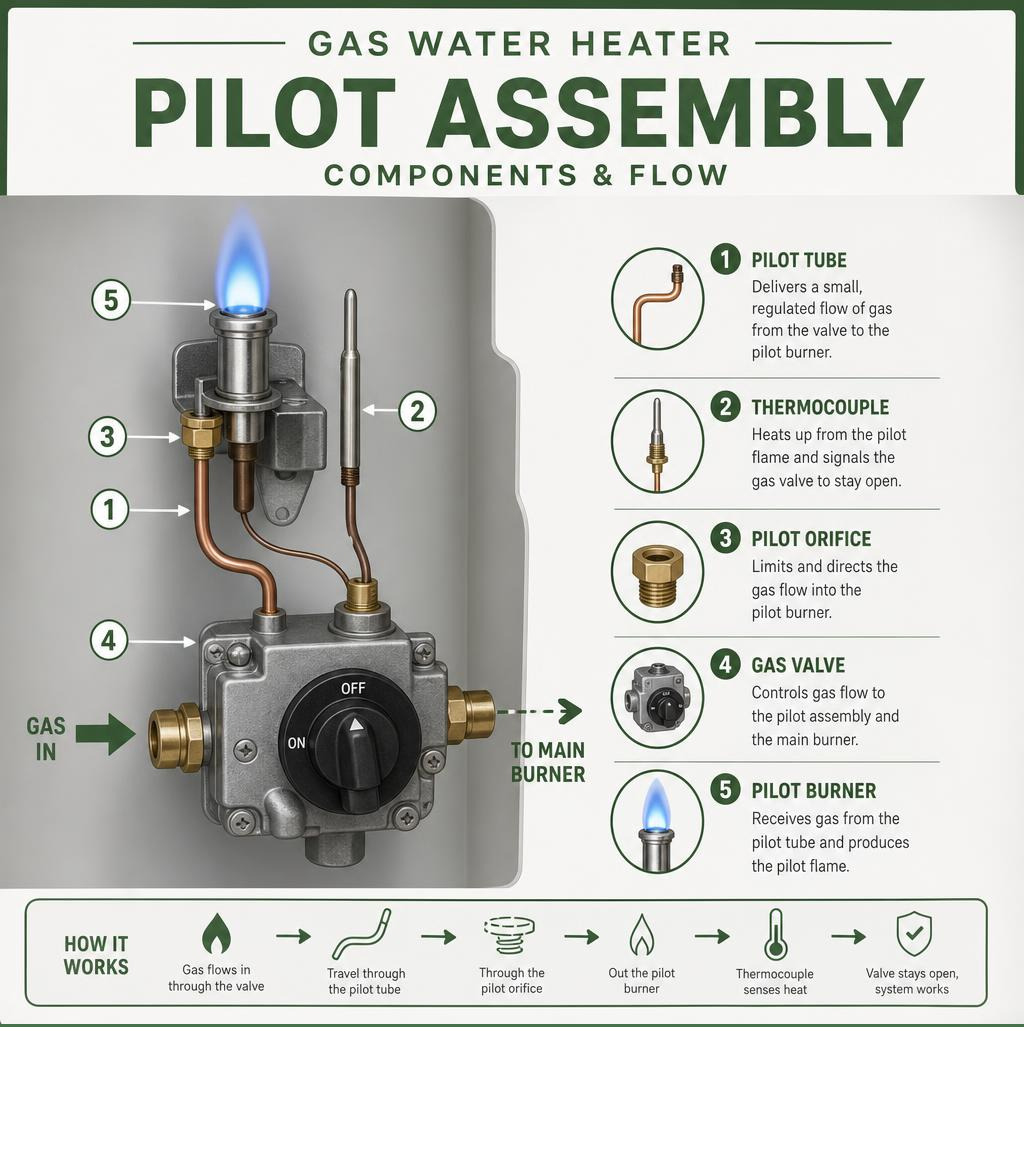
This narrow tube connects the main gas control valve directly to the pilot burner. While the large burner supply tube delivers a high volume of gas to heat the entire tank, the pilot tube carries a tiny, continuous stream of gas to maintain the pilot light. This small flame serves as the ignition source for the main burner whenever the tank temperature drops and calls for heat.
Without a reliable pilot tube, the gas valve has no way to safely deliver fuel to the ignition point. If you are experiencing issues with your system, exploring the fundamentals of water heater systems can help you visualize how this small tube fits into the broader plumbing and heating setup of your home.
Anatomy of the Pilot Assembly
The pilot assembly is a compact cluster of parts located inside the combustion chamber of your water heater. It is mounted directly to the burner assembly. Understanding these components is essential before attempting any diagnostic or repair work.
- Pilot Burner: This is the bracket and nozzle where the pilot flame is anchored. It directs the flame toward the thermocouple.
- Thermocouple or Thermopile: This sensor sits directly in the path of the pilot flame. A thermocouple generates a tiny electrical current, measured in millivolts, when heated. A thermopile is simply a collection of thermocouples bundled together to generate a slightly higher voltage, often used in electronic ignition models.
- Piezo Igniter: This mechanical button creates a high-voltage spark near the pilot burner to light the gas when you manually start the system.
- Combustion Chamber: This is the sealed or semi-sealed area at the bottom of the water heater tank where the burner assembly lives and where combustion safely occurs.
How the Gas Water Heater Pilot Tube Works
When you set your water heater gas valve to the pilot position and press the button down, you open a temporary pathway inside the valve. Gas flows through the gas water heater pilot tube and exits the tiny pilot orifice at the end of the tube. Once lit by the piezo igniter, this gas creates the pilot flame.
As the pilot flame heats the thermocouple, the heat generates a small millivolt signal. This electrical signal travels back to the gas control valve, powering an internal electromagnet that holds the safety valve open. Once this connection is established, you can release the pilot button, and the gas will continue to flow through the pilot tube.
If the pilot flame goes out, the thermocouple cools down. Within a minute or two, the millivolt signal drops to zero, and the safety valve snaps shut, stopping the flow of gas. This safety mechanism prevents unburned gas from filling your home. If your system keeps shutting down unexpectedly, you can read about why your water heater pilot light keeps going out to understand the relationship between the thermocouple, the gas valve, and the pilot supply line.
Materials and Specifications of Pilot Tubing
Pilot tubes are exposed to extreme environments. They must withstand high temperatures inside the combustion chamber, resist corrosive combustion byproducts, and remain airtight under constant gas pressure. Manufacturers use three primary metals for pilot tubing: aluminum, copper, and stainless steel.
Aluminum tubing is the most common choice for modern residential natural gas water heaters. It is highly malleable, making it easy to bend and route from the gas valve into the combustion chamber without kinking. Copper material is also widely used, particularly in older systems and LP gas applications. It offers excellent thermal conductivity and durability, though it can be slightly stiffer to work with. Stainless steel represents the premium tier, offering the highest level of corrosion resistance and strength, which is why it is frequently found in commercial systems or harsh environments.
| Material | Flexibility | Corrosion Resistance | Common Applications | Ease of Installation |
|---|---|---|---|---|
| Aluminum | High | Moderate | Standard residential natural gas units | Very Easy |
| Copper | Moderate | High | Older units, LP gas, outdoor heaters | Moderate |
| Stainless Steel | Low | Extremely High | Commercial units, high-end residential | Difficult |
Compression Fittings and Standard Sizes
To prevent hazardous gas leaks, the pilot tube must connect securely to both the gas control valve and the pilot burner. This is achieved using specialized compression fittings.
A compression fitting consists of a threaded nut and a small brass or aluminum ring called a compression olive or ferrule. When you tighten the nut onto the gas valve port, it squeezes the olive against the outer wall of the pilot tube, creating a gas-tight metal-to-metal seal. Flare fittings are also used in some systems, which rely on a flared tube end pressed against a matching seat.
Standard pilot tubing typically comes in outer diameters of 1/4 inch or 1/8 inch. It is crucial to use the exact size specified by your manufacturer. For instance, detailed technical layouts, such as those found in the A.O. Smith Technical Specifications, demonstrate how precise fitting sizes prevent gas leaks and ensure correct pressure regulation within the combustion system.
Troubleshooting and Maintenance
Over time, a pilot tube can develop problems that disrupt your water heater’s operation. Recognizing the early warning signs can save you from a cold shower and prevent costly emergency repairs.
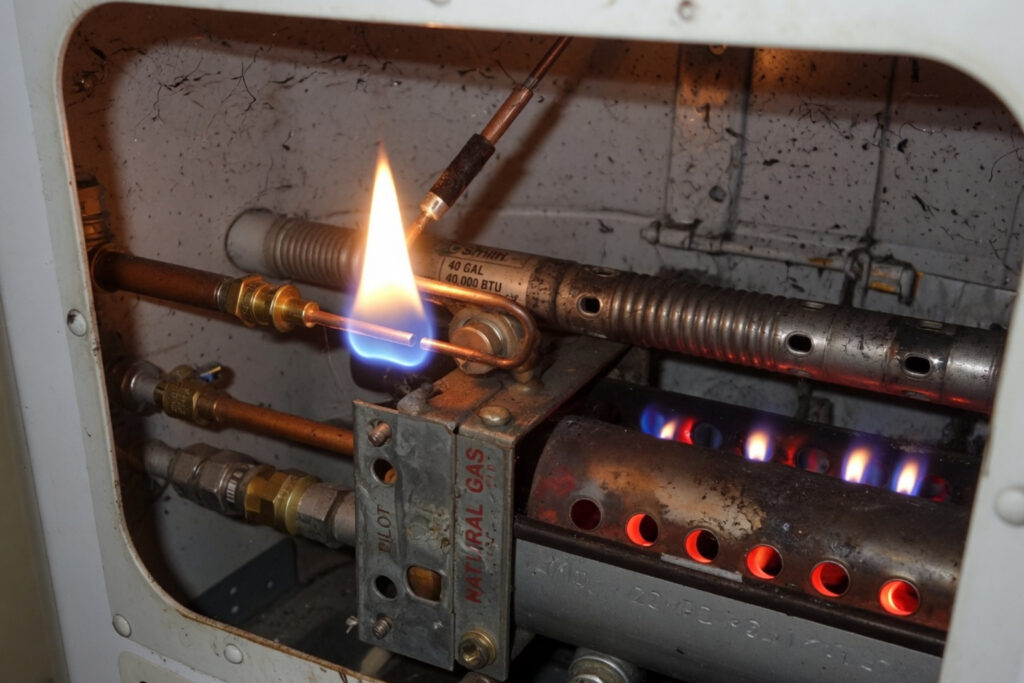
The most common issue is a weak flame or a yellow flame. A healthy pilot flame should be a sharp, steady, and predominantly blue cone that directly engulfs the top 1/3 of the thermocouple tip. If the flame is weak, lazy, yellow, or dancing, it indicates incomplete combustion. This is usually caused by a restriction in the gas flow, often due to carbon buildup, soot, or dust blocking the pilot tube or the tiny pilot orifice.
Regular maintenance is key to preventing these issues. Neglecting your system can lead to pilot outages and inefficient heating. Homeowners can benefit from learning about the major benefits of water heater maintenance to keep their systems running efficiently year-round.
Signs Your Gas Water Heater Pilot Tube Needs Replacement
While some pilot tube issues can be resolved with a thorough cleaning, certain situations require a complete replacement of the gas water heater pilot tube.
- Physical Damage: If the tube is bent, crimped, or kinked during a previous repair attempt, the gas flow will be permanently restricted. Metal fatigue from bending the tube too many times can also cause microscopic cracks.
- Persistent Clogs: If the tube is heavily choked with rust or internal corrosion that cannot be cleared with a wire or compressed air, it must be replaced.
- Gas Leaks: If you smell gas near the burner assembly or detect bubbles at the fittings during a leak test, and tightening the nuts does not resolve the issue, the tubing or the compression olive is compromised.
- Severe Corrosion: Exposure to moisture and combustion chemicals can cause pitting and scaling on the exterior of the tube, weakening its structural integrity.
If you observe any of these warning signs, it is time to seek professional water heater repair to ensure the safety and reliability of your gas system.
How to Clean a Blocked Pilot Tube
If you suspect your pilot tube is simply clogged with dust, soot, or spider webs, cleaning it can often restore proper gas flow.
To clear a blockage, technicians use a very thin, flexible wire that is smaller than the internal diameter of the tube. Gently feeding this wire through the tube helps dislodge carbon buildup. After reaming the tube, flushing it with low-pressure compressed air from the control valve end will blow out any remaining debris.
Never use high-pressure shop air, as this can damage the delicate pilot orifice or bend the pilot bracket. For those interested in the details of hands-on maintenance, you can read our guide on how to repair your own water heater in San Marcos, TX for more context on handling minor burner assembly issues.
Step-by-Step Replacement Guide
Replacing a pilot tube requires precision and strict adherence to safety protocols. Working with gas lines carries inherent risks, so if you are ever unsure of your ability to complete these steps safely, always call a licensed professional.
Before starting, you must perform a complete gas shutoff. Locate the manual gas valve on the incoming pipe leading to the water heater and turn it to the off position. Turn the dial on the water heater’s gas control valve to off as well. If the water heater has been running, allow the combustion chamber to cool completely for at least an hour to avoid severe burns.

When performing repairs, referring to manufacturer documentation is incredibly helpful. For example, the Bradford white gas water heater manual provides specific diagrams of the burner assembly and door gasket configurations that must be followed to maintain the unit’s Flammable Vapor Ignition Resistant safety features.
Safety Precautions and Tools Needed
Gather your tools and safety gear before you begin the replacement process. Having everything on hand ensures a smooth and safe installation.
- Safety Goggles and Gloves: Protect your eyes from debris and your hands from sharp metal edges inside the combustion chamber.
- Open-End Wrenches: You will need standard sizes, typically 3/8 inch, 7/16 inch, and 1/2 inch, to disconnect the pilot tube, thermocouple, and main burner supply line from the gas valve.
- Soapy Water Solution or Gas Leak Detector: A simple mix of dish soap and water in a spray bottle is the best way to verify your new connections are completely airtight.
- Flashlight: Essential for seeing inside the dark combustion chamber.
- Replacement Pilot Tube Kit: Ensure you have the correct length, diameter, and material matching your water heater model.
Installing the New Pilot Tube
Once the old burner assembly is carefully removed from the combustion chamber, you can begin installing the new gas water heater pilot tube.
- Remove the Old Tube: Carefully unscrew the compression nut at the gas valve and the connection at the pilot burner bracket. Slide the old tube out.
- Shape the New Tube: If you are using a flexible aluminum or copper replacement, gently bend it to match the profile of the old tube. Avoid sharp angles that could cause kinking.
- Thread Alignment: Insert the new tube ends into their respective ports. Always start threading the compression nuts by hand. This ensures proper thread alignment and prevents cross-threading, which can ruin the gas valve.
- Tighten the Fittings: Use your open-end wrench to snug the nuts. Do not over-tighten, as this can crush the compression olive and cause a leak.
- Grommet Seal: Ensure the rubber or silicone grommet on the burner access door is properly seated and undamaged to maintain a proper seal on the combustion chamber.
- Leak Testing: Once everything is reassembled and the gas is turned back on, apply soapy water to all connections. If bubbles form, shut off the gas immediately and tighten the fittings slightly.
If you live outside our primary service hub, you can learn more about common water heater repairs in Johnson City, TX to see how local technicians address burner and pilot line issues.
Important Safety Warning for DIYers
Working with gas appliances carries significant risks of fire, explosion, and carbon monoxide poisoning. If safety concerns arise, if you lack the specialized tools required, or if you are dealing with complex plumbing, electrical, or gas systems, do not attempt to complete this repair yourself. If you are unsure about performing any of these steps correctly, always contact a licensed professional to handle the job safely.
Frequently Asked Questions
What is the function of a gas water heater pilot tube?
The pilot tube delivers a small, continuous, and regulated flow of gas from the main control valve to the pilot burner. This gas feeds the pilot light, which stays lit to ignite the main burner when the water heater needs to heat the water in the tank.
Can I use a propane pilot tube on a natural gas water heater?
No, you should not use them interchangeably without modification. While the tubing itself might be physically identical, the pilot orifice at the end of the tube is sized specifically for the type of gas used. Propane operates at a higher pressure and requires a much smaller orifice than natural gas. Using the wrong orifice can cause an dangerously large flame or incomplete combustion.
What size is a standard water heater pilot tube?
Most residential gas water heaters use a pilot tube with an outer diameter of either 1/4 inch or 1/8 inch. The length typically ranges from 18 inches to 24 inches for standard tanks, though some larger or commercial models may require longer runs.
Why is my water heater pilot flame yellow instead of blue?
A yellow flame indicates incomplete combustion, meaning the gas is not mixing with enough oxygen. This is usually caused by dirt, dust, or carbon buildup blocking the pilot tube, the pilot orifice, or the air intake vents on the burner assembly. A healthy flame should be steady and blue.
How do I know if my pilot tube is clogged or if the thermocouple is bad?
If the pilot flame is weak, small, yellow, or will not light at all, the issue is likely a clogged pilot tube or orifice. If the pilot lights with a strong, blue flame but goes out the moment you release the gas control knob, the pilot tube is fine, but the thermocouple is likely failing to send the safety signal to the valve.
Do flare fittings on pilot tubes require thread sealant?
No, you should never use thread sealant or Teflon tape on flare fittings or compression fittings. These connections rely on metal-to-metal contact between the flared tube end or the compression olive and the fitting seat to create a seal. Applying sealant can interfere with this contact and actually cause gas leaks.
How often should a water heater pilot tube be cleaned?
As a general rule, the pilot assembly should be inspected and cleaned once a year as part of your regular water heater maintenance. If you live in a particularly dusty environment or have high levels of airborne debris, more frequent cleanings may be necessary.
What tools do I need to replace a pilot tube?
You will need a set of open-end wrenches (typically 3/8 inch, 7/16 inch, and 1/2 inch) to loosen and tighten the fittings, safety goggles, a flashlight, a new pilot tube kit, and a soapy water solution or gas leak detector spray to test for leaks after installation.
Is it safe to replace a water heater pilot tube myself?
While replacing a pilot tube is a straightforward mechanical task, it involves working with flammable gas lines. If you are comfortable working with gas fittings, have the correct tools, and strictly follow safety and leak-testing protocols, you can perform this repair. However, if you feel unsure, hiring a licensed plumber is the safest option.
Where can I buy a replacement pilot tube for my water heater?
You can find replacement pilot tubes and full pilot assembly kits at local hardware stores, plumbing supply houses, and online retailers. Always verify compatibility by checking your water heater’s brand, model number, and gas type (natural gas or propane) before purchasing.
Conclusion
The gas water heater pilot tube is a small but vital component of your home’s plumbing system. Understanding how it works, how to maintain it, and how to spot the signs of failure can help you keep your hot water running reliably and safely.
While minor maintenance like cleaning a dusty burner can sometimes be tackled as a DIY project, working with gas controls always carries safety risks. If you ever run into persistent leaks, damaged fittings, or if you simply prefer to leave gas line work to the professionals, our experienced team is always nearby to help.
Whether you need fast water heater repairs, seasonal plumbing maintenance, or a complete system replacement, the team at Woods Comfort Systems is ready to help. Schedule your professional water heater service today to keep your home’s hot water running safely and efficiently.