


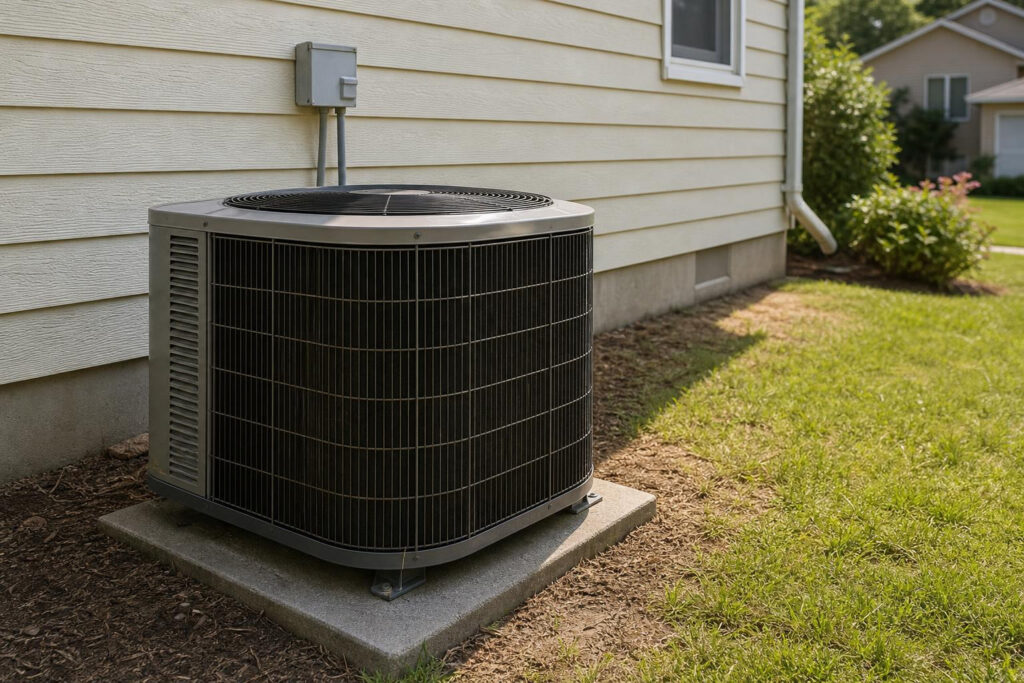
What to Do When Your Air Conditioning Unit Is Not Cooling Your House
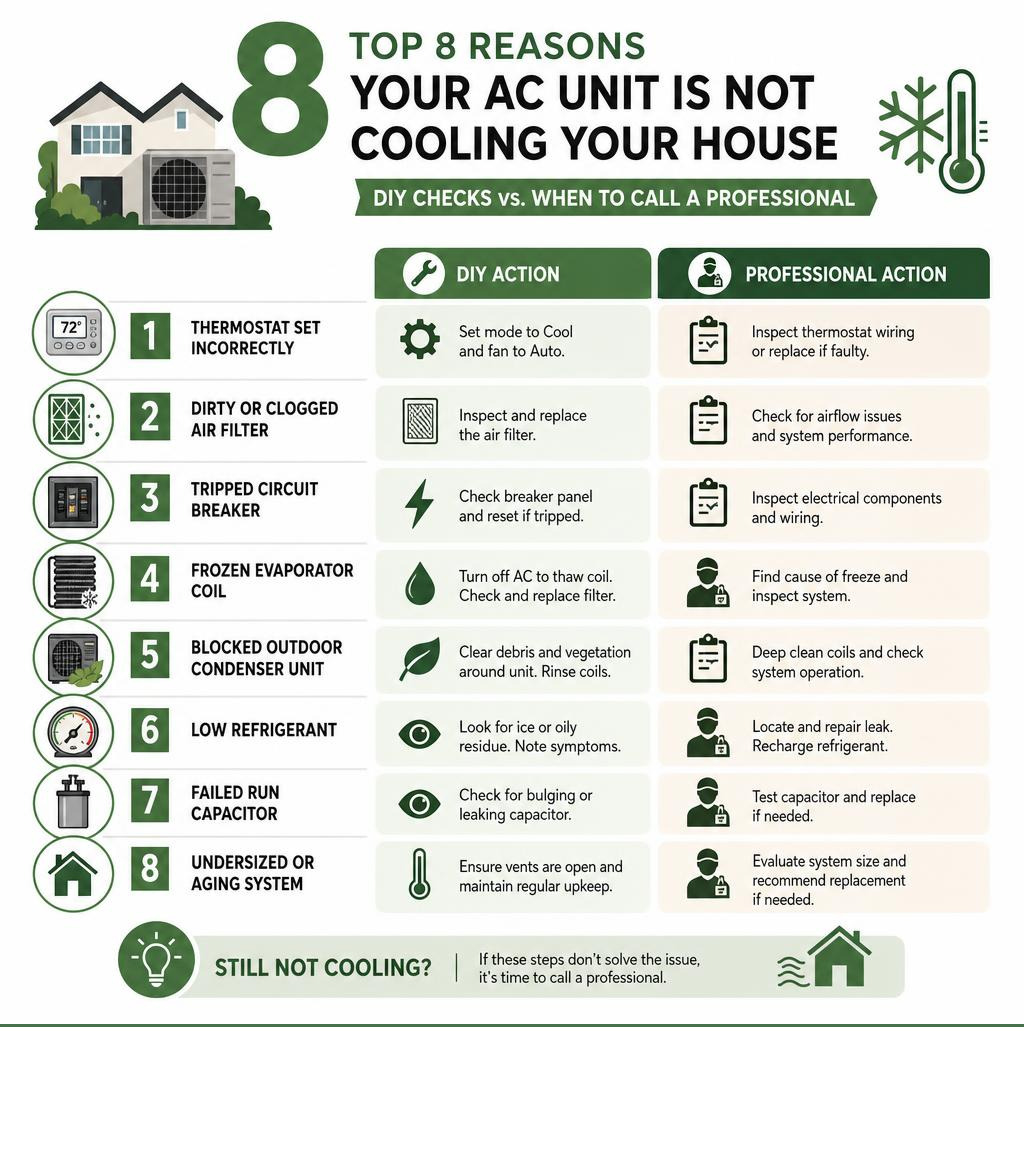
If your air conditioning unit is not cooling your house, here are the most common reasons and what to check first:
- Thermostat set incorrectly – Verify the mode is set to Cool and the fan is set to Auto, not On
- Dirty or clogged air filter – A blocked filter restricts airflow and can cause the system to ice over
- Tripped circuit breaker – Check your breaker panel for a tripped breaker on the AC circuit
- Frozen evaporator coil – Look for ice on the copper lines near your indoor unit
- Blocked outdoor condenser unit – Debris, overgrown vegetation, or dirty coils prevent heat from escaping
- Low refrigerant – A gradual loss of cooling, hissing sounds, or ice buildup can signal a refrigerant leak
- Failed run capacitor – One of the most common part failures on residential AC systems, causing the compressor to stop working while the fan keeps running
- Undersized or aging system – A unit that is too small for your home will struggle to keep up during peak summer heat
If checking the thermostat, filter, and outdoor unit does not resolve the issue, the problem likely requires a professional diagnosis.
There is a particular kind of frustration that comes with an AC unit running while your home stays hot and stuffy. The system kicks on, you can hear it humming, air moves through the vents, and yet an hour later the temperature has barely budged. It is one of the most common service calls we see across Central Texas every summer, and the causes range from something you can fix in five minutes to a component failure that needs a certified technician.
Over three-quarters of homes in the United States rely on air conditioning, which means millions of households face this exact situation every cooling season. The good news is that a structured approach to diagnosis can save you time, money, and a lot of unnecessary discomfort. Some of the most frequent causes, like a dirty filter or an incorrect thermostat setting, are genuinely quick fixes. Others, like a refrigerant leak or a failing compressor, require professional tools and EPA certification to address safely.
I’m Chris Woods, owner of Woods Comfort Systems, a third-generation HVAC company serving Central Texas since 1956. Over the decades, I have diagnosed and repaired hundreds of cases where an air conditioning unit was not cooling the house, and in this guide I will walk you through every step of the process so you know exactly what to check, what to do, and when to call for help.
Quick Homeowner Checks for an Air Conditioning Unit Not Cooling House
Before you pick up the phone to schedule an emergency service call, there are three basic areas you should inspect. A quick check of your thermostat, power supply, and air filtration can resolve a surprising number of cooling issues without costing you a dime. These initial troubleshooting steps are completely safe for homeowners to perform and often pinpoint the exact reasons your AC system is not cooling your home before the indoor temperature climbs too high.
Thermostat Settings and Power Issues
It sounds simple, but you should always start at the thermostat. Verify that the system is set to Cool mode and that the temperature setting is at least three to five degrees below the current room temperature. If someone accidentally bumped the thermostat or switched it to Heat mode, your system will obviously fail to cool your living spaces.
Another common culprit is the fan setting. If your thermostat fan is set to On instead of Auto, the indoor blower fan will run continuously, even when the outdoor compressor is cycled off. This circulates unconditioned, lukewarm air throughout your home, making it feel like your system is failing to cool. Switching the fan to Auto ensures the blower only runs when the system is actively cooling the air, which also helps control indoor humidity levels.
If your thermostat screen is completely blank, it may simply need new batteries. Most digital thermostats rely on AA or AAA batteries to retain settings and communicate with your HVAC system. If the batteries die, the thermostat cannot signal the outdoor unit to turn on.
Additionally, check your main electrical panel. Central AC systems utilize a large amount of power and have two separate circuit breakers: one for the indoor air handler or furnace, and one for the outdoor condenser unit. If the outdoor breaker has tripped, your indoor blower will continue to push warm air through your vents while the compressor outside remains completely silent. If you find a tripped breaker, reset it once by flipping it completely to the off position and then back to the on position. If it trips a second time, do not attempt to reset it again, as this indicates a serious electrical fault that requires professional troubleshooting central air systems.
Inspecting and Replacing the Air Filter
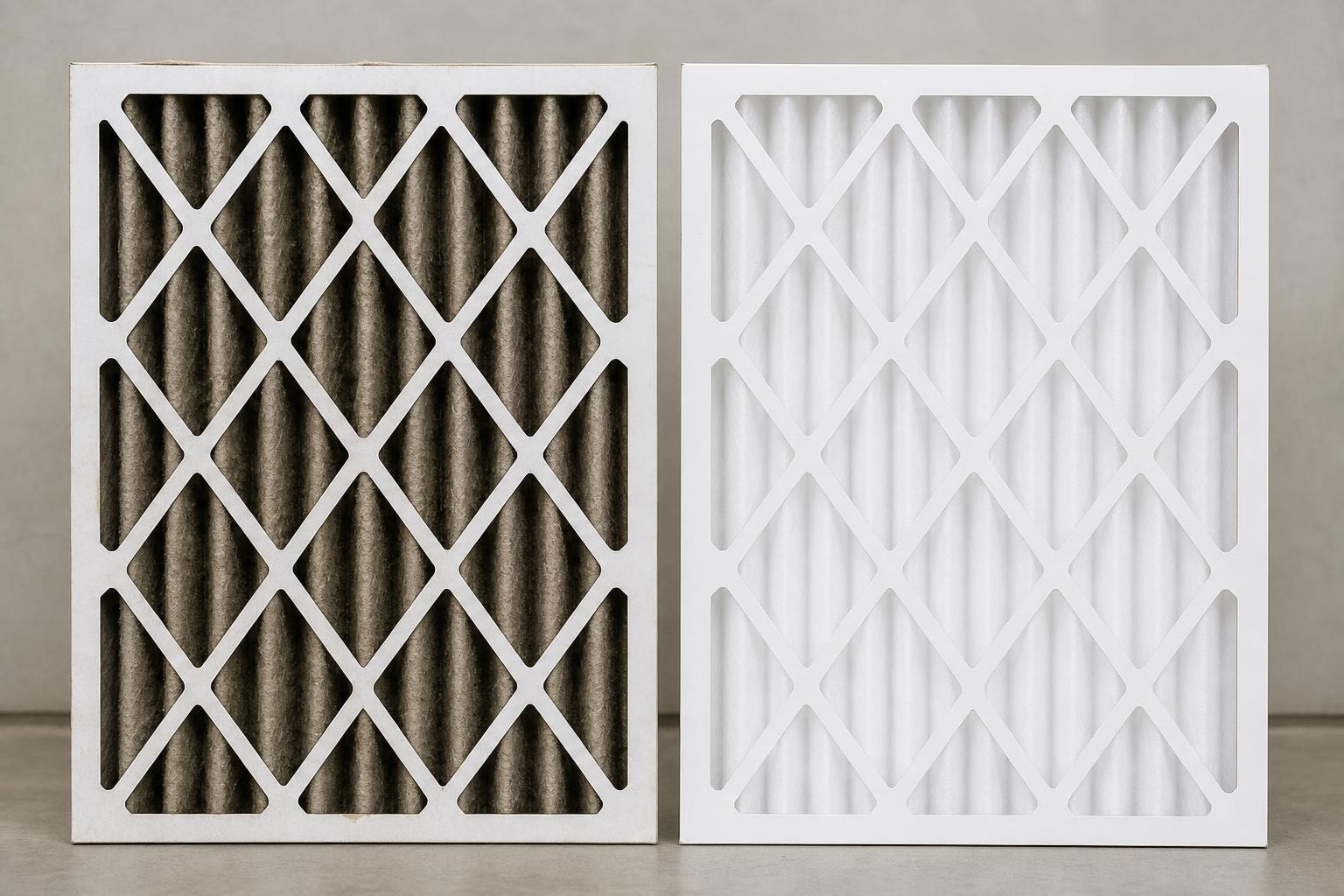
A dirty air filter is the single most common cause of poor cooling performance. When an air filter becomes clogged with dust, pet dander, and household debris, it creates severe airflow restriction. Your AC system relies on a steady volume of warm indoor air passing over the cold evaporator coil to transfer heat out of your home.
When airflow is restricted, the temperature of the evaporator coil drops rapidly. This causes the moisture condensing on the coil to freeze solid, forming a thick block of ice that completely blocks air from passing through. We recommend changing your air conditioner filters at least every three months. However, for households with pets or high occupancy, you may need to check and replace them monthly during the peak cooling seasons in places like Austin, TX or San Antonio, TX. Neglecting this simple task is one of the primary causes of poor airflow from AC vents and can lead to complete system shutdown.
Clearing the Outdoor Condenser Unit
Your outdoor unit has a vital job: it must dump the heat absorbed from inside your home into the outdoor air. It does this via the outdoor condenser coil, which is wrapped around the unit. If this coil is covered in grass clippings, dirt, leaves, or pollen, it acts as an insulating blanket. The heat remains trapped inside the refrigerant, preventing the system from cooling your indoor space.
Walk outside and inspect the perimeter of your condenser. Ensure there is at least two feet of clear space on all sides of the unit. Trim back any overgrown bushes, weeds, or low-hanging tree branches. If the metal fins on the side of the unit are visibly caked with dirt, you can gently rinse them with a garden hose using a low-pressure spray. Never use a pressure washer, as the high-pressure stream will instantly bend the delicate aluminum fins and permanently restrict airflow.
Common Mechanical and Electrical Failures
If your basic homeowner checks do not reveal an obvious issue, your system is likely experiencing a mechanical or electrical failure. In extreme summer heat, components are pushed to their absolute limits, and even minor wear can cause a complete breakdown. If you suspect an internal component has failed, you will want to understand the warning signs of these common issues before calling for AC not cooling in San Marcos, TX.
Frozen Evaporator Coil and Restricted Airflow
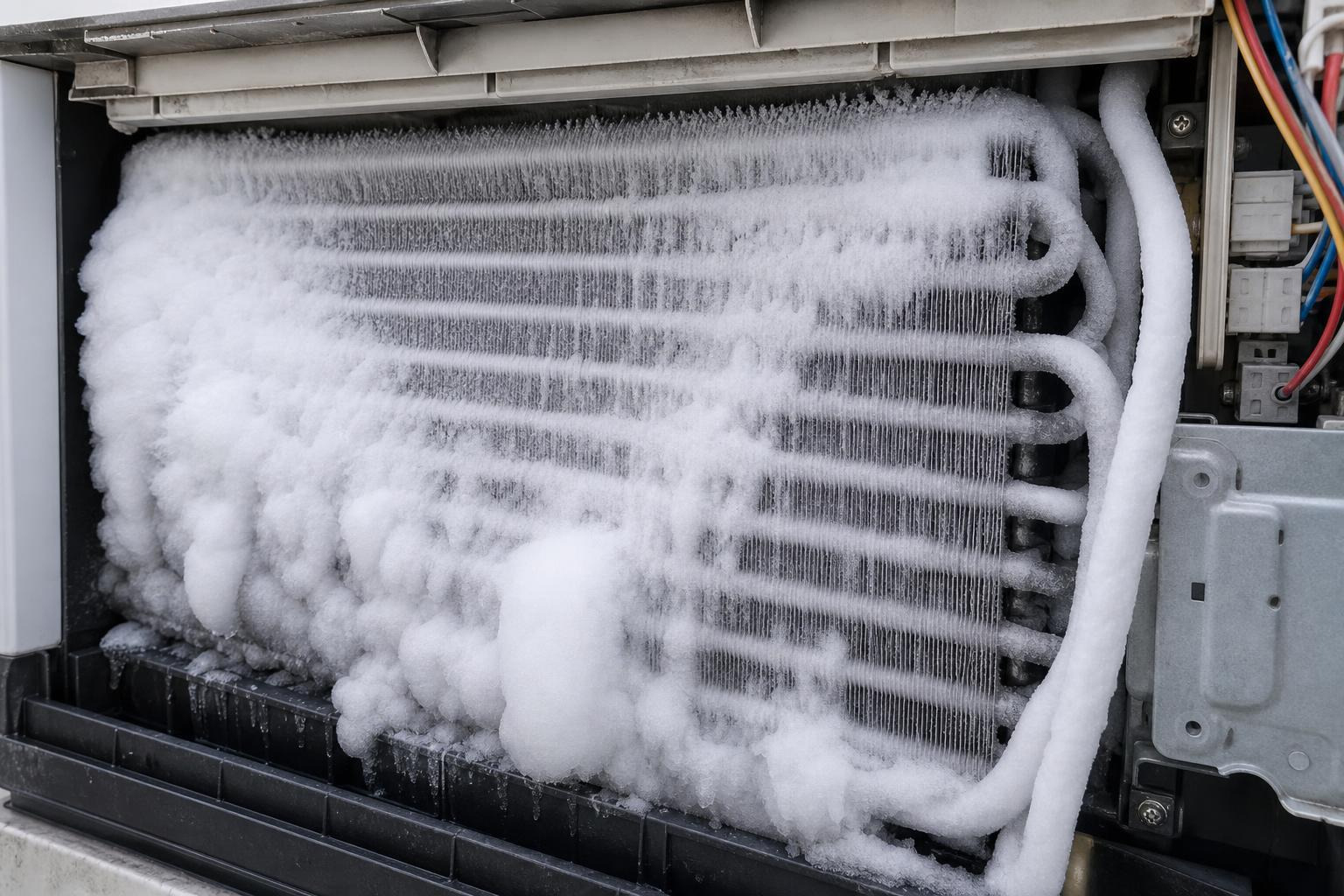
A frozen evaporator coil is behind roughly 30% of all service calls where the AC is running but failing to cool. When airflow is restricted due to a clogged filter or blocked return grilles, the temperature of the refrigerant inside the coil drops below 32 degrees. This causes the moisture pulled from your indoor air to freeze instantly on the metal fins.
Signs of a frozen evaporator coil include visible frost forming on the copper refrigerant tubing connected to your indoor unit, inadequate cooling, higher utility bills, and excessive water drainage or water pooling near your indoor air handler. If you find ice on your system, you must turn the AC off immediately. Running a system with a frozen coil can cause liquid refrigerant to flood back into the compressor, which can destroy this expensive component. Switch your thermostat to Off and turn the fan setting to On to help thaw the ice safely before a technician arrives.
Low Refrigerant and Sealed System Leaks
Refrigerant is the lifeblood of your AC system. It cycles continuously between liquid and gas states to absorb heat from your home and release it outdoors. It is a common misconception that air conditioners consume refrigerant over time. Your AC is a sealed system, meaning the refrigerant charge should remain constant for the entire lifespan of the unit.
If your system is low on refrigerant, it means you have a leak. A refrigerant leak can contribute to your AC system not blowing cold air, cause your system to run for much longer periods without adequately cooling, or lead to a damaged compressor. Common warning signs of a leak include a persistent hissing sound coming from the indoor or outdoor unit, weak airflow, and ice forming along the copper lines. Finding and repairing a leak requires specialized electronic leak detectors and EPA certification. Simply adding more refrigerant without fixing the leak is an expensive, temporary solution that harms the environment and fails to solve the root cause of why your AC is not cooling to its set temperature.
Run Capacitor and Compressor Issues
Electrical component failures are incredibly common during hot Texas summers. The run capacitor is the single most common part failure on residential AC systems, accounting for 25% to 30% of emergency summer service calls. The capacitor acts like a temporary battery, delivering the electrical boost required to start and run the outdoor fan motor and the compressor.
When a capacitor fails, you will often hear a loud humming sound coming from the outdoor unit, but the fan blades will not spin and the compressor will not start. Running a system with a failed capacitor can quickly cause the fan motor or compressor to overheat and burn out.
The compressor is the heart of your HVAC system, pumping refrigerant through the lines. If the compressor fails, the system cannot cool at all. Replacing a compressor is a major, costly repair that often warrants a discussion about whether to repair or replace the entire outdoor unit.
System Sizing and Ductwork Problems
Sometimes, an air conditioning unit is not cooling your house because of structural or installation issues rather than a broken part. If your ductwork is poorly sealed or your system is incorrectly sized for your home’s thermal load, you will struggle to maintain comfortable indoor temperatures no matter how many parts you replace.
| Diagnostic Area | DIY Troubleshooting Steps | Professional HVAC Repairs |
|---|---|---|
| Thermostat | Verify cool mode, set fan to auto, replace batteries | Recalibrate sensor, repair wiring, replace control board |
| Air Filters | Inspect monthly, replace every 3 months | Diagnose system static pressure issues |
| Outdoor Unit | Clear leaves and debris, maintain 2 feet of clearance | Clean deep coils, replace fan motor, replace contactor |
| Refrigerant | Check for visible ice on copper lines | Perform leak test, repair copper lines, recharge system |
| Electrical | Check and reset tripped circuit breaker once | Replace run capacitor, replace hard start kit, repair wiring |
| Ductwork | Inspect visible ducts in attic for obvious disconnections | Seal leaks with mastic, perform duct blaster test, redesign ducts |
Understanding how these structural elements impact your comfort can help you make informed decisions about your system. For example, learning how ductwork affects your air conditioning efficiency can shed light on why certain rooms in your house remain warmer than others.
Why an Undersized Air Conditioning Unit Is Not Cooling Your House
Under moderate spring conditions, you may not notice any issues with an undersized air conditioner. However, as outdoor temperatures rise during peak summer in Wimberley, TX or New Braunfels, TX, an undersized AC will run for extremely long periods of time and struggle to keep you cool.
Air conditioning units are sized using precise Manual J heat load calculations, which take into account your home’s square footage, insulation levels, window placement, and local climate. If a system is too small, it simply lacks the cooling capacity to overcome the thermal load of the hot afternoon sun. This results in continuous running, high energy bills, and an indoor temperature that refuses to drop to your thermostat setpoint.
Leaky Ductwork and Poor Airflow
Your ductwork is the highway system that delivers conditioned air to your living spaces. According to the Department of Energy, the typical home loses 20% to 30% of its conditioned air through leaks, loose connections, and poorly sealed duct joints.
When ducts run through a sweltering attic, even a minor leak can pull superheated attic air directly into your living spaces or dump your expensive, cold air straight into the attic. This lowers the static pressure of your system, restricts airflow, and forces your AC to run constantly to compensate for the lost cooling power.
Troubleshooting and Resetting Your AC System
If your system has stopped blowing cold air, you can perform a safe system reset to clear minor electronic glitches. Think of this like rebooting a computer when it starts running slowly. However, it is vital to know when a reset is appropriate and when you should shut the system down immediately to prevent catastrophic damage.
How to Reset an Air Conditioning Unit Not Cooling House
If your system is running but blowing warm air, or if it has shut down completely after a power surge, follow these steps to perform a safe hard reset:
- Turn off the system at the thermostat: Switch the thermostat mode to Off.
- Shut off the circuit breakers: Locate your main electrical panel and turn off the breakers for both the indoor air handler and the outdoor condenser unit.
- Wait five minutes: Leave the power completely off for at least five minutes to allow the internal capacitors to discharge and the system’s computer control boards to reset.
- Restore power: Turn both circuit breakers back on.
- Set the thermostat: Switch your thermostat back to Cool mode and set the temperature a few degrees below the room temperature.
If the system starts up and begins blowing cold air, a minor electrical glitch was likely the culprit. If it continues to blow warm air or trips the breaker again, you may have a larger issue, such as an AC system making your home hotter in Woodcreek, TX.
When to Turn Off Your AC Immediately
Continuing to run your AC when it is not properly cooling your house can take a minor issue and turn it into a major component failure or require a complete system replacement. You should shut your system down immediately at the thermostat and breaker if you experience any of the following warning signs:
- A burning or electrical smell coming from your vents or the outdoor unit.
- Loud banging, screeching, or grinding noises when the system cycles on.
- Water actively leaking from your indoor unit or ceiling, which indicates a clogged condensate drain line.
- The circuit breaker trips repeatedly when the system tries to start.
- Visible ice forming on the indoor coil or outdoor refrigerant lines.
Required DIY Safety Guidance
While basic troubleshooting like changing filters and clearing debris is safe for homeowners, complex repairs pose significant safety risks. If safety concerns arise, specialized tools are required, or you are dealing with complex HVAC, electrical, or structural systems, always contact a licensed professional. Never attempt to service internal electrical components or refrigerant lines yourself if you are unsure about performing the task correctly.
Frequently Asked Questions About AC Cooling Issues
Why is my AC running but not cooling the house?
When your system runs but fails to cool, the most common causes are a severely clogged air filter restricting airflow, a dirty outdoor condenser coil trapping heat, low refrigerant from a system leak, or a failing run capacitor that prevents the compressor from running while the outdoor fan continues to spin.
How do I know if my AC evaporator coil is frozen?
You can identify a frozen evaporator coil by looking for visible frost on the copper refrigerant lines near your indoor unit. Other signs include weak airflow from your vents, warm air blowing instead of cold, higher utility bills, and excessive water pooling around the base of your indoor air handler.
Can a dirty air filter cause my AC to stop cooling?
Yes, a dirty air filter severely restricts the airflow your system needs to transfer heat. This restriction causes the evaporator coil temperature to drop below freezing, leading to ice formation that blocks all airflow and can cause your system to shut down completely to prevent compressor damage.
Should I turn off my AC if it is not blowing cold air?
Yes, you should turn the system off immediately. If your AC is running but not cooling, continuing to run it puts extreme stress on the compressor and fan motors. This can turn a simple, inexpensive repair into a major component failure or require a full system replacement.
Why does my AC take so long to cool the house down?
This is often caused by high indoor humidity, excessive solar heat gain through unshaded windows, or leaky ductwork in your attic. It can also occur if your system is aging and losing efficiency, or if the unit is undersized and struggling to overcome extreme outdoor heat.
How do I reset my central AC unit?
To reset your system, turn the thermostat to Off. Go to your electrical panel and switch off the circuit breakers for both your indoor and outdoor units. Wait at least five minutes for the system to fully power down, turn the breakers back on, and set your thermostat to Cool mode.
What does a hissing sound from my AC unit mean?
A persistent hissing sound usually indicates a high-pressure refrigerant leak. Because refrigerant is pressurized, it makes a hissing noise as it escapes through a tiny hole in the copper lines. This is an environmental hazard that requires professional repair and recharging.
Why is my AC blowing warm air instead of cold air?
This can happen if your thermostat is accidentally set to Heat or if the fan is set to On instead of Auto. Mechanically, it is often caused by a tripped outdoor breaker, a failed run capacitor, or a broken compressor that cannot pump refrigerant to cool the air.
How often should I change my home AC filter?
We recommend changing standard one-inch filters every three months. If you have pets, allergies, or run your system constantly during hot Texas summers, you should inspect your filter monthly and replace it as soon as it appears dirty.
When should I repair versus replace my aging AC system?
If your system is over 10 to 12 years old and requires an expensive repair like a compressor replacement, it is often more cost-effective to invest in a new, energy-efficient system. We recommend consulting a professional to evaluate your options and help you decide when to repair or replace your AC in San Marcos, TX.
Conclusion
An air conditioning unit is not cooling your house is a stressful situation, but taking a systematic approach to troubleshooting can help you identify whether you are facing a simple fix or need professional assistance. Regular preventive maintenance, such as changing your air filters every three months and keeping your outdoor unit clear of debris, is the best way to prevent unexpected breakdowns and extend the longevity of your cooling system.
Whether you need fast AC repairs, seasonal HVAC maintenance, or a complete system replacement, the team at Woods Comfort Systems is ready to help. We have served our neighbors across San Marcos, TX and the surrounding Central Texas communities with honest, family-owned service for over 60 years. Schedule your professional AC repair services with our experienced technicians today to restore comfort to your home.