

Why Your HVAC Tune-Up Schedule Matters More Than You Think
Following the right HVAC tune-up schedule is one of the simplest ways San Marcos, TX homeowners can avoid surprise breakdowns, keep energy bills in check, and get the most out of their heating and cooling systems. With Central Texas summers pushing temperatures well above 100°F and HVAC systems accounting for nearly half of all home energy use, skipping regular service is a risk most homeowners cannot afford.
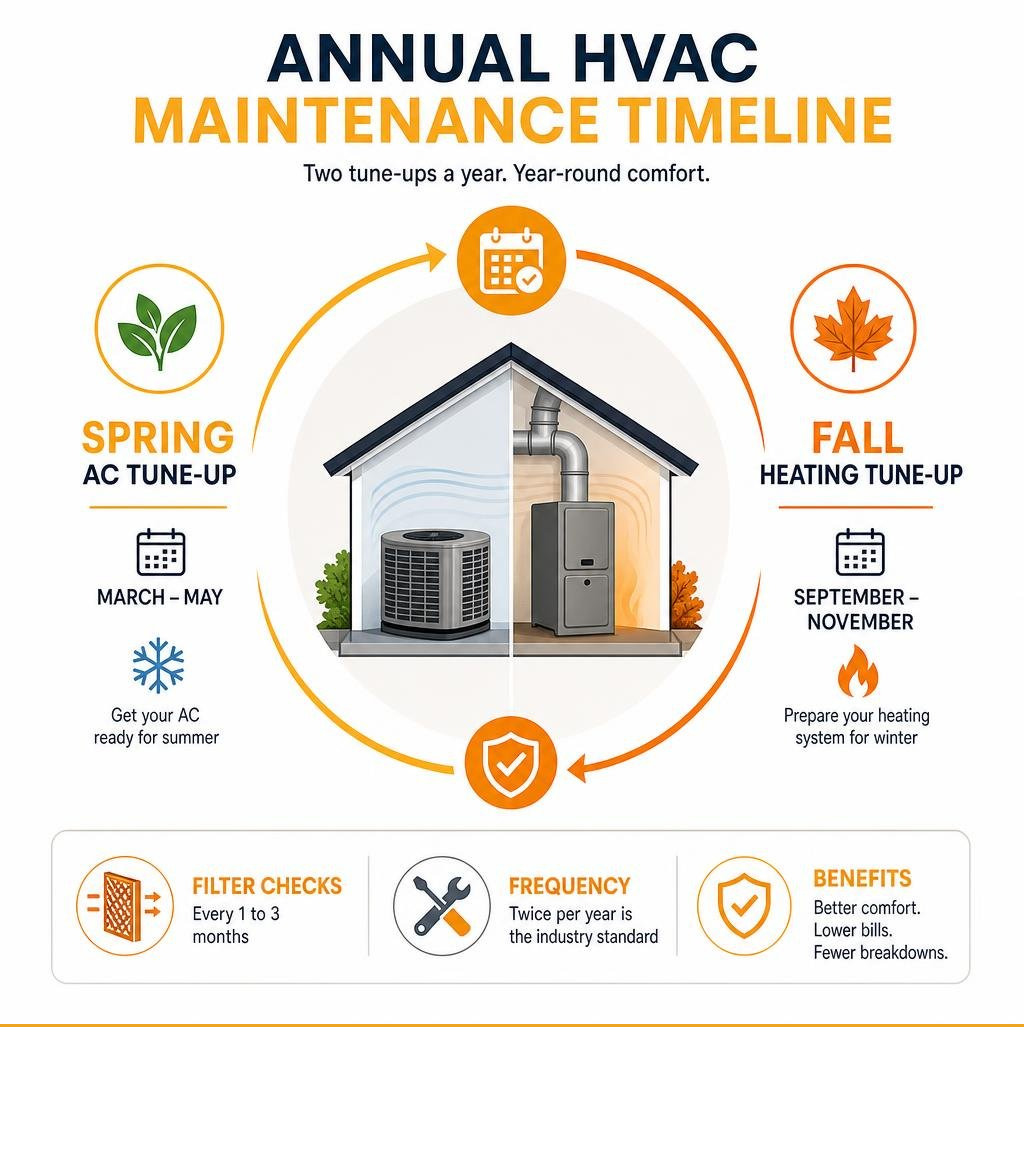
Here is the recommended HVAC tune-up schedule at a glance:
| Season | System | Ideal Timing |
|---|---|---|
| Spring | Air conditioner (cooling) | March to May |
| Fall | Furnace or heating system | September to November |
- Spring tune-up: Gets your AC ready before peak summer demand
- Fall tune-up: Prepares your heating system before temperatures drop
- Filter checks: Every 1 to 3 months, regardless of season
- Frequency: Twice per year is the industry standard recommended by ENERGY STAR and most manufacturers
Most systems benefit from two professional visits per year. If your system is older, runs heavily, or sits in a dusty environment, more frequent attention may be needed.
At Woods Comfort Systems, our experienced team represents a third-generation HVAC company serving Central Texas since 1956. Building the right HVAC tune-up schedule has been at the core of how we help homeowners across San Marcos, TX, and surrounding communities protect comfort, safety, and long-term equipment performance. In the sections below, we will walk you through exactly what a proper tune-up includes, when to schedule it, and how it protects your home and your wallet.
Establishing Your Ideal HVAC Tune-Up Schedule
To keep your home comfortable year-round, you need a proactive schedule. Waiting until your system stops blowing cold air in July or fails to heat your home during a sudden January cold snap is a recipe for high repair bills and uncomfortable days.
The ideal HVAC tune-up schedule splits your maintenance into two key seasonal events: spring AC preparation and fall heating preparation. In South Central Texas, our cooling systems bear the brunt of the workload. Because our AC units run continuously for months at a time, scheduling a professional inspection in the spring ensures that accumulated dust, worn capacitors, and minor electrical issues are resolved before the summer heat arrives.
For heating systems, fall is the golden window. Even though our winters in San Marcos, TX are relatively mild, your furnace or heat pump must be safe and operational when temperatures dip. A fall visit focuses on combustion safety, gas line integrity, and heat exchanger inspections to help prevent carbon monoxide risks.
Beyond day-to-day comfort, sticking to a strict schedule is often required to protect your financial investment. Many HVAC manufacturers require proof of regular, professional maintenance to keep equipment warranties active. If a major component fails within the warranty period, the manufacturer may reject your claim if you cannot show documented proof of professional service.
For cooling-season preparation, Woods Comfort Systems helps homeowners stay ahead of extreme heat with professional AC repair and maintenance services designed for Central Texas homes. For heating-season preparation, our heating service team can inspect furnaces, heat pumps, and related safety controls before colder weather arrives.
HVAC Tune-Up vs. Ongoing Maintenance: What is the Difference?
While many homeowners use the terms “tune-up” and “maintenance” interchangeably, they actually refer to different aspects of caring for your home heating and cooling systems. Understanding this difference helps you make informed choices about your system care and budget.
An HVAC tune-up is a highly focused, seasonal service. Think of it as a specialized check-up performed once or twice a year to prepare your system for the extreme weather ahead. During a tune-up, a technician performs specific tasks such as calibrating the thermostat, cleaning the coils, clearing the condensate drain line, and testing electrical components. The goal is immediate optimization: ensuring the system runs at peak efficiency for the upcoming season.
Ongoing maintenance is a comprehensive, year-round approach to system care. It includes the seasonal tune-ups, but also encompasses routine homeowner tasks like monthly air filter changes, keeping the outdoor unit clear of weeds and debris, and monitoring the system for unusual noises or odors. Ongoing maintenance also includes long-term planning, such as duct cleaning every few years, tracking equipment age, and budgeting for eventual component replacements.
When you invest in a structured service plan, you bring these two concepts together. A professional plan provides a regular schedule of tune-ups combined with ongoing perks like priority scheduling and repair discounts. For homeowners who want consistent care without having to remember every seasonal task, a maintenance plan can take the guesswork out of scheduling and help ensure your system receives reliable attention over time.
What is Included in a Professional HVAC Tune-Up Checklist?
A thorough professional tune-up is much more than a quick visual inspection. If a technician is in and out of your home in under forty-five minutes, they likely missed critical steps. A proper, high-value service takes between sixty and ninety minutes per system and follows a strict, multi-point checklist.
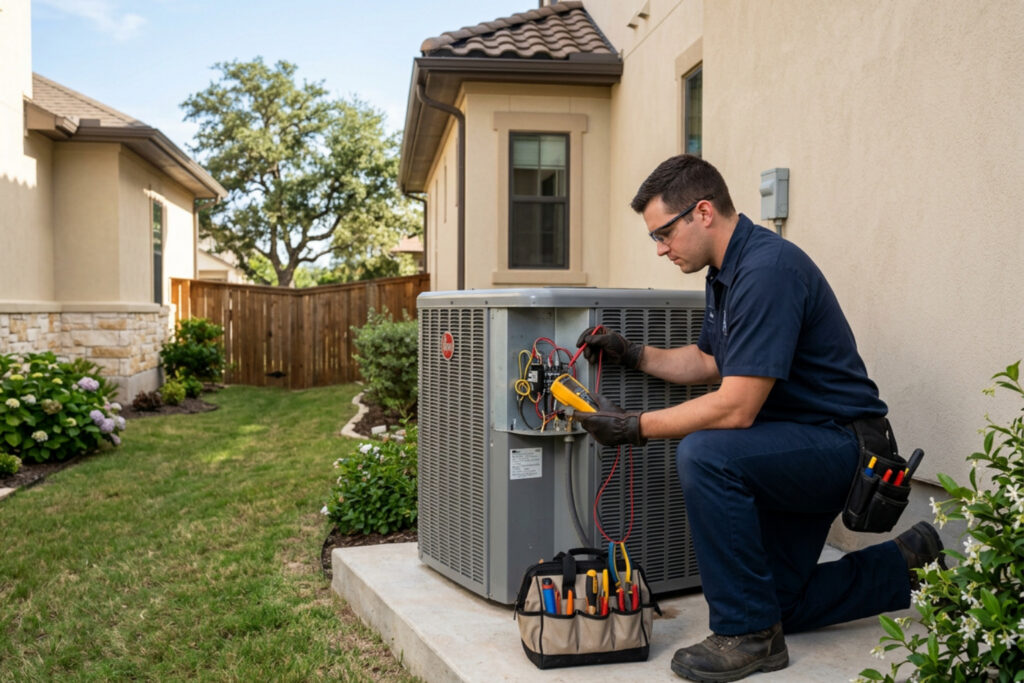
One of the most important parts of this checklist is testing electrical components, particularly the capacitors. Capacitors act like temporary batteries that give your motors the starting boost they need. They are designed to degrade over time and commonly fail after years of service. Catching a weak capacitor during a spring tune-up prevents it from failing on a blistering summer afternoon, saving you from an emergency service call.
Technicians also tighten loose electrical connections, measure voltage and current draw, inspect safety controls, and clean vital components. Dirty coils force your compressor to work harder, which can increase energy use and shorten the lifespan of the equipment.
To give you a better idea of how these seasonal visits differ, here is a comparison of standard spring and fall tasks:
| Spring AC Tune-Up Tasks | Fall Heating Tune-Up Tasks |
|---|---|
| Clean evaporator and condenser coils | Inspect heat exchanger for cracks |
| Check refrigerant pressure and levels | Clean and adjust burners |
| Inspect condensate drain line and flush | Test carbon monoxide safety controls |
| Test compressor and outdoor fan motor | Verify gas pressure and valve operation |
| Lubricate moving blower parts | Inspect flue pipe and venting system |
| Calibrate thermostat settings | Test ignition system and flame sensor |
A complete, professional checklist ensures that every component is tested, cleaned, and verified. ENERGY STAR recommends pre-season maintenance by a qualified contractor, including spring cooling checks and fall heating checks, to support efficiency, comfort, and system reliability.
Seasonal Considerations for San Marcos, TX Homeowners
Living in South Central Texas means dealing with a unique set of climate challenges. Our weather patterns directly dictate how we manage our HVAC systems. From Austin, TX down to San Antonio, TX, and throughout communities like Kyle, TX, New Braunfels, TX, and Wimberley, TX, our systems face extreme environmental stress that homeowners in cooler climates never have to consider.
Our summers are long, hot, and incredibly humid. This combination means your AC is not just cooling the air: it is also working overtime to remove moisture from your home. High humidity levels force the system to run longer cycles, which increases wear and tear on the blower motor and compressor. Additionally, our mild winters are occasionally interrupted by sudden, severe freezes. These rapid temperature swings require systems that can transition quickly and operate safely under sudden heavy loads.
Why You Need a Spring HVAC Tune-Up Schedule
Scheduling your cooling service in the early spring is essential for surviving the Texas summer. When a technician optimizes your airflow and verifies your refrigerant levels early in the year, they ensure your system can handle the upcoming heat wave without blowing a fuse or freezing up.
A clean, well-adjusted AC uses significantly less electricity to cool your home. It also prevents common summer breakdowns caused by clogged drain lines, which can lead to water damage in your ceiling or closet. For more seasonal context, Woods Comfort Systems explains the reasons AC maintenance should make your spring task list before the heat sets in.
Why You Need a Fall HVAC Tune-Up Schedule
While our winters are shorter, a fall heating tune-up is primarily about safety. If you have a gas furnace, a cracked heat exchanger can allow dangerous carbon monoxide gas to leak into your indoor air. Because carbon monoxide is odorless and colorless, annual testing is a vital safety measure for your family.
For homes utilizing electric heat pumps, a fall visit ensures the system can successfully switch from cooling mode to heating mode and that the auxiliary heating strips are working correctly. To help homeowners prepare for cold snaps, our team also covers why you should schedule furnace maintenance this fall before heating problems appear.
The Financial and Operational Benefits of Regular Tune-Ups
Many homeowners wonder if scheduling professional service twice a year is worth the ongoing cost. When you look at the long-term value, the financial and operational return on investment is clear.
First, let us look at energy efficiency. A well-maintained system does not have to fight through dirty coils, restricted airflow, clogged filters, or loose electrical connections. Because HVAC systems account for a large share of home energy use, even modest efficiency losses can add up quickly on monthly utility bills.
Second, regular care directly supports longer equipment life. When parts are cleaned, tested, and adjusted before heavy seasonal use, the system can run with less strain. Considering that a complete system replacement is one of the larger investments you will make in your home, delaying that purchase for several years can provide meaningful long-term value.
Finally, regular visits help catch potential system failures before they occur. A technician can spot a frayed belt, a rusting drain pan, or a failing electrical contactor during a routine visit, resolving the issue before it turns into an inconvenient emergency repair. To protect your home and keep your system in peak condition year-round, Woods Comfort Systems can help you build a practical maintenance routine that fits the way your household uses heating and cooling.
DIY Maintenance vs. Professional HVAC Service
A successful maintenance program is a partnership between the homeowner and a professional technician. While there are several tasks you can safely perform yourself, attempting complex technical work without the proper training and tools can damage your system, void your warranty, or compromise your safety.
As a homeowner, your most important job is changing your air filters regularly. In South Central Texas, filters should be inspected monthly and replaced every one to three months, depending on whether you have pets or allergies. You should also keep the outdoor condenser unit clear of leaves, grass clippings, weeds, and debris. Gently hose down the exterior of the unit occasionally to keep the fins clean, and make sure that indoor supply and return vents are not blocked by furniture or drapes.
However, professional expertise is required for the internal components of your system. Technicians use specialized diagnostic tools to measure electrical current, test safety limit switches, and check refrigerant pressures. Handling refrigerant requires EPA Section 608 certification, and working around high-voltage electrical panels or gas lines poses serious safety risks.
If you attempt to clean delicate evaporator coils or adjust gas burners yourself, you risk causing expensive damage. For comprehensive system care, it is always best to rely on certified HVAC professionals to handle the technical work safely.
If safety concerns arise, specialized tools are required, or you are unsure about performing any task correctly, please contact a certified professional immediately to protect your home and your family.
Frequently Asked Questions About HVAC Maintenance
1. How often should I schedule HVAC maintenance in San Marcos, TX?
For the best performance in our Central Texas climate, we recommend scheduling professional maintenance twice a year: once in the spring for your AC system and once in the fall for your heating system.
2. What is the difference between an HVAC tune-up and an inspection?
An inspection is a simple visual assessment to check if the system is working. A professional tune-up includes a complete inspection plus active cleaning, component testing, electrical calibrations, and clearing the drain lines.
3. Can a dirty air filter affect my HVAC maintenance?
Yes, a dirty filter restricts airflow, which strains the blower motor, reduces system efficiency, and can cause the AC coils to freeze. Changing your filters regularly is the most important DIY task you can perform.
4. Is a spring AC tune-up really necessary for Texas summers?
Absolutely. Our summers bring extreme heat and high humidity. A spring tune-up ensures your system is clean, fully charged with refrigerant, and ready to run efficiently during peak summer demand.
5. What happens if I skip my fall heating tune-up?
Skipping fall service increases the risk of heating failures during winter cold snaps and can lead to safety hazards, such as undetected carbon monoxide leaks from a damaged heat exchanger.
6. How long does a professional HVAC tune-up take?
A thorough, professional tune-up typically takes sixty to ninety minutes per system. This gives the technician enough time to perform all safety tests, clean the coils, and run a full system performance check.
7. Will regular HVAC tune-ups lower my monthly energy bills?
Yes. Keeping your coils clean, electrical connections tight, and moving parts lubricated can reduce unnecessary strain on your system and may lead to noticeable savings on your utility bills.
8. Does skipping professional maintenance void my HVAC warranty?
Yes, most manufacturers require regular professional maintenance by a licensed technician to keep your equipment warranty valid. Be sure to keep all service records as proof.
9. What maintenance tasks can I safely perform myself?
You can safely change your air filters, keep the area around the outdoor condenser unit clear of debris, and make sure your indoor vents are open and unobstructed.
10. Are HVAC maintenance plans worth the investment?
Yes, maintenance plans are highly beneficial. They typically include seasonal tune-ups, priority scheduling during busy seasons, and discounts on repairs, providing excellent peace of mind and long-term value.
Conclusion
Caring for your home heating and cooling system does not have to be stressful. By establishing a consistent seasonal schedule, you can keep your home comfortable, lower your energy bills, and avoid the hassle of sudden breakdowns. At Woods Comfort Systems, we bring over sixty years of family-owned Texas roots and a commitment to royal customer treatment to every home we serve in San Marcos, TX, and surrounding areas. Whether you need fast AC repairs, seasonal HVAC maintenance, or a complete system replacement, our team is ready to help. Contact our professional HVAC technicians to keep your system running perfectly all year long.