


How Long Does AC Installation Take? Here’s What Central Texas Homeowners Need to Know
How long does AC installation take is one of the first questions homeowners ask when their system starts failing in the middle of a Texas summer. The short answer: most standard AC replacements take 4 to 8 hours and are finished in a single day. More involved projects can run longer.
Here is a quick breakdown by installation type:
| Installation Type | Estimated Time |
|---|---|
| Standard AC replacement (like-for-like) | 4 to 8 hours |
| New central AC (no existing ductwork) | 1 to 2 days |
| Ductless mini-split (single zone) | 4 to 8 hours |
| Full HVAC system replacement | 1 to 3 days |
| Homes needing new ductwork | 2 to 5 days |
That said, the actual time depends on several things: your home’s layout, the condition of your existing ductwork, whether electrical upgrades are needed, and the type of system being installed. We will walk through all of it in this guide.
At Woods Comfort Systems, our third-generation HVAC team has served Central Texas homeowners since 1956. Over decades of AC installations across a wide range of homes and system types, we have seen every variable that affects how long AC installation takes, from straightforward same-day swaps to multi-day projects in older homes with outdated wiring. In the sections below, we will break down exactly what to expect so you can plan your installation day with confidence.
The Standard Timeline: How Long Does AC Installation Take?
When you invest in a new cooling system, you want the process to be as quick and seamless as possible. However, rushing a highly technical installation is a recipe for early system failure, poor efficiency, and frequent repairs down the road. Balancing speed with absolute precision is what separates a quality installation from a sloppy, rushed job.
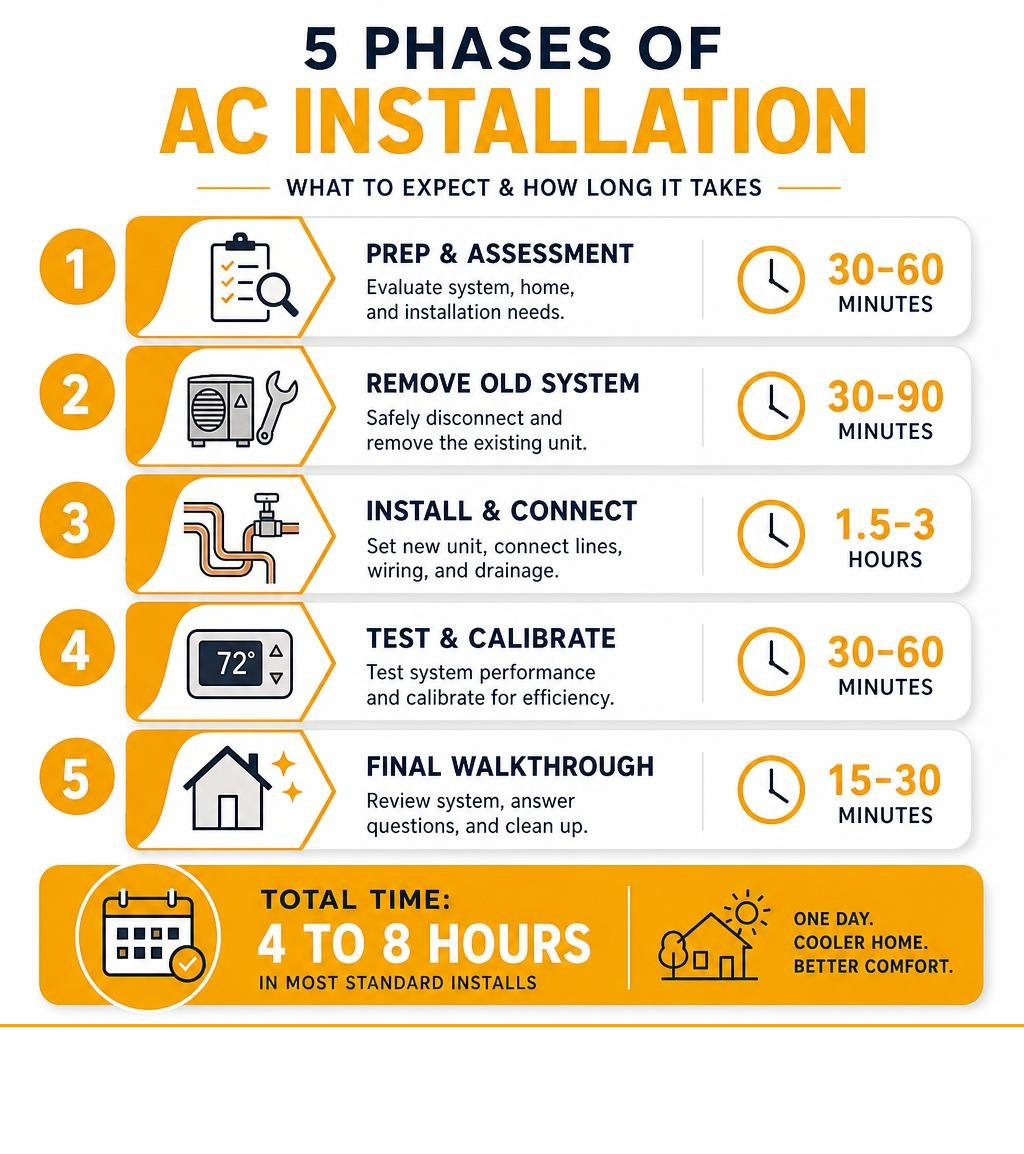
For the vast majority of homeowners in San Marcos, TX, and the surrounding areas, a standard residential replacement takes between 4 and 8 hours. This typical timeframe covers the complete removal of your old outdoor condenser and indoor air handler or evaporator coil, the placement and connection of the new units, and the initial system testing.
If you are planning the project from start to finish, the entire journey actually spans more than just the physical installation day. A well-planned replacement process generally follows this comprehensive timeline:
- Research and Selection (1 to 7 days): Evaluating system types, efficiency ratings (SEER2), and choosing the right unit.
- Acquiring Quotes and Site Assessments (1 to 3 days): Inviting professionals to inspect your home and perform load calculations.
- Reviewing Proposals and Scheduling (1 to 3 days): Selecting your contractor and booking the installation date.
- Installation Day (4 to 8 hours): The physical removal of old equipment and setup of the new system.
- Post-Installation Inspection (1 to 2 days): Final city inspections or permit sign-offs if required by local municipalities.
By working with an experienced team that provides comprehensive professional AC installation services, you can ensure that each phase is handled efficiently without cutting critical corners.
Factors That Determine How Long Does AC Installation Take
No two homes in Central Texas are identical, which means every installation presents its own unique set of circumstances. Several key variables dictate whether your project will lean closer to the 4-hour mark or extend over multiple days:
- System Type and Complexity: A standard split system replacement is highly predictable. However, converting to a heat pump or installing a multi-zone ductless system introduces extra steps.
- Home Size and Layout: Larger homes often require larger equipment or multiple systems, naturally extending the labor time. Multi-story homes also require extra effort to transport heavy equipment up stairs or into tight attic spaces.
- Accessibility: If your indoor unit is located in a cramped crawlspace, a tight closet, or a hot, hard-to-reach attic, our technicians will need more time to safely maneuver the heavy components.
- Climate Conditions: Texas summers are notoriously brutal. When temperatures climb above 100 degrees, technicians must take safety breaks to prevent heat-related illnesses, which can slightly extend the outdoor labor timeline.
Understanding these variables helps our team provide an accurate, upfront estimate of the physical labor required for your home. If your project includes a more efficient heating and cooling upgrade, our heat pump installation services can help you compare system options that may affect installation time.
Simple vs. Complex Installations
The easiest way to gauge your timeline is to determine whether your project is a simple replacement or a complex, custom installation.
A like-for-like replacement is the most straightforward scenario. In this case, we are replacing an existing, broken system with a new model of the same size and type. The ductwork is already in place and in good condition, the electrical connections are up to code, and the refrigerant lines simply need to be replaced or thoroughly flushed. These jobs are almost always completed in 4 to 8 hours.
A complex installation involves major structural or system changes. This includes retrofitting an older historic home in Wimberley, TX, that has never had central air, converting from a boiler system to a modern heat pump, or completely redesigning and replacing the residential ductwork.
For new construction projects, taking a custom approach yields massive long-term benefits. Designing a system from scratch allows for perfect load matching and optimal duct routing. Planning those details early can also make the installation more efficient, as we explain in our article on custom HVAC installation benefits.
Step-by-Step: What Happens on AC Installation Day?
Knowing exactly what happens once the installation truck pulls into your driveway can relieve a lot of homeowner anxiety. The physical installation process is a highly coordinated sequence of technical steps.
Phase 1: Site Preparation and Old Unit Removal
The very first hour of the project is dedicated to preparing your home and safely removing the old, worn-out equipment. Our team begins by laying down protective floor runners and setting up dust barriers to keep your living space pristine.
Next comes the most critical environmental safety step: refrigerant recovery. EPA Section 608 rules prohibit intentionally venting refrigerants while maintaining, servicing, repairing, or disposing of air-conditioning and refrigeration equipment, so this step should be handled by certified professionals with proper recovery equipment. Our certified technicians connect a specialized recovery machine to safely pump the old refrigerant into a secure cylinder. Once the system is empty, we disconnect the high-voltage electrical lines, unbolt the old outdoor condenser, and haul it away. This entire phase generally takes 1 to 2 hours.
Phase 2: Installing the New Indoor and Outdoor Units
With the old equipment out of the way, we prepare the site for the new system. Outdoors, we level the ground and install a new composite condenser pad, complete with vibration-isolation pads to minimize operating noise. The new outdoor condenser is then carefully set in place.
Indoors, we mount the new evaporator coil or air handler. This requires precise positioning to ensure proper condensate drainage, preventing water damage to your ceilings or closets. We also run new copper line sets to connect the indoor and outdoor units. This physical positioning and mounting phase takes about 2 to 4 hours. Homeowners who want a closer look at the process can use our guide to what to expect during AC installation to plan access, pets, and cooling downtime before the crew arrives.
Phase 3: Electrical Work, Line Connections, and System Charging
Once the physical units are secured, the technical connections begin. We braze the copper refrigerant lines using a nitrogen purge to prevent internal oxidation, which can clog the system and damage the compressor.
We then rewire the high-voltage electrical disconnect box outdoors and connect the low-voltage thermostat wiring indoors. To ensure there are absolutely no leaks, we perform a nitrogen pressure test.
Following a successful pressure test, we connect a vacuum pump to perform a deep vacuum evacuation. This process pulls moisture and non-condensable gases out of the closed loop, which is vital because moisture reacting with refrigerant creates a highly corrosive acid that can ruin a brand-new compressor. Finally, we charge the system with the exact weight of refrigerant specified by the manufacturer. This technical phase requires 1 to 2 hours.
Phase 4: System Testing and Final Walkthrough
An AC installation is not complete just because the unit turns on. The final hour is dedicated to system commissioning and testing. We measure the static pressure within your ductwork, verify the electrical amp draw of the compressor, and check the temperature split (the difference in temperature between the air entering the return grille and the air exiting your supply vents, which should ideally be between 15 and 20 degrees).
Once we confirm the system is running at peak efficiency, we clean up our work areas, haul away all debris, and conduct a final walkthrough with you. We will show you how to program your new thermostat, explain the warranty coverage, and answer any questions you have. This final verification takes about 1 hour.
How Homeowners Can Prepare for a Faster Installation
While our technicians handle all the heavy lifting, there are a few simple things you can do ahead of time to help the day go as quickly and smoothly as possible:
- Clear the Paths: Ensure there is a clear, wide path from your driveway to both the indoor utility closet or attic and the outdoor condenser site.
- Clear the Work Zones: Move any furniture, rugs, or stored items away from your indoor air handler. Outdoors, trim back any overgrown bushes or weeds around the condenser pad.
- Secure Your Pets: The constant opening and closing of doors, combined with the noise of power tools, can stress out pets. Keeping them safe in a secure room or boarding them for the day prevents accidental escapes.
- Provide Gate Access: If you have a locked gate or a security code, make sure to share those details with our team before arrival.
Taking these quick preparation steps can easily shave an hour off the total installation time. If you are also planning for heating upgrades, the same access and scheduling principles apply, especially when your project involves both cooling and furnace equipment.
How System Type and Home Conditions Affect Your Timeline
The physical style of the equipment you choose plays a massive role in how many hours our team will spend at your home. Different technologies require completely different installation methods.
| System Type | Average Installation Time | Best Suited For |
|---|---|---|
| Central Split AC | 4 to 8 hours | Homes with existing, functional ductwork |
| Ductless Mini-Split (Multi-Zone) | 1 to 2 days | Older homes without ducts, home additions, or zoned cooling |
| Heat Pump System | 5 to 10 hours | Energy-efficient year-round heating and cooling |
| Geothermal System | 3 to 5 days | Ultimate long-term efficiency (requires ground excavation) |
Central Air Conditioning Systems
Traditional central split AC systems are the most common cooling setups in South Central Texas. These systems rely on a central air handler or furnace paired with an evaporator coil inside, connected via refrigerant lines to a condenser outside.
If your home already has a well-designed, clean duct network, a central AC replacement is highly efficient, typically wrapping up in 4 to 8 hours. Our technicians will focus on matching the new equipment to your existing ductwork to ensure proper airflow and maximum comfort.
Ductless Mini-Split Systems
Ductless mini-split systems are an incredible option for homes without traditional ductwork, or for targeting specific hot spots in your house. Instead of relying on a central air handler, ductless systems use small, wall-mounted air handlers in individual rooms, all connected to a single outdoor compressor.
Installing a single-zone mini-split is incredibly fast, often taking just 2 to 5 hours. However, if you are installing a multi-zone system with four or five indoor units, the timeline will expand to 1 or 2 days. The technicians must run individual refrigerant lines, drain lines, and communication cables from each indoor zone back to the outdoor unit.
Heat Pump Systems
Heat pumps look and operate almost identically to traditional split AC systems, but they feature a reversing valve that allows them to provide both cooling in the summer and highly efficient heating in the winter.
Because the physical setup of a heat pump is so similar to a standard air conditioner, a standard replacement takes about 5 to 10 hours. The slight increase in time is due to the additional control wiring and configuration required for the dual-stage heating and cooling controls. For homeowners considering year-round comfort upgrades, our team can explain how a properly matched system supports both cooling and heating performance.
Key Factors That Can Delay Your AC Installation
Even with the most experienced crew, certain pre-existing home conditions can occasionally delay a project. Being aware of these potential obstacles ahead of time allows us to plan around them.
- Ductwork Condition: Your new, high-efficiency AC system relies on precise airflow. If our pre-install inspection reveals crushed, disconnected, or heavily leaking ducts, we must repair or replace them first. Running new ductwork can add anywhere from a few hours to several days to the project.
- Electrical Upgrades: Modern high-efficiency systems sometimes require different electrical circuit breakers or heavier-gauge wiring than your old system. If your home’s electrical panel is outdated, we may need to perform an electrical upgrade to ensure safe operation.
- Hard-to-Reach Locations: If your indoor unit is tucked deep inside a tight, low-ceiling attic, or if your outdoor condenser is located on a steep, rocky slope, transporting the heavy machinery safely takes extra time.
- Weather Delays: While we can handle a light drizzle, we cannot safely install electrical components or open up refrigerant lines to the atmosphere during heavy rain. Moisture contamination inside a refrigerant line can completely ruin a new system.
- Permit and Inspection Approvals: Depending on your local municipal codes in areas like New Braunfels, TX, or Kyle, TX, securing building permits and coordinating city inspections can add administrative time to the overall project calendar.
Frequently Asked Questions About How Long Does AC Installation Take
Common Homeowner FAQs: How Long Does AC Installation Take?
We understand that having technicians in your home is a disruption to your daily routine. Here are direct, clear answers to the questions we hear most frequently from Central Texas homeowners.
Can an AC installation be completed in a single day?
Yes, in the vast majority of cases, a standard like-for-like AC replacement is completed in a single day, usually taking between 4 and 8 hours. Our team arrives in the morning and typically has your new system up and running by the late afternoon.
Will my power be turned off during the installation process?
Your entire home will not lose power, but we will temporarily turn off the electrical breakers that supply power to your heating and cooling equipment. This is a critical safety step to protect our technicians while they handle high-voltage wiring. The electricity in the rest of your home will remain completely functional.
How long will my home be without cooling on installation day?
You should expect to be without indoor cooling for about 4 to 6 hours. We recommend cooling your home down a few degrees below your normal setting on the morning of the installation to help your house retain its cool air as long as possible while the system is offline.
Does installing a new AC unit require replacing the furnace at the same time?
While it is not strictly mandatory, it is highly recommended. Your indoor furnace and outdoor AC condenser are designed to work as a matched system. Pairing a brand-new, high-efficiency AC with an old, inefficient furnace can restrict airflow, lower your system’s overall SEER2 efficiency rating, and void your manufacturer’s warranty.
How long does it take to install a ductless mini-split system?
A single-zone ductless mini-split system can be installed in as little as 3 to 5 hours. However, if you are installing a multi-zone system to cool your entire home, the installation will typically take 1 to 2 days depending on the layout and the number of indoor zones.
Can technicians install an AC unit when it is raining?
We cannot install an AC system during heavy rain or thunderstorms. Working with high-voltage electrical components in wet conditions poses a severe safety hazard to our technicians. Additionally, opening refrigerant lines in the rain introduces moisture contamination, which can cause internal acid formation and compressor failure.
Do I need to be home for the entire installation process?
You do not need to stand over our shoulders the entire day, but we do require an adult to be present at the start of the project for the initial walkthrough and at the end of the day for the final system demonstration and handoff.
How long does it take to replace or repair ductwork?
Minor ductwork repairs can be completed in a few hours. However, a complete ductwork replacement for an average-sized home typically takes 1 to 2 days. This process is highly labor-intensive, as technicians must work inside attics or crawlspaces to run, seal, and insulate the new duct runs.
What are the signs that my current AC unit needs to be replaced?
The most common signs include a system age of over 15 years, a sudden and unexplained rise in your monthly energy bills, frequent and increasingly expensive repairs, weak airflow, and an inability to maintain a comfortable indoor temperature during hot summer days.
How does a proper load calculation affect the installation timeline?
Performing a Manual J load calculation before installation day ensures we install the exact size system your home needs. Sizing the system correctly beforehand prevents installation day delays caused by trying to fit mismatched equipment, and it ensures your new system runs at peak efficiency from day one.
Conclusion
Upgrading your home’s cooling system is a significant investment in your long-term comfort, energy efficiency, and peace of mind. While the physical process of how long does AC installation take typically averages just 4 to 8 hours, ensuring that every step is executed with absolute precision is what guarantees your system will run reliably for the next 15 to 20 years.
At Woods Comfort Systems, we have spent more than six decades providing royal customer treatment and high-quality craftsmanship to our neighbors across San Marcos, TX, and the surrounding Central Texas communities. Our family-owned team is committed to getting the job done right the first time, ensuring your home stays cool and comfortable even during the hottest summer heatwaves.
Whether you need fast AC repairs, seasonal HVAC maintenance, or a complete system replacement, Woods Comfort Systems is ready to help. Contact our professional AC installation technicians today.