


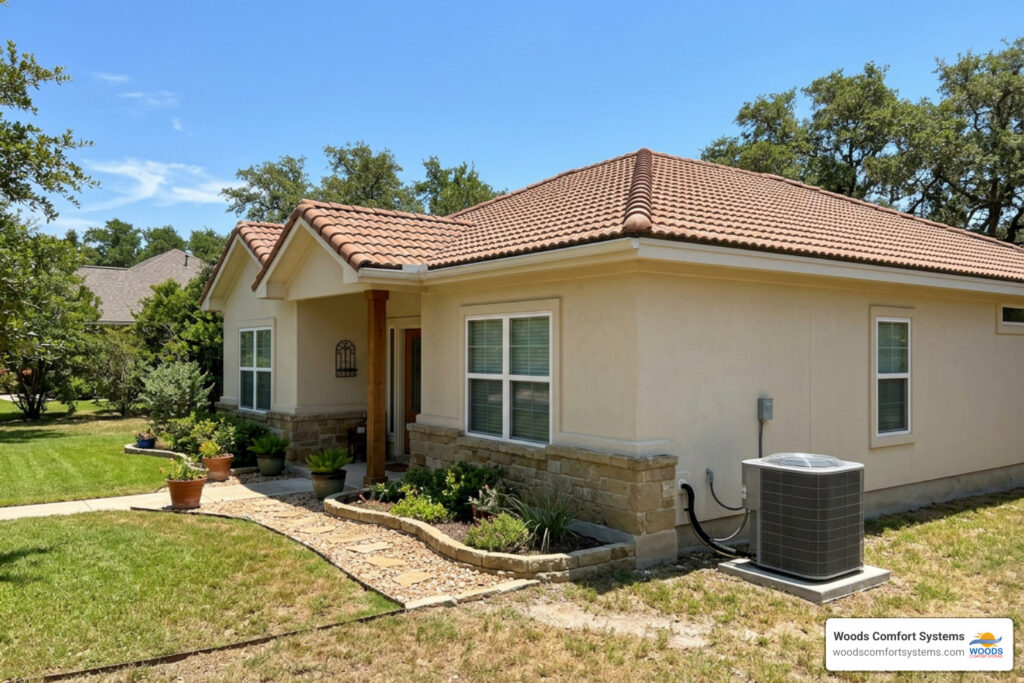
What San Marcos, TX Homeowners Need to Know About HVAC Services
Finding reliable HVAC services in San Marcos, TX is one of the most important decisions you can make as a homeowner in Central Texas. With summer temperatures regularly climbing past 100°F and AC systems running nearly eight months out of the year, the stakes are high when your heating or cooling system fails.
Here is a quick overview of what to look for when hiring an HVAC provider in San Marcos, TX:
- Verify licensing and certification – Look for TDLR-licensed contractors with NATE-certified technicians
- Confirm 24/7 emergency availability – San Marcos, TX summers do not wait for business hours
- Ask about proper system sizing – A Manual J load calculation ensures your system fits your home
- Understand repair vs. replace thresholds – Use repair age, repair scope, and overall system condition to guide major decisions
- Check for permits – The City of San Marcos, TX requires permits for HVAC replacements and major modifications
- Review maintenance plan options – Preventative care lowers energy bills and extends system life
- Choose a locally rooted provider – Local companies understand San Marcos, TX climate and housing conditions better than national chains
San Marcos, TX sits at a unique geographic crossroads where Hill Country meets Blackland Prairie. That means limestone bedrock that traps heat, high humidity near the river corridor, and HVAC systems that work harder than almost anywhere else in Texas. Choosing the wrong contractor can cost you unnecessary repairs or an undersized system that never quite keeps up.
The Woods Comfort Systems team is part of a third-generation HVAC company serving Central Texas since 1956, and we have spent decades delivering dependable HVAC services in San Marcos, TX to homeowners who need solutions that actually hold up in this climate. Read on for the seven most important things to know before you hire anyone.

1. Understand Your Local Climate Challenges
San Marcos, TX sits at a highly unique geological and climatological intersection. Positioned right along the Balcones Escarpment, our local geography directly impacts how your home comfort systems perform. To the west, the rocky Hill Country rises, while the flat Blackland Prairie stretches to the east. This specific topography, combined with our proximity to the Edwards Aquifer recharge zone and the San Marcos, TX River corridor, creates microclimates characterized by intense heat and exceptionally high humidity levels.
The limestone bedrock and caliche soil found throughout San Marcos, TX act like natural radiators. During our long summer days, this rock absorbs massive amounts of heat. Long after the sun goes down, the limestone continues to radiate warmth back into the air and up through your home foundation, keeping local temperatures high well into the night.
For your AC system, this means there is very little natural relief. Instead of resting during the evening, your cooling system must continue to work at a high capacity to maintain a comfortable indoor temperature.
Add to this the heavy humidity rising from our local waterways, and your AC unit is forced to pull double duty: it must constantly lower the air temperature while simultaneously extracting gallons of water vapor from the air.
Without a professional seasonal AC tune-up in San Marcos, TX, this relentless workload leads to rapid wear and tear. Over time, high humidity levels can cause moisture to build up on your evaporator coils, leading to biological growth, restricted airflow, and eventually, system freeze-ups. Understanding these local climate challenges is the first step in realizing that generic, one-size-fits-all HVAC advice simply does not cut it in Central Texas.
2. Know When to Repair vs. Replace Your System
When your AC begins to struggle, one of the toughest financial decisions you will face is whether to invest in another repair or replace the entire system. Instead of relying on a fixed dollar rule, look at the age of your system, the severity of the repair, the condition of the major components, and whether the equipment can still keep up with your home during a San Marcos, TX summer.
A newer system with a minor part failure is often a strong repair candidate, especially if it has received regular maintenance and still cools evenly. An older system with repeated breakdowns, poor airflow, rising utility bills, or major component issues may be a better candidate for replacement, because continuing to patch the same equipment can become less practical over time.
Beyond repair frequency, you must also consider overall system performance and energy efficiency. An older system that relies on outdated, phased-out refrigerants will become increasingly expensive to service.
If you notice that your utility bills are creeping upward month after month, or if you are dealing with uneven cooling from room to room, these are clear signs that it may be time to compare repair costs with replacement options.
Before you authorize a costly fix, make sure your technician provides a comprehensive breakdown of when to repair or replace your AC in San Marcos, TX so you can weigh your immediate costs against long-term energy savings.
3. Verify Licensing, Insurance, and NATE Certification
Texas summers are brutal, which unfortunately attracts unlicensed, under-qualified individuals looking to make a quick buck on emergency repairs. Before you let any technician touch your system, you must verify that the company is fully licensed, insured, and certified.
In our state, all legitimate HVAC contractors must hold a license from the Texas Department of Licensing and Regulation. This license helps confirm the contractor is authorized to perform regulated HVAC work in Texas, carries proper liability insurance to protect your property, and stays up to date on evolving state codes.
Additionally, you should look for a company that employs NATE-certified technicians. NATE, which stands for North American Technician Excellence, is the gold standard for technical certification in the heating and cooling industry. Technicians who earn this credential have demonstrated a deep, verified understanding of system diagnostics, airflow dynamics, and complex electrical systems.
Furthermore, anyone handling chemical refrigerants must possess EPA Section 608 certification. With strict federal regulations surrounding refrigerant handling, choosing an uncertified technician can lead to environmental damage, voided equipment warranties, and unsafe operating conditions in your home.
Whether you are seeking service directly in the river corridor or looking for reputable HVAC repairs in New Braunfels, TX, always ask to see proof of licensing and insurance. A reputable company will gladly share these credentials to give you complete peace of mind.
4. Ensure Proper Sizing with Manual J Load Calculations
Many homeowners assume that when it comes to air conditioners, bigger is always better. This is one of the most common and expensive mistakes you can make. An oversized AC unit will cool your home too quickly, a process known as short-cycling.
Because the system turns on and off rapidly, it never runs long enough to perform its second crucial job: removing humidity from the air. This leaves you with a home that feels cold, damp, and clammy, which can eventually lead to mold growth and poor indoor air quality.
On the other hand, an undersized unit will run continuously without ever reaching your desired thermostat setting. This places immense strain on mechanical components, leading to premature system failure and sky-high monthly electric bills.
To prevent these issues, a professional contractor must perform a Manual J load calculation. This calculation is a precise, scientific assessment of your home’s unique heating and cooling needs. It goes far beyond simple square footage to analyze:
- The exact orientation of your home relative to the sun
- The quality and thickness of your attic and wall insulation
- The number, size, and efficiency rating of your windows
- Local climate data and typical wind patterns
- The number of occupants living in the home
By taking these factors into account, your technician can determine exactly what size AC unit for San Marcos, TX home performance is required. Having this data-backed calculation in hand also ensures you receive an accurate estimate for your upcoming AC installation in San Marcos, TX, preventing you from paying for capacity you do not need.
5. Ask About Maintenance Plans and Service Agreements
The absolute best way to avoid a middle-of-the-night system failure in the dead of summer is to invest in preventative maintenance. Just like your vehicle, an HVAC system requires regular tuning, cleaning, and inspection to run at peak efficiency.
When you partner with a provider that offers structured maintenance plans, you ensure your system receives the professional care it needs twice a year: once in the spring before the cooling season starts, and once in the fall before the winter chill sets in.
During a typical maintenance visit, a technician will clean your outdoor condenser coils, inspect electrical connections, measure refrigerant levels, test safety controls, and clear out your condensate drain line. These proactive steps keep your system running smoothly, which directly translates to lower monthly utility bills and a significantly longer system lifespan.
Investing in preventative care lets you unlock the full benefits of energy efficient AC system performance in San Marcos, TX. Many maintenance agreements also come with added perks, such as priority scheduling, discounts on repairs, and the peace of mind that comes from knowing a professional is keeping a close eye on your home comfort investments.
6. Check for Proper Permitting and Local Building Codes
When replacing an HVAC system, it is incredibly important to ensure the work is fully permitted and compliant with local building codes. The City of San Marcos, TX requires building permits for all major HVAC replacements and significant ductwork modifications.
Pulling a permit is not just a bureaucratic step; it is a vital safety measure. Once the installation is complete, a city inspector will visit your home to verify that the work complies with the National Electrical Code and local mechanical standards.
Unpermitted HVAC work can create serious headaches down the road. If you decide to sell your home in the future, a home inspector will look for permits for any major home improvements. Unpermitted installations can stall your home sale, void your manufacturer equipment warranties, and even lead to safety hazards if electrical or venting systems were installed incorrectly.
Always ask your prospective contractor if they will handle the permitting process with the City of San Marcos, TX on your behalf. A professional, trustworthy company will always insist on pulling the proper permits and coordinating the final inspection.
This commitment to code compliance is just as critical whether you are hiring services in town or planning professional AC installation that must be sized, installed, and inspected correctly for your home.
7. Choose a Provider with 24/7 Emergency HVAC Services San Marcos, TX
When your AC goes out on a Saturday afternoon in July, you do not have the luxury of waiting until Monday morning for a technician to arrive. Inside a brick or wood-frame home in Central Texas, indoor temperatures can quickly climb past 90°F within just a few hours of a system failure. This is not just uncomfortable; it can be downright dangerous, especially for young children, elderly family members, and pets.
That is why you should only partner with an HVAC company that offers true, 24/7 emergency services. When evaluating providers, ask what their average response time is for after-hours calls and whether their service vehicles are fully stocked with common replacement parts like capacitors, contactors, fan motors, and relays. A company that keeps these parts on hand can complete most emergency repairs in a single visit, saving you from spending a hot, sleepless night in a sweltering house.
Having access to rapid, reliable AC repair services when you need them most is the ultimate safety net for your household. Look for a provider that treats your emergency with the urgency it deserves, arriving promptly with the tools and expertise needed to restore your home comfort immediately.
Frequently Asked Questions About Home Comfort
How much do professional HVAC services San Marcos, TX cost?
The cost of professional HVAC services in San Marcos, TX can vary widely based on the specific type of service you need. Minor repairs, such as replacing a failed capacitor or clearing a clogged condensate drain line, typically cost less than major component repairs or full system replacement. The final investment depends on the age of your equipment, the repair complexity, the size of your home, the efficiency rating of any new equipment, and whether you require ductwork modifications. We always recommend getting a detailed, written estimate before any major work begins.
Why should I choose local HVAC services San Marcos, TX over national chains?
Choosing a local HVAC provider means you are working with professionals who have experience dealing with the unique climate, soil, and housing conditions of Central Texas. Local companies understand how the limestone bedrock, high humidity, and intense summer heat affect system performance. Furthermore, local providers have deep roots in the community, meaning their business thrives on building long-term relationships and maintaining an excellent local reputation. You are far more likely to receive personalized, honest, and prompt service from a local team than from a distant national franchise.
What is the average lifespan of an AC unit in San Marcos, TX?
Due to the intense heat and high humidity levels in Central Texas, AC units in San Marcos, TX typically have an average lifespan of 12 to 15 years. This is slightly shorter than the national average because our systems must run for nearly eight months out of the year, putting extra wear and tear on mechanical components. However, you can significantly extend the lifespan of your system by scheduling professional bi-annual maintenance, changing your air filters every 30 to 90 days, and addressing minor repairs promptly before they turn into major system failures.
How should homeowners compare HVAC repair and replacement?
Homeowners should compare HVAC repair and replacement by looking at system age, repair frequency, energy performance, comfort problems, and the severity of the current issue. If your system is newer, well maintained, and facing a minor repair, fixing it may be the practical choice. If it is older, inefficient, frequently breaking down, or struggling to cool your home evenly, replacement may offer better long-term value. A licensed HVAC professional can inspect the system and explain both options clearly.
How often should I schedule AC maintenance in San Marcos, TX?
You should schedule professional HVAC maintenance twice a year. We highly recommend scheduling your cooling system tune-up in the spring, before the intense summer heat arrives, to ensure your AC can handle the heavy workload. Your heating system tune-up should be scheduled in the fall, before the first winter freeze, to ensure your furnace or heat pump operates safely and efficiently. Regular maintenance is the key to preventing unexpected breakdowns and keeping your monthly energy bills as low as possible.
Why is my home humid even when the AC is running?
High indoor humidity while your AC is running is often a sign of an oversized cooling system. If your AC is too large for your home, it will cool the air very quickly and shut off before it has completed a full cooling cycle. Because these short cycles do not allow the system to run long enough, the evaporator coil cannot extract moisture from the air, leaving your home feeling damp and clammy. Other potential causes include a clogged condensate drain line, a dirty evaporator coil, or leaking ductwork that is drawing in humid air from your attic or crawlspace.
What are the most common AC problems in San Marcos, TX?
The most common AC problems faced by local homeowners include clogged condensate drain lines, failed run capacitors, and refrigerant leaks. High humidity levels cause algae and dust to accumulate in drain lines, leading to water backups that can trigger safety switches and shut down your system. The intense summer heat also places immense thermal stress on electrical capacitors, causing them to fail and prevent the compressor or outdoor fan from starting. Finally, vibration and corrosion can cause tiny pinhole leaks in copper coils, leading to low refrigerant levels and reduced cooling capacity.
Does homeowners insurance cover HVAC replacement?
In most cases, standard homeowners insurance policies do not cover HVAC replacement if the system failed due to normal wear and tear, age, or a lack of regular maintenance. However, your insurance policy may cover repair or replacement costs if the system was damaged by a covered peril, such as a lightning strike, a fallen tree limb, vandalism, or a house fire. We always recommend reviewing your specific policy details and speaking with your insurance agent to determine if your situation qualifies for a claim.
What is the best thermostat setting for a Texas summer?
For the ideal balance of comfort and energy savings during a hot Texas summer, we recommend setting your thermostat to 78°F when you are at home. If you plan to be away from your house for more than four hours, consider raising the thermostat to 85°F to prevent your system from cooling an empty home. Utilizing a programmable or smart thermostat can make these temperature adjustments completely automatic, helping you lower your cooling costs without sacrificing comfort when you return home.
Are there local donation centers in San Marcos, TX that accept old working appliances?
Yes, if you have an old, working window AC unit, space heater, or other home appliance that you no longer need, there are local options available. San Marcos, TX has local donation centers, including Goodwill and Salvation Army locations serving the community. These organizations often accept working appliances to support their local programs. Be sure to call ahead to your local drop-off center to verify their current donation guidelines and ensure they have the capacity to accept your specific working appliance.
Conclusion
Navigating home comfort does not have to be stressful. By understanding our unique local climate challenges, verifying technician credentials, and prioritizing preventative care, you can keep your home comfortable and your energy bills manageable all year long.
Since 1956, the family-owned team at Woods Comfort Systems has been dedicated to providing top-tier royal customer treatment and dependable technical expertise to our neighbors throughout Central Texas.
Whether you need fast AC repairs, seasonal HVAC maintenance, or a complete system replacement, the team at Woods Comfort Systems is ready to help. Contact our professional HVAC service technicians today to experience the difference that over 60 years of local commitment can make for your home.