

Why Recognizing Slab Leak Signs Early Can Save Your Home
Slab leak signs are something every Central Texas homeowner should know how to spot. A slab leak happens when a water pipe beneath your home’s concrete foundation cracks or corrodes and begins leaking. Because the pipes are buried under concrete, the damage can go on for months before you ever see it.
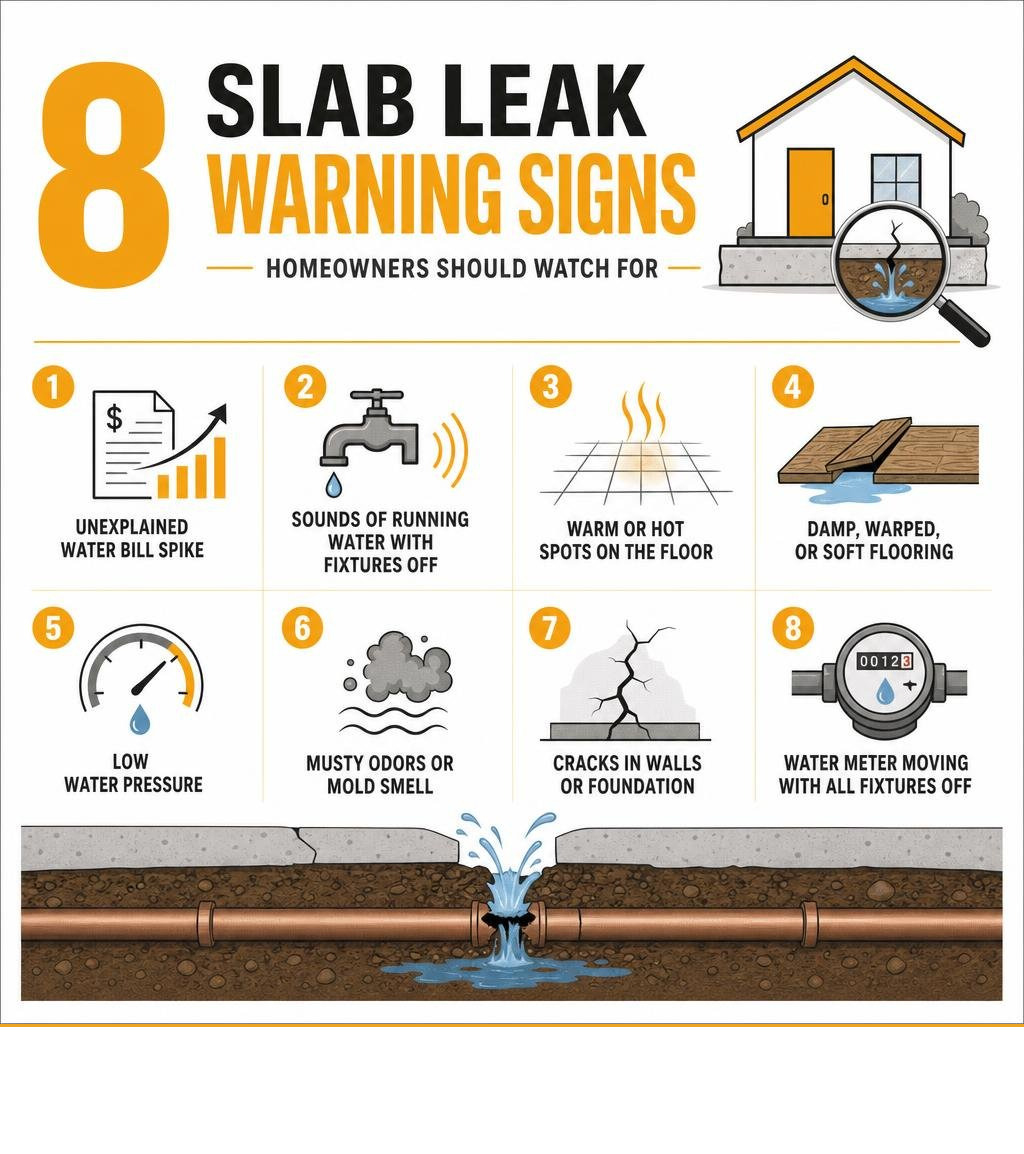
Here are the most common slab leak signs to watch for:
| Warning Sign | What It Means |
|---|---|
| Unexplained water bill spike | Water is escaping somewhere in your underground pipes |
| Sounds of running water with fixtures off | Pressurized water is leaking beneath the slab |
| Warm or hot spots on the floor | A hot water line is leaking under the concrete |
| Damp, warped, or soft flooring | Water is seeping up through the foundation |
| Low water pressure | A leak is reducing flow throughout the system |
| Musty odors or mold smell | Moisture is trapped beneath flooring or behind walls |
| Cracks in walls or foundation | Shifting soil from water saturation is stressing the structure |
| Water meter moving with all fixtures off | A hidden leak is actively losing water |
The stakes are real. According to the EPA, household leaks waste nearly 10,000 gallons of water every year, and many go completely undetected until serious damage has already been done. Left unaddressed, a slab leak can erode your foundation, trigger mold growth, and turn a manageable repair into a structural crisis costing tens of thousands of dollars.
I’m Chris Woods, owner of Woods Comfort Systems, a third-generation home services company serving Central Texas since 1956, and over the decades I’ve seen how quickly slab leak signs can escalate when homeowners don’t know what to look for. In the sections below, I’ll walk you through everything you need to know to catch a problem early and protect your home.
What is a Slab Leak and Why is it Dangerous?
To understand why a slab leak is such a threat, you first have to understand how your home was built. Most modern homes in San Marcos, TX, and the surrounding Central Texas region are constructed on a slab on grade foundation. Before the concrete slab is poured, plumbers lay out the main water supply and sewer lines directly in the soil. Once the concrete is poured over these pipes, they are permanently encased beneath your home.
When one of these under-slab pipes fails, it creates a hidden plumbing leak. Because the water is pressurized, it does not just drip: it sprays continuously into the gravel, sand, and soil beneath your concrete foundation.
This continuous water flow is incredibly dangerous for several reasons:
- Foundation Erosion and Shifting: As water sprays under pressure, it washes away the supporting soil beneath your slab. This creates empty pockets or voids. Without proper soil support, the heavy concrete slab will eventually crack, sink, or buckle under its own weight.
- Severe Water Waste: A pressurized water line leak never takes a break. It runs 24 hours a day, wasting thousands of gallons of treated water. This is not just bad for the environment: it is incredibly expensive for your monthly utility budget.
- Destructive Mold Growth: Concrete is naturally porous. When water pools beneath the slab, it eventually wicks upward through the concrete and into your home’s flooring. This trapped moisture creates the perfect breeding ground for toxic mold and mildew in flooring cavities, baseboards, and drywall.
- Compromised Structural Integrity: When the foundation shifts, the rest of the house moves with it. This leads to cracked drywall, doors that will not close, warped window frames, and sagging rooflines.
If you suspect you have a leak under your foundation, ignoring it is the worst thing you can do. Understanding the signs of hidden plumbing leaks is the first step in protecting your property from severe structural damage.
Common Causes of Foundation Water Leaks
Slab leaks do not happen without a reason. Beneath your home, a combination of chemistry, physics, and geology is constantly at work. In our service areas like Buda, TX, and Kyle, TX, several primary factors contribute to under-slab pipe failure:
Texas Clay Soil Movement
The geography of Central Texas plays a massive role in plumbing longevity. Our region is famous for highly expansive clay soil. This type of soil acts like a sponge: it expands dramatically when wet and shrinks during hot, dry summer droughts. This constant shifting puts immense physical stress on the concrete foundation and the rigid pipes buried beneath it, eventually causing them to crack or pull apart at the joints.
Pipe Corrosion and Age
If your home was built between the 1960s and the late 1990s, there is a very high probability that your under-slab plumbing consists of copper pipes. While copper was the industry standard for decades, it is highly susceptible to corrosion. Hard water, which is rich in minerals like calcium and magnesium, is incredibly common in Austin, TX, and San Antonio, TX. Over time, these minerals react with the copper, leading to pitting corrosion that creates tiny pinhole leaks.
High Water Pressure
Water pressure that is too high puts constant stress on your pipe walls and joints. Most residential plumbing systems are designed to operate safely between 40 and 80 PSI. If your home lacks a properly functioning pressure-reducing valve, municipal water surges can stress vulnerable areas under your foundation, accelerating the development of common plumbing problems like slab leaks.
Poor Installation Practices
Sometimes, the issue dates back to when the home was built. If the original plumbers did not properly wrap the copper pipes, the raw concrete can chemically react with the metal, causing rapid corrosion. Additionally, if the pipes were laid directly against sharp gravel or rocks without proper sand bedding, the natural vibrations of water flowing through the pipes will cause them to rub against the rocks, eventually wearing a hole through the pipe wall.
Top Slab Leak Signs Every Homeowner Should Watch For
Because slab leaks are buried under inches of concrete and dirt, you cannot simply look under the sink to find them. Instead, you must rely on secondary clues. Homeowners who know how to identify slab leak signs can catch the problem before it causes catastrophic foundation failure.

Here are the primary warning signs you should never ignore:
1. Unexplained Water Bill Spikes
If your water usage habits have not changed but your monthly utility bill is steadily climbing, a hidden leak is the most likely culprit. A small pinhole leak can waste hundreds of gallons of water a day, leading to noticeable financial spikes.
2. The Sound of Running Water
When your home is completely quiet, especially late at night, listen closely. If you hear a faint, constant hissing, rushing, or whooshing sound coming from beneath your floors when all faucets, showers, and washing machines are turned off, you are likely hearing water escaping from a pressurized pipe.
3. Warm or Hot Spots on Your Floor
If you walk barefoot across your tile, laminate, or concrete floors and suddenly notice a localized spot that feels unusually warm, this is a classic indicator of a hot water line slab leak. The leaking hot water heats the surrounding concrete, which then radiates warmth up through your flooring.
4. Damp, Warped, or Buckling Flooring
When water saturates the concrete slab, it has nowhere to go but up. You may notice damp carpets, warped wood planks, bubbling linoleum, or loose floor tiles. According to industry experts at LeakTronics, flooring damage is often one of the first visible physical signs of a long-standing foundation leak.
5. Sudden Drops in Water Pressure
If you notice a sudden, persistent drop in water pressure across multiple fixtures in your home, it means a significant volume of water is escaping before it ever reaches your faucets. This is a clear indicator that you are dealing with the dangers of leaky pipes beneath your foundation.
6. Musty Odors and Mold
Moisture trapped under carpets or behind baseboards inevitably leads to mold and mildew. If you smell a persistent, earthy, musty odor in certain rooms but cannot find any visible source of water, the moisture is likely wicking up from a compromised slab.
7. Foundation Cracks and Sticking Doors
As the soil shifts and voids form beneath the concrete, the foundation will settle unevenly. This structural movement causes cracks in your home’s exterior brickwork, interior drywall, and concrete slab. You may also notice that doors and windows suddenly stick or refuse to close smoothly.
How to Detect a Slab Leak Early
Catching a slab leak early is the difference between a minor localized repair and a major structural restoration. If you notice one or more of the warning signs listed above, you can perform a few simple checks yourself before calling in the professionals.
DIY Methods to Spot Slab Leak Signs
While you should always leave the final diagnosis and repair to a licensed plumber, these simple DIY tests can help confirm your suspicions:
- The Water Meter Test: This is the most reliable DIY check for any hidden leak. First, turn off every single water source inside and outside your home, including faucets, ice makers, and irrigation systems. Locate your water meter box, which is usually near the street. Look at the low-flow indicator (often a small red or blue triangle or a digital sweep hand). If that indicator is spinning or the digital numbers are climbing while all water is shut off, you have an active leak.
- The Barefoot Walk: Turn off your AC and walk slowly across your hard-surface floors barefoot. Pay close attention to any sudden temperature changes. If you find a warm spot, mark it with painter’s tape.
- Isolate the Water Heater: If you suspect a hot-line leak, turn off the cold-water shut-off valve on top of your water heater. Check your water meter again. If the meter stops moving, you have confirmed that the leak is on your hot water supply line.
While these tests are helpful, ignoring a small plumbing leak because you are not entirely sure can lead to massive structural issues down the road.
Professional Diagnostics for Hidden Slab Leak Signs
Professional plumbers do not rely on guesswork or random demolition. At Woods Comfort Systems, we use advanced, non-invasive technology to pinpoint the exact location of the leak before we ever cut into your concrete:
- Acoustic Listening Devices: We use highly sensitive ground microphones and acoustic sensors to listen through concrete slabs. Because escaping water vibrates at a specific frequency, these tools allow us to hear the exact spot where the pipe is ruptured.
- Thermal Imaging Cameras: Infrared cameras allow our technicians to see heat signatures beneath your floors. A leaking hot water line will show up as a bright red plume on our screens, showing us exactly where the hot water is pooling.
- Line Tracing and Pressure Testing: By introducing air or specialized tracer gas into your plumbing lines, we can monitor pressure drops and trace the physical path of the pipes beneath your foundation. This is highly effective, much like the advanced leak detection methods used to find hidden leaks in Texas attics.

Professional Repair and Prevention Strategies
Once we have pinpointed your slab leak, we will discuss the best repair strategy for your home’s specific situation. We always prioritize the most reliable, cost-effective, and least invasive methods possible.
Slab Leak Repair Options
Depending on the age of your pipes, the location of the leak, and the condition of your plumbing system, we will recommend one of the following repair methods:
| Repair Method | How It Works | Best For | Pros & Cons |
|---|---|---|---|
| Spot Repair | We open a small, precise hole in the concrete slab to access and repair the damaged section of pipe. | Newer homes with localized pipe damage. | Pros: Quick and cost-effective. Cons: Requires cutting flooring; does not prevent future leaks on the same line. |
| Pipe Rerouting | We abandon the leaking pipe under the slab entirely and run a new, modern line through your walls or attic. | Older homes with copper pipes prone to multiple leaks. | Pros: Non-invasive to floors; completely removes the risk of future leaks on that line. Cons: Requires routing pipes through walls. |
| Full Home Repiping | We replace all old under-slab water lines with modern, flexible, and corrosion-resistant PEX piping. | Older homes with systemic pipe corrosion. | Pros: Permanent solution; increases home value; eliminates all under-slab plumbing risks. Cons: Higher initial investment. |
To get your home’s plumbing back in perfect working order, it is essential to work with a licensed team that specializes in professional plumbing repair services.
Preventing Future Slab Leaks
The best way to handle a slab leak is to prevent it from ever happening in the first place. Here is how you can protect your Central Texas home:
- Install a Pressure-Reducing Valve (PRV): Keep your home’s water pressure regulated below 60 PSI to prevent excessive stress on your pipes.
- Use a Water Softener: Hard water is incredibly tough on copper pipes. Installing a water softener removes the harsh minerals that cause pitting corrosion under your slab.
- Maintain Foundation Moisture: Keep the soil around your foundation consistently moist during hot Texas summers to prevent the ground from shrinking and shifting. Ensure your gutters drain water away from the foundation to avoid localized soil saturation.
- Schedule Annual Plumbing Inspections: Regular professional checkups can catch minor pressure issues or water quality problems before they turn into costly underground emergencies.
Frequently Asked Questions About Slab Leaks
What is a slab leak?
A slab leak is a plumbing leak that occurs in the water supply or sewer lines running beneath or encased within your home’s concrete slab foundation. Because these pressurized lines are buried beneath concrete, the leaks are hidden from plain sight and require specialized equipment to locate.
How do I know if I have a slab leak?
The most common slab leak signs include sudden spikes in your water utility bills, the sound of running water when all faucets are turned off, warm spots on your floors, damp or warped flooring, low water pressure, musty odors, and new cracks in your drywall or exterior brickwork.
Can a slab leak cause mold?
Yes. Concrete is porous, meaning it easily absorbs water. When a pipe leaks beneath your foundation, the moisture wicks upward through the concrete slab and pools beneath your carpets, hardwood, or tile. This constant moisture creates an ideal environment for mold and mildew to grow undetected.
Will homeowners insurance cover slab leak repairs?
Homeowners insurance coverage varies significantly depending on your policy. In many cases, insurance companies will cover the “tear-out” costs required to access the leak (such as cutting through the concrete) and the cost to repair secondary water damage, but they may exclude the actual plumbing pipe repair itself. It is best to contact your insurance provider to verify your specific coverage.
How long does it take to repair a slab leak?
Most professional slab leak repairs take between one and three days to complete. A simple spot repair or localized pipe reroute can often be finished in a single day, while a comprehensive whole-house repiping project may take a few days to complete, depending on the size and complexity of your home.
Can a slab leak fix itself?
No. A slab leak will never fix itself. Because the water lines are under constant pressure, even a tiny pinhole leak will gradually expand over time as the rushing water erodes the surrounding pipe material. Ignoring the issue will only lead to more severe foundation damage and higher repair bills.
What causes slab leaks in Texas?
Slab leaks are particularly common in Texas due to our highly expansive clay soils, which expand and contract dramatically with weather changes, putting stress on buried pipes. Additionally, the highly mineralized hard water common in Central Texas causes internal corrosion in older copper plumbing lines.
How much water does a slab leak waste?
A typical slab leak can waste anywhere from 10,000 to tens of thousands of gallons of water per month depending on the size of the pipe rupture. Because the leak is continuous and pressurized, it represents a constant, non-stop drain on both your local water supply and your personal finances.
Can I stay in my home during slab leak repairs?
In most cases, yes. Our team at Woods Comfort Systems works hard to minimize disruption to your daily routine. While we may need to temporarily shut off your water service during the active repair process, we always aim to restore your water service as quickly as possible so you can remain comfortable in your home.
How can I prevent slab leaks in the future?
You can prevent future slab leaks by installing a pressure-reducing valve to keep your water pressure below 60 PSI, installing a water softener to reduce mineral corrosion, maintaining consistent soil moisture around your foundation, and scheduling routine plumbing inspections.
Conclusion
A slab leak is undoubtedly one of the most stressful plumbing challenges a homeowner can face, but catching the slab leak signs early changes everything. By paying close attention to unexplained water bill increases, damp floors, and running water sounds, you can address the problem before it threatens your home’s foundation.
At Woods Comfort Systems, we have spent more than 70 years helping our neighbors in San Marcos, TX, and across Central Texas keep their homes safe, comfortable, and dry. Our family-owned business is built on a foundation of honest advice, highly trained technicians, and royal customer treatment. We provide 24/7 emergency services to ensure you are never left dealing with a plumbing crisis alone.
Whether you suspect a hidden water leak beneath your foundation, need seasonal HVAC maintenance, or require a complete system upgrade, our experienced team is ready to help. Protect your home’s structural integrity and restore your peace of mind by contacting Woods Comfort Systems to schedule professional plumbing services today.