


That Sewer Line Smell in Your House? Here’s What It Usually Means
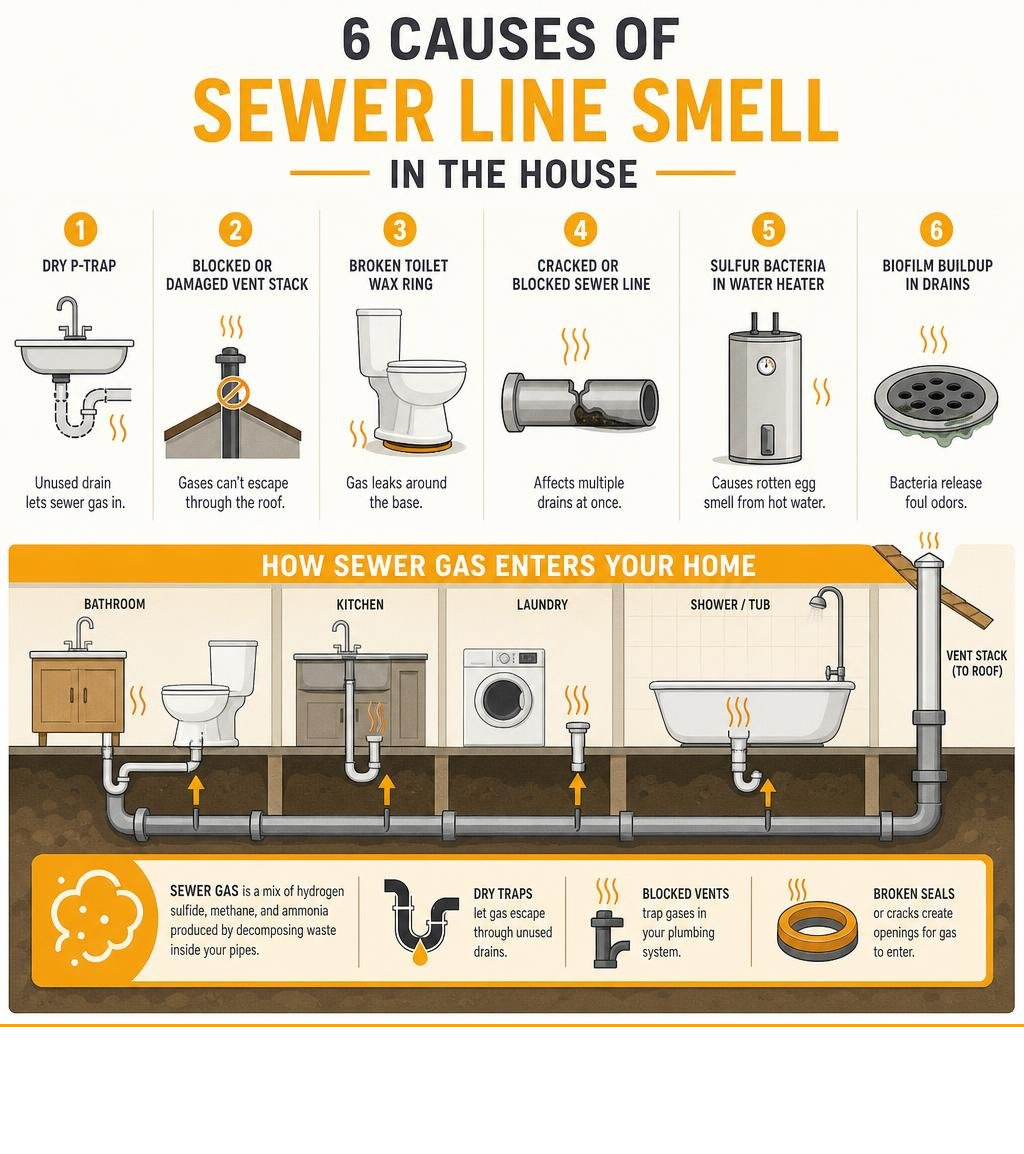
A sewer line smell in your house almost always comes from one of six common plumbing problems, and most of them can be identified without calling a plumber right away.
Quick answer: the most common causes are:
- Dry P-trap – a drain that hasn’t been used in weeks, letting sewer gas in
- Blocked or damaged vent stack – prevents gases from escaping through the roof
- Broken toilet wax ring – gas leaks around the base of your toilet
- Cracked or blocked sewer line – affects multiple drains at once
- Sulfur bacteria in your water heater – causes a rotten egg smell from hot water
- Biofilm buildup in drains – bacteria feeding on organic waste release foul odors
The smell itself comes from sewer gas, which is a mix of hydrogen sulfide, methane, and ammonia produced when organic matter breaks down inside your pipes. Even at low concentrations (as little as 0.5 parts per million), hydrogen sulfide produces that unmistakable rotten egg odor. At higher levels, it can cause headaches, nausea, dizziness, and respiratory irritation.
The good news is that identifying the source usually comes down to noticing a pattern: which drain smells, when it happens, and whether one or multiple fixtures are affected.
I’m Chris Woods, owner of Woods Comfort Systems, a family-owned company serving Central Texas since 1956. Over the decades, our team has helped homeowners across San Marcos, TX and the surrounding area track down and resolve sewer line smells in the house that range from simple dry traps to serious sewer line failures. In the sections below, I’ll walk you through each cause and what to check first.
What is Sewer Gas and Why Does It Smell?
Sewer gas is a complex mixture of toxic and non-toxic gases created by the natural decomposition of household and municipal organic waste. The primary components that make up this gas include hydrogen sulfide, methane, carbon dioxide, ammonia, nitrogen, and oxygen.
While methane and carbon dioxide are completely odorless, hydrogen sulfide and ammonia are the culprits behind the foul stench. Hydrogen sulfide is highly volatile and carries a distinct rotten egg or sulfur smell. Humans have an incredibly sensitive olfactory response to this compound, meaning we can detect it at levels as low as 0.5 parts per million (PPM). When the concentration is below 1 PPM, it often manifests as a musty or swampy scent. Once it climbs between 1 and 2 PPM, it becomes a sharp, unmistakable rotten egg odor.
Understanding what bad odors from your drain could mean is the first step in assessing whether you are dealing with a minor localized issue or a larger systemic failure. According to scientific facts on sewage smell in house, prolonged exposure to these gases is not just unpleasant, it can pose genuine health risks, including headaches, sinus irritation, dizziness, and nausea. In high concentrations, methane also presents a flammability risk, making it critical to address any persistent sewer odors promptly.
1. Dry P-Traps: The Most Common Cause of a Sewer Line Smell in House
If you have a room or a bathroom that is rarely used, the culprit behind your sewer smell is likely a dry P-trap.
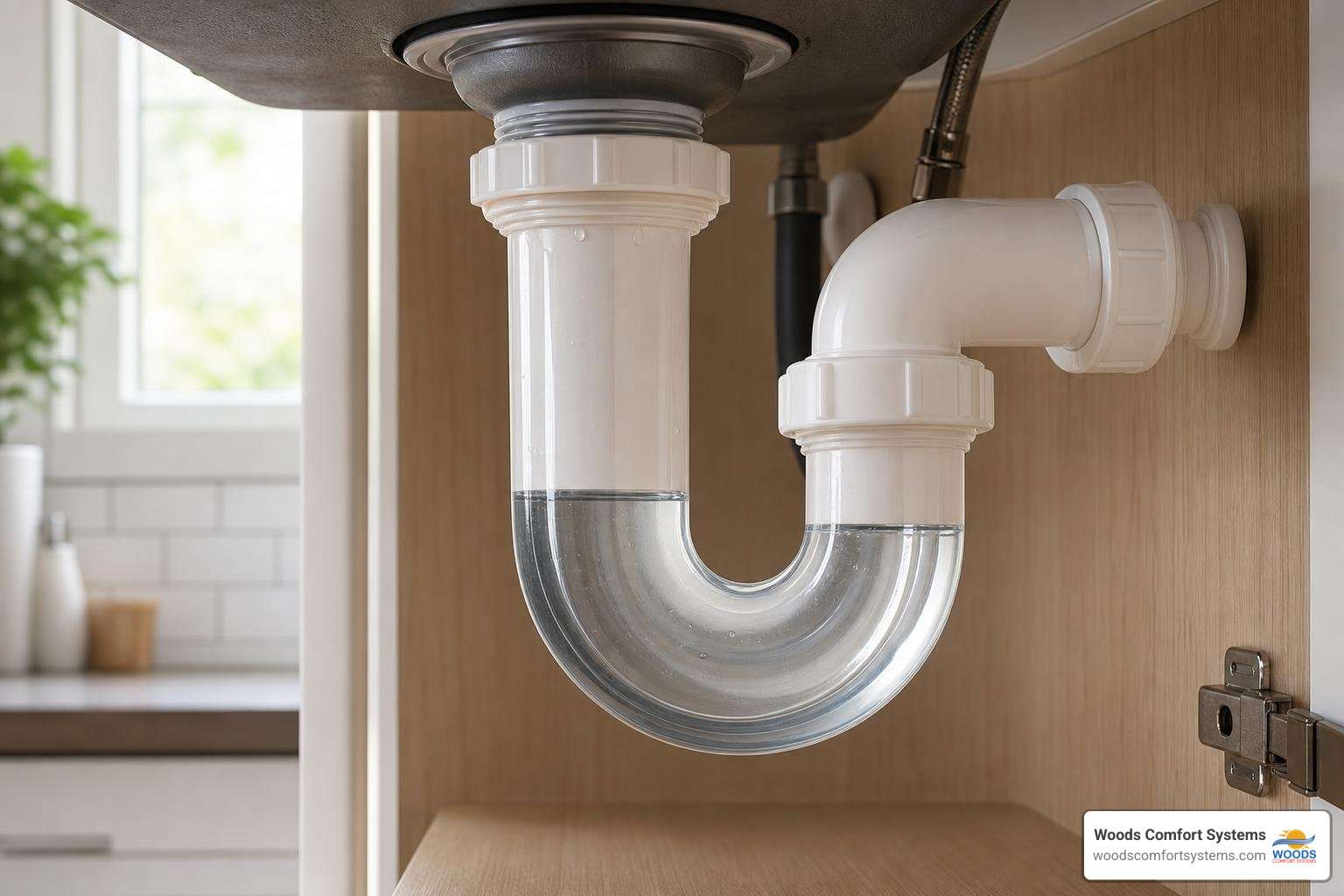
Every plumbing fixture in your home, including sinks, showers, bathtubs, and toilets, relies on a U-shaped pipe called a P-trap. This curve is designed to hold a small amount of standing water at all times. This water acts as a physical barrier, sealing off the open drain from the gases lurking inside the sewer system.
Under normal household conditions, a P-trap typically takes 2 to 4 weeks to dry out completely. However, in the warm, dry climate of Central Texas, or in well-ventilated rooms, water can evaporate much faster, sometimes in as little as 1 to 2 weeks. This is especially common in:
- Guest bathrooms that are only occupied during holidays
- Basement floor drains or utility room sinks
- Emergency floor drains next to washing machines
When the water evaporates, the seal is broken, and sewer gas flows freely up the pipe and into your living spaces.
Fixing a dry P-trap is incredibly simple. All you need to do is run water down the dry drain for about 60 seconds to prime the trap and re-establish the water barrier. If the smell fades and does not return, you have successfully solved the problem.
To prevent this from happening in infrequently used drains, you can pour a tablespoon of mineral oil down the drain after refilling it with water. The oil floats on top of the water barrier, significantly slowing down the rate of evaporation. For a detailed breakdown of this phenomenon, you can read more about how dry traps cause sewer gas odor.
2. Damaged or Blocked Plumbing Vent Stacks
Every drainage system needs replacement air to keep water flowing smoothly. This is the job of your plumbing vent pipes, which run vertically through your home and exit through the roof.
Vent stacks regulate the air pressure within your drainage lines. When water rushes down a drain, it creates a vacuum behind it. The vent stack draws in outside air to balance this pressure, allowing wastewater to flow freely. If the vent stack is clear, sewer gases rise up and exit safely above your roofline.
However, if a vent stack becomes blocked by bird nests, leaves, twigs, or dead pests, the system loses its ability to equalize pressure. When you flush a toilet or run a heavy load of laundry, the vacuum created in the pipes will actually pull water out of nearby P-traps to let air in. This pressure imbalance leaves those P-traps dry, allowing sewer gases to pour into your home.
Common signs of a vent stack issue include:
- Gurgling or sucking noises from your sinks when you flush a nearby toilet
- Slow-draining sinks and bathtubs throughout the home
- Sewage smells that seem to come and go depending on water usage
Ignoring these signs can lead to structural damage and indoor air contamination. Understanding the dangers of leaky pipes and vents is vital for maintaining a safe and healthy household environment. Clearing a roof vent usually requires climbing onto the roof to clear debris or run a plumbing snake down the stack, a task best left to professionals if you are uncomfortable with heights.
3. Broken Toilet Wax Rings and Loose Seals
Your toilet is connected to the sewer line through a floor flange, and the connection between the toilet base and this flange is sealed with a molded wax ring. This ring creates a completely airtight and watertight seal.
Over time, this wax seal can degrade, dry out, or break. This often happens if:
- The toilet flange was installed too low (below the finished floor level) during a remodel
- The toilet bolts have worked themselves loose, causing the toilet to rock or wobble
- The wax ring was improperly compressed on one side during installation
When the wax ring fails, sewer gas escapes from the gap between the toilet base and the floor flange. Interestingly, a wax ring can fail and allow sewer gas to leak into your bathroom long before you see any physical water pooling on the floor. If you notice a persistent sewer smell in a bathroom and the toilet moves even slightly when you sit down, the wax ring is almost certainly broken.
Resetting a toilet with a new wax ring is a standard plumbing repair. It involves turning off the water, draining the toilet, removing the mounting bolts, lifting the toilet, scraping away the old wax, and installing a new, high-quality wax ring. This is why we always emphasize that why you shouldn’t ignore even a small plumbing leak, as even an invisible gas leak can ruin your indoor air quality and signal structural instability.
4. Blocked, Cracked, or Damaged Sewer Lines
A cracked or blocked main sewer line is a serious plumbing issue that requires immediate professional attention.
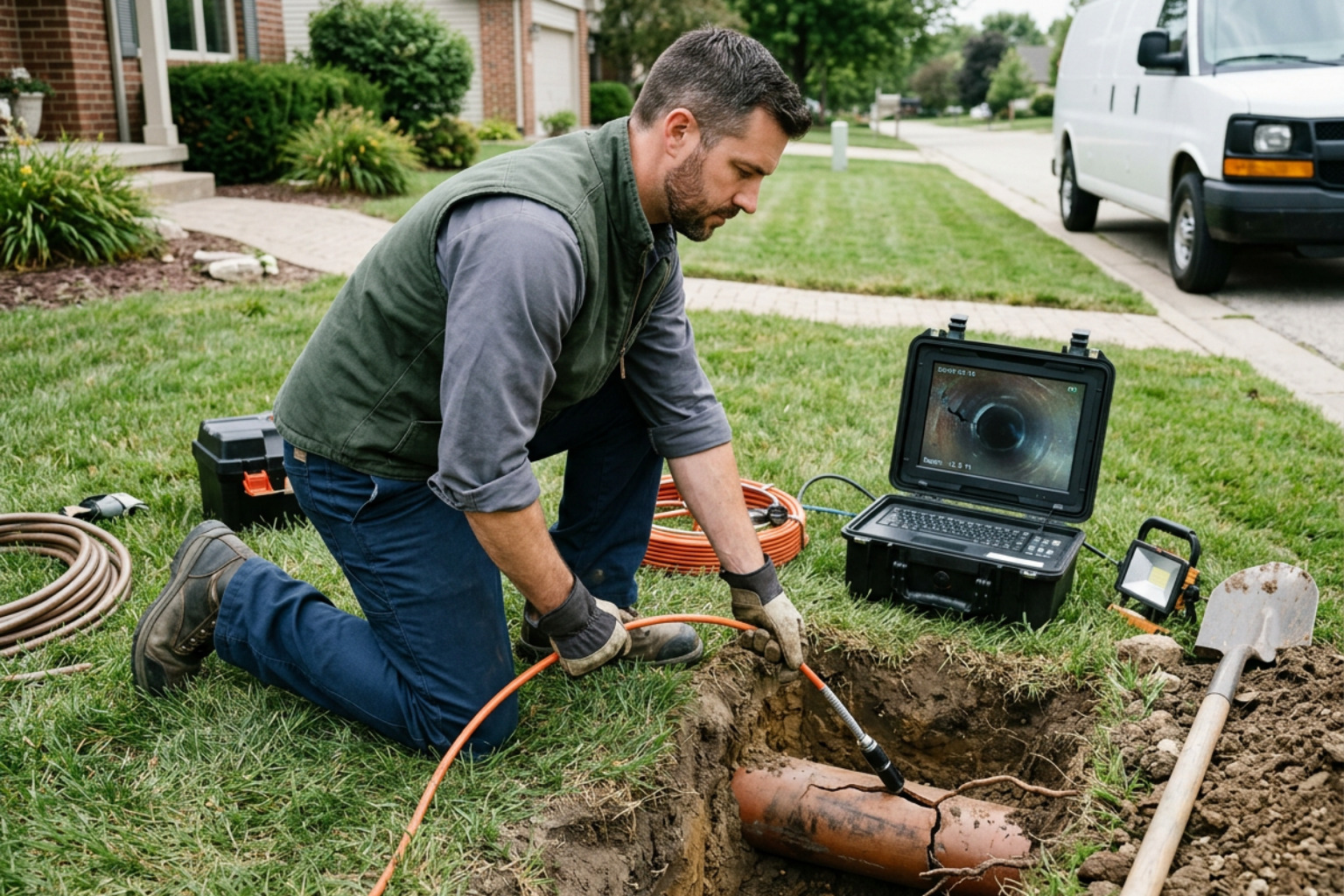
When your main sewer line is compromised, wastewater cannot flow away from your home properly. The resulting backup forces sewage and toxic sewer gases back up through your lowest drains.
Sewer lines can become damaged due to several factors:
- Tree Root Intrusion: Tree roots are naturally drawn to the warmth and moisture of sewer lines. They can grow through tiny cracks in clay or cast-iron pipes, expanding until they completely block or shatter the pipe.
- Pipe Corrosion: Older homes in the San Marcos, TX area often have cast-iron or clay pipes that naturally corrode and collapse over time.
- Ground Shifting: Soil movement can cause pipes to sag, crack, or break entirely.
When a main sewer line fails, the impacts extend beyond bad odors. These plumbing backups threaten AC and indoor air quality, as the airborne contaminants can be pulled into your HVAC system and distributed throughout your entire home.
How to Identify a Main Sewer Line Smell in House
How do you know if the smell is coming from your main sewer line rather than a simple clogged sink? Look for these systemic warning signs:
- Multiple Slow Drains: If your kitchen sink, shower, and washing machine drain are all running sluggishly at the same time, the blockage is deep in the main line.
- Gurgling Drains: When you flush a toilet, you hear bubbles or gurgling in your shower drain or bathroom sink.
- Recurring Backups: Wastewater backs up into your lowest floor drains or bathtubs when you run water upstairs.
- Odor Changes with Weather: The sewer smell becomes significantly worse after a heavy rainstorm due to increased ground pressure on the cracked pipes.
If you are experiencing these symptoms, you should contact a professional to perform a sewer camera inspection. This allows plumbers to run a high-definition camera down your line to pinpoint the exact location and cause of the damage. For residents dealing with these issues, understanding the side effects of clogged drains in Buda, TX can help you act quickly before a minor clog turns into a costly property clean-up.
5. Sulfur Bacteria in Water Heaters
If you only notice a rotten egg or sulfur smell when you run hot water, the problem is not in your sewer pipes at all. Instead, it is likely living inside your water heater.
Many water heaters contain an anode rod, typically made of magnesium or aluminum, designed to protect the steel tank from rusting by corroding first. However, certain non-harmful, sulfur-reducing bacteria can thrive in the warm environment of a water heater tank. These bacteria react with the magnesium or aluminum of the anode rod, converting naturally occurring sulfates in your water into hydrogen sulfide gas.
When you turn on a hot water tap, this gas is released into the air, creating a strong rotten egg smell.
To test this, run cold water from a tap for a minute and smell it. Then, run hot water from the same tap. If the smell only occurs with the hot water, your water heater is the source.
Solving this problem usually involves:
- Flushing and disinfecting the water heater tank with a chlorine bleach solution to kill the bacteria.
- Replacing the standard magnesium anode rod with an aluminum-zinc alloy anode rod, which is much less reactive to sulfur-reducing bacteria.
- Temporarily raising the water heater temperature to 140 degrees Fahrenheit for 24 hours to eliminate the bacterial colony (this should be done carefully to prevent scalding).
For safe and effective resolution, we highly recommend utilizing professional water heater services to handle the inspection, anode rod replacement, and tank sanitation.
6. Biofilm Accumulation and Clogged Drains
Sometimes, a foul odor coming from a single shower or sink drain is simply caused by biofilm accumulation.
Biofilm is a slimy, sticky layer of bacteria and mold that forms inside drain pipes. It feeds on a steady diet of soap scum, hair, skin cells, toothpaste, and shaving cream. As these organic materials decompose within the sticky biofilm layer, they release a localized sewage-like odor.
This issue is particularly common in shower drains, where hair easily catches and creates an ideal breeding ground for bacteria. While biofilm can be incredibly smelly, it is a localized issue that does not indicate a structural failure in your sewer system.
While many homeowners attempt to clear these odors using harsh chemical drain cleaners, these products can actually corrode older cast-iron or galvanized pipes. Learning about the benefits of professional drain cleaning vs DIY methods will help you protect your plumbing system from unnecessary chemical damage while ensuring a deep, long-lasting clean.
DIY Steps to Eliminate a Sewer Line Smell in House Drains
If you suspect you have a localized biofilm or minor clog issue, you can try these safe DIY steps to clean and deodorize your drains:
- The Boiling Water Flush: Carefully pour a kettle of boiling water down the drain to help melt grease and soap scum. (Note: Do not do this if you have PVC pipes, as boiling water can soften the joints. Use hot tap water instead.)
- The Baking Soda and Vinegar Reaction: Pour half a cup of baking soda down the drain, followed by one cup of white vinegar. Let the mixture fizz and work its magic for 15 to 30 minutes. The chemical reaction helps break down organic grime and neutralize odors.
- The Hot Water Rinse: Flush the drain thoroughly with a gallon of hot water.
- The Drain Snake: If you suspect hair is trapping debris, use a cheap plastic drain snake (often called a zip-it tool) to pull hair out of the drain.
- Enzyme Cleaners: Use a natural, enzyme-based drain cleaner monthly to break down organic matter without damaging your pipes.
If these steps do not resolve the issue, or if the smell returns quickly, it may be time to seek professional help. In fact, why fall is the perfect time to book an appointment for drain cleaning is a great guide on keeping your plumbing system running smoothly ahead of the busy holiday season.
How to Safely Diagnose and Prevent Sewer Odors
Finding the source of a sewer smell involves systematic pattern recognition. Is the smell localized to one drain, or is it present throughout the entire house? Does it happen constantly, or only when you run certain appliances?
By tracking these patterns, you can narrow down the cause and decide whether a DIY fix is appropriate or if you need to call in a professional.
| Symptom / Pattern | Potential Cause | Initial DIY Action | When to Call a Professional |
|---|---|---|---|
| Odor from a single, rarely used guest bathroom or floor drain | Dry P-trap | Run water for 60 seconds; add a tablespoon of mineral oil | If the smell persists after refilling the trap |
| Gurgling toilets, slow drains, or smell appearing when other fixtures are run | Blocked vent stack | Inspect roof vents for visible debris if safe to do so | If the blockage is deep or vent pipes are cracked |
| Odor localized around the base of a wobbly or rocking toilet | Broken toilet wax ring | Check toilet bolts for tightness | To remove the toilet and replace the wax ring |
| Multiple slow drains, gurgling sinks, or smells that worsen after rain | Blocked or damaged sewer line | Stop running water to prevent backups | Immediately; requires camera inspection |
| Rotten egg smell present only when running hot water | Sulfur bacteria in water heater | Flush the tank; check cold water separately | To replace the anode rod or sanitize the system |
| Odor coming from a frequently used shower or kitchen sink drain | Biofilm or minor hair clog | Flush with baking soda, vinegar, and hot water | For stubborn clogs that DIY methods cannot clear |
Preventative maintenance is always the best defense against plumbing issues. Simple habits like using drain strainers to catch hair and food waste, flushing unused drains bi-weekly, and avoiding flushing anything other than toilet paper and human waste can prevent major system failures. To keep your home running smoothly, take a look at our comprehensive guide on common plumbing problems and how to avoid them.
Frequently Asked Questions About Sewer Odors
Is a sewer line smell in house dangerous to your health?
Yes, prolonged exposure to sewer gas can be hazardous. Sewer gas contains toxic compounds like hydrogen sulfide and ammonia, which can cause headaches, nausea, dizziness, and respiratory irritation. Additionally, methane gas in sewer mixtures is highly flammable and can present an asphyxiation risk in extremely high, confined concentrations.
How long does it take for a P-trap to dry out?
Under average household conditions, a P-trap takes approximately 2 to 4 weeks to dry out completely. However, in dry climates like Central Texas, or in rooms with high temperatures and heavy air circulation, water can evaporate from a P-trap in as little as 1 to 2 weeks.
Why does the sewage smell in my house come and go?
Sewer odors that fluctuate are often influenced by shifting atmospheric pressure, changes in wind direction, water usage patterns, and HVAC operation. For example, running an exhaust fan can create negative pressure that pulls sewer gas through a tiny leak or a dry P-trap, making the smell suddenly noticeable.
Can I use bleach to get rid of a sewer line smell in house drains?
No, pouring bleach down your drains is a temporary mask rather than a permanent fix. Bleach does not address the root cause of sewer gas, such as a dry P-trap or a damaged vent, and frequent use of harsh chemicals can corrode and damage older plumbing pipes.
What does sewer gas actually smell like?
Sewer gas is most commonly described as smelling like rotten eggs or sulfur due to the presence of hydrogen sulfide. In very low concentrations, it may smell musty, swampy, or like decaying organic matter.
Why does the sewer smell get worse after it rains?
Heavy rain saturates the soil, which increases ground pressure on buried pipes. This pressure can force sewer gas out of cracked underground pipes and up through your home’s foundation or drains. Rain can also overwhelm municipal sewer systems, causing gases to back up into residential lines.
How do I know if the smell is sewer gas or a dead animal?
Sewer gas smells strongly of sulfur or rotten eggs and is typically strongest near plumbing fixtures or drains. A dead animal produces a distinct, sweet, and sickly decay odor that gets progressively worse over several days and is usually localized to a wall cavity, attic, or crawlspace rather than a drain.
Can a sink overflow drain cause a sewage smell?
Yes, the overflow channel on bathroom sinks rarely gets flushed with water, allowing soap scum, hair, and bacteria to accumulate. Over time, this dark, damp channel grows a smelly biofilm that releases an odor resembling sewer gas. Flushing it with baking soda and vinegar usually solves the problem.
How does a loose cleanout plug cause sewer odors?
A sewer cleanout is an access point to your main sewer line, usually located in a utility room, basement, or yard. If the cleanout cap or plug is loose, cracked, or missing entirely, sewer gases will escape directly into your home instead of traveling out through the roof vent.
When should I call a professional plumber for sewer smells?
You should call a professional plumber if the sewer smell is persistent, affects multiple drains, is accompanied by gurgling toilets or slow drainage, or if you suspect a broken sewer line or blocked roof vent. If you experience health symptoms like nausea or headaches, exit the home and call for professional help immediately.
Conclusion
A sewer line smell in your house can be an incredibly stressful experience, but in many cases, it is a problem that can be diagnosed with a little bit of patience and pattern recognition. Whether you are dealing with a simple dry P-trap that needs a quick splash of water or a complex main sewer line blockage that requires a high-tech camera inspection, taking action early is the key to protecting both your home and your family’s health.
At Woods Comfort Systems, we have spent more than 60 years providing the residents of San Marcos, TX and the surrounding Central Texas communities with honest, reliable, and expert plumbing and HVAC services. As a family-owned business, we treat our customers like royalty and offer 24/7 emergency services to ensure you are never left dealing with a plumbing crisis alone.
Whether you need fast plumbing repairs, seasonal drain maintenance, or a complete sewer line inspection, the team at Woods Comfort Systems is ready to help. Contact the team to schedule your professional plumbing repair services today.