


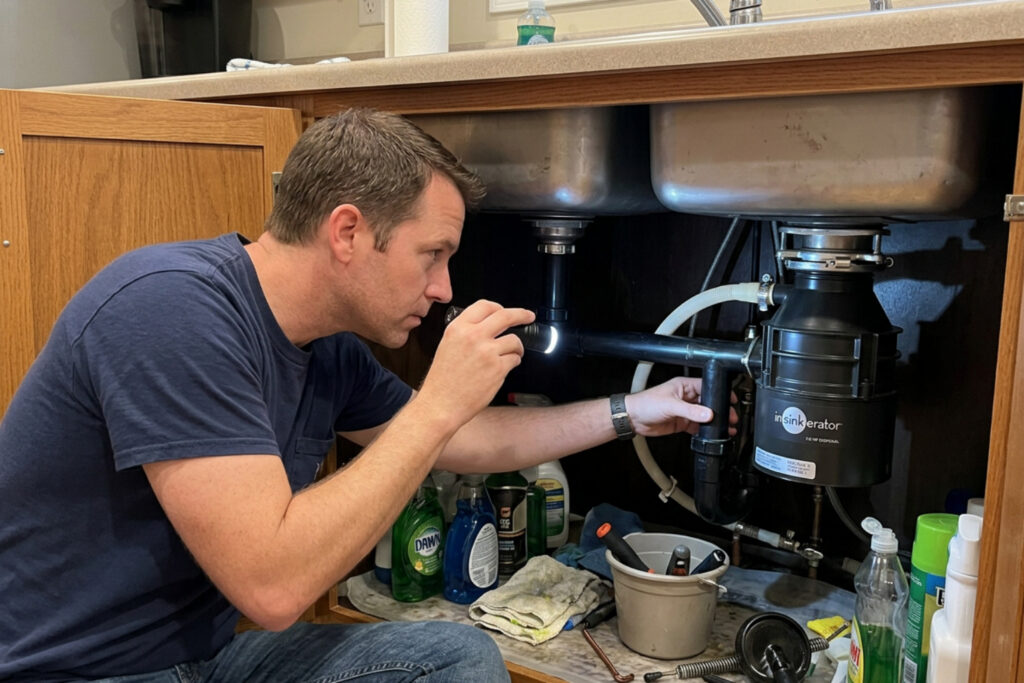
What to Do When Your Garbage Disposal Is Humming But Not Working
If your garbage disposal humming not working is the problem you’re dealing with right now, here is the short answer:
The humming sound means your disposal is getting power, but the impeller (grinding plate) is stuck and cannot spin. This is almost always caused by a jam, not a broken motor. In most cases, you can fix it yourself in under 10 minutes.
Quick fixes to try right now:
- Turn off the power at the wall switch and the circuit breaker
- Insert a 1/4-inch Allen wrench into the hex socket on the bottom of the unit and work it back and forth to free the jam
- Remove any visible debris from inside the chamber using tongs or pliers (never your hand)
- Press the red reset button on the underside of the unit after clearing the jam
- Restore power and run cold water while testing the disposal
If the hum continues after these steps, you may be dealing with a burned-out motor or an electrical fault, which we cover in detail below.
A humming disposal is actually a good sign in one important way: it tells you the unit is receiving electricity. The motor is running, but something is physically blocking the impeller from spinning. According to industry data, roughly 80% of humming garbage disposal cases are caused by a jammed flywheel or impeller, not a failed motor. That means most homeowners can solve this problem without calling anyone.
That said, some situations do call for a professional. We will walk you through how to tell the difference.
I am Chris Woods, owner of Woods Comfort Systems, a third-generation home services company serving Central Texas since 1956, and our team regularly handles garbage disposal humming not working issues alongside our full range of plumbing services. Keep reading and we will show you exactly how to diagnose and fix the problem, step by step.
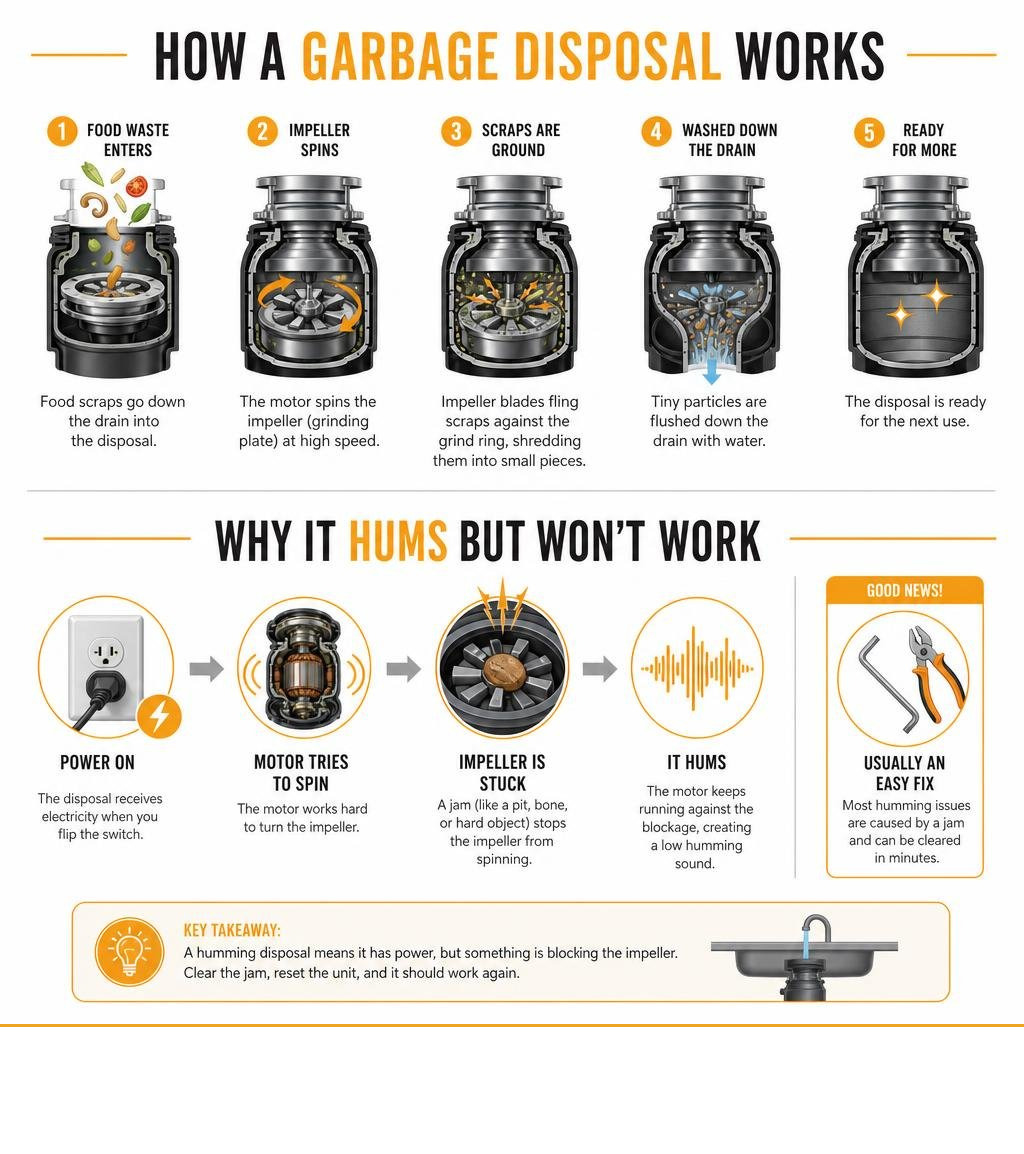
Understanding Why Your Garbage Disposal Humming Not Working Occurs
To fix a problem, it helps to understand what is happening inside the machine. When you flip the wall switch, electrical current flows directly to the disposal motor. This motor is designed to spin a heavy metal flywheel at high speeds. Mounted on top of this flywheel are small metal lugs, often called impeller blades. These blades use centrifugal force to fling food scraps against a stationary grind ring, shredding them into tiny particles that safely wash down your drain.
When a hard object, like a fruit pit, a small bone, or even a stray coin, gets wedged between the rotating flywheel and the stationary grind ring, the flywheel grinds to a sudden halt. The electrical motor continues to try to spin, but the physical obstruction prevents any movement. This electrical resistance inside the stalled motor creates the low, vibrating hum you hear.
If you leave the switch on while the unit is jammed, the motor will quickly overheat. Fortunately, modern disposals are built with a thermal overload switch to prevent electrical fires. This safety switch automatically cuts power to the unit when it gets too hot, causing the hum to stop and leaving the disposal completely silent.
Understanding these mechanics is essential for knowing when to schedule a garbage disposal repair with a professional plumber. If the flywheel is completely free but the motor refuses to spin and simply hums, you are likely dealing with a internal motor failure rather than a simple jam.
Below is a quick comparison table to help you distinguish between a common jammed flywheel and a completely burned-out motor:
| Symptom | Jammed Flywheel (80% of Cases) | Burned-Out Motor (20% of Cases) |
|---|---|---|
| Sound | Loud, low-pitched electrical hum | Faint hum or complete silence |
| Wrench Test | Allen wrench is difficult to turn at first | Allen wrench turns completely freely |
| Reset Button | Stays pressed in after the motor cools down | Pops back out immediately when pressed |
| Odors | Normal food odors or no smell | Strong, acrid smell of burning plastic |
| GFCI Outlet | Usually remains active unless overloaded | Instantly trips the outlet or main circuit breaker |
How to Safely Unjam and Fix a Humming Garbage Disposal in 5 Steps
Working on any appliance that combines water, electricity, and moving metal parts requires strict safety precautions. Before you attempt any DIY troubleshooting, you must understand your physical limits and the safety limits of the machine. Never, under any circumstances, place your hand or fingers inside the grinding chamber of the disposal, even if you are absolutely certain the power is turned off.
Many common appliance issues can be resolved with basic tools, but approaching them without the right process can turn a minor fix into a major safety hazard. If you are ever uncomfortable with these steps, it is always best to rely on a professional to avoid worsening common household plumbing problems. For those who want to try resolving the issue themselves first, you can review these helpful DIY tips for a non-working disposal before proceeding with our five-step method below.
Step 1: Disconnect the Power Supply
Electrical safety is your absolute priority. Do not rely solely on the wall switch next to your sink. Switches can fail, or someone else could walk into the kitchen and flip the switch while you are working.
First, locate the power cord underneath your sink and unplug the unit from the wall outlet. If your garbage disposal is hardwired directly into your home’s electrical system, you must go to your main electrical service panel (breaker box) and switch off the dedicated circuit breaker for the garbage disposal. Verify the power is off by flipping the wall switch on and off; there should be absolutely no sound or movement.
Step 2: Manually Rotate the Flywheel Using an Allen Wrench
Most garbage disposals feature a manual override socket on the very bottom of the unit, accessible from underneath the sink. This is a small, hex-shaped hole in the center of the bottom plate.
Insert a 1/4-inch Allen wrench (also known as a hex key) directly into this socket. Slowly work the wrench back and forth. If the unit is jammed, you will feel significant resistance. Apply firm, steady pressure to turn the wrench clockwise and counterclockwise. Continue this back-and-forth motion until you feel the resistance break and the wrench begins to rotate freely in complete 360-degree circles.
Step 3: Inspect the Chamber and Remove Foreign Objects
Once the flywheel is moving freely from the bottom, shine a bright flashlight down through the sink drain opening. Look closely for the physical object that caused the jam. Common culprits include cherry pits, olive stones, small metal twist-ties, or plastic bottle caps.
Use a pair of long needle-nose pliers or kitchen tongs to reach into the chamber and extract the debris. Never use your fingers. Even with the power disconnected, the metal components inside are sharp, and the flywheel can suddenly release tension and rotate slightly, pinching your fingers.
Step 4: Use the Red Reset Button
After clearing the physical obstruction, you need to address the thermal overload protection system. If the disposal was humming for more than a few seconds before you turned it off, the built-in safety switch likely tripped to prevent overheating.
Look at the bottom underside of the disposal cylinder. You will find a small, red button. If the safety switch tripped, this button will be protruding slightly. Give the unit about 10 to 15 minutes to cool down completely, then firmly press the red button inward. You should hear and feel a distinct click as it resets. If the button feels mushy or pops right back out, let the unit cool for another 10 minutes and try again.
Step 5: Restore Power and Test the Unit
Now that the jam is cleared and the thermal switch is reset, it is time to test your work. Plug the power cord back into the under-sink outlet or turn the circuit breaker back on at the electrical panel.
Turn on the kitchen faucet, letting a steady stream of cold water run down into the disposal drain. Flip the wall switch on. The disposal should start up instantly with its familiar, smooth grinding sound. Let it run for 15 to 20 seconds with the water running to flush any remaining loose debris down the drain line.
Advanced Diagnostics for Persistent Disposal Issues
If you completed all five steps above and your garbage disposal humming not working issue remains unresolved, the problem is likely more complex than a simple food jam. When a disposal continues to hum without spinning, or if the unit remains completely silent after resetting, you may be facing severe mechanical or electrical issues. This is when you should consider scheduling a professional plumbing repair to avoid damaging your kitchen plumbing or electrical system.
Troubleshooting a Garbage Disposal Humming Not Working
When a disposal hums but the flywheel turns completely freely during the wrench test, the problem is internal to the motor. Over time, the internal starting capacitor or the motor windings can fail. When this happens, the motor receives electrical current but lacks the phase torque required to begin spinning.
You can perform a few advanced electrical checks if you have experience with home electrical systems:
- Check the GFCI Outlet: If your disposal is plugged into a GFCI (ground-fault circuit interrupter) outlet under the sink, check if the test/reset button on the outlet has tripped. A failing motor often leaks electrical current to the ground, instantly tripping these sensitive safety outlets.
- Inspect the Main Breaker: If the disposal hums briefly and then trips your home’s main circuit breaker, there is likely a direct electrical short inside the motor casing. This is often caused by water leaking through the internal seals into the electrical compartment.
- Review Technical Resources: For a deeper look into the electrical failure modes of these appliances, you can read this technical guide on motor humming to help determine if the windings have failed.
When to Replace a Garbage Disposal Humming Not Working
Garbage disposals are highly durable, but they do not last forever. If your unit is approaching the end of its typical lifespan, investing in repairs may not be the most practical choice.
Consider the following factors when deciding whether to repair or replace your unit:
- Age of the Unit: Most residential garbage disposals are designed to last between 5 and 10 years, which translates to roughly 2,000 to 5,000 hours of operation. If your unit is over 8 years old and has developed a persistent hum or motor failure, replacement is generally the most cost-effective path.
- Corrosion and Leaks: Look closely at the exterior of the disposal body under your sink. If you see rust, wet spots, or active dripping from the bottom of the plastic housing, the internal seals have failed. Once water enters the motor chamber, the unit is a safety hazard and must be replaced.
- Frequent Jams: If your disposal jams constantly on soft, non-fibrous foods, the grinding components have likely grown dull and worn.
When a replacement is necessary, our team offers comprehensive plumbing installation services to help you select and install a high-quality, reliable new unit that fits your kitchen’s needs.
How to Prevent Future Garbage Disposal Jams and Humming
The best way to handle a jammed garbage disposal is to prevent it from happening in the first place. With consistent preventive maintenance and a few simple adjustments to your daily kitchen habits, you can keep your disposal running smoothly for years.
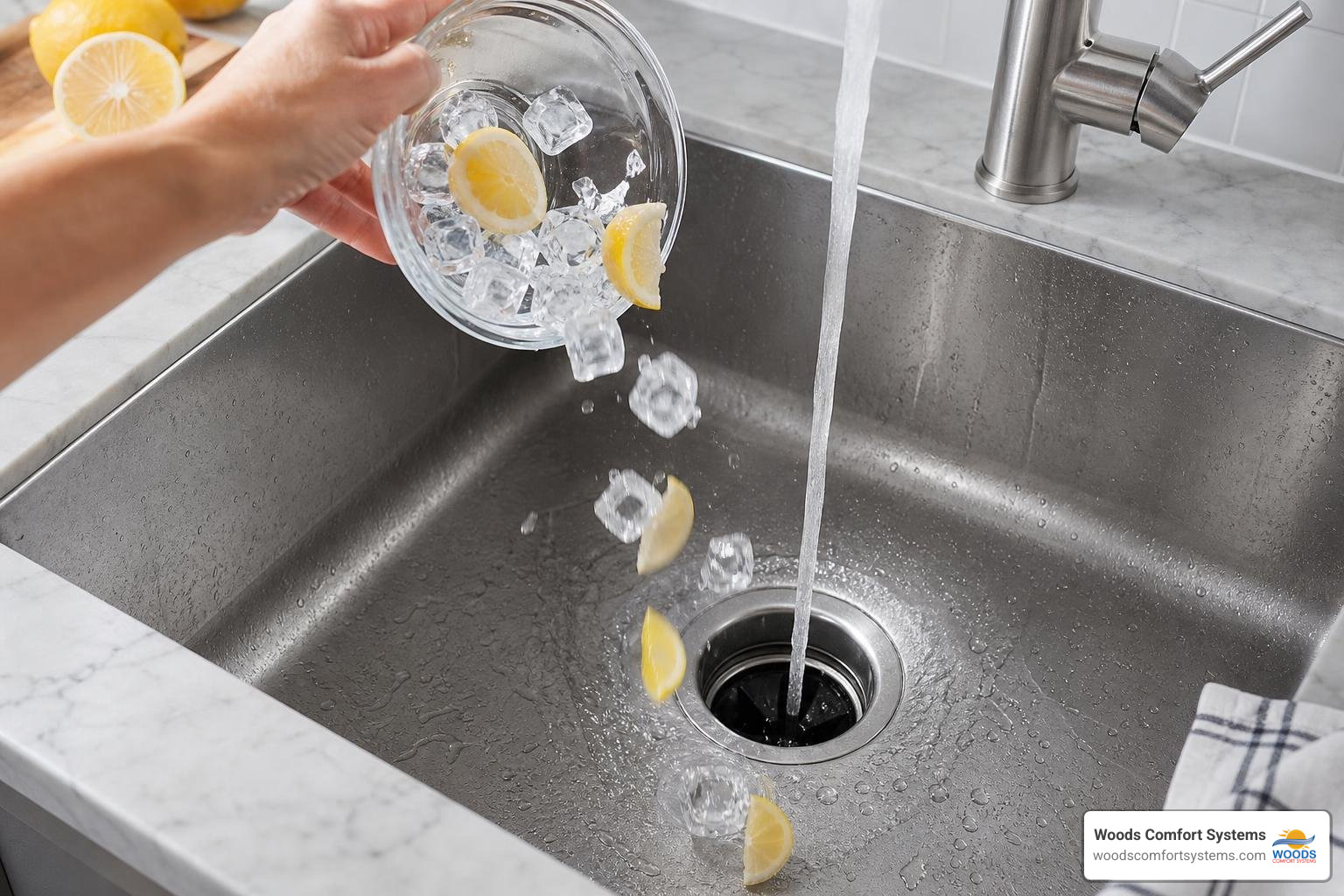
To keep your disposal clean and free of stubborn residue, try these simple maintenance steps:
- Run Cold Water: Always run a strong stream of cold water before, during, and for at least 15 seconds after using the disposal. Cold water is crucial because it solidifies any grease or fats, allowing the blades to chop them up before they can cling to the plumbing lines.
- Clean with Ice and Citrus: Once a month, toss a handful of ice cubes and a few lemon or orange slices into the disposal. Run the unit with cold water. The hard ice scrapes away organic buildup on the flywheel and grind ring, while the citrus oils eliminate unpleasant odors.
- Avoid Chemical Cleaners: Never pour harsh chemical drain openers down your disposal. These caustic chemicals can degrade the internal rubber seals and damage the metal grinding components, leading to premature leaks and motor failure.
For more helpful home maintenance advice, take a look at our guide on common plumbing problems and how to avoid them to protect your entire home plumbing system.
Items You Should Never Put Down the Drain
Your garbage disposal is not a trash can. It is designed solely for light, biodegradable food scraps. To prevent severe clogs and mechanical jams, keep the following items out of your sink:
- Fibrous Vegetables: Celery, corn husks, onion skins, and artichokes contain tough, stringy fibers that can wrap around the rotating shaft, binding the motor and causing a persistent hum.
- Coffee Grounds and Eggshells: While they seem harmless, coffee grounds and eggshells pack together inside your pipes, creating a thick, paste-like clog that blocks wastewater flow.
- Cooking Grease, Fats, and Oils: Liquid grease coats the inside of your disposal and drain lines. As it cools, it solidifies into a thick sludge that traps other food particles and creates stubborn blockages.
- Animal Bones and Fruit Pits: Extremely hard items like beef bones, peach pits, or cherry stones will instantly jam the flywheel and can chip or break the grinding lugs.
If you are already dealing with a slow-draining sink or a stubborn backup caused by these items, our team provides expert professional drain cleaning to clear your pipes and restore proper flow.
Frequently Asked Questions About Garbage Disposal Humming
1. Why is my garbage disposal humming but not spinning?
When your disposal hums but does not spin, it means the motor is successfully receiving electrical power but is physically blocked from rotating. This is almost always caused by a hard object or a mass of fibrous food wedged tightly between the rotating impeller plate and the stationary grind ring.
2. Where is the reset button on a garbage disposal?
The reset button is a small, bright red button located on the bottom underside of the disposal cylinder. It is part of the built-in thermal overload protector, which automatically trips and pops outward to cut power when the motor overheats.
3. Can a humming garbage disposal catch fire?
It is highly unlikely for a humming disposal to catch fire. Modern units are equipped with an automatic thermal overload safety switch. If the motor begins to overheat due to a physical jam, this safety switch will automatically cut power to the unit within a few minutes.
4. What size Allen wrench do I need to unjam a garbage disposal?
Most standard residential garbage disposals use a 1/4-inch hex key (Allen wrench) to manually rotate the flywheel from the bottom socket. Many manufacturers include this specific wrench with the unit, but any standard 1/4-inch hex tool will work.
5. How long do garbage disposals typically last?
The average lifespan of a residential garbage disposal is between 5 and 10 years. This lifespan depends heavily on the quality of the unit, how frequently it is used, and how well it is maintained over time.
6. Is it better to repair or replace a humming garbage disposal?
If your disposal is under 5 years old and experiencing its first jam, a simple DIY repair or professional unjamming is usually best. However, if the unit is over 8 to 10 years old, has a seized motor, or is actively leaking water from the bottom casing, full replacement is the more reliable and cost-effective choice.
7. Why does my garbage disposal hum and then shut off?
This sequence occurs because the thermal overload protector is doing its job. When the jammed motor hums, it rapidly generates heat. Once the temperature reaches a critical limit, the safety switch trips, cutting power and shutting the unit off to prevent electrical damage.
8. Can I use chemical drain cleaners to clear a jammed disposal?
No, you should never use chemical drain cleaners in a garbage disposal. The harsh, corrosive chemicals can quickly destroy the internal rubber seals, corrode the metal grinding components, and splash back out of the drain, posing a serious safety hazard to your skin and eyes.
9. Why is my kitchen sink backing up when I run the disposal?
If your sink backs up with wastewater when you run the disposal, the issue is not a jammed motor. Instead, it indicates a clog in the drain line further down the plumbing system. The disposal is spinning and pushing water out, but a blockage is preventing it from flowing away.
10. When should I call a professional plumber in San Marcos, TX?
You should call a professional plumber if the disposal continues to hum after you have cleared all visible debris and performed the Allen wrench test, if you smell a strong burning odor, or if you notice water leaking from the bottom of the disposal housing.
Conclusion
A garbage disposal humming not working can disrupt your kitchen routine, but in most cases, a quick check with an Allen wrench and a press of the red reset button will have your sink back in working order. When DIY steps are not enough, or if you suspect your unit has reached the end of its lifespan, seeking professional plumbing help is the safest and most efficient path forward.

At Woods Comfort Systems, we have spent more than 60 years providing the families of San Marcos, TX and the surrounding Central Texas communities with honest, reliable home services. Our highly trained, expert plumbers are ready to assist you with everything from quick repairs to complete appliance replacements. If you are dealing with a stubborn disposal issue, a clogged drain, or any other plumbing concern, we are here to help with 24/7 emergency service and the royal customer treatment you deserve. Schedule your professional plumbing service with our friendly team today!