

What Homeowners Are Paying for Water Heater Replacement in 2026
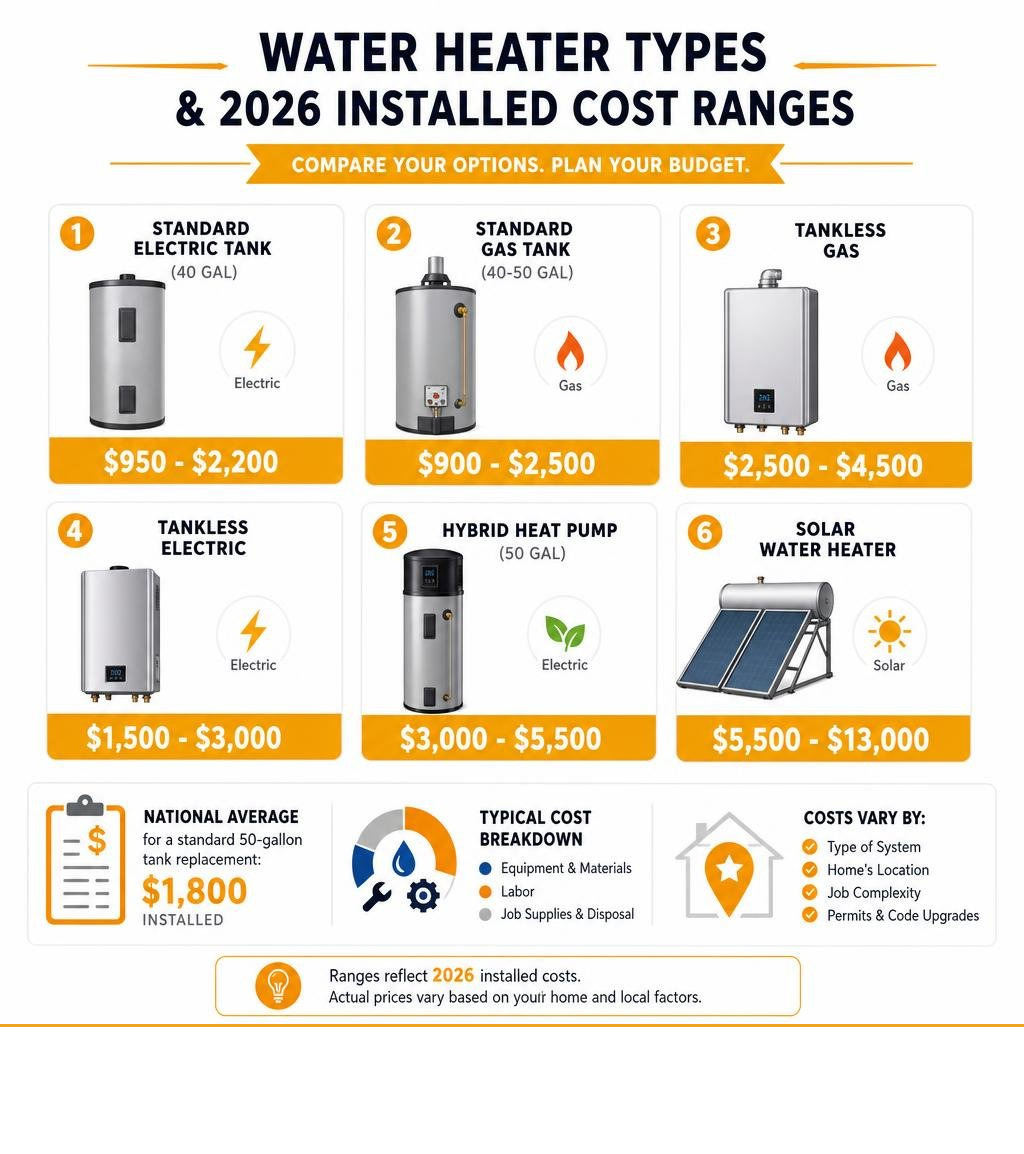
Water heater replacement cost in 2026 ranges from about $1,000 to over $5,500 installed, depending on the type of system, your home’s location, and how complex the job is. Here is a quick snapshot to answer your question right away:
| Water Heater Type | Installed Cost Range (2026) |
|---|---|
| Standard electric tank (40 gal) | $950 – $2,200 |
| Standard gas tank (40-50 gal) | $900 – $2,500 |
| Tankless gas | $2,500 – $4,500 |
| Tankless electric | $1,500 – $3,000 |
| Hybrid heat pump (50 gal) | $3,000 – $5,500 |
| Solar water heater | $5,500 – $13,000 |
The national average for a standard 50-gallon tank replacement runs around $1,800 installed, including the unit, labor, and haul-away of the old system.
Most homeowners in Central Texas pay somewhere in the middle of these ranges for a straightforward like-for-like swap. Costs climb when you add permits, code upgrades, or switch from one fuel type to another.
I’m Chris Woods, owner of Woods Comfort Systems, a third-generation home comfort company with deep roots in Central Texas going back to 1956. Over the decades, our team has handled hundreds of water heater replacement jobs across the region, giving us a clear picture of what fair water heater replacement costs look like and where homeowners can avoid being overcharged. In this guide, I’ll walk you through everything you need to know before calling a plumber.
Understanding Your Total Water Heater Replacement Cost
When you receive a quote for a new water heater, it is important to understand that the equipment itself is only one part of the equation. A complete water heater installation involves several cost categories, including the retail price of the water heater, the specialized labor required for plumbing and gas connections, the installation supplies, and the proper disposal of your old, heavy tank.
To help you visualize where your money goes, let us look at how these elements break down for a typical installation. According to industry data, a standard replacement project is generally divided into three major components: the equipment and materials, the professional labor, and the necessary job supplies.
| Cost Component | Typical Percentage of Budget | General Price Range (2026) |
|---|---|---|
| Water Heater Unit | 45% – 55% | $600 – $3,000 |
| Professional Labor | 35% – 45% | $400 – $1,500 |
| Permits, Supplies, & Disposal | 10% – 15% | $150 – $600 |
As you plan your budget, you can find more details on how these factors change depending on the specific model you choose in this comprehensive guide on how much does a water heater cost in 2026.
The initial price of the equipment is heavily influenced by the technology of the unit. Standard storage tanks are the most economical upfront, while high-efficiency systems like tankless and hybrid heat pump units require a larger initial investment. However, these advanced units can drastically reduce your monthly energy bills, allowing you to recoup the extra cost over time.
Standard Tank Water Heater Replacement Cost
The traditional storage tank water heater remains the most common system in Central Texas homes. These units work by keeping a designated volume of water constantly heated and ready for use. If you are replacing a standard tank with another tank of the same size and fuel source, you are looking at the most budget-friendly installation option.
Electric storage tanks are generally the least expensive to purchase. They use heating elements immersed inside the tank to warm the water. Because they do not require venting for combustion gases, the installation is straightforward and fast. Gas storage tanks cost slightly more upfront and require a dedicated venting system to safely direct exhaust gases outside your home. However, gas models typically have lower operating costs than standard electric tanks and recover hot water much faster.
If you are dealing with a tank that has started to rust or fail, you might notice pooling water around the base of the system. This is a common issue that homeowners face. To understand what causes this and what your next steps should be, read our guide on water heater leaking issues to protect your home from potential water damage.
Tankless Water Heater Replacement Cost
If you are tired of running out of hot water during back-to-back showers, a tankless system might be the perfect fit for your household. Often called on-demand water heaters, these units do not store hot water. Instead, they use high-powered burners or electric elements to heat the water instantly as it flows through the unit on its way to your faucet.
The initial water heater replacement cost for a tankless system is higher than a traditional tank. This is because the installation is more complex. A tankless gas unit often requires a larger gas line to feed its powerful burners and a specialized double-wall venting system to handle high-temperature exhaust. Despite the higher upfront investment, tankless units offer incredible long-term value. They only use energy when you turn on a hot water tap, which eliminates the standby energy losses associated with keeping a large tank hot all day.
Homeowners who make this switch enjoy several distinct advantages, including a lifespan that is often twice as long as a standard tank. You can explore these benefits further in our article on the benefits of upgrading to a tankless water heater. To ensure your new system is set up for maximum efficiency and safety, it is essential to rely on professional tankless water heater installations performed by licensed local experts.
Hybrid Heat Pump and Alternative Systems
For homeowners looking for the absolute highest level of energy efficiency, hybrid heat pump water heaters are an excellent choice. These systems work like a refrigerator but in reverse. Instead of pumping heat out of a box, they pull warmth from the surrounding air and transfer it into your water storage tank. Because they move heat rather than creating it, they are up to three times more efficient than standard electric water heaters.
While hybrid systems have a higher equipment cost, they can save a typical family hundreds of dollars per year on utility bills. Additionally, they qualify for substantial federal tax credits under the Inflation Reduction Act, which can offset up to 30 percent of the total installation cost. They also qualify for local utility rebates in many areas of Central Texas, bringing the net cost much closer to that of a standard electric tank.
Solar water heaters are another alternative option. These systems use solar collectors installed on your roof to heat your water. While they offer incredibly low operating costs, they represent the highest upfront installation cost and require a conventional backup heating source for cloudy days or periods of high hot water demand.
Key Factors That Influence Installation Pricing
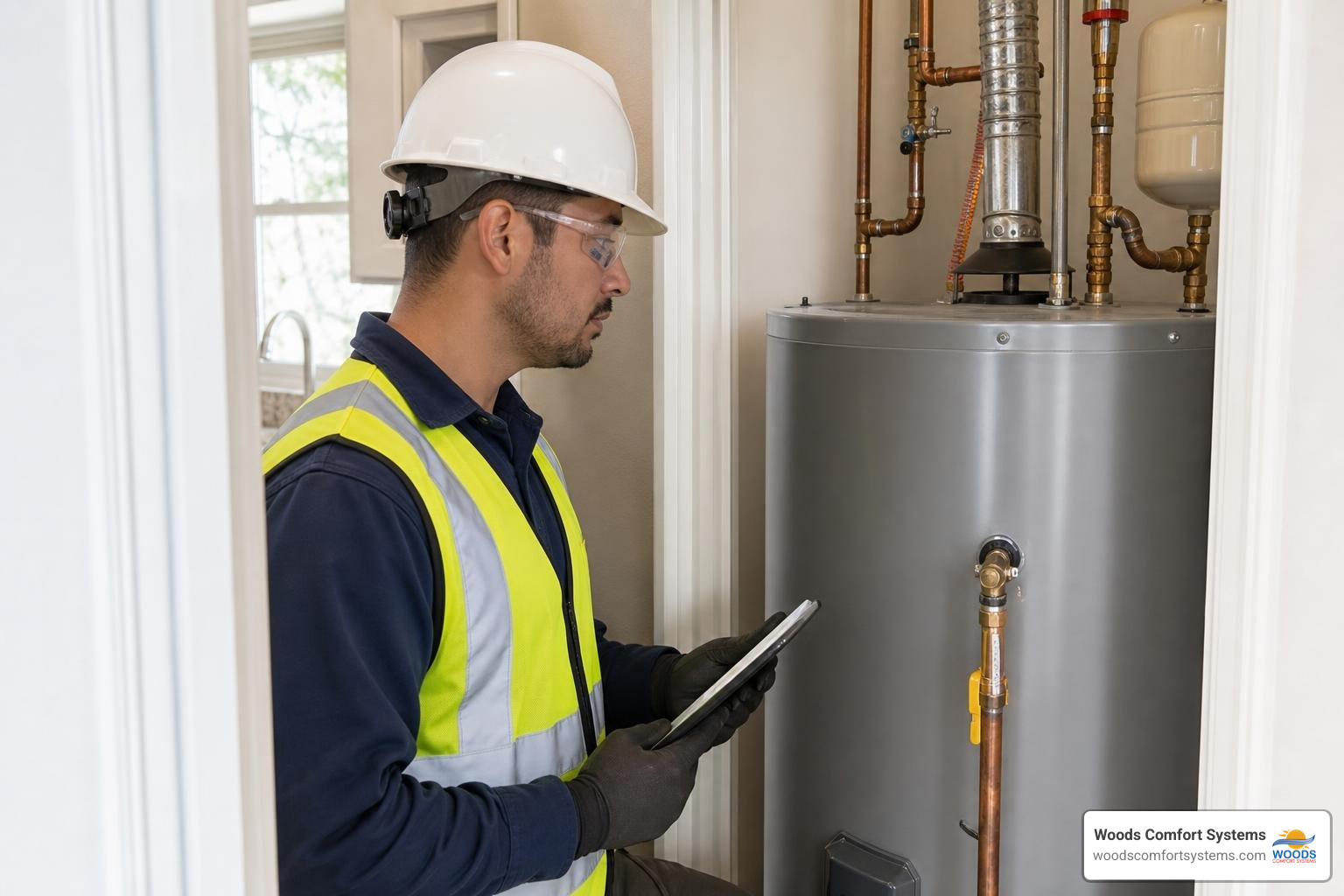
No two homes are exactly alike, which is why water heater installation quotes can vary even for the same model of water heater. Several key variables dictate the final price of your project, including the physical location of the unit, local plumbing codes, and the structural design of your home.
For example, installing a water heater in a wide-open garage is much easier and faster than squeezing a new unit into a tight utility closet or hauling a heavy tank up into a steep attic. If a technician has to navigate narrow stairs, work in a cramped crawl space, or modify your existing plumbing to make the new unit fit, the labor costs will reflect the extra time and effort required.
Sizing and Capacity Requirements
Choosing the right size water heater is crucial for both your daily comfort and the lifespan of the system. A system that is too small will leave you shivering in the shower, while an oversized unit will waste energy heating water you do not need.
For traditional tank systems, sizing is based on the number of people in your household and your peak hot water usage. A family of two can usually get by with a 30 to 40-gallon tank, while a family of four or five typically requires a 50 to 75-gallon unit. For tankless systems, sizing is measured in gallons per minute (GPM) to ensure the system can handle multiple hot water demands at the same time, such as running a washing machine and a shower simultaneously. To find the perfect fit for your home, check out our detailed water heater sizing guide.
Fuel Source and Utility Conversions
The cheapest installation is always a like-for-like swap, meaning you replace an old gas unit with a new gas unit, or an old electric unit with a new electric unit. If you decide to switch fuel sources, you must budget for additional utility connection work.
Switching from gas to electric requires a licensed electrician to run a new 240-volt dedicated circuit from your electrical panel to the water heater location, which can add several hundred dollars to the project. Conversely, switching from electric to gas requires running new gas lines and installing a dedicated vent pipe through your roof or exterior wall. If you are upgrading to a gas tankless system, the technician must also verify that your existing gas meter and gas lines are large enough to supply the high volume of gas the unit demands.
Regional Labor Rates and Location Complexity
Where you live plays a significant role in professional labor rates. High-cost metropolitan areas naturally feature higher plumber fees due to increased business overhead, insurance costs, and local demand.
In Central Texas, labor rates are generally reasonable compared to coastal states, but they still vary between bustling urban centers like Austin, TX and smaller surrounding communities. To see how our local region compares to other areas, you can review the state-by-state data in this guide on the average water heater cost by state in 2026.
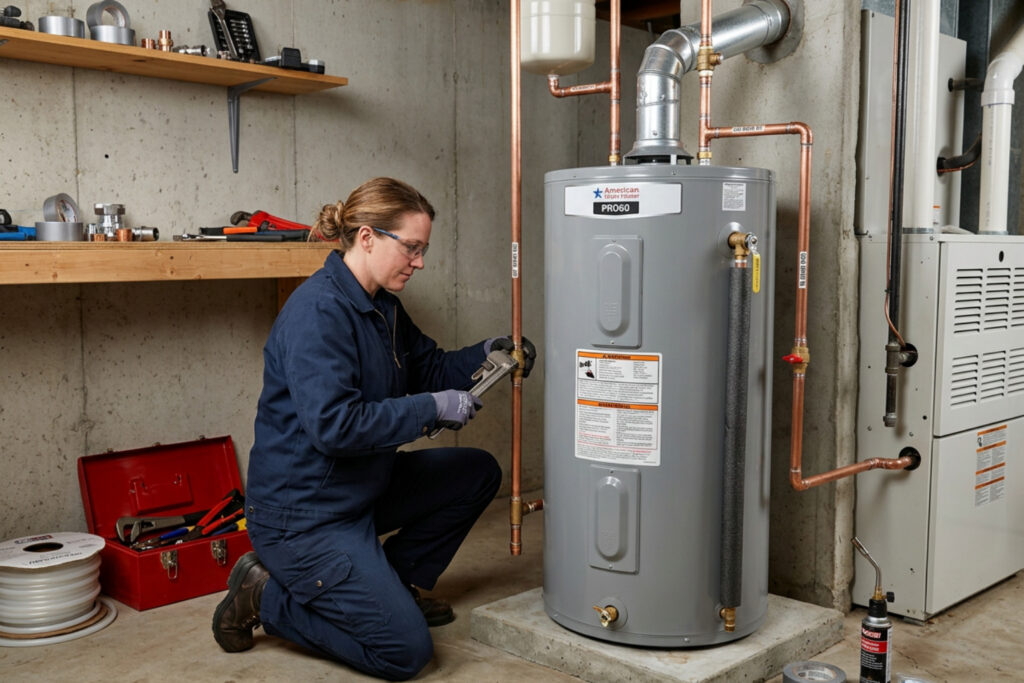
Beyond regional averages, the physical location of the water heater inside your home affects labor. Many homes in San Marcos, TX and Kyle, TX have water heaters located in attics or tight interior closets. Replacing an attic unit requires a multi-person crew to safely lower the old, water-logged tank and hoist the new one into place. It also requires installing specific safety features, such as a sturdy drain pan connected to a waste line, to prevent a future leak from ruining your ceilings.
Hidden Expenses and Code Upgrades to Anticipate
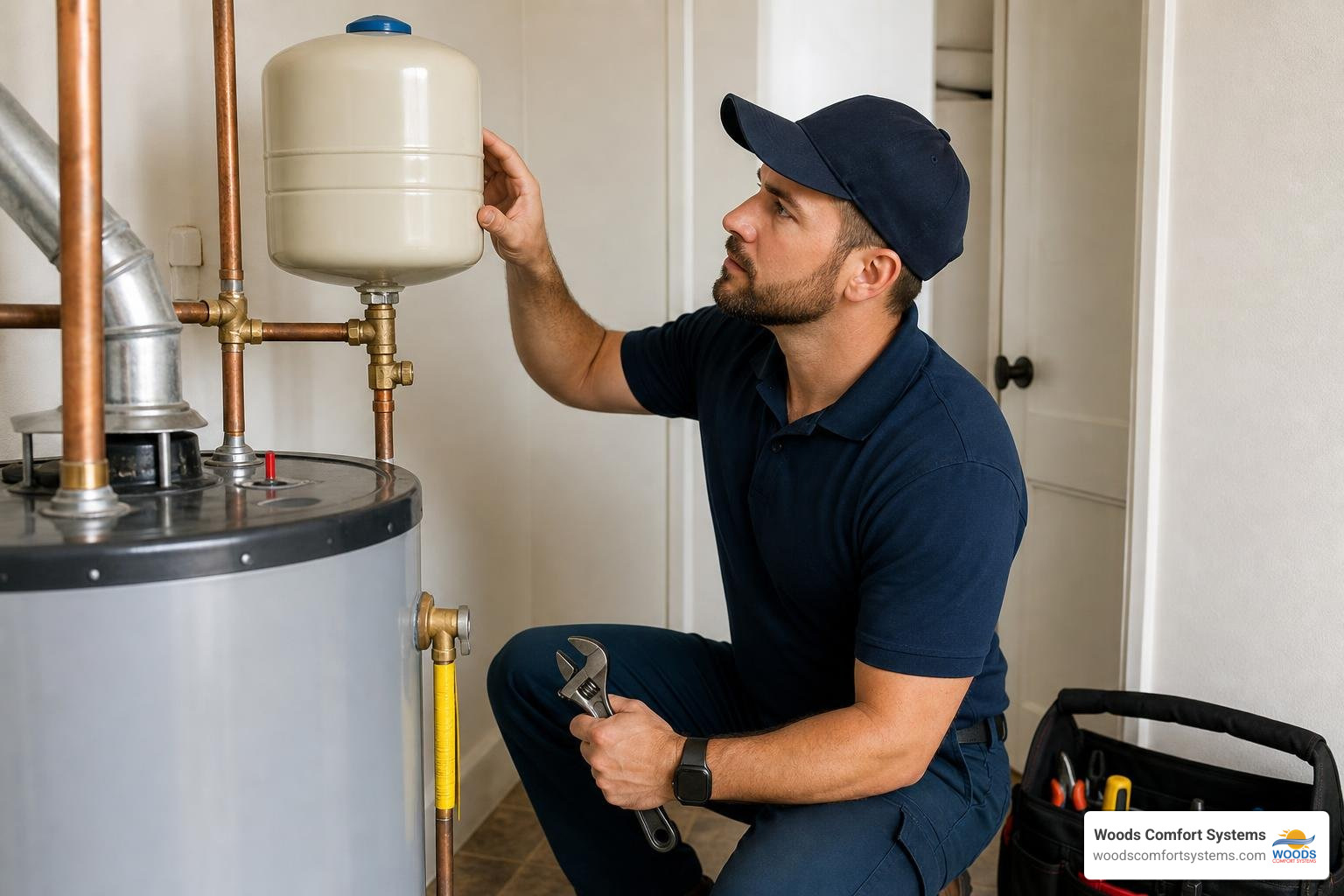
When comparing plumbing quotes, the lowest price is not always the best deal. Some companies advertise a bare-bones price for the water heater unit itself but leave out the mandatory code upgrades, permits, and safety devices required by your local municipality.
When we replace a water heater, we are legally required to bring the entire installation up to current plumbing codes. These safety standards are designed to protect your family and your property, and they should never be skipped or ignored to save a few dollars.
Permits, Inspections, and Disposal Fees
Most cities in Central Texas, including San Antonio, TX and New Braunfels, TX, require a plumbing permit for a water heater replacement. A permit ensures that a city inspector will review the completed work to verify that gas lines, electrical connections, and vents are safe and code-compliant. Permit fees generally range from $50 to $250 depending on your local jurisdiction.
Additionally, you must consider the disposal of your old water heater. Old tanks are heavy, filled with sediment, and cannot simply be left on the curb. A professional installation quote should always include the labor to drain, disconnect, haul away, and responsibly recycle your old unit.
Safety Devices and Code Compliance
Modern plumbing codes require several safety devices that may not have been present when your original water heater was installed. Budgeting for these items ahead of time will prevent any surprises on installation day:
- Thermal Expansion Tanks: In a closed plumbing system, water expands as it heats up, creating high pressure that can damage your pipes and appliances. An expansion tank absorbs this excess pressure, protecting your plumbing system.
- Temperature and Pressure (T&P) Relief Valves: This critical safety valve releases water if the temperature or pressure inside the tank climbs to dangerous levels, preventing system failures.
- Drip Pans and Drain Lines: If your water heater is located in an attic or finished living space, a drip pan must be installed underneath the unit to collect any condensation or leaks and channel the water safely outdoors.
- Sediment Traps: For gas water heaters, a sediment trap must be installed on the gas line to prevent debris from entering and clogging the gas control valve.
Repair vs. Replacement: Making the Right Decision
If your water heater is acting up, you might be wondering if you can get away with a simple repair or if it is time to invest in a complete replacement. Making the wrong choice can lead to wasted money on temporary fixes or an unexpected flood in your home.
Determining the best path forward depends on several key indicators, including the age of your system, the frequency of breakdowns, and the nature of the problem. For a detailed breakdown of how to weigh these choices, read our water heater repair vs replacement guide.
Evaluating System Age and Repair Costs
As a general rule of thumb, standard tank water heaters have a useful lifespan of 8 to 12 years. If your system is approaching or has passed its tenth year, investing in a major repair is rarely a wise financial decision.
Plumbing experts often recommend using the fifty-percent rule: if the cost of repairing your current water heater is more than half the cost of a brand-new system, replacement is almost always the better long-term investment. Modern units are far more energy-efficient than older models, meaning a new installation will start lowering your utility bills immediately. If you are unsure whether your system is salvageable, you can learn about the indicators of severe trouble in our guide on the signs your water heater needs professional attention.
Signs of Imminent Water Heater Failure
Sometimes, a water heater will give you clear warning signs that it is on its last legs before it fails completely. Paying attention to these warning signs can help you schedule a replacement on your own terms rather than dealing with an emergency situation:
- Rusty or Discolored Water: If red or brown water is coming out of your hot water taps but not the cold ones, the inside of your steel tank is likely rusting through.
- Rumbling and Popping Noises: Over time, hard water minerals settle to the bottom of the tank, forming a thick layer of sediment. As the burner heats the water, steam bubbles pop through this crust, creating loud rumbling noises. This sediment layer insulates the water from the heat source, causing the tank metal to overheat and eventually crack.
- Slow Hot Water Recovery: If your system takes hours to provide hot water after a single shower, the heating elements or burners are failing.
To maximize the lifespan of your unit and delay the need for a replacement, it is vital to understand the importance of regular water heater maintenance, which includes flushing the tank annually to clear out destructive sediment.
Frequently Asked Questions About Water Heater Replacement
Replacing a home appliance can bring up a lot of questions. Before we dive into the specific questions, we always recommend that handy homeowners learn the basics of system care. If you want to perform basic maintenance yourself, you can follow our step-by-step how to drain your water heater guide to clear out sediment and keep your system running smoothly.
What is the average water heater replacement cost in 2026?
The national average cost to replace a standard 50-gallon tank water heater in 2026 is approximately $1,800 installed. However, total costs can range from $900 for a basic electric tank swap to over $5,500 for a high-efficiency tankless or hybrid heat pump system with complex installation requirements.
Is it cheaper to install a gas or electric water heater?
Electric water heaters are generally cheaper to purchase and install upfront because they do not require complex venting systems or gas line connections. However, gas water heaters typically cost less to operate month-to-month and recover hot water much faster than standard electric models.
How long does a professional water heater installation take?
A straightforward, like-for-like tank replacement typically takes a professional plumbing crew between 2 and 4 hours to complete. If you are converting from a tank to a tankless system, or if you need to relocate the unit, the project can take a full day due to the necessary gas, electrical, and venting modifications.
Do I need a permit to replace my water heater in San Marcos, TX?
Yes, most municipalities in Central Texas, including San Marcos, TX, require a plumbing permit and subsequent inspection for water heater replacements. This ensures the installation complies with local building and safety codes, protecting your home and keeping your manufacturer warranty valid.
What are the signs that my water heater is failing?
Common signs of failure include water pooling around the base of the tank, rusty hot water, consistent rumbling or popping noises from the unit, a sudden drop in hot water capacity, and the need for frequent repairs to keep the system running.
Is a tankless water heater worth the extra upfront cost?
Yes, for many families, a tankless system is highly worth the investment. Tankless units last 15 to 20 years, which is nearly double the lifespan of a standard tank, and they reduce water-heating bills by up to 30 percent. They are ideal for large households that require a continuous supply of hot water.
Can I replace a water heater myself as a DIY project?
While a highly skilled DIYer might handle a basic electric tank swap, we strongly advise against DIY installations for gas units or tankless conversions. Working with gas lines, high-voltage electricity, and complex venting systems carries significant safety risks, and incorrect installation can lead to gas leaks, fires, or carbon monoxide poisoning.
What code upgrades might be required during replacement?
Depending on when your home was built, you may need code upgrades such as a thermal expansion tank, a safety drip pan with a dedicated drain line, a new gas shutoff valve, updated venting materials, or seismic straps to secure the unit.
How can I save money on my water heater replacement?
You can save money by choosing energy-efficient models that qualify for federal tax credits or local utility rebates. Additionally, scheduling your replacement before your old unit fails completely allows you to shop around for competitive quotes and avoid paying premium emergency service fees.
How long do standard tank and tankless water heaters last?
Standard tank water heaters typically last between 8 and 12 years, depending on water quality and maintenance. Tankless water heaters are much more durable, frequently lasting 15 to 20 years or more when they receive annual maintenance and flushing.
Conclusion
Replacing your water heater is a significant home improvement project, but it does not have to be a stressful one. By understanding the factors that influence the total installation cost, prioritizing code compliance, and choosing the right system for your family’s needs, you can make a confident decision that keeps the hot water flowing for years to come.
Whether you need fast plumbing repairs, seasonal system maintenance, or a complete water heater replacement, our experienced team is ready to deliver royal customer treatment and quality work you can trust. Schedule professional plumbing services with Woods Comfort Systems today to get an accurate, honest estimate for your home.