

What to Do When Your AC Is Leaking Water Inside Your House
AC leaking water inside your house is one of the most common and stressful problems a Central Texas homeowner can face, especially during the peak of summer when your system is running around the clock.
Here is a quick summary of what causes it and what to do first:
Most common causes:
- Clogged condensate drain line (the leading cause)
- Dirty air filter causing frozen evaporator coils
- Damaged or rusted drain pan
- Low refrigerant levels
- Broken condensate pump
- Improper AC installation
What to do right now:
- Turn off your AC at the thermostat
- Switch off the breaker to the unit
- Clean up any standing water
- Check and replace a dirty air filter
- Call a licensed HVAC technician if the leak continues
The water itself is not immediately life-threatening, but it is not harmless either. A typical residential AC system can produce anywhere from 5 to 20 gallons of condensate per day in humid conditions. When that water stops draining properly and starts pooling inside your home, mold growth can begin within 24 to 48 hours, and water damage to ceilings, walls, and flooring can cost thousands of dollars to repair.
I’m Chris Woods, owner of Woods Comfort Systems, a third-generation HVAC company serving Central Texas since 1956, and our team has diagnosed and repaired hundreds of AC leaking water inside house situations across San Antonio, TX, Austin, TX, and the surrounding communities. In this guide, I will walk you through every cause, fix, and prevention step you need to know.
Why Is Your AC Leaking Water Inside House?
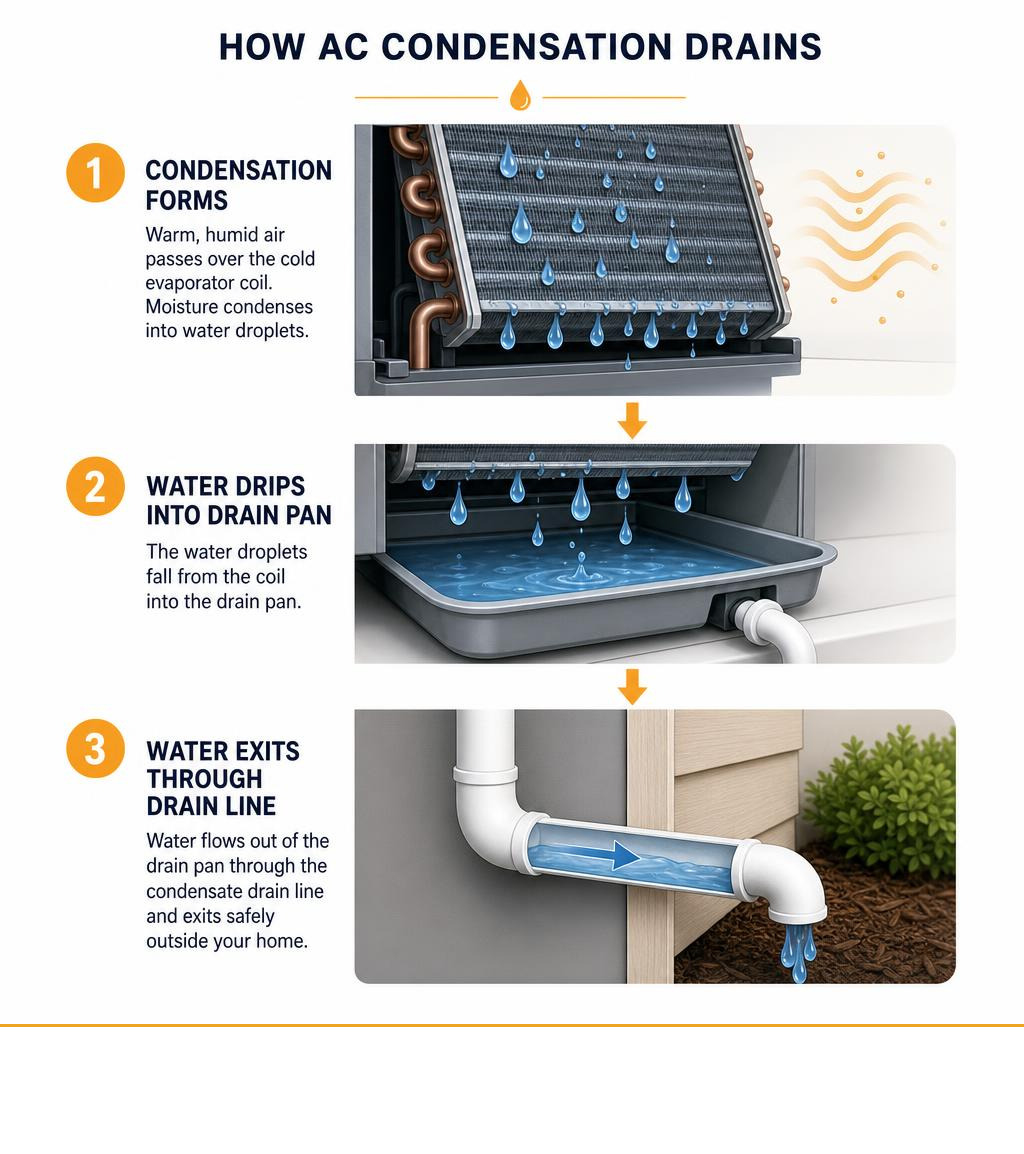
When your AC is running, it does more than just lower the temperature in your home. It also acts as a dehumidifier, pulling moisture out of the warm indoor air. This moisture condenses on the cold evaporator coils, much like water droplets forming on the outside of a cold glass of sweet tea on a hot Texas afternoon.
Under normal circumstances, this water drips off the coils into a primary drain pan and flows safely out of your home through a dedicated PVC drain line. However, if any part of this drainage system fails, you will quickly find yourself dealing with an AC leaking water inside house.
To determine exactly why your system is failing to manage this moisture, we must look at the most common mechanical and operational culprits. You can read more about these issues on the why is my AC leaking water? causes & fixes – Bryant page, or reach out to us directly for professional AC repair services.
Clogged Condensate Drain Line: The Leading Cause of an AC Leaking Water Inside House
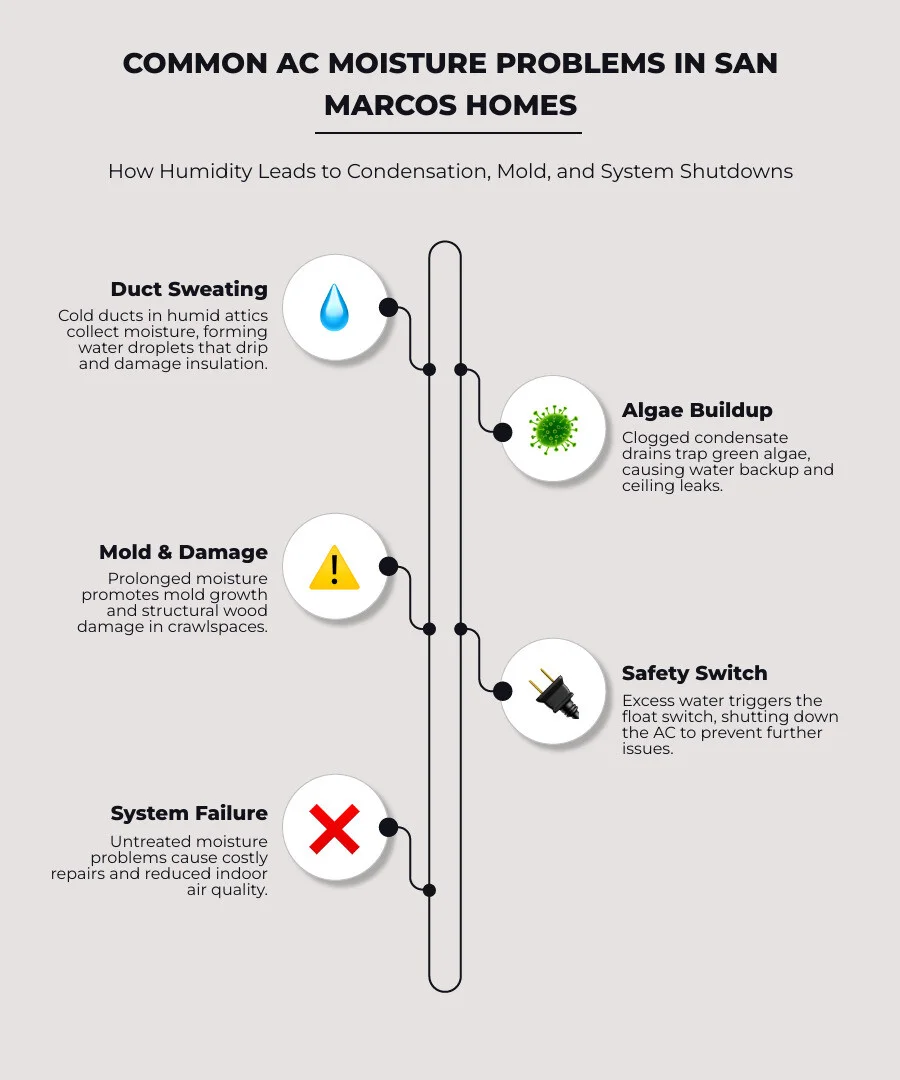
By far, the most frequent reason for water pooling around your indoor unit is a clogged drain line. Over time, the dark, damp environment inside your PVC drain pipe becomes the perfect breeding ground for algae, mold, mildew, and slime.
As these biological materials grow, they combine with household dust and pet dander to form a thick clog. When the path is blocked, the condensation has nowhere to go but to back up and overflow the drain pan, spilling directly onto your flooring or leaking through your ceiling.
Identifying this issue early can save you from major headaches. If you suspect this is your primary problem, you can read our detailed guide on how to handle an AC unit clogged condensate drain line to learn how to clear minor blockages safely.
Dirty Air Filters and Frozen Evaporator Coils
Another major cause of indoor water leaks is a frozen evaporator coil. Many homeowners are surprised to learn that an air conditioner can freeze solid in the middle of a hot summer, but it happens more often than you think.
When your air filter becomes loaded with dust and debris, it severely restricts the volume of warm air passing over the cold evaporator coils. Without sufficient airflow to transfer heat, the temperature of the refrigerant inside the coils drops below freezing, causing the condensation on the outside of the coils to turn into solid ice.
Eventually, that ice will melt, often very rapidly when the system cycles off. This sudden deluge of water easily overwhelms the shallow primary drain pan, resulting in water pouring out of your air handler. If you are experiencing airflow issues, you can follow our step-by-step instructions on how to fix an AC unit not cooling in 5 simple steps to restore proper air balance. For additional troubleshooting tips, you can also consult this guide on how to stop AC water leaks from Direct Energy.
Damaged or Rusted Drain Pans in Older Systems
If your HVAC system is more than 10 to 12 years old, the issue might be a physically compromised drain pan. Older air handlers often utilize metal primary drain pans. Over a decade of constant exposure to water, these metal pans can corrode and rust through completely, allowing water to drip directly through the bottom of the unit.
Modern systems typically use durable plastic pans that do not rust, but even these can crack if they were installed improperly or if the unit has shifted over time. If you have an attic installation, you should always have a secondary drain pan placed underneath the entire unit to catch any overflow before it ruins your ceiling drywall.
Keeping an eye out for these structural failures is vital as your system ages. To learn what to watch for, check out our article on the signs an AC system is headed for trouble in San Marcos, TX.
Is Water Leaking From an AC Unit Dangerous?
While finding a puddle of water in your closet or utility room is certainly annoying, many homeowners want to know if the situation is actually dangerous. The short answer is yes, but not necessarily in the way you might think.
Unlike a gas leak or a carbon monoxide issue, an AC water leak is not an immediate life-threatening emergency. However, leaving water to drip unchecked inside your home presents several serious hazards:
- Electrical Hazards: Your air handler contains high-voltage electrical components, wiring, and circuit boards. If water leaks into these electrical areas, it can cause short circuits, ruin expensive components, or even present a risk of electrical shock and fire.
- Structural Damage: Water naturally follows gravity, traveling along ceiling joists, wall studs, and subflooring. Over time, this constant moisture rots wood framing, warps hardwood flooring, and destroys drywall.
- Mold and Mildew Growth: Mold spores exist naturally in the air, but they require moisture to colonize. A persistent AC leak provides the perfect environment for mold to thrive, which can ruin your indoor air quality and cause respiratory issues for your family.
To understand the full scope of these risks and how they impact your household safety, you can read our comprehensive breakdown on whether water dripping from an air conditioner is dangerous.
The Hidden Risks of Ignoring an AC Leaking Water Inside House
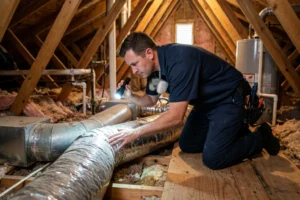
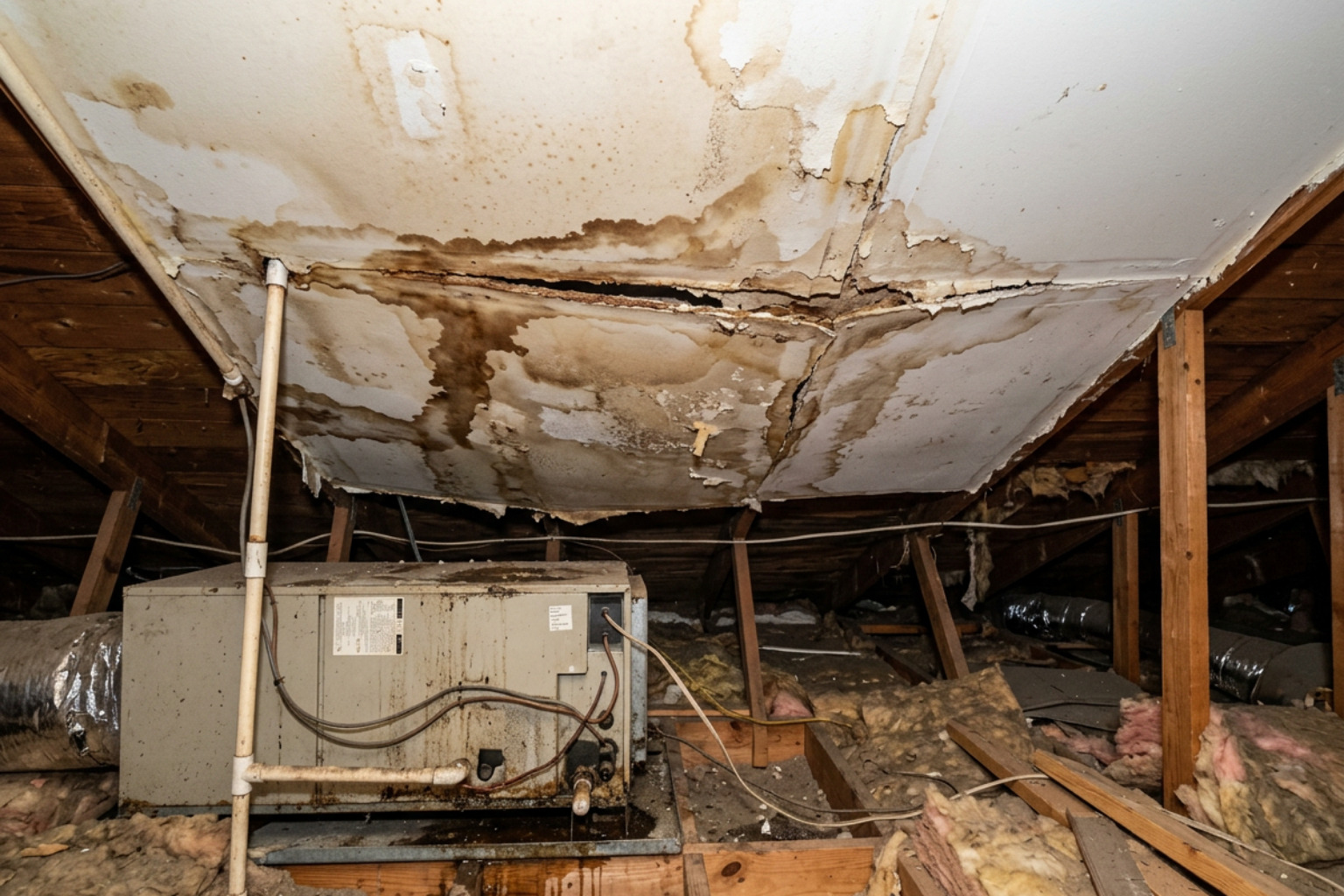
One of the most deceptive aspects of an AC leak is that the visible puddle is often just the tip of the iceberg. This is especially true for systems located in attics or crawlspaces.
By the time you notice a water stain on your ceiling, the water may have already saturated feet of fiberglass insulation, warped your wooden ceiling joists, and created a massive hidden mold colony. Because mold can begin to grow within 24 to 48 hours of moisture exposure, ignoring a seemingly minor drip can quickly turn into a multi-thousand-dollar mold remediation and drywall reconstruction project.
Immediate Steps to Take When Your AC Starts Leaking Water Indoors
If you walk into your utility closet or look up at your ceiling and see water dripping, you need to act quickly to minimize the damage. Do not wait for the scheduled arrival of a technician to take these initial steps:
- Shut Down the System Immediately: Go to your thermostat and turn the system completely off. If the water is pooling near electrical components, go to your home breaker panel and switch off the dedicated circuit breaker for your indoor AC unit. This stops the cooling cycle, prevents the system from producing more water, and eliminates electrical shock hazards.
- Protect Your Belongings and Clean Up Standing Water: Move any furniture, electronics, or personal items away from the wet area. Use towels, a mop, or a wet-dry vacuum to clean up as much standing water as possible to protect your flooring and drywall.
- Inspect the Air Filter: Check your air filter. If it is completely clogged with dust, replace it immediately. If your evaporator coil was frozen, keeping the system off with a clean filter in place will allow the ice to thaw safely.
- Examine the Drain Line and Pan: If your air handler is accessible, look at the drain pan. Is it filled to the brim with water? If so, you are definitely dealing with a clogged drain line or a failed condensate pump.
To help you decide whether you can tackle the fix yourself or if it is time to bring in our team at Woods Comfort Systems, we have put together this simple comparison table:
| Symptom / Issue | DIY Level of Difficulty | Recommended Action |
|---|---|---|
| Extremely dirty air filter | Very Easy | Replace the filter immediately and keep the system off to let any ice thaw. |
| Minor algae clog at the end of the PVC drain line | Moderate | Use a wet-dry vacuum on the outdoor drain pipe to suction out the clog, then flush with vinegar. |
| Rusted, cracked, or leaking primary drain pan | Difficult | Requires professional replacement of the pan, which often involves lifting the heavy evaporator coil. |
| Frozen evaporator coils due to low refrigerant | Complex / Dangerous | Do not attempt to fix. Refrigerant handling requires EPA certification. Call a professional. |
| Malfunctioning condensate pump | Moderate | Replace the pump if you are comfortable with basic wiring, or call an HVAC technician. |
How to Prevent Future AC Water Leaks
The best way to deal with an AC leaking water inside house is to prevent it from happening in the first place. Fortunately, keeping your cooling system dry and running smoothly is relatively simple if you follow a few basic maintenance steps:
- Change Your Air Filters Regularly: This is the single most important maintenance task for any homeowner. Change your air filters every 30 to 90 days, depending on whether you have pets or allergy sufferers in your home.
- Perform Seasonal Drain Line Flushes: Every three months, pour a cup of distilled white vinegar down your condensate drain line access port. The natural acidity of the vinegar kills biological growth and keeps algae from forming clogs.
- Install a Safety Float Switch: If your system does not already have one, ask a technician to install a secondary drain pan float switch. This simple, inexpensive device automatically shuts off your AC system if water begins to back up in the drain pan, preventing water from overflowing into your home.
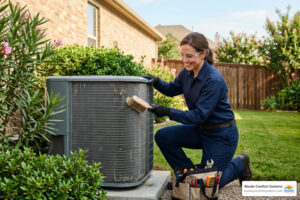
- Schedule Annual Professional Maintenance: Having our certified technicians inspect your system every spring is the ultimate defense against leaks. We thoroughly clean the evaporator coils, flush the drain lines, test the condensate pump, and check refrigerant levels to ensure everything is in perfect working order.
To make keeping up with these tasks effortless, consider signing up for our preventative services. You can find more info about our HVAC maintenance plans to see how we help keep your home comfortable and dry year-round.
Frequently Asked Questions About AC Water Leaks
Is it safe to continue running the AC while it is leaking water?
No, you should not continue running your air conditioner if it is actively leaking water inside your home. Continued operation will only produce more condensation, worsening the water damage to your drywall, ceilings, and floors. Furthermore, running a system with a frozen coil or low refrigerant can cause permanent, expensive damage to your compressor.
How can I identify a clogged condensate drain line?
The most obvious sign of a clogged drain line is water overflowing from the primary drain pan located under your indoor air handler. You might also notice that the outdoor drain pipe, which usually drips water consistently when the AC is running, is completely dry. If your system is equipped with a float switch, a clog will cause the system to shut off repeatedly without cooling your home.
Can a dirty air filter really cause my AC to leak water?
Yes, a dirty air filter is one of the leading causes of indoor water leaks. When airflow is restricted, the evaporator coils get too cold and freeze over. Once the unit cycles off or struggles to run, that accumulated ice melts rapidly and overflows the drain pan, spilling water into your home.
What is the typical cost range to fix common AC water leak issues?
The cost to repair an AC leak varies depending on the root cause. Clearing a simple clogged drain line is relatively inexpensive and can often be done as a DIY fix for the cost of a bottle of vinegar or a wet-dry vacuum attachment. Professional drain clearing or replacing a failed condensate pump is also highly affordable. However, replacing a rusted drain pan or locating and repairing a major refrigerant leak can be more significant investments.
How much water does a typical residential AC system produce per day?
In the humid climate of Central Texas, a typical residential air conditioning system can produce anywhere from 5 to 20 gallons of water per day. This high volume of water is why a properly functioning drainage system is so critical to protecting your home from structural damage.
How fast can mold start growing after an AC water leak?
Mold spores can begin to germinate and colonize wet building materials, such as drywall, carpet padding, and wood framing, within 24 to 48 hours of moisture exposure. This is why immediate water cleanup and system shutdown are so important when you discover a leak.
When should I call a professional HVAC technician for an AC leak?
You should call a professional if you suspect a refrigerant leak, if your drain pan is cracked or rusted, or if you have cleared the drain line and the system continues to leak water. Any issue involving electrical components, internal wiring, or refrigeration sealed systems requires specialized training and tools.
Does homeowners insurance cover water damage from an AC leak?
Homeowners insurance typically covers water damage if the leak was sudden and accidental, such as a pipe bursting or a component failing unexpectedly. However, if the insurance adjuster determines that the leak was the result of long-term maintenance neglect, such as never changing your air filter or failing to clear a known clog, your claim may be denied.
Why is my AC leaking water but still cooling the house?
If your system is still cooling but leaking water, it usually means your evaporator coils are working fine, but your drainage system has failed. A clogged PVC drain line, a cracked drain pan, or a malfunctioning condensate pump will allow water to escape inside your home even while the system successfully lowers your indoor temperature.
How often should I schedule AC maintenance to prevent leaks in San Marcos, TX?
We highly recommend scheduling professional HVAC maintenance at least once a year, ideally in the spring before the intense Texas summer heat sets in. This ensures your drain lines are clear, your coils are clean, and your system is fully prepared to handle the high humidity levels of our local climate.
Conclusion
Dealing with an AC leaking water inside house can be a stressful experience, but acting quickly and performing regular preventative maintenance can save your home from costly water damage and mold remediation. By keeping your air filters clean, flushing your drain lines with vinegar, and partnering with a trusted professional, you can keep your home cool and dry all summer long.
If you are facing an active AC leak or want to schedule your annual system tune-up, our family-owned team is here to help. Whether you need fast AC repairs, seasonal HVAC maintenance, or a complete system replacement, the team at Woods Comfort Systems is ready to help. Schedule your professional HVAC service today and let our experienced technicians provide you with the royal customer treatment you deserve.