



Fall Allergies Indoor Air Quality Checklist for Central Texas Homes
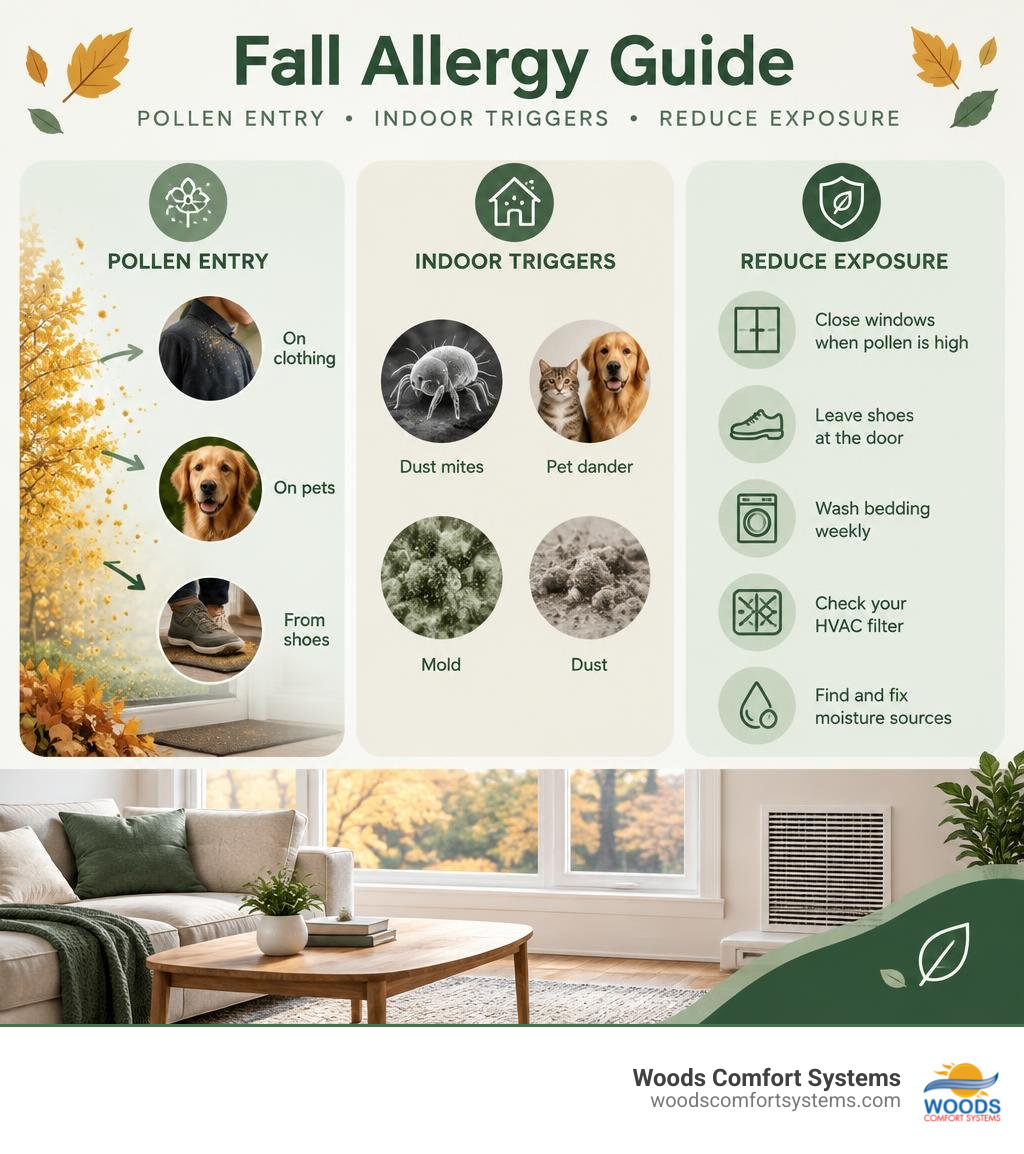
Fall allergies indoor air quality problems often start when pollen comes inside on shoes, clothing, and pets and mixes with dust, dander, and indoor moisture. To reduce the indoor load, focus on limiting what enters, keeping the HVAC system maintained, and resolving damp conditions promptly.
Simple household steps can help: close windows when outdoor pollen is high, leave shoes at the door, wash bedding regularly, and check the filter on schedule. Homeowners can safely check the thermostat, filter, breaker or switch, vents, and outdoor debris. Work involving electrical components, gas connections, refrigerant, or sealed equipment should be handled by our technician.
Outdoor pollen can arrive on clothing, pet fur, and everyday foot traffic. Inside, dust mites, pet dander, and moisture can add to the load. If coughing, wheezing, or other symptoms are severe, talk to your doctor.
Fall Allergies and Common Indoor Triggers
When autumn arrives across Central Texas, cooler evenings can bring more time indoors. Pollen from weeds and other plants may still enter on shoes, clothing, pet fur, and through frequently opened doors. Once inside, it can mix with dust, dander, and moisture-related concerns already present in the home.
Pollen, Dust, and Moisture Inside the Home
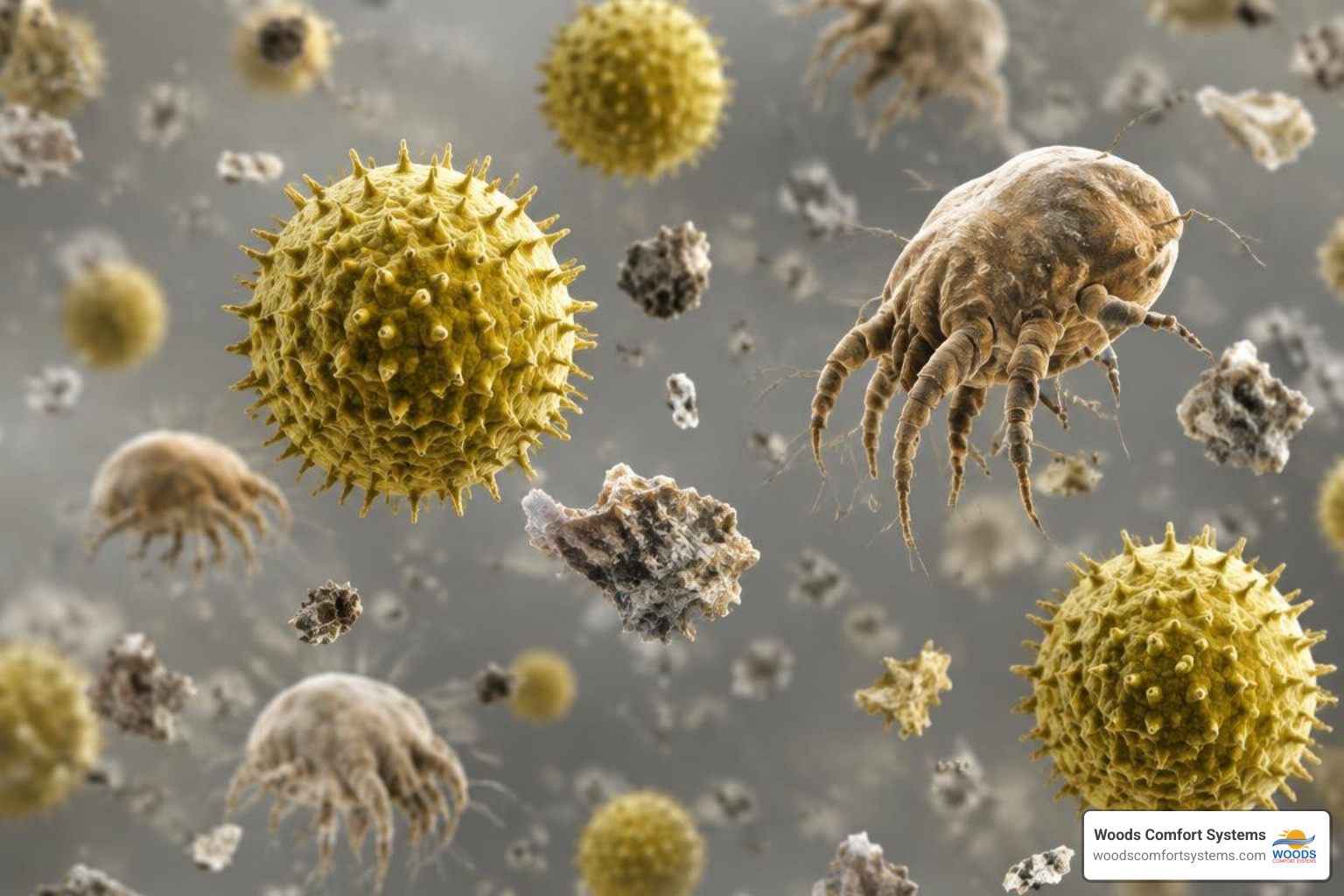
Ragweed and outdoor mold spores can be part of the fall pollen season, but indoor conditions matter too. Damp spots, musty odors, or condensation can point to a moisture issue worth addressing. Keep bathrooms and kitchens ventilated, clean up spills promptly, and have our technician assess persistent moisture around HVAC equipment or ductwork.
Pets and fabrics can also carry allergens from outdoors. A quick wipe of paws after walks and regular laundering of pet bedding can limit what gets transferred to rugs, furniture, and bedrooms. For more practical pet-related steps, see managing pet dander.
Everyday Activity Can Bring Allergens In
Early fall routines often mean sports gear, backpacks, and jackets moving through the house each day. Create a drop zone near the entry, keep shoes off carpeted areas, and store outdoor gear away from bedrooms when possible. These steps do not eliminate allergens, but they reduce the amount that settles into soft surfaces.
Dust and dander can build up in bedding, rugs, and upholstered furniture, especially in rooms that see heavy use. Regular cleaning and properly maintained filtration work together. Homeowners looking for bedroom-focused cleaning ideas can review these dust mite tips.
What’s in the Air This Fall in Central Texas
Fall in Central Texas can bring a mix of outdoor triggers that find their way indoors. Weed pollen, including ragweed, can remain active as the weather changes. Outdoor mold spores can also be more noticeable when damp leaves, soil, and other organic material stay wet after rain. Warm days may keep pollen around longer, even when mornings and evenings start to feel cooler.
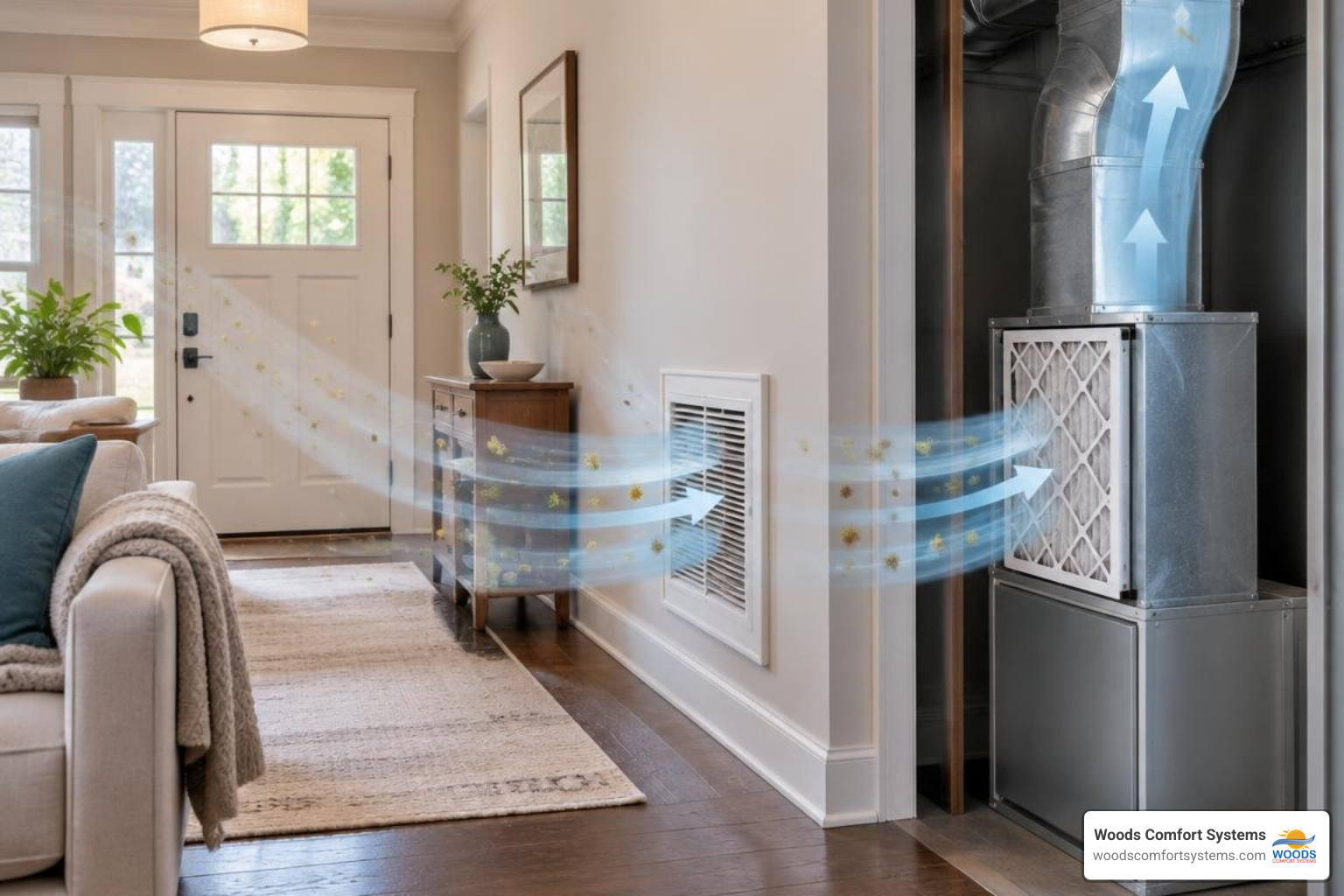
These particles do not stay outside automatically. They can come in on shoes, clothing, pet fur, and air that enters through open doors or windows. Once indoors, they can settle into rugs, furniture, bedding, and other soft surfaces. Closing windows on high-pollen days, removing shoes near the entry, and keeping up with routine cleaning can limit how much outdoor material gets carried through the home. Checking local pollen reports can also help households decide when to take extra precautions.
Central Texas residents often deal with mountain cedar pollen later in winter. Preparing the home during fall can also make it easier to manage cedar season when it arrives. A properly selected filter can capture airborne particles as HVAC air moves through the system, while closed windows and moisture control help reduce other indoor contributors. Address damp areas promptly and use exhaust ventilation in kitchens and bathrooms to limit conditions that can support mold growth.
Everyone responds differently to airborne irritants. Questions about symptoms, their causes, or treatment are medical questions for a doctor. For home comfort concerns, a technician can evaluate airflow, filtration, and moisture-related HVAC conditions without homeowners opening sealed equipment.
HVAC Filtration, Humidity, and Professional System Care
Your HVAC system moves air through the home, so filter condition and airflow can influence comfort during pollen season. A clogged or overly restrictive filter can make the system work harder and may reduce airflow. A seasonal visit can help identify filter, airflow, and equipment concerns before they become larger problems.
Choosing the Right Filter for Your System
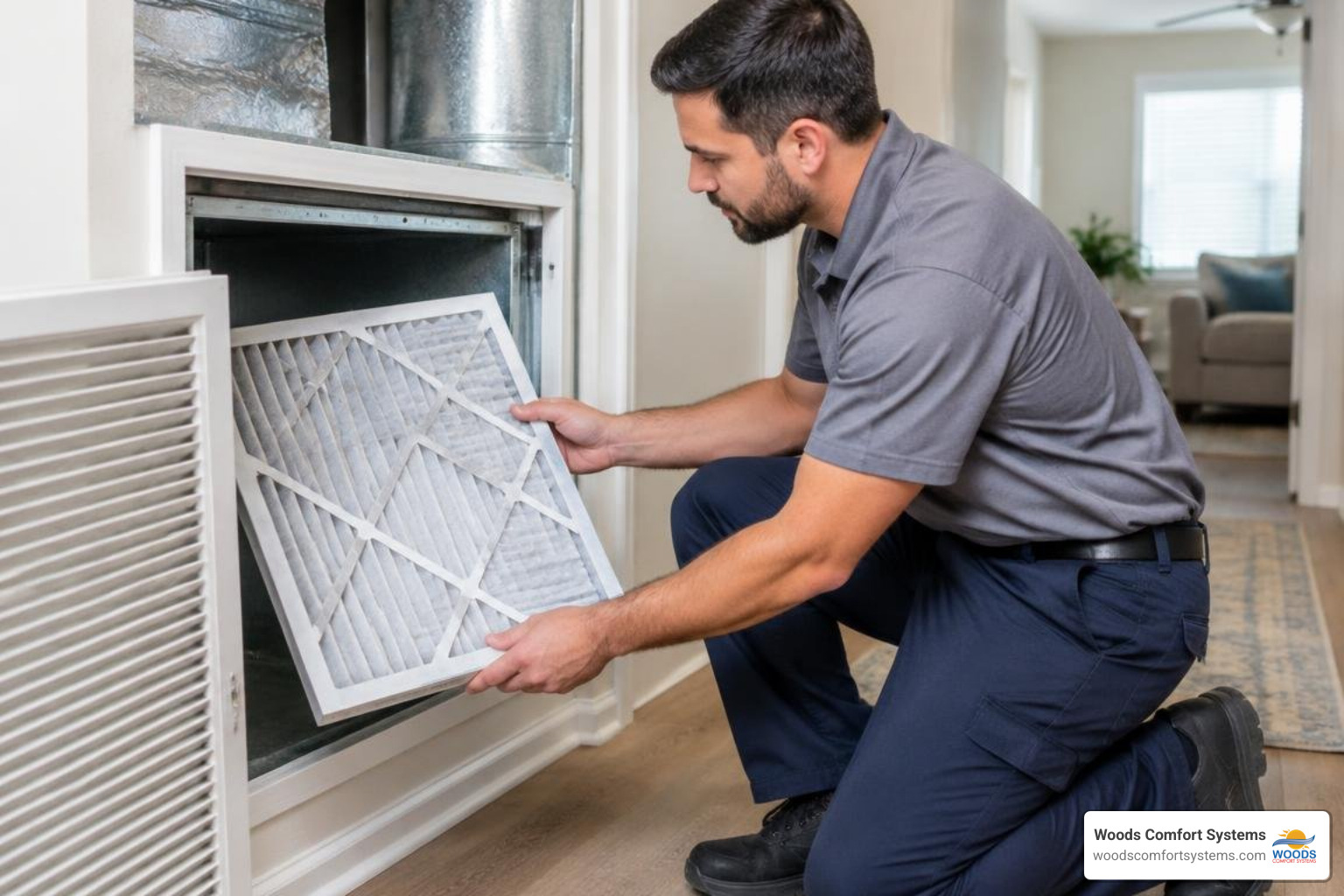
A higher-efficiency media filter can catch more pollen and fine airborne particles than a basic filter, but it must suit the system. Our technician should confirm that the equipment can handle the added airflow resistance before making a change. For a clearer look at filter options, read about the best AC filter.
If the system is not running normally, do not open sealed components or attempt electrical or gas repairs. Our technician can diagnose those issues safely.
Keeping Humidity in a Healthy Range
Humidity can make indoor air feel stuffy and can support conditions that allow mold and dust mites to thrive. The EPA advises keeping indoor humidity below 60 percent, ideally between 30 and 50 percent. Use bathroom and kitchen exhaust ventilation, watch for leaks or condensation, and ask our technician to investigate ongoing humidity concerns.
Ductwork and Airflow Checks Before Winter
Leaky, damaged, or disconnected ductwork can pull dust and unconditioned air into the system. Homeowners can keep vents open and clear of furniture, but our technician should inspect sealed duct connections, airflow balance, and other system components. Professional ductwork service can address problems that are not visible from the living space.
A Recent Service Call in San Marcos
A San Marcos homeowner dealing with heavy cedar pollen indoors learned that their filtration system was undersized. Cedar pollen is most associated with winter in Central Texas, but the same filtration concern can affect a home during any seasonal pollen period. We upgraded the HVAC system to a high-efficiency media filter, which reduced allergens and improved airflow throughout the home. Our NATE-certified technicians can evaluate filtration and airflow together.
Air Purifiers, UV Lights, and Media Filters: What Each Does
A media filter works inside the HVAC system to capture airborne particles as air moves through it. It can help reduce the amount of pollen, dust, and other particles that circulate through the home, but the filter needs to fit the equipment and be changed on an appropriate schedule. Our technician can check whether a higher-efficiency media filter is a good match for the system’s airflow needs.
A whole-home air purifier is installed as part of the HVAC system and is designed to support cleaner indoor air throughout the house. Depending on the type of equipment and the home’s needs, it may help address airborne particles or odors that are a recurring concern. For more information, see air purifier options. It is not a substitute for routine cleaning, moisture control, or needed HVAC maintenance, but it can be a useful part of a broader indoor-air plan.
A UV light is typically placed near HVAC components where moisture can collect. It is intended to support cleaner system conditions and can be considered when a technician identifies an appropriate use for it. For a closer explanation of this option, see the UV light guide.
The best choice depends on the home, existing HVAC equipment, household concerns, and maintenance habits. Our technician can recommend the right combination of filtration or indoor-air equipment after an on-site evaluation. Explore indoor air quality services when you would like help choosing an option that suits your home.
A maintenance plan gives our technician a regular opportunity to review filtration, drainage, and seasonal system performance before smaller concerns become larger problems.
Practical Steps for a Healthier Autumn Home
Fall allergies indoor air quality concerns are easier to manage with household habits and HVAC care. Focus on bedrooms and high-use rooms, and avoid repairs beyond basic homeowner checks.
A few practical habits can reduce what gets carried into living areas:
- Set up a shoe-removal area near entry doors.
- Keep jackets, sports uniforms, and backpacks away from beds and upholstered furniture.
- Wipe pet coats and paws after outdoor time.
- Run kitchen and bathroom exhaust fans during moisture-producing activities.
- Use damp cloths for dusting instead of dry dusters.
- Vacuum rugs and carpets regularly with equipment designed to contain fine dust.
Build these tasks into a weekly routine. Start with the entryway, bedroom floors, and filter cabinet, then expand as needed. Consistent steps help homeowners notice returning concerns early.
Seasonal Weather and Indoor Comfort
Warm days can continue into October across San Marcos and the Hill Country. That can extend the time when outdoor pollen is tracked indoors. As evenings cool and the heating system starts running again, dust that settled near vents or within the return path can begin moving through the home. Replacing a loaded filter before the first cold front supports steadier airflow and gives the system a cleaner start to the season. If the filter loads unusually fast, our technician can help identify the cause. Checking the filter, keeping windows closed when pollen is high, and arranging a seasonal HVAC visit can help the home transition into cooler weather.
When a cold front arrives, families often close windows and begin using heat more often. Before that change, make sure the heating system is ready for seasonal use. If you notice a musty smell, inconsistent airflow, or an unusual system sound, our technician should inspect the equipment.
Make Bedrooms Lower-Allergen Spaces
Bedrooms are a sensible place to focus because bedding and soft furnishings can hold dust and dander. Use allergen-resistant covers if they suit your household, wash bedding regularly, and keep pets off sleeping surfaces when possible. A portable air cleaner may be useful in some rooms, but the HVAC system and the home’s moisture conditions still need attention.
It also helps to keep return vents unobstructed and avoid storing boxes, clothing, or furniture directly against them.
Signs Your Indoor Air Needs Attention
A home may need closer indoor-air attention when dust returns quickly after cleaning, rooms feel persistently stuffy, or a musty smell keeps coming back. These signs can have more than one cause, so it helps to notice where and when they occur. Some people also find that coughing, congestion, or irritation eases when they spend time away from home. That pattern is worth discussing with a doctor if symptoms are severe or persistent. At home, note recent filter changes, moisture concerns, and rooms with uneven airflow. Our technician can use those details to evaluate HVAC-related conditions safely without homeowners opening sealed equipment.
Avoid relying on one cleaning task. Consistent filter changes, routine cleaning, and prompt attention to moisture or airflow problems provide a dependable seasonal plan.
Frequently Asked Questions About Fall Allergies and Indoor Air
Should I run my HVAC fan continuously during allergy season?
Continuous fan operation can move air through the filter more often, but it may not be the best setting for every home. Ask our technician which thermostat setting supports your equipment, comfort needs, and humidity control.
What should I check before calling for an HVAC visit?
Homeowners can check the thermostat setting, replace a dirty filter, make sure breakers or switches are on, confirm vents are open, and clear debris from around outdoor equipment. Do not attempt repairs involving wiring, gas, refrigerant, or sealed system parts.
Can a dirty filter cause uneven comfort from room to room?
A dirty filter can restrict airflow and may contribute to comfort differences, but it is not the only possible cause. Ductwork, equipment settings, and other system conditions may also need professional evaluation.
What indoor humidity level should I aim for in fall?
Keeping indoor humidity below 60 percent, with a target between 30 and 50 percent when practical, can help limit moisture-related indoor air concerns. If condensation, damp areas, or musty odors continue, schedule an HVAC evaluation.
When is the best time to schedule fall maintenance?
Early fall or October is a useful time to have the system checked before heating use becomes routine. A maintenance visit can review filter condition, airflow, drainage, and the equipment’s overall operation.
Conclusion
Fall allergies indoor air quality planning does not have to be complicated. Start with safer homeowner checks, regular cleaning, filter changes, and a call for professional help when moisture, airflow, or equipment concerns persist.
Written by Chris Woods, Owner, Woods Comfort Systems. Chris is the third generation of the Woods family in Texas HVAC and has led Woods Comfort Systems in San Marcos since 2010.
Woods Comfort Systems is family-owned since 1956 and represents three generations of the Woods family serving San Marcos and Central Texas. With 4.9 stars on Google, the team helps homeowners across Hill Country communities such as Austin, New Braunfels, Kyle, Buda, and Wimberley with practical HVAC and indoor air solutions. Contact us to schedule service for a technician to assess your home.
Woods Comfort Systems · 1900 Dutton Dr, San Marcos, TX 78666 · (512) 253-8927