

Gas Line Repair Starts With Safety
Gas line repair starts with protecting people, not trying to find or stop a leak yourself. If you smell rotten eggs or hear hissing near a gas line, leave the area at once. Do not use light switches, phones, or the gas meter while inside. From a safe distance, call 911 and your gas utility, then stay away until they say it is safe.
Homeowners should only take safe steps: leave the home, call for help from outside, and keep appliance and vent areas clear when there is no active emergency. Do not try to trace an odor, apply a temporary fix, move an appliance, or operate a valve. Our technician handles work on gas piping, valves, appliances, testing, and repairs. A natural gas leak can create a fire or explosion risk, while carbon monoxide is a separate combustion hazard.
Critical Warning Signs and Causes of Gas Piping Failures
Natural gas is a reliable fuel for heating, cooking, and hot water, but it is naturally colorless and odorless. Utilities add mercaptan, which creates the familiar rotten egg odor that can alert people to a possible leak. If that odor is present, leave first and call for help from outside rather than investigating the source.
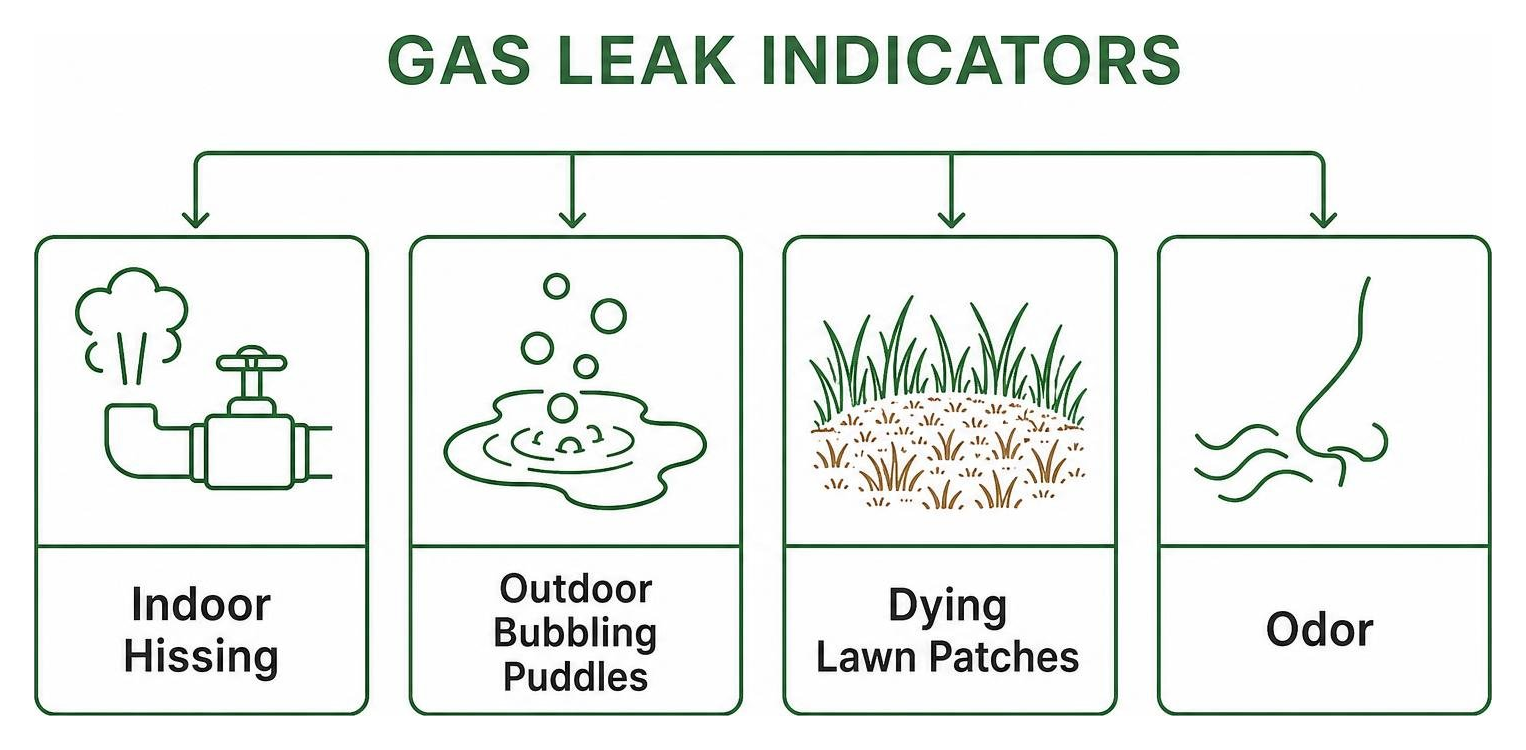
Other warning signs can include hissing near a line or appliance, unexplained dead vegetation near an outdoor line, bubbling in standing water, or dust moving from the ground near buried piping. Headaches, nausea, dizziness, and eye irritation can have many causes, so they are not a reliable way to identify a gas leak. For a suspected gas leak, follow the safety steps below rather than trying to identify the source.
Fuel gas and carbon monoxide are different hazards. Escaping gas can ignite, while incomplete combustion in an appliance can produce carbon monoxide. The CDC notes that carbon monoxide is colorless and odorless and recommends a battery-operated or battery back-up CO detector. If a furnace has an unusual odor, review this gas smell guidance after the immediate safety concern has been addressed.
Visual and Environmental Indicators of Leaks
Watch for changes around appliances, piping, and the yard, but do not attempt to test a line, valve, or connection yourself. Common signs include:
- Hissing or whistling near supply lines, shut-off valves, or appliance connections
- Unexplained brown or dead patches of grass near a buried line while surrounding vegetation remains green
- Continuous bubbling in puddles, mud, or landscape water features above an underground line
- Dirt, dust, or light debris blowing from cracks in soil or paved areas
- An unusual odor near a furnace, water heater, range, dryer, or outdoor appliance
Gas Appliances That Share Your Home’s Gas Lines
The same gas supply may serve a furnace, water heater, range, dryer, fireplace, pool heater, or outdoor kitchen. A problem near one appliance can affect the safe operation of the whole system. Keep the area around appliances and their vents clear of storage, debris, and other obstructions, but leave any inspection, adjustment, or repair to our technicians. For combustion-related symptoms or concerns, this guide to carbon monoxide warning signs can help homeowners recognize when to get help.
Piping can develop problems because of corrosion, loose connections, accidental damage, aging components, or movement in the ground. In Central Texas, shifting clay soil can place stress on buried lines and connections over time. Our technicians evaluate the full system instead of assuming that a visible symptom identifies the only problem.
Signs a Gas Appliance Needs a Professional Check
Gas appliances can show signs of trouble even when there is no obvious leak. A burner flame that looks yellow or orange instead of a steady blue flame can indicate a combustion or adjustment concern. Soot or scorch marks around a furnace, water heater, range, fireplace, or other appliance also deserve prompt professional attention. A pilot light that repeatedly goes out, when the appliance uses one, is another reason to stop relying on the appliance until it is checked.
Pay attention to changes that occur when an appliance starts or runs. Unusual odors, delayed ignition, new noises, or a water heater or furnace that struggles after a period of no use can point to an issue with the appliance, its connections, or its safe operation. A carbon monoxide detector alarm is an emergency: leave the home and call 911 first. Do not re-enter until emergency personnel says it is safe.
If it is safe to do so, stop using the affected appliance and call our technician for an evaluation. Our technician can check the appliance connections, venting, ignition components, and overall operation. Never try to adjust burners, valves, pilot lights, or gas controls yourself. Professional service helps identify the cause without putting homeowners at risk or overlooking a related problem elsewhere in the system.
Seasonal Risks in Central Texas
Fall often brings furnaces, water heaters, and gas fireplaces back into regular use after lighter use during warmer weather. Before relying on these appliances again, it is a good time to have gas appliances and visible connections checked by our technicians. A professional visit can identify concerns around accessible piping, shut-off areas, appliance connections, and venting without asking homeowners to inspect or adjust gas components themselves.
Central Texas weather can also affect buried lines over time. Long dry periods can cause clay soil to shift, and heavy rain can change soil conditions again. That movement may place stress on buried piping and connections, especially around outdoor appliances or lines that serve detached spaces. Watch for unusual odors, hissing, dead vegetation, bubbling water, or disturbed soil, then follow the safety steps below rather than investigating the source.
What to Do If You Suspect a Gas Leak
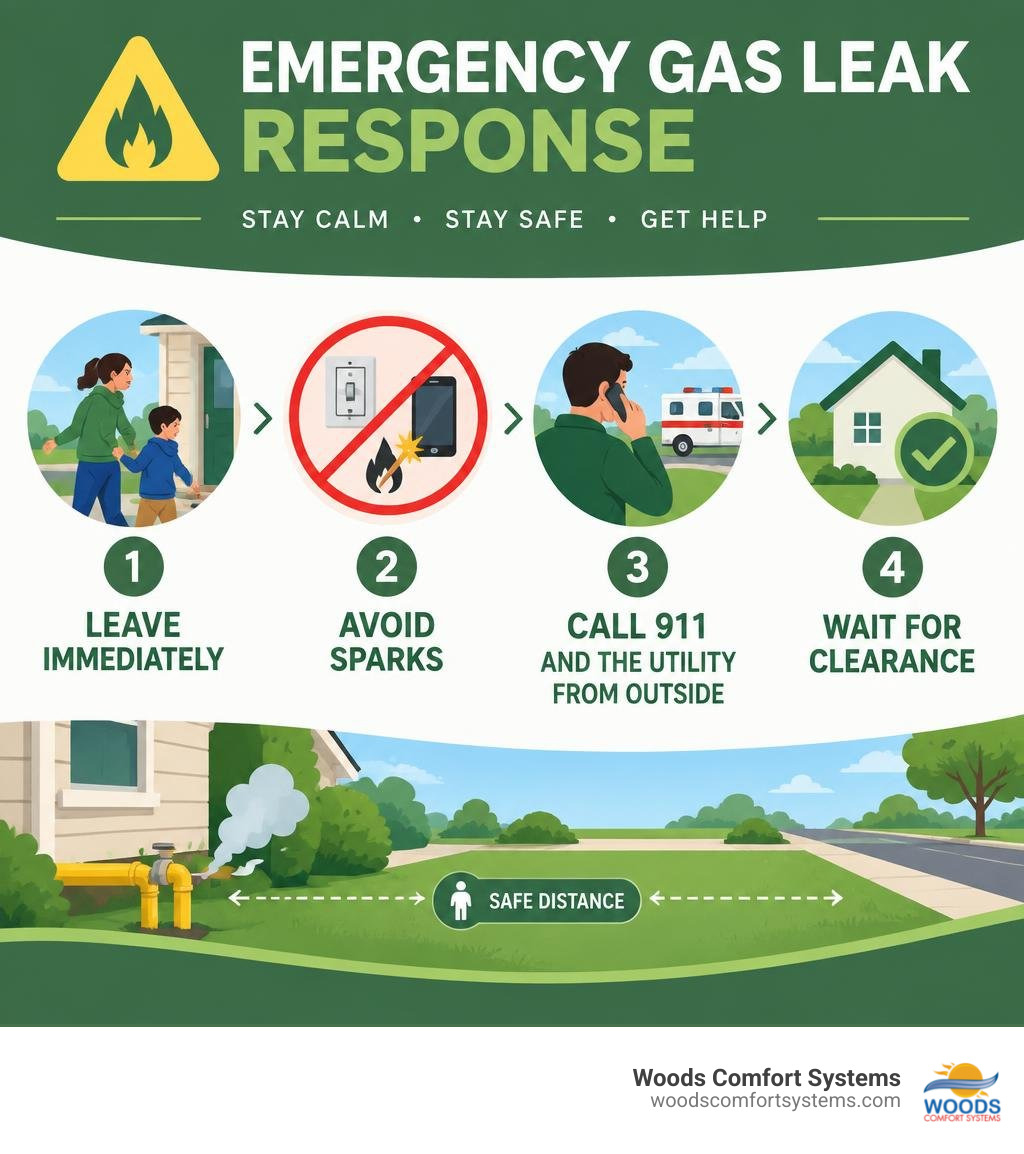
If you smell gas or hear loud hissing, follow these safety steps without trying to troubleshoot the source:
- Get everyone, including pets, out of the building right away.
- Exit without using switches, outlets, thermostats, appliances, or the gas meter.
- Wait until you are outside to use a phone, and do not start a vehicle near an attached garage.
- Put distance between yourself and the property.
- From that safe location, contact 911 and then notify the natural gas utility.
- Leave the shutoff valve alone unless emergency personnel or the utility gives you direct instructions.
- Remain away from the property until responders or utility personnel authorize a return.
After you have followed the emergency steps, this emergency plumber guide offers additional guidance on situations that need prompt professional attention.
What to Tell Us When You Call
After everyone is safe and the emergency response is underway, share details that can help our technicians understand the situation. Explain where you noticed a gas odor or hissing sound, whether it was indoors or outdoors, and whether the utility has shut off the gas. Let us know which appliances use gas and whether any recent work or changes occurred near the area. If anyone feels unwell, call 911 first and follow emergency guidance. Do not return to the property or attempt to inspect, relight, or operate gas equipment before the utility or emergency personnel says it is safe.
Defining Property Owner vs. Utility Responsibilities
The utility typically maintains the service line and equipment up to the meter. Piping and connections on the home side of the meter are generally the property owner’s responsibility, including lines serving detached buildings, pool heaters, interior appliances, and outdoor features. A utility representative can explain the boundary for a specific property.
If a leak is found on the customer side, our technicians can assess the affected piping and explain the repair needed. Homeowners should not attempt to reconnect appliances, adjust valves, or restore service themselves.
A utility may shut off the gas and leave the meter off until a repair is made and checked. Our licensed plumbers or technicians coordinate the necessary repair work, testing, and next steps so the system can be returned to service safely.
How Our Technicians Restore Safe Service
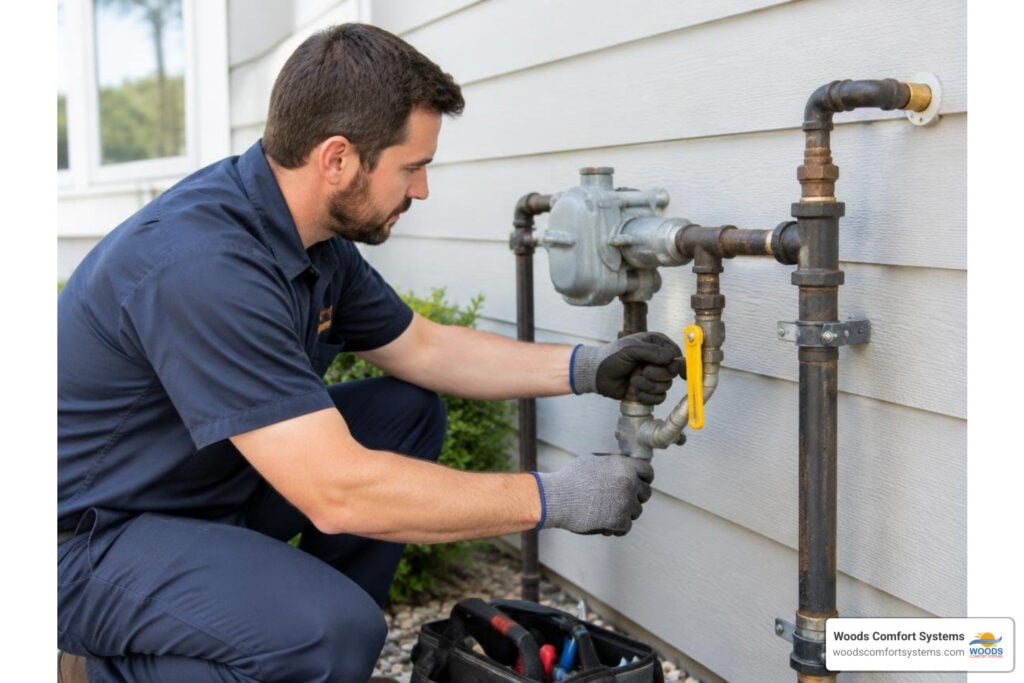
Professional gas line repair requires careful diagnosis, the right equipment, and a safety-first process. Our technicians explain what they find in plain language, answer questions about the affected area, and recommend an appropriate repair or replacement without asking homeowners to handle gas components.
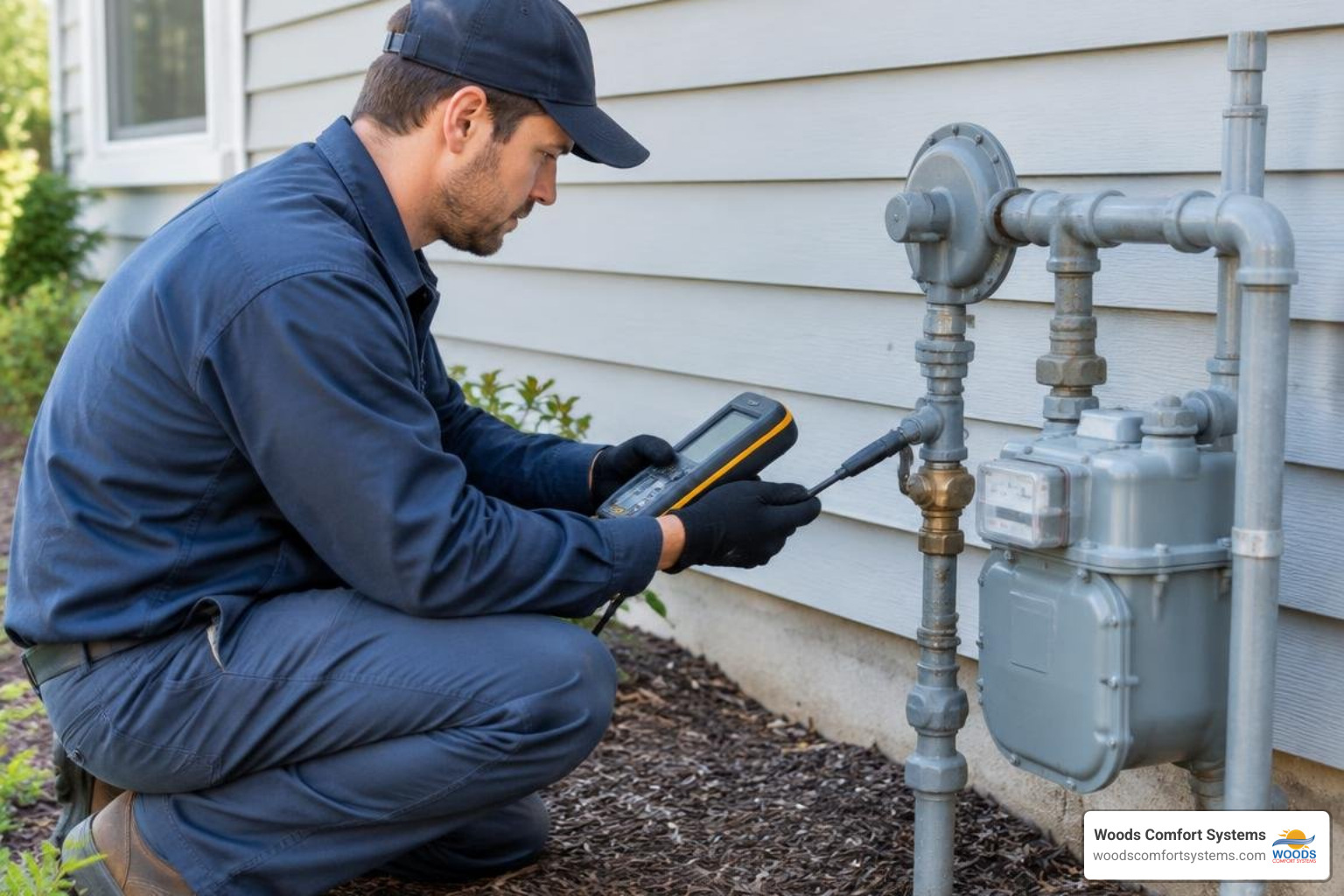
When our technicians arrive for plumbing repair services, they focus on finding the source of the concern, protecting the property, and completing the work according to applicable requirements.
Finding the Leak Safely
Leaks can occur in concealed piping, at appliance connections, beneath a slab, or along exterior lines, which is why our technician evaluates the system with appropriate safety procedures.
- Review the reported odor, sound, appliance issue, or outdoor change
- Check accessible piping and connections with appropriate leak-detection equipment
- Isolate the affected area when needed to confirm the source of the problem
- Inspect related appliance connections before recommending the repair
Repair and Testing Before Service Returns
The right repair depends on the location and condition of the damaged area. Our technicians may repair a localized section or recommend replacement when the surrounding piping shows broader concerns. They consider access to the line, the condition of nearby connections, the appliances served, and whether any related parts need attention. Before gas service is restored, they pressure-test the repaired system and confirm it is ready for safe operation.
For homes in San Marcos and nearby Hill Country communities, clear communication matters as much as careful workmanship. If a heating appliance is involved, a furnace repair service can address the appliance-side concern after the gas-supply issue is evaluated.
Repair or Replace? What Our Technician Looks At
Our technician looks at the age and overall condition of the piping, where the leak is located, and whether there are other weak spots nearby. A single accessible issue may call for a focused repair, while repeated concerns, widespread deterioration, or damage in difficult areas can make replacement the safer long-term option. The evaluation also considers whether the problem is indoors, outdoors, underground, or close to an appliance, since each location affects access and testing. Our technician reviews how the line serves the home, whether nearby connections show wear, and what applicable code requirements mean for the work. Homeowners do not need to decide between repair and replacement alone. Our technician explains the condition of the system, the available next steps, and why a particular recommendation supports safe, dependable operation. After the work, the line is checked before service returns so the home can be used with confidence.
Frequently Asked Questions
Can I fix a small gas leak myself?
No. Even a small suspected leak can become dangerous, and homeowners should not work on gas piping, valves, or appliance connections. Follow the safety steps above and do not try to turn the gas back on yourself.
Can a gas leak happen outside the house?
Yes. Buried piping, outdoor appliances, and lines serving detached structures can develop leaks. Watch for unusual odors, bubbling water, dead vegetation, or soil movement, then follow the safety steps above rather than digging or testing the line. Keep children, pets, vehicles, and ignition sources away from the affected area while you wait for guidance.
Will my gas appliances need to be relit after a repair?
They may need to be checked and restarted after gas service has been shut off. Our technician handles the necessary appliance checks and relighting steps so homeowners do not have to work with gas controls. Follow any utility or technician instructions before using appliances again.
Should I have a CO detector if I have gas appliances?
Yes. Carbon monoxide can be produced when fuel does not burn completely, and it cannot be seen or smelled. Install and maintain battery-operated or battery back-up CO detectors as recommended by the manufacturer and safety guidance. Replace batteries and units according to the manufacturer’s instructions, and leave the home if an alarm sounds or anyone feels unwell.
Should I have my gas appliances checked before winter?
Fall is a good time to have gas appliances checked before they return to regular use. Our technician can inspect accessible connections, venting, and safe operation for the furnace, water heater, fireplace, or other gas appliances. A professional check can identify concerns before the heating season is underway.
Conclusion
A suspected gas problem deserves a calm, safety-first response. Leave the area, call for help from outside, and let trained professionals handle the piping, appliances, testing, and repairs. Woods Comfort Systems serves homeowners in San Marcos and Central Texas communities including Austin, New Braunfels, Kyle, Buda, and Wimberley.
Written by Chris Woods, Owner, Woods Comfort Systems. Chris is the third generation of the Woods family in Texas HVAC and has led Woods Comfort Systems in San Marcos since 2010.
Family-owned since 1956, Woods Comfort Systems brings three generations of the Woods family to HVAC and plumbing service. Our team is proud of its 4.9 stars on Google and offers after-hours emergency service when homeowners need prompt help.
For dependable plumbing services and help with gas-related concerns, contact Woods Comfort Systems to schedule service. Woods Comfort Systems · 1900 Dutton Dr, San Marcos, TX 78666 · (512) 253-8927