

Why Fall Heating Prep Can’t Wait
A fall HVAC checklist Texas homeowners can use starts with one simple truth: Texas winters are unpredictable, and your heating system needs to be ready before the first cold snap hits.
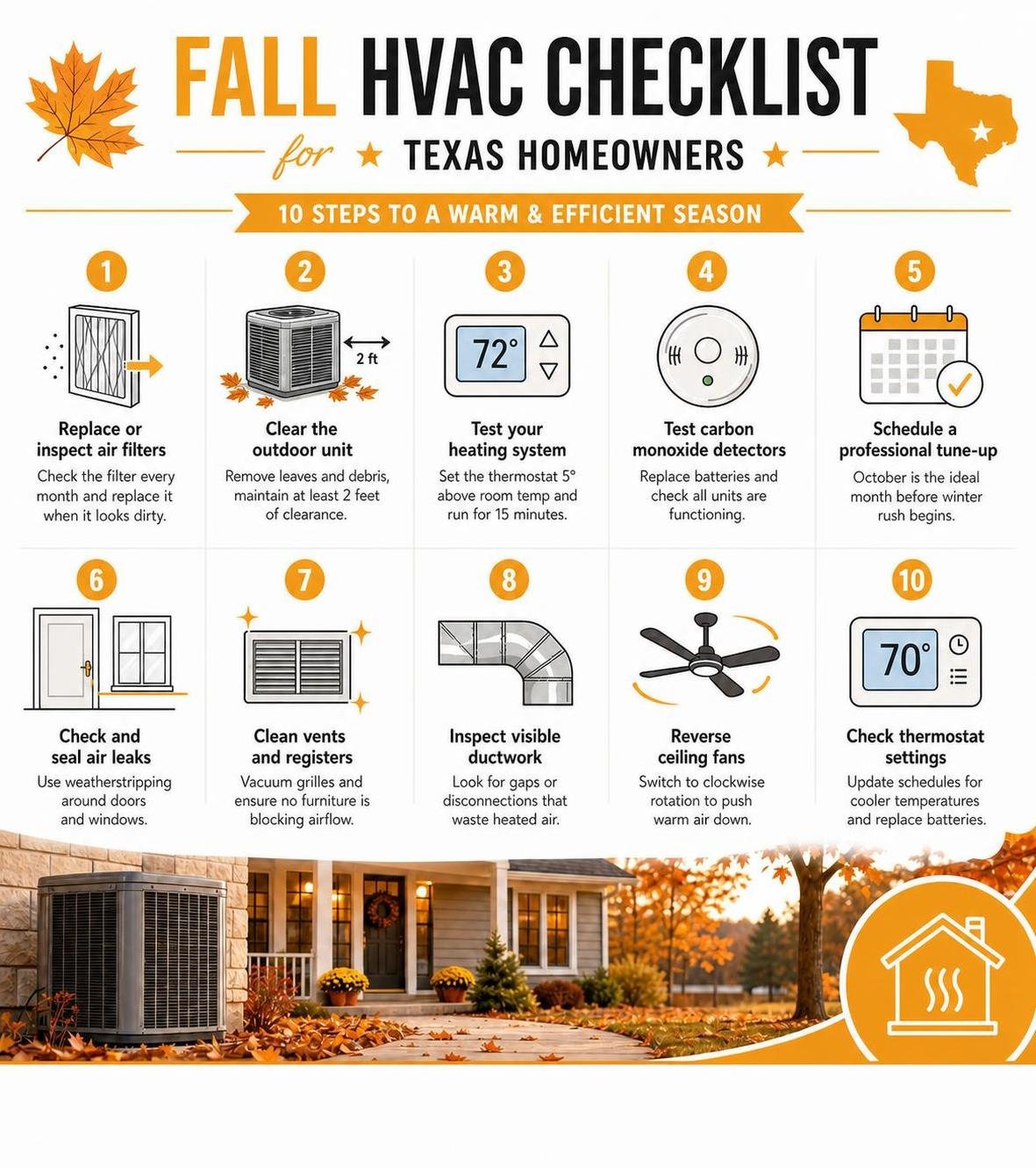
Here is a quick overview of the essential fall HVAC checklist for Texas homeowners:
- Replace or inspect air filters – Check the filter every month and replace it when it looks dirty
- Clear the outdoor unit – Remove leaves and debris, maintain at least 2 feet of clearance
- Test your heating system – Set the thermostat 5 degrees above room temperature and run for 15 minutes
- Test carbon monoxide detectors – Replace batteries and check all units are functioning
- Schedule a professional heating tune-up – October is the ideal month before winter rush begins
- Check and seal air leaks – Use weatherstripping around doors and windows
- Clean vents and registers – Vacuum grilles and ensure no furniture is blocking airflow
- Inspect visible ductwork – Look for gaps or disconnections that waste heated air
- Reverse ceiling fans – Switch to clockwise rotation to push warm air down
- Check thermostat settings – Update schedules for cooler temperatures and replace batteries
Texas summers are brutal on HVAC equipment. Your system has likely run for six to eight months straight before fall arrives, and that kind of workload takes a toll. Add in the state’s history of sudden, severe cold events like Winter Storm Uri in February 2021, and the stakes for skipping fall prep become very real.
According to ENERGY STAR, as much as half of the energy used in a home goes to heating and cooling. Seasonal attention can help keep the system ready for changing weather.
Woods Comfort Systems has been family-owned since 1956, with three generations of the Woods family serving San Marcos and Central Texas / Hill Country communities such as Austin, New Braunfels, Kyle, Buda, and Wimberley. With 4.9 stars on Google, the team helps homeowners prepare for cooler weather with clear, safety-first guidance. The sections below separate safe homeowner checks from work our technician should complete.
How Texas Weather Affects Your Heating System
Living in Central Texas means preparing for abrupt weather changes, from long summer heat to sudden cold fronts. That swing can put added demand on heating and cooling equipment.
After a long cooling season, a professional visit can identify maintenance needs before the heating season begins. Homeowners can handle simple preparation, while our technician evaluates electrical connections and other system components.
The devastating freeze of Winter Storm Uri taught us that we can no longer treat heating as an afterthought in South Central Texas. A heating system failure during a severe cold snap is not just uncomfortable, it is a safety hazard that can lead to frozen pipes, water damage, and dangerously low indoor temperatures.
Proactive maintenance helps prepare your system for sudden weather shifts and gives our technician an opportunity to address concerns before they become disruptions. Review these fall maintenance reasons before the cold weather sets in.
Your Fall HVAC Checklist Texas Homeowners Can Follow
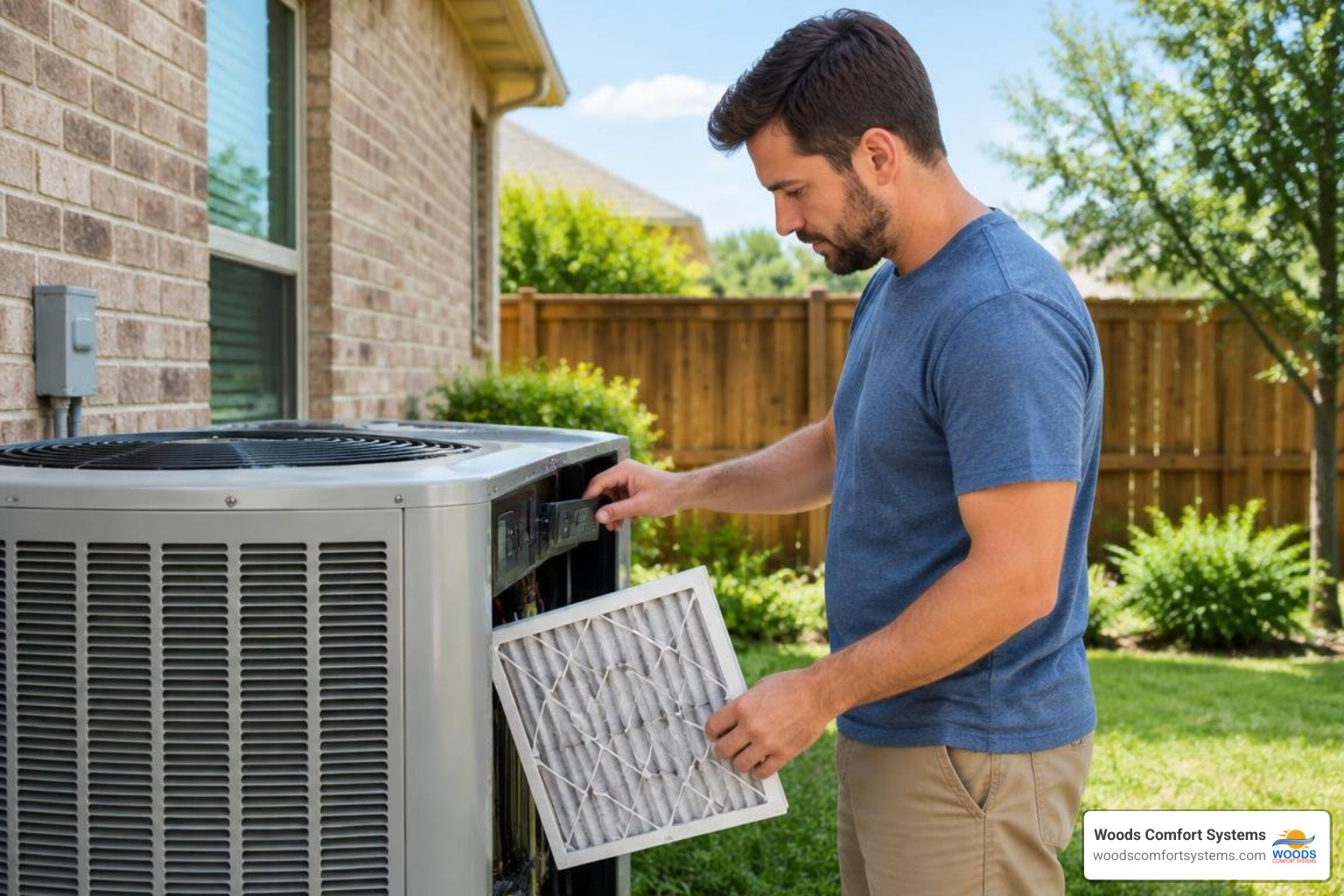
Homeowners can complete a few safe seasonal checks, including inspecting the thermostat, changing the filter, checking the breaker or system switch, clearing vents, and removing debris around the outdoor unit. Gas, electrical, and sealed-system work belongs to our technician.
For safety, do not open HVAC cabinets or attempt repairs. If the system will not start after basic thermostat and breaker or switch checks, contact a professional for diagnosis.
Essential Air Filter Maintenance
The single most important DIY task for any homeowner is regular air filter maintenance. Your air filter is the first line of defense for your HVAC system, trapping dust, pet dander, and wild Texas pollen before they can accumulate on sensitive internal components.
During heavy usage seasons, check your air filter every month and replace it when it looks dirty. Homes with pets, allergies, or dusty conditions may need more frequent checks.
When choosing a replacement filter, follow the equipment documentation or ask our technician which option fits your system. A filter that is overly restrictive can reduce airflow, so it is important to use one that supports proper operation.
Clearing Debris and Maintaining Outdoor Unit Clearance
Your outdoor condenser unit needs room to breathe. Over the summer and early fall, leaves, twigs, grass clippings, and dirt can accumulate around the unit, blocking essential airflow.
Walk outside and inspect the area around your outdoor unit. Trim back any shrubs, weeds, or low-hanging branches to maintain at least a two-foot clearance on all sides. Clear away any pile-up of fallen leaves or debris from the base of the unit.
Homeowners should not clean coils or open the outdoor unit. Coil cleaning and inspection are tasks our technician completes during a tune-up, while you can safely keep the surrounding area clear.
Testing Thermostats and Heating Cycles
Do not wait for the first freezing night to find out your heater does not work. A critical step in your fall preparation is conducting a pre-season heating test while the weather is still mild.
To test your system, head to your thermostat and switch the mode from “cool” to “heat.” Set the temperature about five degrees warmer than the current room temperature. You should hear the system kick on, and within a few minutes, you should feel warm air gently blowing from your supply registers.
Let the system run briefly. A short dusty odor at first startup can be normal, but a persistent burning odor or unusual noise calls for professional help. Review winter thermostat settings for practical temperature-setting guidance.
When to Call a Professional for Your HVAC System
While performing basic maintenance tasks like changing filters and clearing debris is highly beneficial, homeowners must recognize their limits. If safety concerns arise, specialized tools are required, or you are dealing with complex electrical, plumbing, or structural systems, always contact a licensed professional. If you are ever unsure about performing a task correctly, it is best to step back and let an expert handle it to avoid damaging your system or risking personal injury.
Professional Heating Tune-Ups: Why October is the Perfect Time
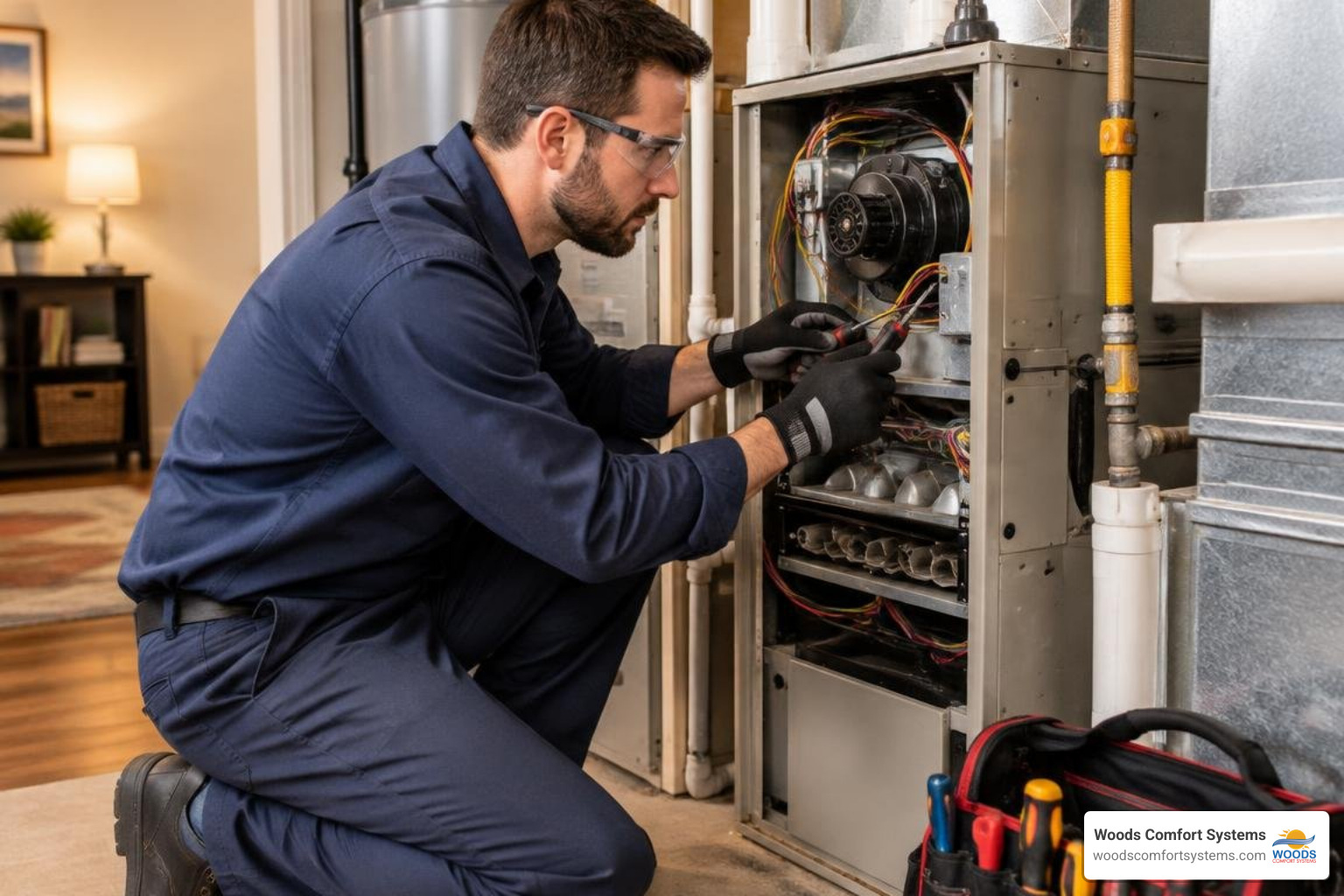
Safe homeowner checks are helpful, but they do not replace a professional heating tune-up. Our technician can inspect the components homeowners should not handle and help prepare the system for cooler weather. Learn more about our heating services.
In Central Texas, early fall is a practical time to schedule service before colder weather arrives. Planning ahead can make it easier to choose an appointment time that works for your household.
Scheduling early gives our technician time to complete the needed checks before a cold front. Read why early fall tune-ups are useful in the local area.
A Recent Fall Service Call in Austin
During fall service in Austin, technicians found loose electrical connections where overheating could have damaged major components. Tightening and testing the wiring prevented a system shutdown. The homeowner avoided an emergency repair during winter weather. This type of work is not a homeowner task because electrical connections require professional evaluation and testing. A seasonal visit gives our technician an opportunity to check these components before you need dependable heat. The service call shows why a professional tune-up can address concerns that are not visible during a basic homeowner checklist.
A professional maintenance visit covers system operation, safety controls, and components that should not be handled as DIY tasks.
What is Included in a Professional Heating Tune-Up?
A professional heating tune-up is a comprehensive process that goes far beyond a simple visual check. A licensed technician will perform a multi-point inspection to optimize your system’s performance and safety. Key steps include:
- Tightening electrical connections: Loose connections can cause voltage drops, system cycling issues, or even electrical fires.
- Lubricating moving parts: Reducing friction in fan motors and bearings prevents premature wear and lowers energy consumption.
- Cleaning blower components: Removing dust and dirt from the blower wheel ensures maximum airflow and prevents motor overheating.
- Testing system controls: Technicians verify that the startup cycle, running cycle, and safety shut-offs function exactly as the manufacturer intended.
- Calibrating the thermostat: Ensuring your thermostat reads temperatures accurately prevents your system from running longer than necessary.
- Inspecting safety switches: Verifying that limit switches and pressure switches function correctly to shut down the system in case of malfunction.
Gas Furnace vs. Heat Pump Winter Preparation
Depending on whether your home uses a gas furnace or a heat pump, the winter preparation steps will vary significantly. Heat pumps rely on electricity and refrigerant to move heat, while gas furnaces rely on combustion.
| Maintenance Task | Gas Furnace | Heat Pump |
|---|---|---|
| Heat Exchanger Inspection | Yes (Critical for carbon monoxide safety) | No |
| Burner Cleaning & Adjustment | Yes | No |
| Reversing Valve Testing | No | Yes (Crucial for switching to heating mode) |
| Defrost Cycle Verification | No | Yes (Prevents outdoor coil from icing up) |
| Auxiliary/Emergency Heat Check | No | Yes (Ensures backup heat works in extreme cold) |
| Flue Pipe & Venting Inspection | Yes | No |
| Refrigerant Level Verification | No | Yes |
Heat pumps require precise refrigerant charges to heat your home efficiently in cold weather. If the reversing valve or defrost cycle fails, your outdoor unit can freeze into a solid block of ice, leaving you without heat when you need it most. For gas furnaces, cleaning the burners and inspecting the venting system is vital to ensure complete combustion and safe exhaust of gases.
Crucial Safety Checks Before Running Your Heating System
Safety comes first when preparing a heating system for winter. Homeowners can test detectors, check vents, and keep the outdoor area clear, while combustion systems and high-voltage electrical components require our technician. See these winter heating preparation tips for additional safe steps.
Carbon Monoxide and Gas Leak Prevention
If your home uses a gas furnace, carbon monoxide is an important safety concern. The CDC’s carbon monoxide basics explain that CO is a colorless, odorless gas that can cause serious illness or death.
Before turning your heater on for the season, test every carbon monoxide detector in your home by pressing the physical test button. Replace the batteries in all detectors annually, even if the units are not chirping. If your detectors are more than five to seven years old, they should be completely replaced.
A damaged heat exchanger or combustion problem can create a serious safety concern. Do not inspect burners, flames, or furnace components yourself. If a carbon monoxide alarm sounds, leave the home and follow emergency guidance; for non-emergency heating concerns, contact us about furnace repair.
Electrical Connections and System Controls
Electrical safety is also important for every heating system. Homeowners can confirm that the thermostat is set correctly and that the breaker or system switch is on, but electrical connections require our technician.
During a professional maintenance visit, a technician will measure the voltage and current on your system’s motors. They will tighten all electrical wiring connections and inspect safety controls, such as the limit switches on furnaces. These safety switches are designed to shut the system down automatically if it begins to overheat, preventing catastrophic equipment damage and protecting your home.
Warning Signs Your System Needs Immediate Professional Attention
Sometimes a heating system needs professional attention before winter weather arrives. Contact a technician if you notice these warning signs:
- Unusual noises: Squealing, grinding, rattling, or loud banging can point to a system issue.
- Weak airflow: Very little air from vents may require professional diagnosis after you confirm the filter and vents are clear.
- Frequent cycling: Repeatedly turning on and off can signal a thermostat or system concern.
- Persistent burning smells: A short dusty odor can occur at first startup, but persistent odors need prompt attention.
- Carbon monoxide alarms: Leave the home and follow emergency guidance.
Frequently Asked Questions About Texas Winter Heating Prep
Can I run my heater briefly before the first cold front?
Yes. Set the thermostat to heat and raise the setting a few degrees above the room temperature to confirm that the system starts and warm air reaches the vents. Stop and call a professional if you notice persistent odors, loud noises, or a carbon monoxide alarm.
What homeowner checks are safe before a heating tune-up?
You can replace the air filter, make sure vents are not blocked, clear leaves around the outdoor unit, and confirm the thermostat and breaker or system switch are set correctly. Do not open cabinets or work on gas, electrical, or sealed components. Our technician handles those parts during service.
Should I cover my outdoor heat pump in winter?
Do not cover a heat pump while it is operating because it needs airflow to work correctly. Keep leaves and other debris away from the unit instead. Ask our technician about any site-specific protection concerns during a tune-up.
What should I do if my carbon monoxide alarm sounds?
Leave the home immediately and follow emergency guidance. Do not try to locate or repair the source yourself. Once it is safe to do so, arrange for a qualified professional to evaluate the heating system.
When should I schedule a professional heating tune-up?
Early fall is a practical time to schedule service before cold weather puts more demand on the system. Our technician can inspect safety controls, electrical connections, and other components homeowners should not handle. This helps identify concerns before you rely on the heater regularly.
Keep Your Home Warm and Safe This Winter
A fall HVAC checklist Texas homeowners can follow combines safe checks such as filter changes, thermostat testing, clear vents, and outdoor debris removal with a professional tune-up for the parts homeowners should not handle. This approach helps keep your home ready for cooler weather.
Written by Chris Woods, Owner, Woods Comfort Systems. Chris is the third generation of the Woods family in Texas HVAC and has led Woods Comfort Systems in San Marcos since 2010.
For seasonal HVAC maintenance, heating repair, or a system replacement, Woods Comfort Systems is ready to help. Explore our maintenance plans or schedule service to prepare your home for the season.