



Why a Heating System Inspection Matters Before Winter

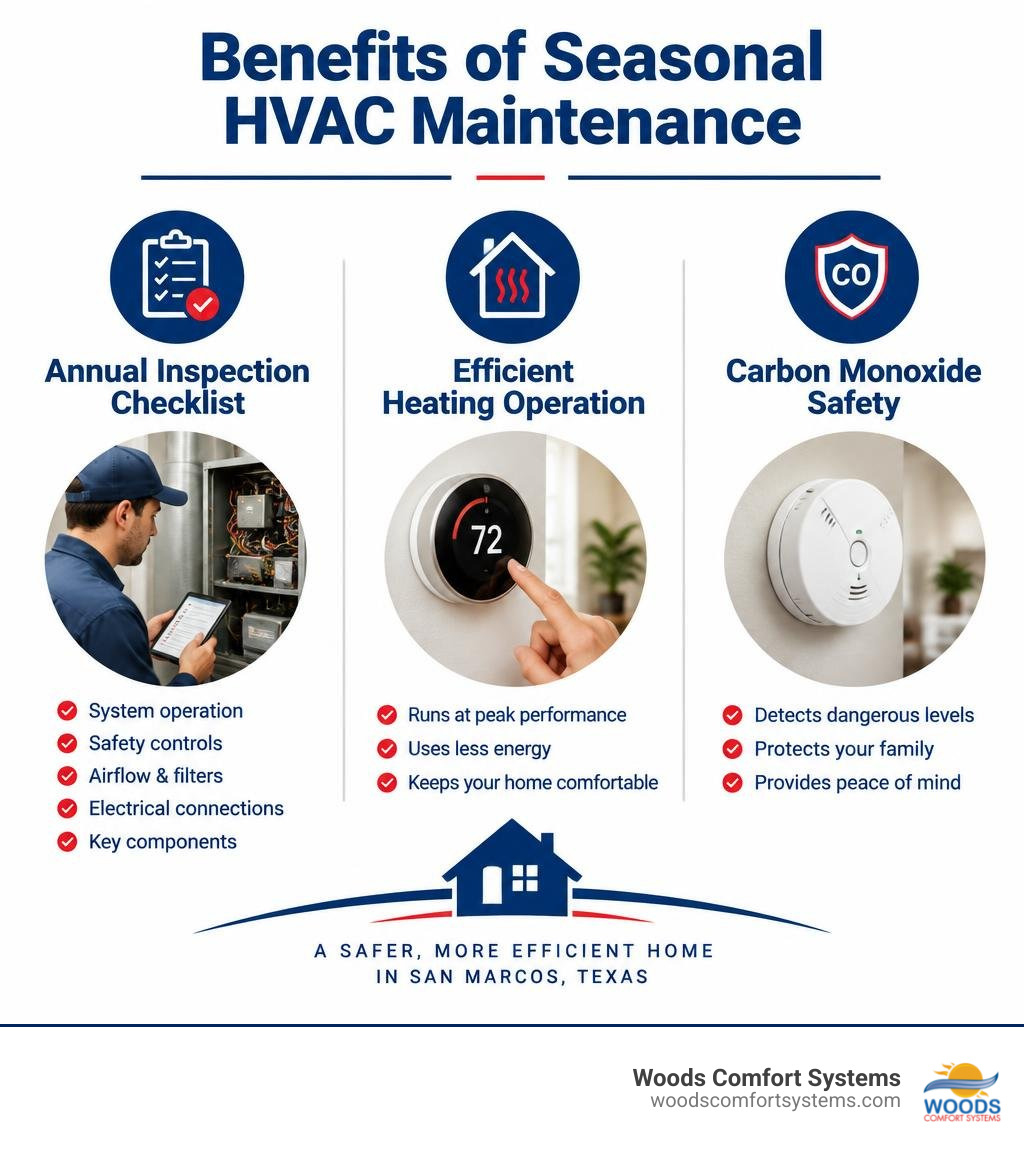
A heating system inspection helps confirm that a furnace or heat pump is operating safely before cooler weather arrives in San Marcos. It is not a quick glance at the equipment. Our technician checks the system’s operation, safety controls, airflow, electrical connections, and accessible components so small concerns can be identified before the season places more demand on the system.
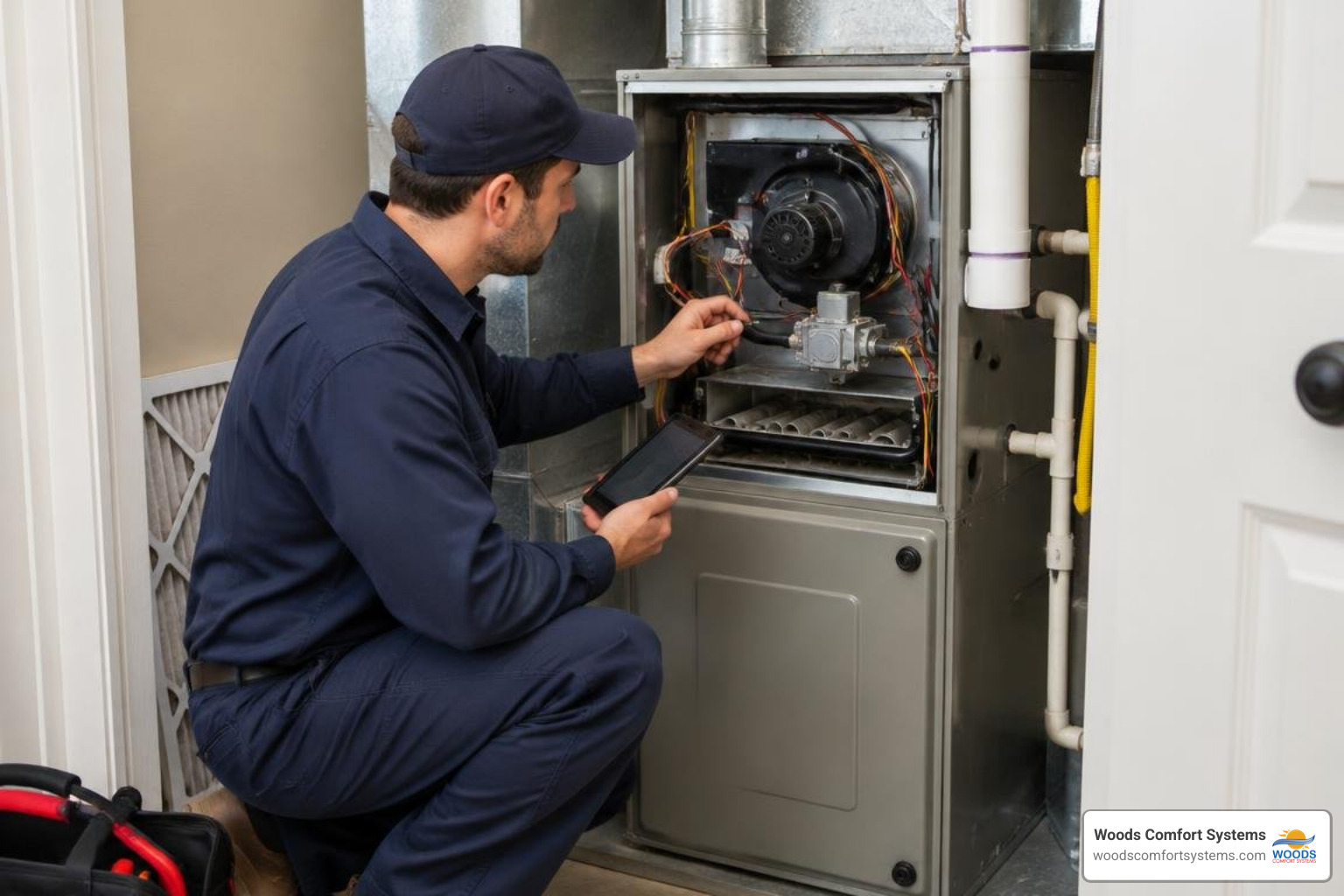
For homeowners, the safest pre-winter checks are simple and visible. Confirm that the thermostat is set correctly, replace a dirty filter, make sure supply and return vents are open and unobstructed, and check that the breaker and nearby service switch are on. If the home has an outdoor heat pump unit, clear leaves and loose debris from around it without opening panels or touching wiring. Work involving gas, electrical connections, refrigerant, combustion, or sealed components is work our technician handles because those systems require proper training and diagnostic equipment.
What our technician evaluates during a visit:
- Furnace or heat-pump startup and shutdown operation
- Filters, airflow, accessible duct connections, and temperature delivery
- Thermostat response and system controls
- Electrical connections, motors, safety switches, and related components
- Venting and combustion-related safety items on fuel-burning furnaces
- Signs of wear that may affect dependable winter operation
A pre-season appointment also gives you time to make informed repair decisions before a cold snap. Our team serves San Marcos and Central Texas and Hill Country communities, helping homeowners prepare their equipment for a comfortable winter without relying on risky DIY repairs.
Prepare Your Furnace or Heat Pump for Colder Weather
When the Texas heat eases, it is easy to put heating maintenance off until the first chilly night. That delay can leave a homeowner discovering a problem when the system is needed most. A fall visit is a practical way to check the condition of a furnace or heat pump, address visible wear, and make sure the system responds properly before winter use becomes routine.
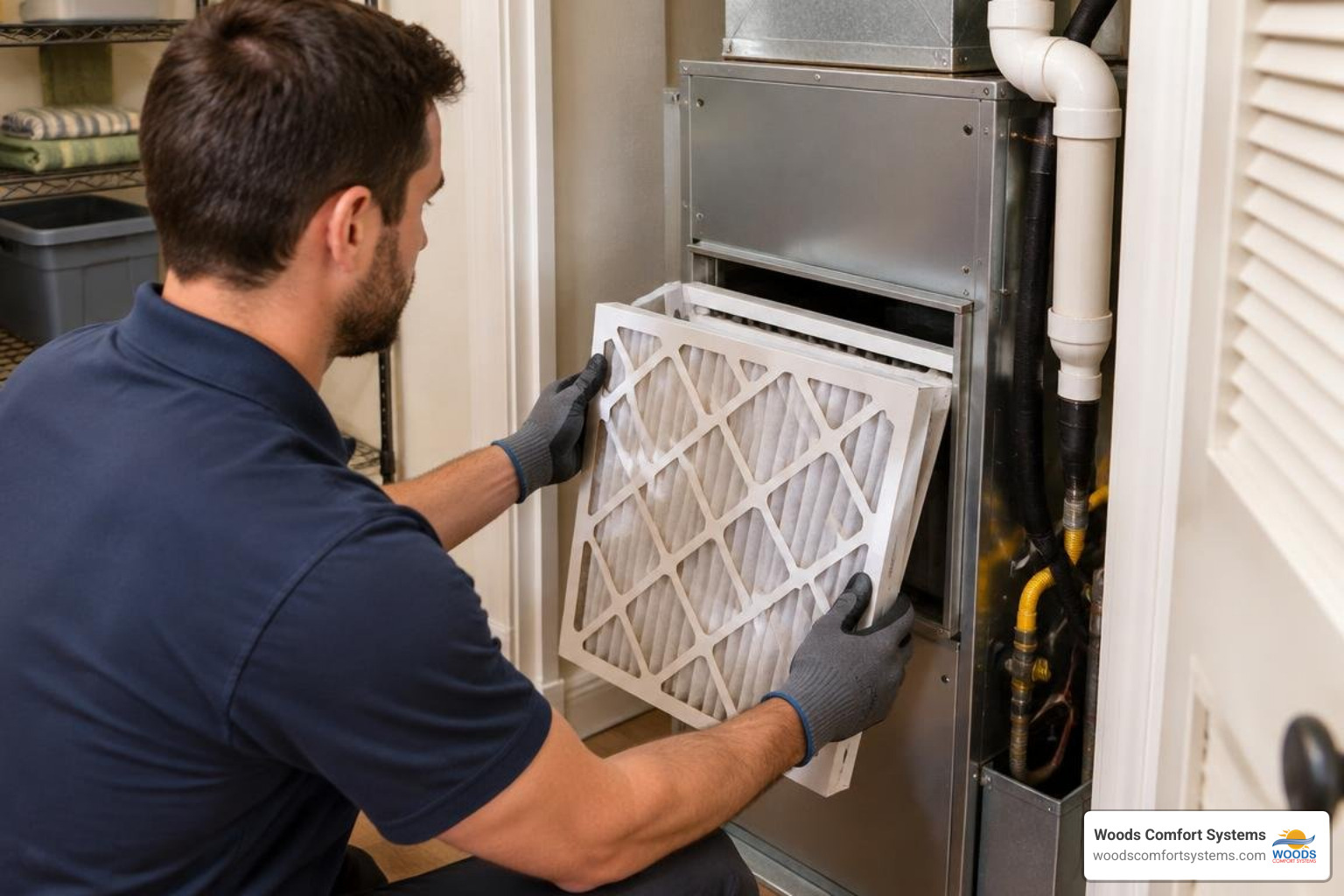
Start with the simple checks that are appropriate for homeowners. Replace a visibly dirty filter with the correct size and type, make sure vents are not blocked by furniture or rugs, and confirm that the thermostat and breaker are set for heating operation. If you use a heat pump, keep the outdoor unit clear of leaves and debris so airflow is not restricted. Do not remove access panels, adjust gas components, test electrical connections, or attempt work on sealed equipment. Those tasks are part of professional service.
A visit can also support better indoor comfort. The EPA’s indoor air quality guidance explains that indoor pollutants can affect health, which is one reason filter condition, airflow, and ventilation deserve attention. For help with a complete pre-season visit, explore our heating services or our heat pump service options.
Regular care is also easier to manage when it is planned rather than rushed. Our guide on HVAC tune-up timing can help homeowners decide when to book seasonal service. A clear plan gives our technician time to evaluate any concerns and gives you time to consider the next step without waiting for an urgent breakdown.
A Simple Homeowner Checklist Before Calling
Before scheduling service, note what you can safely observe. Is the thermostat calling for heat? Is the filter clean? Are the vents open? Is the breaker or nearby switch on? These details can help describe the situation clearly when you contact our team, but they should not replace professional diagnosis when the system will not start, makes unusual noises, or shows signs of unsafe operation.
It is also useful to notice whether the concern affects the entire home or only one area. A room that stays cooler than the rest of the house, airflow that changes from one vent to another, or a thermostat that does not seem to respond can give the technician a better starting point. Avoid moving wiring, opening electrical compartments, or changing internal settings while gathering that information.
Homeowners should also avoid repeatedly resetting equipment after a shutdown. If a furnace or heat pump does not run as expected, our technician can inspect the underlying cause rather than masking it with repeated restarts. That approach protects the equipment and helps keep safety concerns from being overlooked.
What a Professional Pre-Winter Visit Covers
A professional visit goes beyond the homeowner checks that can be completed from the thermostat, filter slot, breaker, vents, or outdoor-unit clearance. Our technician uses the appropriate tools to evaluate the equipment, identify wear, and confirm that the system is operating as intended. Gas components, electrical connections, combustion-related parts, refrigerant circuits, and sealed equipment are not DIY projects.
During a heating system inspection, our technician may evaluate system startup, control response, airflow, accessible ductwork, blower performance, electrical components, safety controls, and the condition of parts that affect dependable heating. For fuel-burning furnaces, the appointment also includes appropriate attention to venting and combustion safety. If a concern is found, the technician can explain what was observed and recommend the next step in plain language.
Homeowners can support the appointment by sharing changes they have noticed, such as uneven temperatures, new noises, frequent cycling, or a system that takes longer than usual to warm the home. Clear observations help the technician focus the diagnosis, while the actual repair and safety testing remain professional work.
A Recent Service Call in Austin
During a fall maintenance visit in Austin, our technician found loose electrical connections that could have overheated major components. The connections were tightened and tested, helping the homeowner avoid a winter emergency repair. This type of issue is a good example of why electrical work should stay with a trained technician. A homeowner may notice that a system is not operating normally, but opening equipment or attempting to tighten wiring can create safety risks and may cause further damage.
For concerns involving heating performance, our furnace repair team can diagnose the issue and discuss appropriate repairs. If the concern is airflow from room to room, our ductwork services can help address the system components that influence comfort.
When the appointment is complete, ask the technician to summarize what was checked, what is operating normally, and whether any follow-up is recommended. That conversation gives homeowners a practical record of the visit and makes it easier to prioritize service decisions before the heating season is underway.
Carbon Monoxide Safety and Heating Equipment
Carbon monoxide safety deserves special attention in homes with fuel-burning furnaces. The CDC explains that carbon monoxide is an odorless, colorless gas, so people cannot rely on sight or smell to recognize it. That is why working carbon monoxide alarms are an important part of a home safety plan.
Homeowners should install carbon monoxide alarms according to the manufacturer’s instructions, test the alarms regularly, and replace batteries or units when needed. If an alarm sounds, leave the home and follow the emergency guidance provided by local authorities. Do not try to diagnose a furnace, vent, or combustion issue yourself. Anything involving gas, venting, electrical connections, combustion testing, or internal furnace components is work our technician handles.
During professional service, our technician checks the heating equipment and related safety components appropriate to the system. The visit may include evaluating furnace operation, venting, and conditions that could affect safe performance. If there is a concern, the technician can explain the finding and recommend the proper repair instead of leaving the homeowner to guess about a potentially serious issue.
If you notice soot, unusual odors, visible corrosion, or a furnace that shuts down unexpectedly, arrange service promptly. These signs do not identify the cause by themselves, and they should not be investigated by taking equipment apart. A professional assessment is the safer way to determine whether the issue involves the heating equipment, venting, controls, or another component.
Carbon monoxide alarms and professional heating care serve different roles. Alarms provide an important warning, while a technician evaluates the equipment that may need attention. Keeping both parts of that plan in place helps homeowners prepare for winter with greater confidence.
Signs Your Furnace or Heat Pump Needs Attention
A seasonal appointment can prevent some problems, but homeowners should still pay attention to changes in heating performance between visits. A system that suddenly behaves differently may need prompt professional evaluation, especially when the issue involves repeated shutdowns, unfamiliar sounds, or a noticeable change in comfort from room to room.
Watch for these signs and contact a professional rather than trying to repair internal equipment:
- New or persistent noises: Banging, squealing, rattling, or grinding can point to a component that needs inspection.
- Frequent cycling: A furnace or heat pump that starts and stops repeatedly may have a control, airflow, or mechanical concern.
- Uneven heating: Cold rooms or unusually warm rooms can signal airflow or equipment performance issues.
- Weak airflow: Check that the filter is clean and vents are open, then schedule service if airflow remains limited.
- Unexpected shutdowns: Verify the thermostat, breaker, and service switch only. If the system still does not operate, our technician should diagnose it.
A homeowner can also pay attention to when the problem occurs. For example, note whether it begins at startup, after the system has run for a while, or only when the temperature changes. Include those details when you call, along with any safe steps you have already taken. This information helps the technician understand the pattern without asking you to perform unsafe testing.
Some airflow concerns originate outside the heating equipment itself. Our article on duct cleaning versus sealing explains why the right solution depends on the condition of the duct system. If the concern is an active heating failure, do not remove panels or reset the system repeatedly. Let a trained technician determine what is happening.
How to Select an HVAC Technician in San Marcos
Choose a licensed, experienced HVAC company that explains findings clearly and keeps safety-sensitive work with trained professionals. Woods Comfort Systems is family-owned since 1956 and represents three generations of the Woods family, serving San Marcos and nearby Central Texas and Hill Country communities. Our NATE-certified technicians can evaluate furnace and heat-pump concerns, while homeowners can handle only the basic safe checks outlined above. A maintenance plan can make it easier to stay ahead of seasonal service, and our team also offers after-hours emergency service, free estimates, and financing when appropriate.
Common Home Heating Questions Answered
Homeowners often have practical questions before scheduling seasonal service. The answers below focus on safe next steps and the situations that call for a professional visit.
What should I check before I call for heating service?
Start with the thermostat setting, filter condition, breaker or service switch, and open vents. If those visible items look normal and the system still is not heating properly, contact a technician rather than opening the equipment or attempting an internal repair.
Can I clean around my outdoor heat pump myself?
Yes, you can remove loose leaves, grass, and debris from around the outdoor unit while avoiding wiring, panels, and internal components. Do not spray inside the unit, remove covers, or attempt to straighten or repair parts, because that work should be handled by a technician.
Why does my furnace turn on but not keep running?
Several issues can cause this behavior, including airflow restrictions, thermostat concerns, or safety controls responding to a problem. Check the filter and thermostat, then schedule professional service if the pattern continues rather than repeatedly resetting the system.
Should I schedule service if my home still feels comfortable?
Yes, a pre-winter appointment can identify wear or operating concerns before colder weather increases demand on the system. It also gives you an opportunity to ask questions and make a plan before an unexpected interruption affects your home.
What information helps a technician diagnose a heating problem?
Share when the problem began, what the system does or does not do, whether you hear unusual noises, and which safe checks you have already completed. This context helps the technician begin with a clearer picture while completing the necessary professional testing on site.
Conclusion
Preparing your home for winter starts with the safe basics: check the thermostat, replace a dirty filter, confirm the breaker or service switch is on, keep vents open, and clear loose debris around an outdoor heat pump. When the concern involves gas, electrical connections, refrigerant, combustion, or sealed components, leave the work to a qualified HVAC professional. A planned visit can help identify concerns before cooler weather makes dependable heat more important.
Woods Comfort Systems serves San Marcos and Central Texas with professional furnace and heat-pump service. The company is family-owned since 1956, represents three generations of the Woods family, and has earned 4.9 stars on Google. Whether you need seasonal maintenance, a repair evaluation, or guidance on next steps, the team can help you make an informed decision.
Written by Chris Woods, Owner, Woods Comfort Systems. Chris is the third generation of the Woods family in Texas HVAC and has led Woods Comfort Systems in San Marcos since 2010.
Woods Comfort Systems is ready to help you prepare your home for winter. Schedule service to arrange a professional visit and get dependable support from a local team.
Woods Comfort Systems · 1900 Dutton Dr, San Marcos, TX 78666 · (512) 253-8927