

Is Your Home Losing Air or Just Dirty Air? The Duct Cleaning vs. Duct Sealing Question Answered
When it comes to duct cleaning vs. duct sealing, here is the short answer:
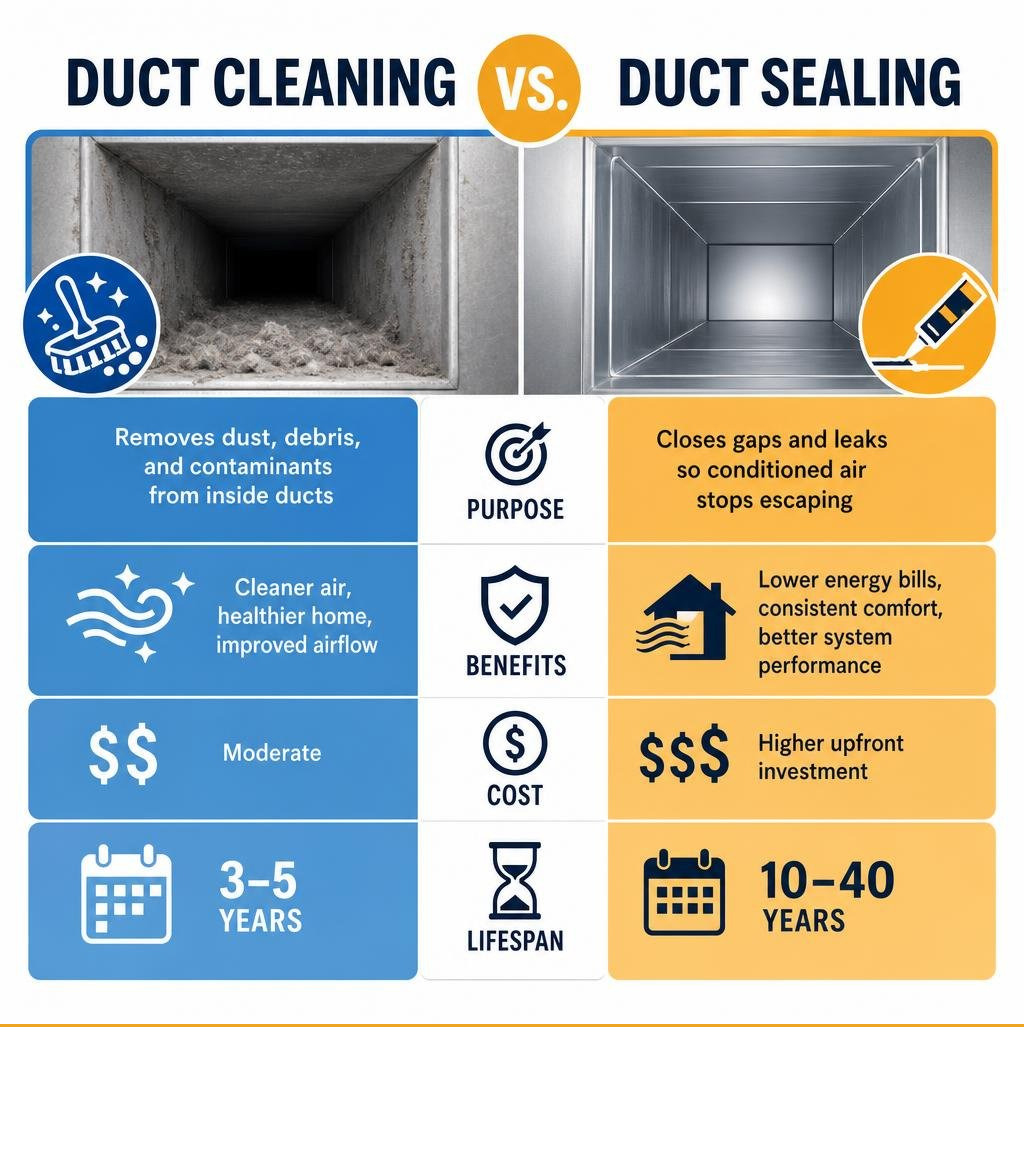
| Duct Cleaning | Duct Sealing | |
|---|---|---|
| What it does | Removes dust, debris, and contaminants from inside ducts | Closes gaps and leaks so conditioned air stops escaping |
| Best for | Poor indoor air quality, visible dust, mold, or pest issues | High energy bills, uneven temperatures, weak airflow |
| How long it lasts | 3 to 5 years on average | 10 to 40 years |
| Affects energy bills? | Minimally | Yes, significantly |
| Affects air quality? | Yes, directly | Yes, by preventing outside air from entering |
| Can you combine them? | Yes; clean first, then seal | Yes; sealing works best on clean ducts |
Many San Marcos, TX homeowners assume these two services are interchangeable. They are not. One clears out what is already inside your ducts. The other stops conditioned air from leaking out before it ever reaches your rooms.
Your HVAC system could be blowing dusty air through your vents while simultaneously losing air through cracks and gaps before it even reaches the room you are trying to cool or heat. That means you could need one service, the other, or both, and choosing the wrong one means spending money without solving your actual problem.
At Woods Comfort Systems, our third-generation HVAC team has served Central Texas since 1956. Over decades of inspecting and servicing duct systems across San Marcos, TX, Austin, TX, and San Antonio, TX, our technicians have seen how the confusion between duct cleaning vs. duct sealing leads homeowners to pay for the wrong service. The guide below will help you identify exactly what your home needs.
Duct Cleaning vs. Duct Sealing: Understanding the Core Differences
To understand the core differences between these two services, it helps to think of your HVAC ductwork as the circulatory system of your home. Your air handler is the heart, and the ducts are the arteries. If your arteries are clogged with debris, the blood cannot flow cleanly. If your arteries have leaks, the blood escapes before reaching its destination.
When we talk about duct cleaning vs. duct sealing, we are addressing two completely different structural and mechanical issues. Duct cleaning is a hygiene service designed to restore proper HVAC airflow and remove years of accumulated dust, dirt, and biological contaminants from the interior surfaces of your system. It is a thorough, deep scrub of the pathways that deliver the air you breathe.
Duct sealing is a structural repair service. Over time, the joints, seams, and connections in your ductwork can loosen, crack, or completely separate. This physical damage allows conditioned air to escape into unconditioned spaces like your attic, crawlspace, or wall cavities. Sealing these gaps prevents thermal loss and keeps your system pressurized.
For San Marcos, TX homeowners comparing both options, Woods Comfort Systems offers comprehensive ductwork services that address cleaning, repair, sealing, and airflow concerns in one professional evaluation. This helps identify whether your system needs contaminant removal, structural sealing, or a combination of both.
What is Professional Duct Cleaning?
Professional duct cleaning is far more involved than simply running a household vacuum hose down your floor registers. True, professional-grade cleaning requires specialized, high-powered equipment to safely extract debris without releasing it into your living spaces.
The process begins by placing your entire duct system under negative pressure. Technicians connect a truck-mounted or high-efficiency portable HEPA vacuum system to your main trunk line. This powerful vacuum pulls air through the system in a controlled direction. While the system is under negative pressure, technicians insert rotary brushes, air whips, and agitation tools into individual duct runs.
These specialized tools physically dislodge stubborn, stuck-on debris from the duct walls. The negative pressure then carries the loosened dust, pet dander, pollen, and construction residue directly into the HEPA filtration containment system, removing fine airborne particles from the duct system. According to the EPA, duct cleaning is most worth considering when ducts show substantial visible mold growth, pest contamination, or heavy debris buildup.
What is Professional Duct Sealing?
Professional duct sealing is the process of finding and permanently closing the physical gaps, cracks, and disconnected joints in your ductwork. Because much of a home’s duct system is hidden behind drywall, under floorboards, or deep within attics, technicians rely on specialized diagnostic tools to locate and quantify leaks.
The process often begins with a duct blaster test. Technicians temporarily seal all supply and return registers, then connect a calibrated fan to the system to measure the exact amount of air leakage under pressure. Once the leaks are quantified, technicians employ different sealing methods based on accessibility:
- Manual Sealing: For accessible ductwork in attics, basements, or crawlspaces, technicians apply a thick layer of professional, water-based mastic sealant. This paste is often reinforced with UL-rated fiberglass mesh tape to bridge larger gaps.
- Aerosol Sealing: For inaccessible ductwork buried behind walls or ceilings, advanced aerosol technology is used. The system is pressurized, and a specialized machine injects a mist of airborne polymer particles into the ducts. These adhesive particles are drawn directly to the leak sites, clinging to the edges of the gaps and building up a durable, airtight seal from the inside.
By fixing leaky AC ducts, you ensure that every cubic foot of air you pay to cool or heat actually makes it into your living spaces, rather than escaping into the Texas heat.
How Duct Cleaning vs. Duct Sealing Impacts Your San Marcos, TX Home
Living in Central Texas means our AC systems run almost continuously for more than half the year. Because our local climate experiences intense summer heat, any inefficiencies in your ductwork are quickly reflected on your monthly utility bills and felt in your home’s daily comfort levels.
Both services have distinct, positive impacts on your home, but they target different symptoms. To help you visualize how these services compare, let us look at the direct impacts of each:
| Feature | Duct Cleaning | Duct Sealing |
|---|---|---|
| Primary Goal | Improve indoor air quality and system hygiene | Stop conditioned air loss and improve efficiency |
| Main Target | Dust, pet hair, mold spores, allergens | Leaks, separated joints, cracked seals |
| Service Frequency | Every 3 to 5 years | Typically a one-time service |
| DIY Feasibility | Extremely low (requires heavy commercial vacuums) | Low to moderate (only accessible attic joints can be sealed by DIYers) |
| Core Benefit | Healthier air, reduced dusting, odor removal | Lower energy bills, even temperatures, longer HVAC life |
For homeowners trying to decide where to start, understanding how ductwork affects air conditioning efficiency can help connect comfort complaints, airflow problems, and energy waste back to the same hidden duct system.
Indoor Air Quality Benefits of Duct Cleaning vs. Duct Sealing
When it comes to the air you breathe inside your home, both services play vital roles, but they address different pathways of contamination.
Duct cleaning directly removes the accumulated reservoir of allergens, mold spores, dust mites, and pet dander that sits inside your system. Every time your AC fan kicks on, it can circulate these settled particles back into your living areas. Removing this buildup prevents the continuous cycle of dust settling on your furniture, being kicked up into the air, and being pulled back into your return vents.
Duct sealing, on the other hand, prevents new contaminants from entering your home. When your return ducts run through unconditioned, dusty areas like an attic or crawlspace, any leaks in those ducts act like a vacuum. The negative pressure pulls dirty, hot, and humid air, along with insulation fibers, pest waste, and outdoor pollutants, directly into your HVAC system. Sealing these leaks ensures that your system only pulls clean, filtered air from your living spaces, keeping your indoor environment cleaner.
Energy Efficiency and Utility Bill Savings of Duct Cleaning vs. Duct Sealing
If your primary goal is to lower your monthly utility bills, duct sealing is by far the higher-leverage intervention.
When ducts leak, your system has to run significantly longer to satisfy the thermostat, which increases energy consumption and accelerates wear and tear on your expensive HVAC equipment. In older homes across San Marcos, TX, duct leakage can be especially frustrating because cooled air may escape into a hot attic before it ever reaches the rooms that need it most.
By sealing those leaks, you can reduce system runtime, improve comfort consistency, and help your equipment operate more efficiently. If airflow feels weak or uneven, a professional can inspect the duct system, test for leakage, and recommend the safest repair approach.
Since leaky or dirty ductwork often affects heating performance too, Woods Comfort Systems can also evaluate related heating services concerns when homeowners notice uneven comfort during colder Central Texas weather.
Signs Your San Marcos, TX Home Needs Ductwork Services
Because your ductwork is largely hidden out of sight, it can be difficult to know when it is time to call in the professionals. However, your home and your HVAC system will drop subtle clues when something is wrong.
If you notice a sudden spike in your energy bills without a corresponding change in the outdoor weather, or if you find yourself constantly dusting your wooden furniture only to see a fine gray film return a day later, your ducts are likely trying to tell you something. Physical issues like whistling noises coming from your vents can also indicate that air is escaping through high-pressure cracks.
Because many duct issues start quietly, Woods Comfort Systems helps homeowners recognize the problems that develop in your ductwork before they turn into comfort, indoor air quality, or HVAC efficiency problems.
When to Choose Duct Cleaning
You should prioritize professional duct cleaning if you notice any of the following signs:
- Visible Mold Growth: If you see black, green, or white fuzzy growth on your plastic registers or inside the metal duct boots, you have a biological moisture problem that requires immediate cleaning and sanitization.
- Pest Infestations: If rodents, insects, or birds have nested in your ductwork, they leave behind droppings, nesting materials, and unpleasant odors that contaminate your indoor air.
- Excessive, Rapid Dust Buildup: If you change your high-efficiency air filters and find them completely clogged with thick gray dust within just a few weeks, your duct walls are likely heavily coated in debris.
- Musty, Stale Odors: If a damp, earthy, or musty smell fills your rooms every time the AC system turns on, it points to organic accumulation inside the system.
When to Choose Duct Sealing
You should prioritize professional duct sealing if you notice these efficiency-related issues:
- Uneven Room Temperatures: If your master bedroom feels like a sauna while your living room is freezing, leaky supply ducts are likely failing to deliver the conditioned air to the furthest points of your home.
- Weak Airflow From Vents: If you place your hand over a supply register and can barely feel the air moving, even though your blower fan is running at full speed, air is escaping through separated joints before reaching the room.
- Unusually High Utility Bills: If your heating and cooling costs are climbing month after month, your system is working overtime to compensate for lost air.
- Dust Accumulating Near Registers: If you notice dark rings of dust or dirt on the ceiling or walls directly surrounding your air vents, leaky return ducts are pulling in dirty attic air and depositing it around your home.
Can You Combine Duct Cleaning and Duct Sealing?
The short answer is yes. In fact, combining duct cleaning and duct sealing is highly recommended by HVAC experts and indoor air quality professionals. When performed together, these two services provide a comprehensive solution that maximizes both the cleanliness and the energy efficiency of your home’s comfort system.
However, the order in which these services are performed is critical. You must always perform duct cleaning before duct sealing.
There is a very practical, technical reason for this sequence. Professional duct sealing relies on sealants, whether mastic or aerosol polymers, adhering firmly to the duct material. If your ducts are coated in a thick layer of dust, pet hair, and oily residue, the sealant will bond to the debris rather than the metal or flexible duct substrate. Over time, as the system vibrates and experiences thermal expansion, the sealant can peel away, causing the seal to fail prematurely.
Cleaning the ducts first ensures a dust-free surface, allowing the sealant to form a long-lasting bond. Furthermore, sealing dirty ducts can trap existing debris and biological contaminants inside the system, making future cleanings more difficult.
Frequently Asked Questions About Duct Cleaning and Sealing
1. What is the main difference between duct cleaning and duct sealing?
Duct cleaning is a hygiene service that physically removes dust, allergens, pet dander, mold, and debris from inside your HVAC system to improve indoor air quality. Duct sealing is a structural repair service that uses mastic or specialized aerosol technology to close physical cracks, gaps, and disconnected joints in your ductwork, preventing conditioned air from escaping and lowering your energy bills.
2. Should I clean or seal my ducts first?
You should always clean your ducts before sealing them. Cleaning removes the thick layer of dust and debris from the interior surfaces of the ductwork. This ensures that the mastic or aerosol sealant can adhere directly to the metal or flexible duct material, creating a permanent, durable bond that will not peel or fail over time.
3. How often should I schedule duct cleaning in San Marcos, TX?
Professional duct cleaning is typically recommended every 3 to 5 years. However, you may need to schedule services more frequently if you have multiple shedding pets, family members with severe allergies or asthma, or if you have recently completed a major home renovation project that generated significant drywall dust and debris.
4. How long does professional duct sealing last?
High-quality professional duct sealing is designed to be a long-term solution. Traditional manual mastic sealing typically lasts 10 to 20 years, while advanced, stress-tested aerosol sealing methods can last up to 40 years. Unlike cleaning, sealing is generally a one-time investment unless your home undergoes major structural settling or ductwork modifications.
5. Can duct sealing really lower my monthly energy bills?
Yes, significantly. The U.S. Department of Energy reports that the average home loses 20% to 30% of its heated or cooled air through duct leaks. By sealing these gaps, your HVAC system does not have to work as hard or run as long to keep your home comfortable, which can reduce your monthly cooling and heating costs by up to 20% to 30%.
6. What are the signs that my home has leaky air ducts?
Common signs of leaky ducts include uneven temperatures between different rooms, weak airflow coming from your supply registers, unusually high utility bills, and excessive dust settling on your furniture shortly after cleaning. You may also hear whistling or rushing air sounds behind your walls or ceilings.
7. Can I seal my own HVAC ducts as a DIY project?
You can perform basic DIY duct sealing on the easily accessible portions of your ductwork located in your attic, crawlspace, or basement using professional water-based mastic sealant and foil tape. However, because approximately 80% of your duct system is hidden behind walls and ceilings, you will need professional aerosol sealing equipment to address hidden leaks.
8. Does duct cleaning help reduce allergy symptoms?
Yes, duct cleaning can provide substantial relief for allergy and asthma sufferers. By removing the accumulated buildup of pollen, pet dander, mold spores, and dust mites from inside your ductwork, you stop these allergens from continuously circulating through your indoor air every time your heating or cooling system turns on.
9. How much do duct cleaning and sealing services typically cost?
The cost of these services can vary widely depending on the size of your home, the number of HVAC systems, the accessibility of your ductwork, and the specific sealing methods used. Generally, duct cleaning is a lower-cost maintenance service, while duct sealing is a structural repair that requires specialized diagnostic testing and represents a larger initial investment.
10. Will duct sealing prevent future dust buildup in my home?
Yes, duct sealing plays a major role in keeping your home cleaner over the long term. When return ducts have leaks, they act like a vacuum, sucking in dusty, dirty air from your attic or crawlspace and blowing it into your living areas. Sealing these leaks ensures that only filtered, clean air circulates through your home.
Conclusion
Deciding between duct cleaning vs. duct sealing does not have to be a guessing game. If your family is sneezing, your home is dusty, or you have recently completed a major renovation, professional duct cleaning is your best path to cleaner, healthier indoor air. If you are dealing with hot and cold rooms, weak airflow, and skyrocketing utility bills, professional duct sealing is the high-leverage structural fix you need.
Because every home in Central Texas is unique, the most effective first step is always to schedule a comprehensive assessment. Getting a professional evaluation allows you to understand the exact state of your system, ensuring you invest in the right solution for your home’s comfort and efficiency.
For more than 60 years, the family-owned team at Woods Comfort Systems has provided honest, expert advice and royal customer treatment to our neighbors across San Marcos, TX, Austin, TX, and San Antonio, TX. We understand the unique challenges our local climate places on residential duct systems, and we are committed to helping you breathe easier while keeping your utility bills under control.
Whether you need a simple visual check, a pressurized duct blaster test, or a complete system overhaul, Woods Comfort Systems is here to help. To take the first step toward a healthier, more efficient home, contact our professional ductwork technicians today.