

When Your AC Keeps Tripping the Breaker: What It Means and What to Do
An AC tripping the breaker is one of the most common calls we get during Central Texas summers and it is a problem you should never ignore.
Quick Answer: Why Is My AC Tripping the Breaker?
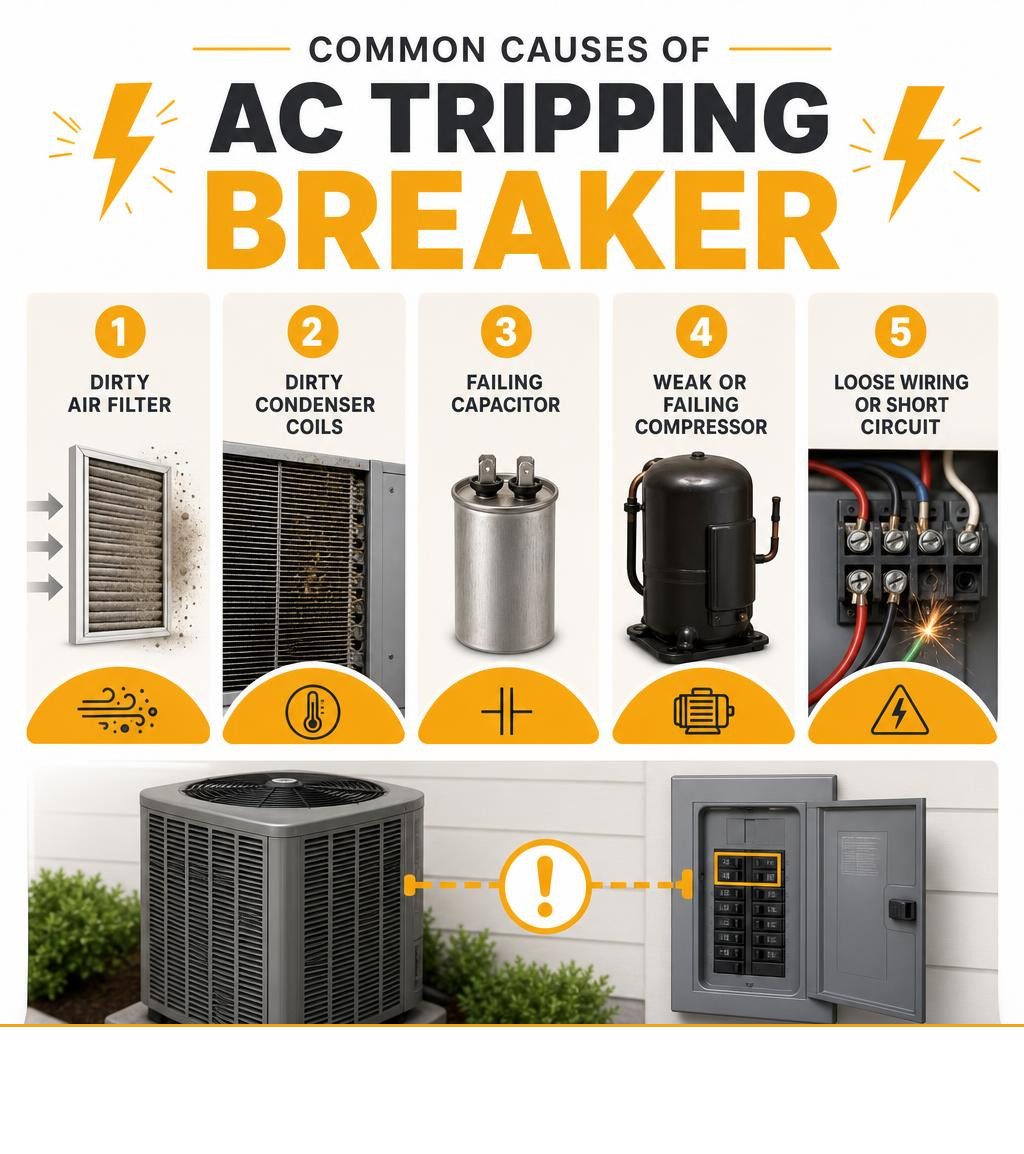
Your AC trips the breaker when it pulls more electrical current than the circuit can safely handle. Here are the most common reasons:
- Dirty air filter restricts airflow, forcing the blower motor to work harder and draw excess current
- Dirty condenser coils trap heat in the system, causing the compressor to overwork
- Failing capacitor makes the compressor struggle to start, spiking the electrical draw
- Weak or failing compressor draws too many amps, especially in high heat
- Loose wiring or short circuit creates a direct electrical fault that immediately trips the breaker
- Frozen evaporator coil blocks airflow and puts the entire system under stress
- Faulty circuit breaker the breaker itself may be worn out and tripping too easily
If your AC trips the breaker once and resets fine, it may be a minor issue. If it keeps tripping, stop resetting it and call a professional.
A tripped breaker is not just an inconvenience, it is your electrical system doing exactly what it was designed to do: protect your home from overheating wires and potential fire hazards. When your AC unit draws more current than its dedicated circuit can safely carry, the breaker cuts power before serious damage can occur. The problem is not the breaker itself. The breaker is the messenger. Something inside or around your AC system is demanding too much electricity, and that underlying issue needs to be found and fixed.
During the peak of a Central Texas summer, when temperatures push into the upper 90s, your AC is running harder than at any other time of year. That extra workload exposes weaknesses in components that might have been holding on just fine through milder weather. A capacitor that was barely functioning in April may fail completely in July. Condenser coils that were slightly dirty in spring can cause full system overload when outdoor temps spike. That is why AC breaker trips tend to cluster around the hottest weeks of the year.
I’m Chris Woods, owner of Woods Comfort Systems, a third-generation HVAC company serving Central Texas since 1956, and over the decades our team has diagnosed and repaired hundreds of AC tripping breaker situations ranging from simple clogged filters to full compressor failures. In this guide, I will walk you through exactly how to troubleshoot the problem safely, step by step.
Understanding Why Your AC Tripping Breaker Occurs
To understand why your AC tripping breaker issues keep happening, you first need to understand the electrical setup of a modern central cooling system. Most central AC systems run on a dedicated 240-volt circuit, controlled by a double-pole breaker in your electrical panel. This breaker monitors the electrical current (measured in amps) flowing to both your outdoor condenser unit and your indoor air handler.
When your AC starts up, it naturally draws a brief spike of electricity, known in the industry as locked rotor amps (LRA). Once the motors are spinning, the electrical draw drops back down to its normal running amps. However, if a motor is seized, a capacitor is weak, or a short circuit occurs, that high startup current stays elevated. The circuit breaker detects this dangerous overcurrent and flips off to protect your home.
There are three primary electrical issues that trigger a breaker trip:
- Overloaded circuit: The AC is physically overworking due to airflow restrictions or dirty coils, drawing slightly more current than the breaker rating over several minutes.
- Short circuit: A hot electrical wire touches a neutral wire, causing an instantaneous, massive spike in current that trips the breaker immediately.
- Ground fault: A hot wire touches a grounded portion of the metal system frame, creating a direct path to the earth and triggering an immediate shutdown.
If you ignore these warning signs, you risk serious damage to your equipment. In fact, a repeatedly tripping breaker is one of the classic signs AC unit close breakdown that homeowners in San Marcos, TX often overlook. Additionally, newer homes equipped with Arc Fault Circuit Interrupter (AFCI) safety devices may experience unique challenges. To learn more about how these highly sensitive safety switches behave, you can read about why your AFCI breaker keeps tripping – CircuitFixer.
5 Simple Steps to Troubleshoot a Tripping AC Breaker
When your system goes silent and the house starts warming up, it is tempting to run to the electrical panel and flip the switch back on immediately. Before you do that, follow a systematic diagnostic process.
| Troubleshooting Step | DIY or Professional? | What to Look For / Action to Take |
|---|---|---|
| 1. Filter Check | DIY | Inspect for heavy dust buildup, replace if clogged. |
| 2. Coil Inspection | DIY / Professional | Check outdoor unit for grass, dirt, or debris; clear away blockages. |
| 3. Evaporator Check | DIY | Look for ice on copper lines or the indoor unit; allow to defrost. |
| 4. One-Reset Rule | DIY | Turn off thermostat, reset breaker once, wait, turn back on. |
| 5. Electrical Testing | Professional | Use multimeters and megohmmeters to test capacitors, wiring, and motors. |
Step 1: Inspect and Replace a Clogged Air Filter
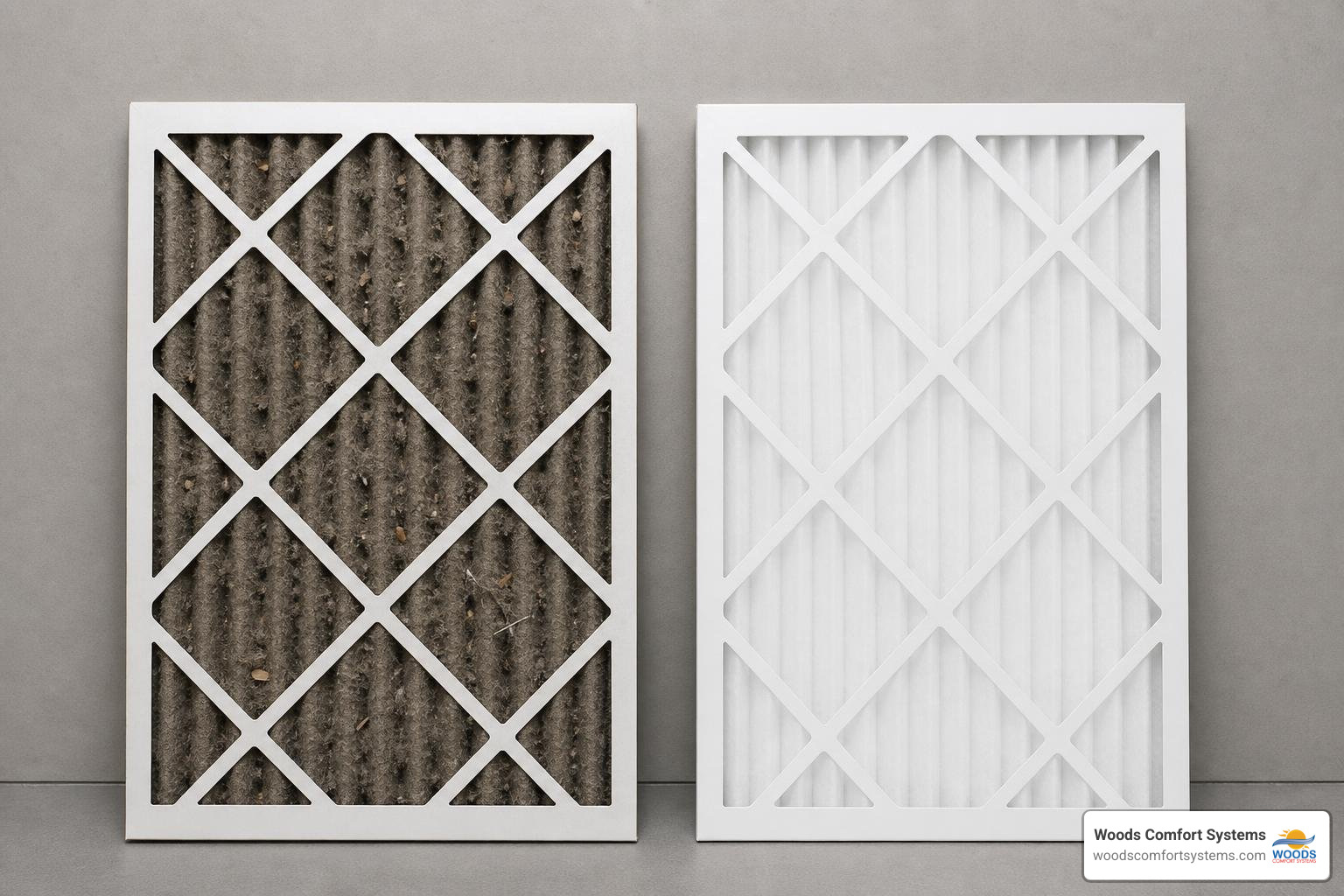
A dirty air filter is the single most common cause of an AC tripping the breaker, accounting for a massive portion of our service calls in Kyle, TX and Buda, TX during the peak summer months.
When dust and pet dander clog your air filter, it creates a severe airflow restriction. The blower motor inside your home has to work twice as hard to pull air through the blocked fabric. This extra physical strain forces the motor to draw excess electrical current. Over time, the motor overheats, its electrical demand spikes, and the breaker trips to prevent the motor from burning out. If you let this go on too long, it can lead to frustrating reasons your AC won’t turn on when you need it most.
Step 2: Clean the Outdoor Condenser Coils
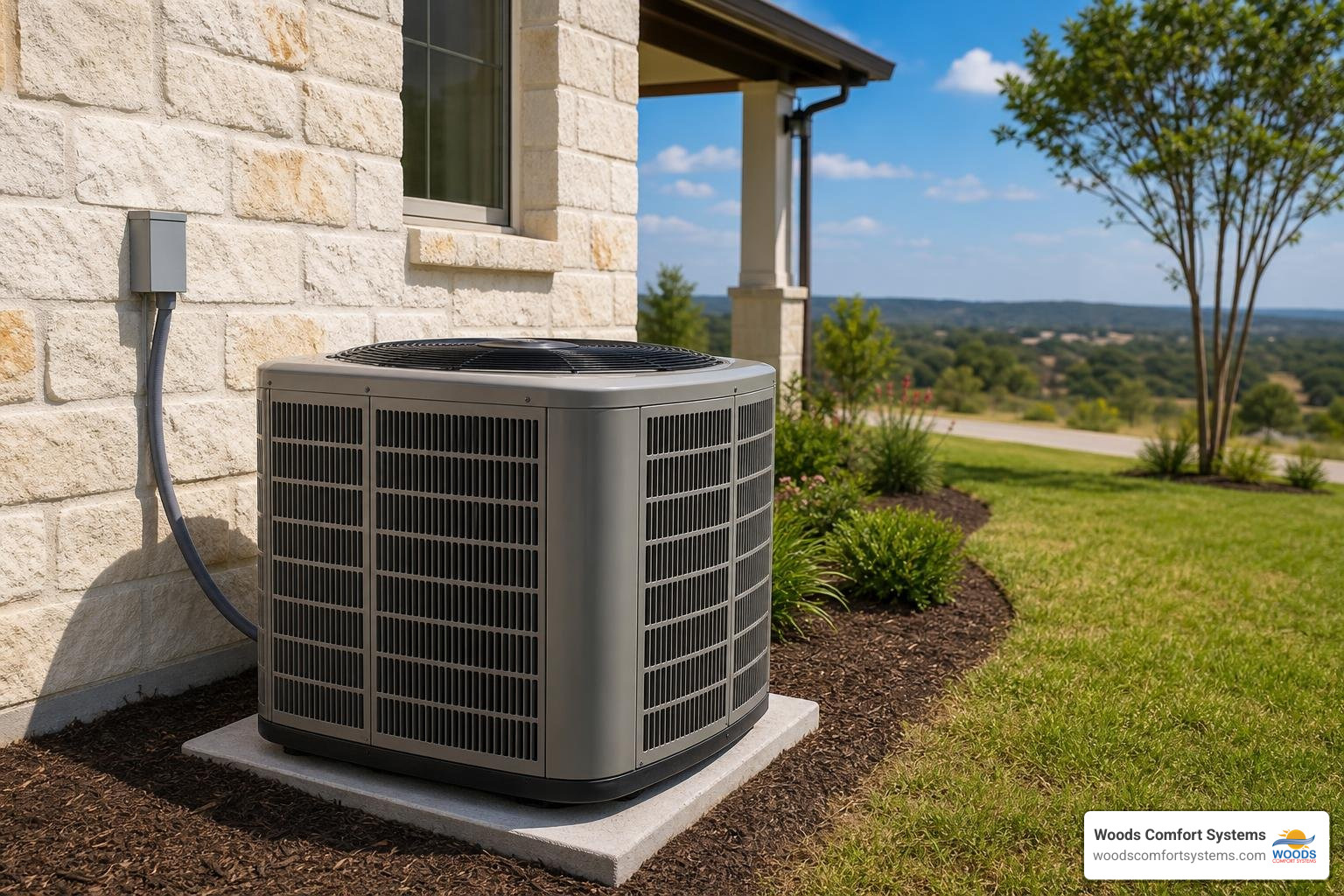
Your outdoor AC unit contains the condenser coils, which are responsible for releasing the heat collected from inside your home out into the wild Texas air. If these coils are covered in dirt, lawn clippings, pollen, or leaves, they cannot transfer heat efficiently.
Think of dirty condenser coils like wearing a heavy wool sweater on a 100-degree afternoon in New Braunfels, TX. Because the system cannot shed heat, the pressure inside the refrigerant lines (known as head pressure) skyrockets. The compressor has to pump much harder to move the refrigerant against this high pressure, which causes its electrical draw to climb higher and higher until the breaker trips.
Keeping these coils clean is essential. Dirty condenser coils are one of the top reasons for circuit breaker trips because they force the AC to overheat. If your system is running but not blowing cold air before it trips, this coil buildup is a highly likely culprit. To dive deeper into this issue, check out our guide on why your AC is not cooling.
Step 3: Check for a Frozen Evaporator Coil
When airflow is restricted by a dirty filter or when refrigerant levels are low, the temperature of your indoor evaporator coil can drop below freezing. Moisture in the air collects on the coil and freezes solid, turning your indoor unit into a block of ice.
This ice buildup completely blocks airflow, causing the blower motor to run continuously under extreme stress while trying to push air through a solid wall of ice. If you notice ice forming on the copper refrigerant lines leading into your home or on the indoor unit itself, turn the system off immediately at the thermostat. Let the system defrost completely, change the filter, and see if the system runs normally. If it freezes up again, you likely have a refrigerant leak that requires professional repair.
Step 4: Perform a Safe One-Reset Rule Protocol
If your breaker has tripped, you can safely attempt to reset it exactly once. We call this the One-Reset Rule.
- Turn the AC off at the thermostat: Never reset a breaker while the system is actively calling for cooling. This protects the compressor from starting up under a heavy electrical load.
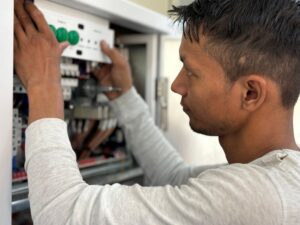
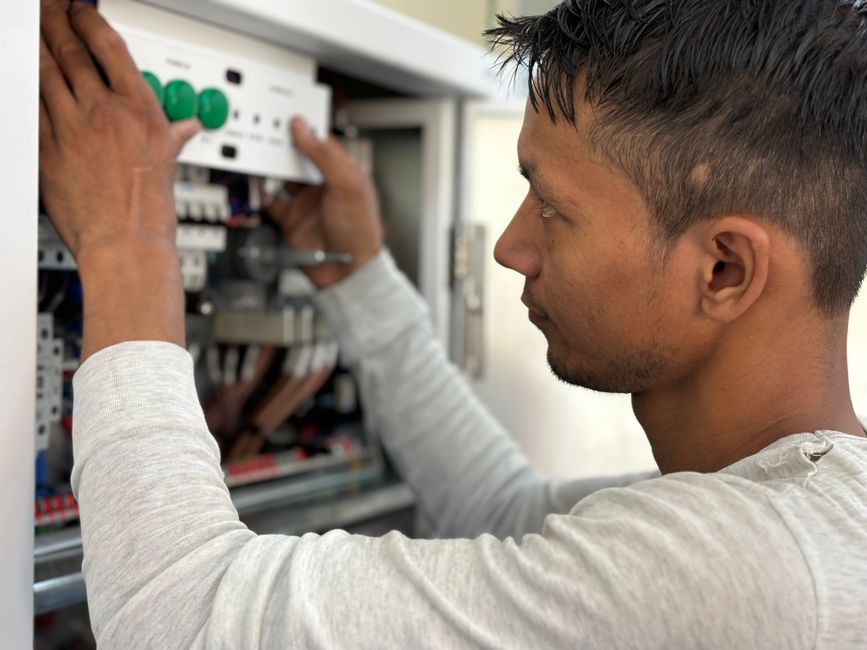
- Locate the tripped breaker: In your electrical panel, look for the double-pole breaker labeled “AC” or “HVAC”. It will likely be resting in the middle position, showing a red indicator flag.
- Reset the breaker: Push the switch firmly to the “Off” position until you hear a distinct click, then flip it back to the “On” position.
- Wait 30 minutes: Allow the outdoor unit’s internal overload switches to cool down completely.
- Turn the thermostat back to cool: Monitor the system closely as it starts up.
If the breaker trips again immediately or within a few minutes, do not try a second reset. Repeatedly resetting a tripping breaker can permanently ruin your compressor or cause an electrical fire.
Step 5: Identify When to Call for Professional HVAC Repair
Some issues simply cannot be solved with basic DIY maintenance. You must turn off the system and call a licensed professional immediately if:
- The breaker trips again immediately after your single reset attempt.
- You smell a distinct burning plastic or electrical odor near the indoor or outdoor units.
- You hear loud clicking, buzzing, or grinding sounds when the system tries to start.
- You notice scorch marks or melted wire insulation inside the outdoor disconnect box.
Our team at Woods Comfort Systems has the advanced diagnostic tools, including specialized multimeters and megohmmeters, to pinpoint the exact electrical fault safely.
Common Mechanical and Electrical Causes of Breaker Trips
If you have changed your filter and cleaned your outdoor unit, but your AC tripping breaker problems persist, the issue is likely a failing mechanical or electrical component.
How a Failing Compressor or Capacitor Results in an AC Tripping Breaker
The compressor is the heart of your air conditioning system, responsible for pumping refrigerant between the indoor and outdoor units. It is also the most expensive component in your system. As compressors age, their internal mechanical parts can wear down, causing them to struggle to start up. This is known as a hard-starting compressor.
To help the compressor start, your system uses a start capacitor, which acts like a booster battery to provide a quick jolt of high-voltage electricity. Over time, especially during intense Central Texas heatwaves, these capacitors weaken and lose their electrical storage capacity. When a capacitor fails, the compressor tries to start but cannot get over the hump. It draws massive amounts of electricity, hitting its locked rotor amp limit, and trips the breaker.
In some cases, we can install a hard start kit to give an aging compressor the extra electrical boost it needs. However, if the electrical windings inside the compressor fail and touch the metal casing, you have a grounded compressor. This creates a direct short to ground, causing an immediate, violent breaker trip every time the system tries to turn on. If you suspect this is happening, you need an urgent AC compressor repair to determine if the motor can be saved or if the system needs replacement.
Loose Wiring and Short Circuits Causing an AC Tripping Breaker
Your air conditioner undergoes constant temperature changes and physical vibrations while operating. Over time, these vibrations can cause electrical connections inside the outdoor unit to work themselves loose.
When wires become loose, they can rub against other metal components, wearing away their protective plastic insulation. This leads to a short circuit or a ground fault. Additionally, the contactor, which is the electrical switch that turns the outdoor unit on and off, can wear out. The electrical contact points can pit, corrode, or even weld themselves together, creating a continuous electrical arc that trips the breaker.
If you start hearing unusual clicking or buzzing sounds when your system cycles, it is a clear warning sign of electrical contactor or wiring issues. For homes with modern safety panels, loose connections can also cause arc faults. You can learn more about how electricians diagnose these sensitive wiring issues by reading about how an AFCI breaker keeps tripping? Causes and fixes.
Safety Risks of Repeatedly Resetting a Tripped Breaker
We cannot emphasize this enough: a circuit breaker is a safety device, not an on-off switch. Its job is to cut power before the copper wires inside your walls get hot enough to melt their insulation and ignite surrounding wood or drywall.
If you keep flipping a tripped breaker back on without fixing the root cause, you are bypassing this critical safety feature. Every time you force the system to take another massive hit of overcurrent, you run the risk of:
- Electrical Fires: Overheated wires inside your walls or electrical panel can easily spark a devastating home fire.
- Compressor Burnout: Forcing a struggling compressor to start repeatedly will quickly fry its internal electrical windings, turning a repairable electrical issue into an expensive system replacement.
- Melted Wire Insulation: The intense heat generated by high current can melt the insulation on your AC wiring, creating permanent short circuits that are incredibly difficult and costly to locate and repair.
If your system is showing signs of severe electrical stress, it is time to consult with an HVAC professional to evaluate when to repair or replace your AC to keep your family safe and comfortable.
Frequently Asked Questions about AC Breaker Trips
Why does my AC trip the breaker only when it is very hot outside?
High outdoor temperatures force your AC to work under much higher internal pressures. This increased workload requires the compressor to draw more electrical current. If you have a weakened capacitor, slightly dirty coils, or a borderline motor, the extra amperage draw of a hot afternoon will push the electrical load past the breaker’s limit.
Can a dirty air filter really cause an AC to trip the breaker?
Yes. A clogged filter severely restricts airflow, forcing the indoor blower motor to work much harder to circulate air. This physical strain causes the motor to draw excessive amperage, eventually overheating and tripping the circuit breaker to prevent motor failure.
Is it dangerous to repeatedly reset a tripped AC breaker?
Yes, it is highly dangerous. Repeatedly resetting a breaker without fixing the underlying issue can lead to melted wiring insulation, permanent damage to your compressor, and a significant risk of an electrical house fire.
How do I know if my AC capacitor is failing?
Common signs of a failing capacitor include a loud humming sound coming from the outdoor unit, a fan motor that struggles to spin or won’t spin at all without a manual push, a swollen or bulging capacitor casing, and frequent breaker trips at startup.
Can a faulty circuit breaker itself be the cause of the trips?
Yes. While circuit breakers are designed to last for decades, they can weaken over time, especially in hot or humid environments like Central Texas. A worn-out breaker may lose its spring tension and trip at a much lower amperage than its official rating.
What is the “One-Reset Rule” for air conditioners?
The One-Reset Rule is a safety protocol that allows homeowners to reset a tripped AC breaker exactly once after checking the air filter and letting the system rest for 30 minutes. If the breaker trips a second time, you must stop resetting it and call a professional.
Why does my AC trip the breaker immediately upon starting?
An immediate trip at the exact moment the system tries to turn on usually points to a direct short circuit, a grounded compressor, or a completely failed start capacitor. The system is instantly drawing a massive spike of electricity, and the breaker cuts power immediately for safety.
Should I call an electrician or an HVAC technician for a tripping breaker?
You should call a qualified HVAC technician first. The vast majority of AC-related breaker trips are caused by mechanical or electrical faults inside the AC unit itself, such as dirty coils, bad capacitors, or failing motors, which require specialized HVAC diagnostic tools to resolve.
How do dirty condenser coils affect my electrical panel?
Dirty condenser coils act like an insulating blanket, trapping heat inside the system. This causes the refrigerant pressure to spike, forcing the compressor to work much harder and draw significantly more electricity, which eventually overloads the circuit breaker in your panel.
What are the signs that my AC compressor is grounded?
A grounded compressor occurs when the electrical windings inside the motor break down and make direct contact with the metal frame. The primary sign is an immediate, violent breaker trip every single time the AC tries to start, often accompanied by a strong electrical burning smell and, in some cases, refrigerant contamination.
Conclusion
A tripping AC breaker is a clear warning sign that your cooling system is under extreme stress. Whether it is a simple fix like replacing a clogged air filter or a more complex issue like a failing capacitor or a grounded compressor, addressing the problem promptly is essential for your comfort and your home’s safety. Remember to respect the One-Reset Rule and never force a struggling system to run.
Whether you need fast AC repairs, seasonal HVAC maintenance, or a complete system replacement, the team at Woods Comfort Systems is ready to help. Schedule your professional AC repair services today to restore reliable, worry-free cooling to your Central Texas home.