


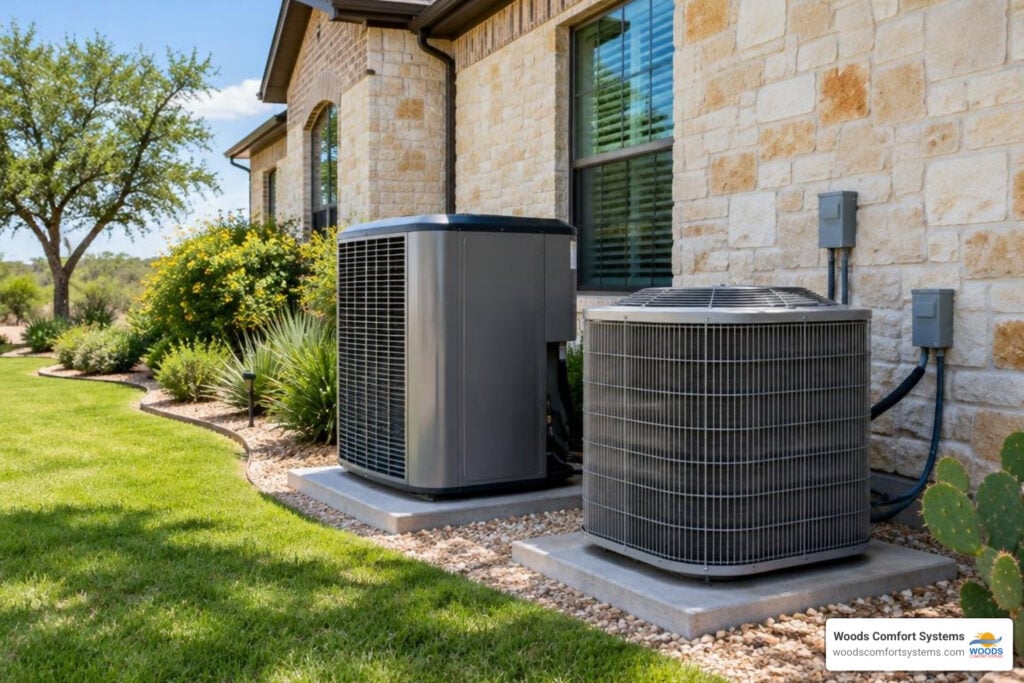
Is a Heat Pump or Central AC the Right Choice for Your Home?
Heat pump vs AC installation comes down to whether your home needs cooling only or a single system that can provide both heating and cooling.
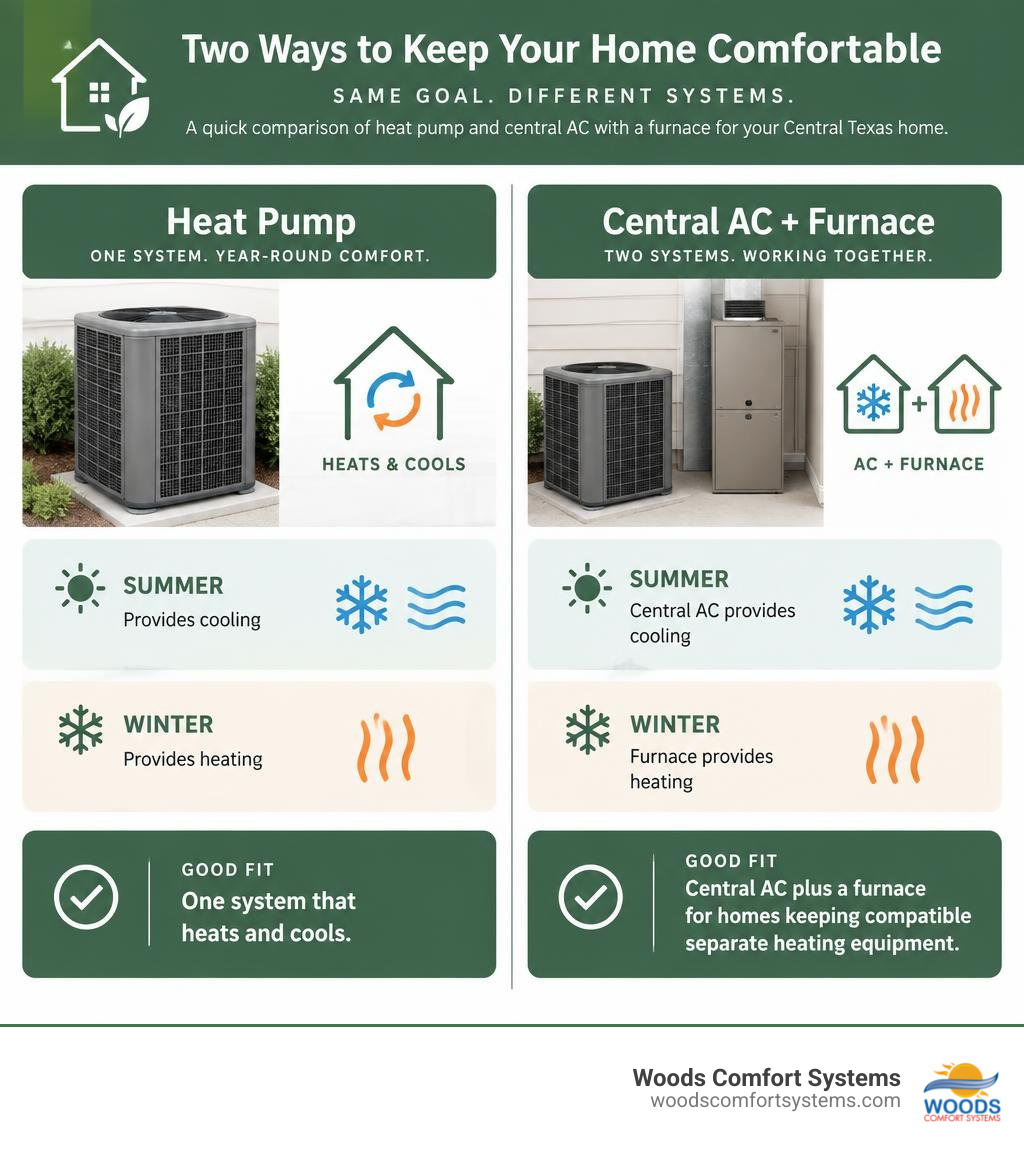
Here is a quick comparison:
| Factor | Heat Pump | Central AC |
|---|---|---|
| Cools your home | Yes | Yes |
| Heats your home | Yes | No, it needs separate heating equipment |
| Best fit | Mild to moderate winters | Homes with compatible separate heating |
| System setup | Can combine heating and cooling | Cooling only |
| Maintenance needs | Year-round attention | Seasonal cooling maintenance |
Bottom line: A heat pump cools like a central AC and can also heat your home. Central AC can be a practical choice when it pairs well with an existing furnace, while a heat pump can simplify a full system replacement.
Choosing between these systems is an important home-comfort decision. Both use refrigeration to move heat out of your home during summer. The key difference appears during cooler weather, when a heat pump can reverse its operation to bring heat indoors.
Central Texas summers are long and demanding, but winter comfort matters too. A system should match your home, existing equipment, comfort priorities, and maintenance expectations.
How Heat Pumps and Central Air Conditioners Work
Both systems use refrigerant to move heat rather than create cold air. In cooling mode, they collect heat from indoor air and release it outdoors through the equipment outside your home.
In a Texas summer, a heat pump and central AC perform the same basic cooling job. They remove heat and moisture from indoor air to help maintain comfortable conditions.
The key difference is a heat pump’s reversing valve, which lets the system operate in the opposite direction for heating. That flexibility allows one system to manage comfort in more than one season.
The Mechanics of a Central AC Unit
A traditional central air conditioner is a one-way street. It is designed to do one job, and it does it exceptionally well. The system consists of three main parts: the compressor, the condenser coil, and the evaporator coil.
- The compressor, located in the outdoor unit, acts as the heart of the system, pumping refrigerant through the copper lines.
- The evaporator coil, located inside your home near your air handler or furnace, absorbs heat and moisture from your indoor air.
- The condenser coil, located in the outdoor unit, releases that captured heat into the outside atmosphere.
Because central AC only provides cooling, it must work with separate heating equipment, often a furnace. If your current system is unreliable, explore AC installation options for professional guidance.
The Mechanics of a Heat Pump System
A heat pump resembles a traditional air conditioner from the outside, but it can move heat in either direction. Its reversing valve changes the refrigerant flow for heating or cooling.
During winter, the system draws available heat from outdoor air and moves it indoors. That is why a heat pump can provide efficient comfort during Central Texas weather.
For homeowners considering a replacement, heat pump benefits can help explain why one system may handle both heating and cooling needs.
Key Differences in Heat Pump vs AC Installation
A heat pump vs AC installation can follow different paths depending on the system and your home. Both need outdoor and indoor equipment, but our technician evaluates the full setup before recommending the right approach.
A new system is not a do-it-yourself project. Our technician handles equipment connections, sealed components, and any gas or electrical work needed for a safe installation.
System Sizing and Planning
Before installation, our technician evaluates your home to size the system correctly. That review considers the home’s layout, insulation, windows, ductwork, and comfort needs.
Proper sizing supports steady comfort and reliable operation. A system that is too large or too small can create uneven temperatures, humidity concerns, and unnecessary wear.
A heat pump can replace both cooling and heating equipment, while central AC works alongside a separate furnace. The best option depends on the condition of your current system and the goals for your home.
Electrical and Ductwork Considerations
If you are changing equipment types, our technician checks whether any electrical work is needed.
Our technician also evaluates ductwork for airflow, sealing, and insulation needs. For homes that need duct improvements, ductwork services can help support a properly matched system.
During a system replacement, our technician:
- Removes the old equipment safely.
- Checks the indoor and outdoor connections and completes any required electrical work.
- Inspects and improves ductwork where needed.
- Installs the new equipment and tests heating and cooling.
Homeowners receive clear guidance on basic safe care, including filters, vents, and keeping outdoor equipment clear of debris.
What Our Technician Checks Before Recommending a System
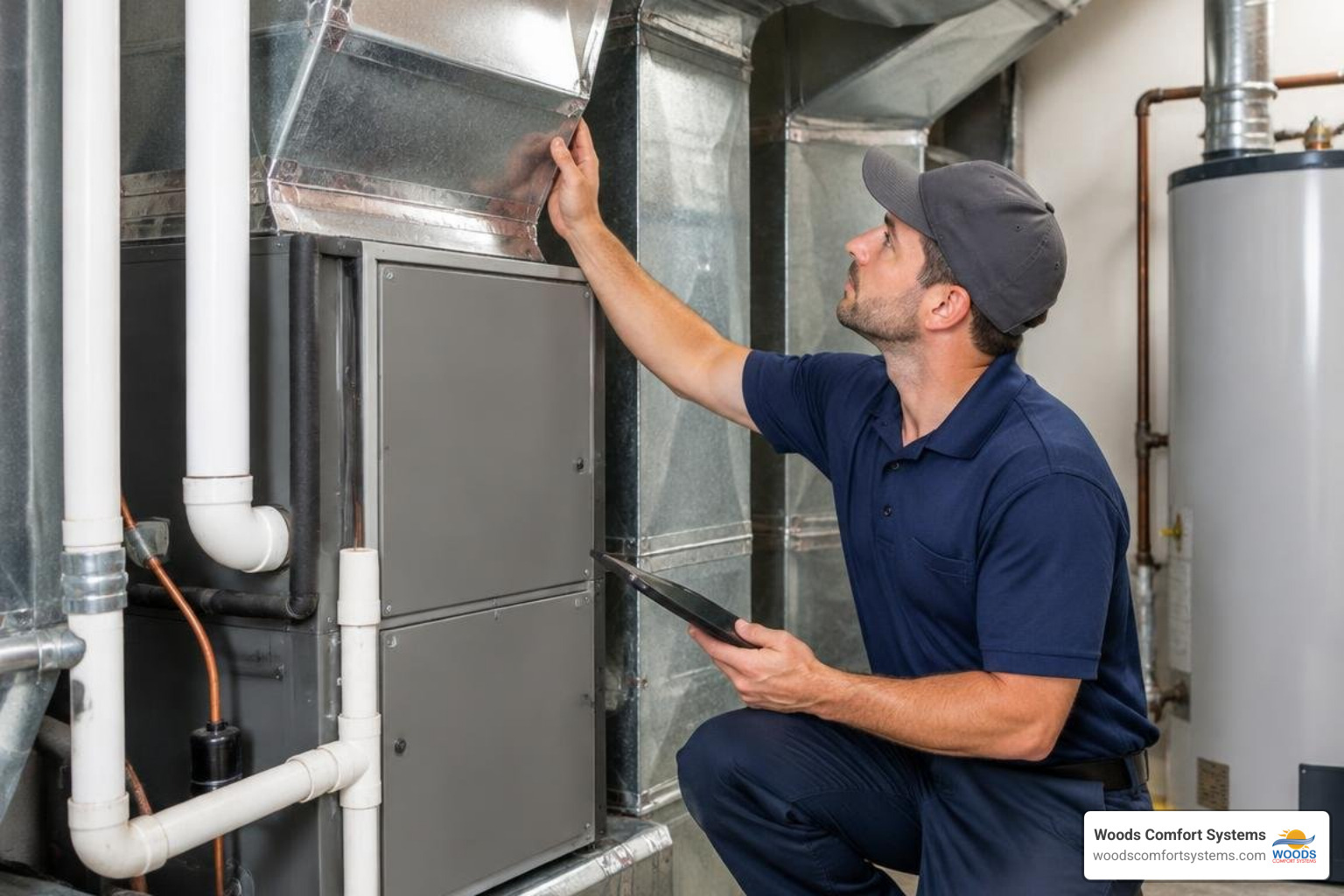
Before recommending a heat pump or central AC system, our NATE-certified technicians review how the entire home is currently heated and cooled. This includes the age, condition, and reliability of existing heating equipment, along with whether it remains compatible with a replacement cooling system. That broader review helps identify whether keeping a furnace, replacing it, or considering a combined solution makes the most sense for the home.
Ductwork and airflow also matter. Our technician looks for rooms that feel warmer, cooler, stuffier, or harder to keep comfortable than the rest of the house. Airflow restrictions, duct condition, insulation, and layout can affect how consistently a new system performs. The evaluation also considers how the household uses the home, such as occupied rooms, daily schedules, additions, future renovation plans, and changing comfort needs. These details help guide a recommendation that supports practical comfort across the home.
Finally, our technician checks whether the installation may involve electrical or gas work and identifies any safety or compatibility considerations before making a recommendation. Homeowners can share their comfort concerns and recent system issues, while our technician handles the technical evaluation and explains the options clearly.
Cooling Performance and Energy Efficiency
In Central Texas, cooling performance matters. Whether you choose central AC or a heat pump, the system should be sized and installed to keep your home comfortable during demanding summer weather.
When comparable equipment is selected, heat pumps and central air conditioners provide similar cooling performance. Installation quality, airflow, maintenance, and equipment selection all affect day-to-day comfort.
Summer Cooling Efficiency Metrics
SEER2 is a cooling-efficiency rating that helps compare equipment. A higher rating generally indicates lower electricity use for the same cooling output under standardized testing.
ENERGY STAR notes that heating and cooling use a large share of home energy, so an efficient system matters.
Many modern systems use variable-speed technology to adjust output more gradually. This can support steadier indoor temperatures and humidity control when the rest of the system is properly designed.
Routine maintenance and correct airflow help preserve cooling performance. Learn more about efficient AC systems before choosing replacement equipment.
Winter Heating Efficiency and HSPF2
Central AC needs separate heating equipment, while a heat pump moves heat indoors for winter comfort. The right choice depends on the full heating and cooling setup in your home.
Because a heat pump moves heat instead of generating it, it can be a strong fit for moderate Central Texas conditions. Our technician can help determine whether a heat pump or a furnace pairing better fits your home.
HSPF2 is a heating-efficiency rating for heat pumps. If heating performance has become unreliable, heat pump warning signs can help you decide when to request a professional evaluation.
Climate Suitability and Energy Use
Local weather is an important consideration when choosing between a heat pump and central AC with separate heating equipment. Central Texas and Hill Country communities typically experience long cooling seasons with shorter periods of winter heating demand.
That pattern can make a heat pump a practical option for many homes. A professional evaluation should still consider your ductwork, existing furnace, electrical setup, comfort preferences, and household needs.
Performance in Mild to Moderate Climates
In a mild climate, a heat pump can provide heating and cooling through one system. Central AC paired with a furnace may be a better match when the existing heating equipment is in good condition or when a dual-system approach suits the home.
For homeowners planning a replacement, heat pump services offers a way to evaluate whether a combined heating and cooling system fits the home.
A Recent System Replacement in San Marcos
Recently, we helped a homeowner in San Marcos resolve frequent breakdowns and rising utility costs. Their system was over 15 years old and losing efficiency. After evaluating the home, we installed a properly sized high-efficiency unit and optimized airflow.
What Happens During a Central Texas Cold Snap
During a cold snap, a heat pump may use backup heat to help maintain indoor comfort. In homes with a dual-fuel setup, the system can use the heat pump in milder conditions and rely on the furnace when additional heating support is appropriate.
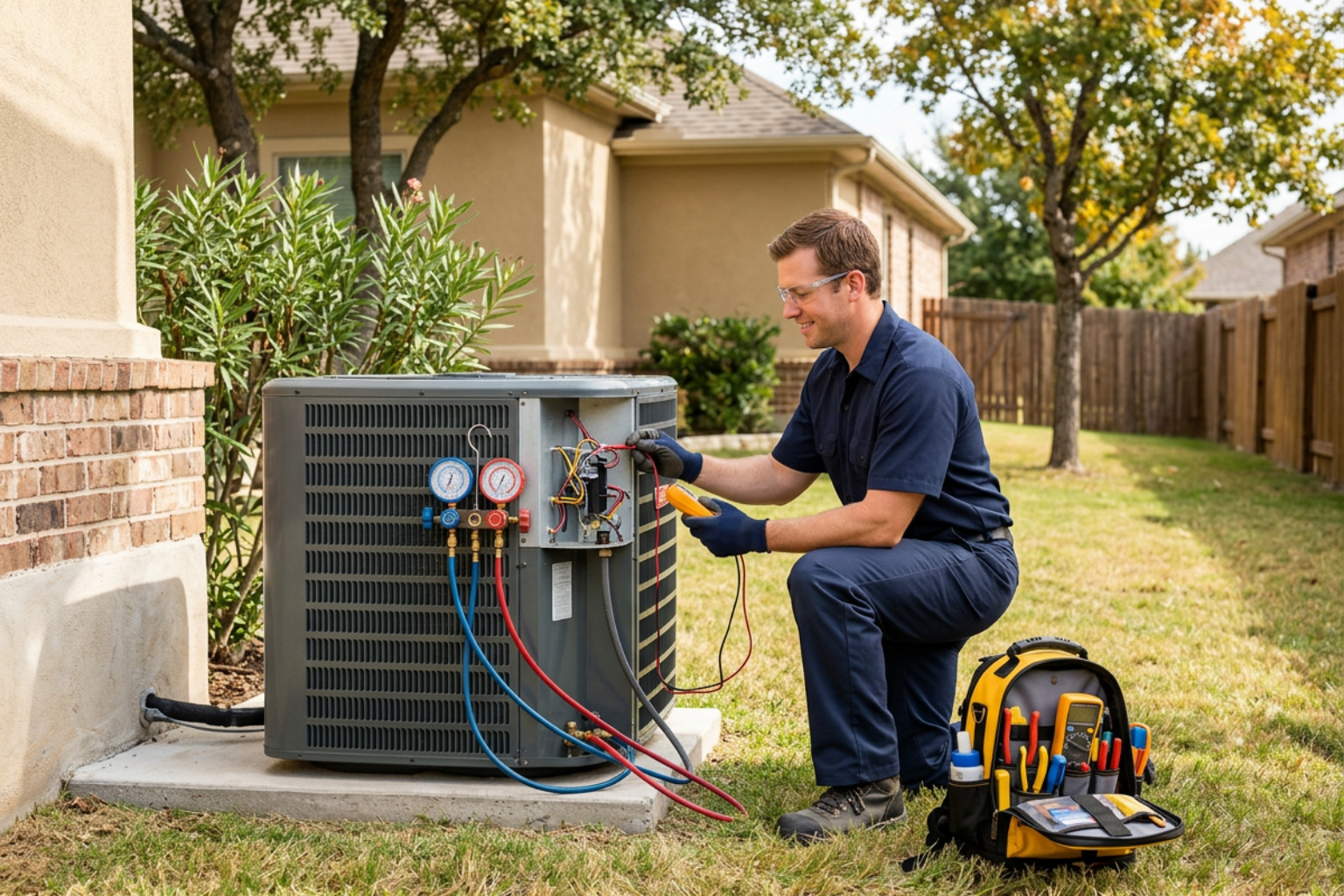
Homeowners can safely check the thermostat setting, filter, breaker or switch, open vents, and outdoor debris clearance. For persistent problems, troubleshoot heating issues before arranging service; our technician handles gas connections, electrical repairs, refrigerant work, and other sealed-system service.
Questions to Ask Before Choosing a System
Before choosing a heat pump or central AC, start with the equipment already in place. Is the current furnace in good condition, and is it worth keeping as part of the next system? Consider the age of the existing equipment and how often it has needed repairs. A system that has become unreliable may point toward a broader replacement, while dependable heating equipment may still pair well with a new central AC.
Think about comfort in each part of the home. Are there rooms that stay warmer, cooler, stuffier, or harder to manage than the rest of the house? Those concerns can reveal airflow or ductwork issues that should be addressed before new equipment is selected. It also helps to consider whether the ductwork is in good shape and whether planned additions or renovations could change the home’s comfort needs.
The home’s energy setup matters as well. An all-electric home and a home with gas service may have different practical options for heating. Finally, decide whether one system that handles both heating and cooling is more appealing than keeping a separate furnace. A technician can use these answers to recommend a setup that fits the home’s equipment, layout, and long-term comfort goals.
Lifespan and Maintenance
A new heating and cooling system is a long-term investment in household comfort. Regular maintenance and prompt professional service can help protect that investment.
Lifespan depends on use and maintenance, along with installation quality, local weather, and how well the equipment matches the home. Central AC usually runs primarily during the cooling season, while a heat pump works in both heating and cooling modes.
Because a heat pump operates year-round, consistent maintenance is especially important. Our technician can inspect the equipment and address developing issues before they affect comfort.
When a repair or replacement decision comes up, our furnace installation guidance and HVAC team can help.
Frequently Asked Questions
Can I keep my existing furnace with a new central AC?
Often, yes, if the furnace is in suitable condition and compatible with the new cooling equipment. Our technician evaluates the complete system so the equipment can work together safely and effectively.
What should I check before calling for heat or AC service?
Start with safe basics: check the thermostat, replace a dirty filter, make sure vents are open, confirm the breaker or switch is on, and clear debris around the outdoor unit. Do not open sealed equipment or attempt gas or electrical repairs; our technician handles that work.
Will my existing ductwork work with a new heat pump?
It may, but ductwork should be inspected before installation. Airflow, leakage, insulation, and overall condition can affect the comfort and performance of a new system.
Is a ductless system a good option for an addition?
Ductless systems can be useful for additions, converted spaces, or rooms that are difficult to serve with existing ducts. Our technician can assess the space and explain whether ducted or ductless equipment is the better fit.
How can I tell whether a heat pump needs professional attention?
Frequent cycling, unusual sounds, weak airflow, uneven temperatures, or a sudden change in comfort can signal a problem. After safe homeowner checks, request professional service so our technician can inspect the system and its sealed components.
Conclusion
Choosing between a heat pump and central AC depends on your home, existing heating equipment, and comfort goals. A professional evaluation can clarify which setup best supports reliable cooling and winter heating in Central Texas.
Written by Chris Woods, Owner, Woods Comfort Systems. Chris is the third generation of the Woods family in Texas HVAC and has led Woods Comfort Systems in San Marcos since 2010.
Woods Comfort Systems is family-owned since 1956, with three generations of the Woods family serving San Marcos and Central Texas and Hill Country communities. With 4.9 stars on Google, the team provides professional guidance for system replacement, repairs, and maintenance.
For help with your next system decision, schedule service. Woods Comfort Systems · 1900 Dutton Dr, San Marcos, TX 78666 · (512) 253-8927