


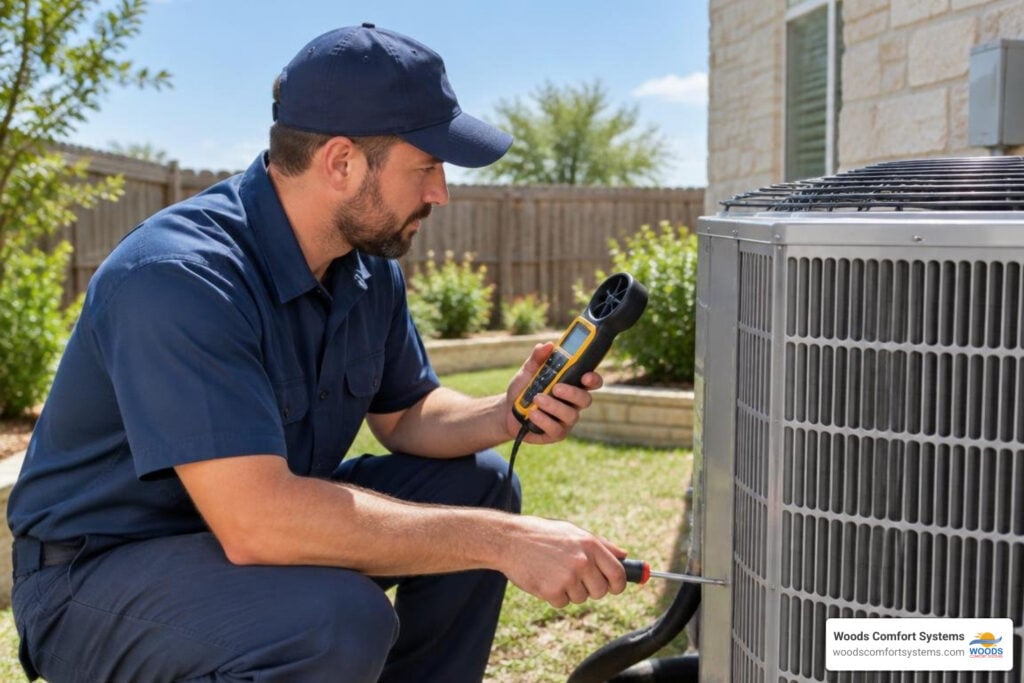
Post-Season Signs Your Cooling System Needs Attention
AC repair concerns often become easier to spot after a long Texas cooling season, when the system has worked through months of heat, dust, and heavy daily use. A unit may still run, yet deliver weaker comfort, make new sounds, or take longer to cool the home. Fall is a practical time to address those changes because the demand for cooling has eased and a developing problem can be evaluated before the next stretch of extreme heat.
Homeowners in San Marcos and nearby Hill Country communities should pay attention to patterns rather than waiting for a complete shutdown. Warm air from the vents, uneven temperatures between rooms, repeated starts and stops, ice on the lines, water near equipment, unusual noises, and higher utility bills can each signal that the system needs professional attention. Some signs have simple causes, while others involve electrical components, refrigerant, or sealed equipment that should only be handled by a trained technician.
The goal is not to diagnose the system from a distance or to take apart equipment at home. It is to notice what has changed, complete a few safe checks, and give the service team useful details about when the issue occurs. That approach helps protect the equipment, supports a clearer visit, and can prevent a minor concern from becoming a larger interruption when summer returns.
If the system is producing a burning odor, tripping a breaker repeatedly, leaking heavily, or failing to cool during hot weather, turn it off when safe to do so and arrange after-hours emergency service. For less urgent issues, a fall appointment gives a technician time to inspect the equipment, explain the findings, and recommend the next appropriate step.

Warning Signs You Need AC Repair
Long cooling seasons can expose wear that was easy to miss when the system was simply keeping up day after day. The signs below do not tell a homeowner exactly which part needs attention, but they do show when the equipment deserves a closer look. Scheduling service in fall can help resolve comfort issues before the next period of sustained heat.

Warm Air or Uneven Cooling
When the thermostat is set for cooling but the vents deliver warm or only mildly cool air, the system is not removing heat as it should. Uneven cooling can look different from room to room, with one area feeling comfortable while another stays stuffy. A dirty filter, closed vents, blocked airflow, or an equipment issue may contribute, so start with the safe checks and let our technician inspect the system if the problem remains.
Do not open sealed components or attempt to add anything to the cooling system. Our technician does the work involving refrigerant, electrical connections, and sealed parts after evaluating the equipment. If the problem appears only during the hottest part of the afternoon, mention that timing when you schedule the visit because it can help guide the inspection.
Weak Airflow from Supply Vents
Weak airflow is often noticed after a long summer because dust and normal use can affect how air moves through the home. A homeowner can check that the thermostat is on the intended setting, replace a dirty filter, make sure supply and return vents are open, and remove leaves or loose debris from around the outdoor unit. Those steps are safe and can rule out simple restrictions without taking equipment apart.
If the airflow stays weak, the cause may be inside the system or ductwork. That is the point to stop troubleshooting and schedule professional service. For related home-comfort guidance, see our ductwork service page and our article on duct cleaning choices.
Short Cycling or Repeated Restarts
Short cycling happens when the system starts, stops, and starts again without completing a normal cooling cycle. It can make a home feel inconsistent and may put extra strain on equipment over time. A thermostat setting, airflow restriction, or an internal system concern can be involved, but homeowners should not try to bypass controls or reset equipment repeatedly to force it to run.
Check the filter, make sure the thermostat is set correctly, and confirm that the breaker or nearby service switch has not been turned off. If the issue continues, record whether it happens every time the system runs or only at certain times of day. That observation is more useful and safer than attempting electrical or control repairs at home.
Rising Bills Without a Clear Change at Home
A higher utility bill can have several causes, including hotter weather, changes in household use, or a cooling system that is running longer than usual. When the increase appears alongside weak airflow, warm rooms, or frequent cycling, it is worth arranging an inspection rather than assuming the system will improve on its own. The focus should be on finding the reason for the extra run time, not on making guesses about the equipment.
Preventive service can also help keep the system ready for the next cooling season. Our AC maintenance team can inspect the system and discuss appropriate upkeep, while our fall tune-up guide explains why seasonal attention matters.
Ice, Water Leaks, and Odd Noises Need Prompt Attention
Some warning signs call for a timely service visit because continued operation can create additional problems. Ice on the lines, water around indoor equipment, and new mechanical or electrical sounds are not issues to ignore until next season. Turning the system off when conditions appear unsafe and arranging professional help is the better choice.
Ice on Lines or Indoor Equipment
Ice can indicate that the system is not moving or managing heat correctly. A homeowner can turn cooling off, replace a dirty filter, and check that vents are open and unobstructed. Do not chip at ice, open equipment panels, or try to handle refrigerant or sealed components, because our technician does that work safely after the system can be inspected.
Once the ice has melted, the original cause still needs attention. Let the service team know whether the system was producing weak airflow, warm air, or unusual cycling before the ice appeared. Those details can help our technician evaluate the system without relying on guesswork.
Water Near the System
Small amounts of moisture can become more noticeable during a Texas summer, but pooled water, damp ceiling areas, or repeated drainage problems deserve professional attention. Homeowners can safely look for a clogged filter, confirm that accessible vents are open, and keep the area around equipment clear. Work inside the equipment or on electrical connections should be left to our technician.
Water issues can also affect indoor comfort. The EPA explains that source control, ventilation, and filtration are key ways to reduce exposure to indoor pollutants, which is one reason to address moisture concerns rather than simply covering them up. Review the EPA’s indoor air guidance for more information about healthy indoor air.
Clicking, Grinding, or Burning Odors
A new sound does not always mean an emergency, but persistent clicking, grinding, buzzing, or rattling should be described to a professional. Burning odors, smoke, or repeatedly tripped breakers are more urgent signs. Turn the unit off if it is safe, avoid resetting the breaker over and over, and contact a service team for after-hours assistance.
For a system that needs evaluation, schedule AC repair service with a team that can explain the findings clearly. Woods Comfort Systems serves San Marcos and Central Texas, including Hill Country communities such as Austin, New Braunfels, Kyle, Buda, and Wimberley.
Safe Homeowner Checks and What Our Technician Handles
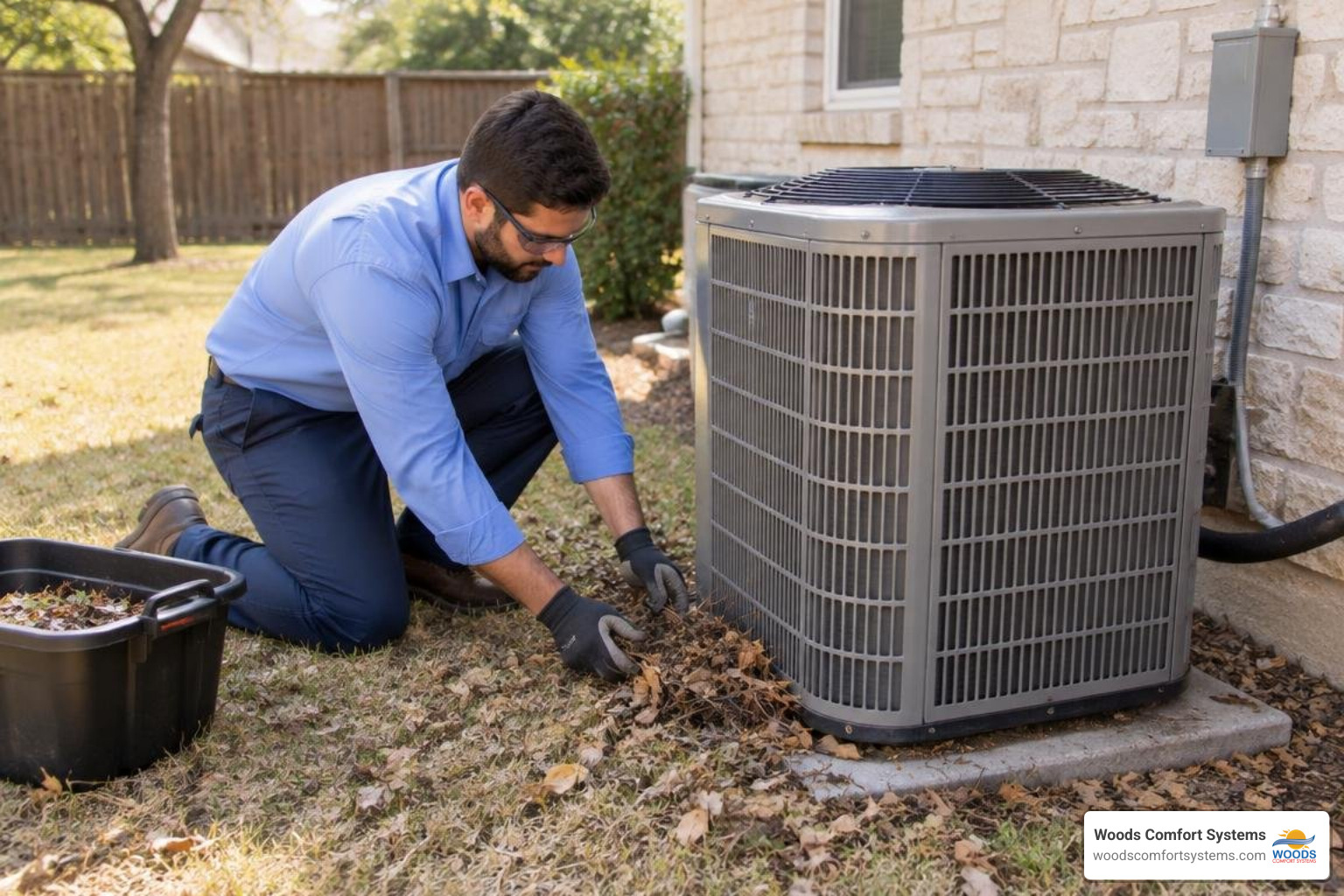
Before requesting service, homeowners can complete a short set of checks that do not require opening equipment or touching wiring. Confirm that the thermostat is set to cool, replace or inspect the air filter, verify that the breaker and nearby service switch are on, make sure supply and return vents are open, and clear loose leaves or debris from around the outdoor unit. These steps can improve basic airflow conditions and give the technician a clearer starting point.
Stop there. Gas work, electrical work, refrigerant work, and repairs involving sealed components are jobs for our technician. Do not remove service panels, bypass controls, or attempt to diagnose electrical parts based on a sound or smell. A professional inspection protects the equipment and helps identify whether the issue is related to airflow, drainage, controls, or another part of the system.
When choosing a contractor, keep the questions simple: ask whether the company is licensed and insured, whether its technicians are trained to diagnose the full system, and whether the findings and available repair options will be explained before work begins. Woods Comfort Systems has NATE-certified technicians, provides after-hours emergency service when needed, and can discuss free estimates and financing for appropriate projects. That is enough information to begin a productive conversation without turning the article into another checklist.
A Recent Service Call in Kyle
During a summer visit in Kyle, a homeowner had uneven cooling caused by restricted airflow from clogged coils. The concern was uneven cooling, and the service visit identified restricted airflow as the reason the home was not receiving consistent comfort. Coil cleaning restored the airflow. This case shows why uneven temperatures should not be dismissed after a long cooling season, especially when a system has been working hard through Texas heat. It also shows why a technician should evaluate the equipment rather than relying on a homeowner to reach or clean internal components.
Fall is also a useful time to plan ahead if the system has struggled through summer. A technician can review the condition of the cooling equipment and discuss whether routine care, repair, or future replacement planning makes sense for the home. Homeowners considering a later system update can explore AC installation options after the current comfort concern has been properly evaluated.
Homeowner FAQs for the Fall Season
Why should I schedule service in fall if my system is still running?
A system that is still operating can still have warning signs that deserve attention, such as longer run times, weaker airflow, or room-to-room temperature changes. Fall service gives a technician an opportunity to assess those concerns before the next period of heavy cooling demand. It can also make it easier to plan repairs or maintenance without waiting for a more urgent interruption.
Can I keep running the system if I see ice on the lines?
It is safer to turn cooling off and let the system thaw rather than continue running it with ice present. You can check the filter and make sure vents are open, but do not attempt to remove ice manually or access sealed equipment. Our technician can determine what caused the condition and advise on the proper repair.
What should I tell the technician when I call?
Describe what you noticed, when it started, whether the issue happens every time the system runs, and whether it affects the whole home or only certain rooms. Mention any water, ice, sounds, smells, or repeated breaker trips, as well as the safe checks you have already completed. Clear observations help the technician focus the visit and communicate the findings more effectively.
Is uneven cooling always a problem with the outdoor unit?
No. Uneven cooling can relate to airflow, vents, filters, ductwork, thermostat settings, or conditions within the cooling equipment. That is why a full evaluation is more useful than assuming one component is responsible. Our technician can inspect the system and explain which condition is affecting comfort in the home.
What does a professional maintenance visit include?
The scope of a visit depends on the condition of the system and the service requested, but the purpose is to inspect operation, identify visible concerns, and address appropriate upkeep. Homeowners should expect clear communication about the technician’s findings and recommended next steps. A maintenance visit is also a good time to raise smaller changes in comfort before they grow into a more disruptive problem.
Prepare Your System for the Next Texas Summer
Addressing post-season cooling concerns in fall can help protect comfort before the next Texas summer arrives. Warm air, weak airflow, repeated cycling, ice, water, odd noises, and unexplained increases in utility use are all worth documenting and discussing with a professional. Homeowners can complete the safe checks, then let our technician handle the work involving electrical connections, refrigerant, gas, and sealed components.
Fall also creates a calmer window to make decisions with better information. Instead of responding to a sudden loss of cooling during the busiest part of the year, you can ask questions, understand the technician’s findings, and choose the next step for your home. That may be a focused repair, planned maintenance, or simply a recommendation to monitor a condition before the weather turns hot again.
Written by Chris Woods, Owner, Woods Comfort Systems. Chris is the third generation of the Woods family in Texas HVAC and has led Woods Comfort Systems in San Marcos since 2010.
Woods Comfort Systems has been family-owned since 1956, with three generations of the Woods family serving Central Texas homeowners. The company is proud of its 4.9 stars on Google and focuses on practical guidance, clear communication, and respectful service for every home. When your cooling system shows signs of trouble, schedule service so our team can assess the issue and help prepare your home for the season ahead.
Woods Comfort Systems · 1900 Dutton Dr, San Marcos, TX 78666 · (512) 253-8927