


Is Your San Marcos, TX Home Ready for a Smart Thermostat?
Smart thermostat HVAC compatibility starts with a few safe homeowner checks and a clear understanding of when to call an HVAC professional. A smart thermostat can make daily temperature control more convenient, but it must match the heating and cooling system already installed in the home.
Before selecting a thermostat, homeowners can safely confirm that the display is working, replace a dirty filter, make sure supply vents are open, verify that the HVAC breaker or service switch is on, and clear leaves or other debris from around the outdoor unit. Those observations can help explain a comfort problem without opening equipment panels or handling wiring.
A thermostat upgrade is not a do-it-yourself project when it involves electrical connections, control-board adjustments, gas equipment, sealed components, or any work inside HVAC equipment. Our technician does this work and can confirm the correct control setup before anything is changed.
Safe Checks Before You Schedule Service
Start by noting whether the thermostat screen is on, whether the system responds to a temperature change, and whether airflow from the vents feels normal. Check the filter if it is accessible, keep furniture away from supply vents, and clear the area around the outdoor unit so it can move air properly. If the system does not respond, the breaker or nearby service switch may need attention, but homeowners should not remove panels or touch electrical components.
For help choosing and setting up new controls, explore our thermostat services. Woods Comfort Systems is family-owned since 1956, with three generations of the Woods family serving Central Texas homeowners. The company also holds 4.9 stars on Google and serves San Marcos along with Hill Country communities such as Austin, New Braunfels, Kyle, Buda, and Wimberley.
This guide explains the system features that affect compatibility, the safe information a homeowner can gather, and the situations that need a professional evaluation.
Understanding Smart Thermostat HVAC Compatibility
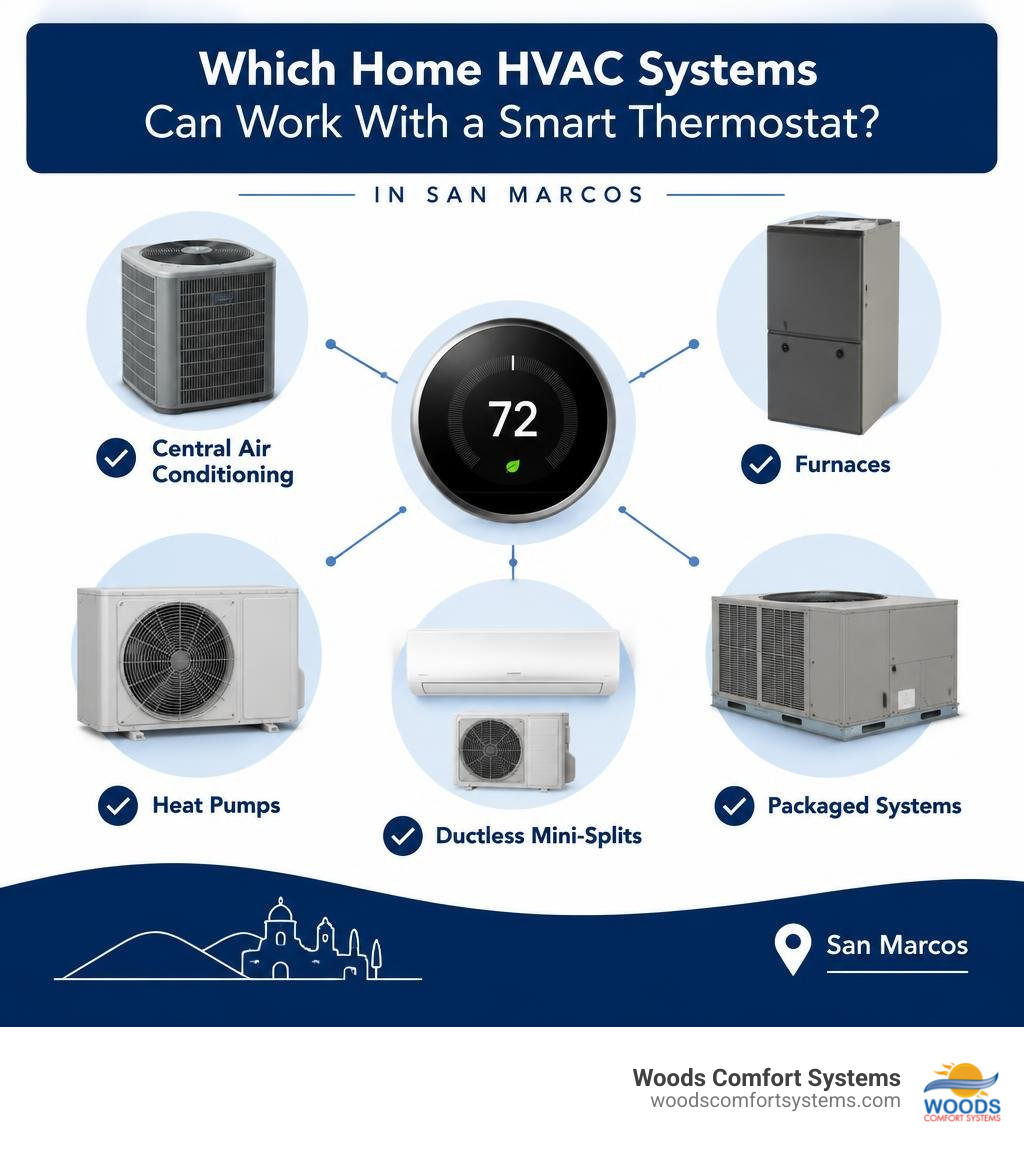
A compatible smart thermostat must communicate correctly with the home’s heating and cooling equipment. The thermostat is only one part of the system, so the wiring terminals, equipment controls, operating stages, and any zoning setup must be evaluated together.

Most central HVAC systems use low-voltage thermostat controls, but the right match still depends on the equipment in the home. Some systems have multiple heating or cooling stages, zone controls, or communicating components that need professional configuration. Installing a thermostat that does not support the existing controls can lead to uneven comfort, short cycling, or lost system features.
Start With the System, Not the Thermostat
A homeowner can read the thermostat label and note the terminal letters after switching the system off at the thermostat. A clear photo of the thermostat face and visible terminal labels gives our technician useful information before a visit. Do not disconnect wires, test electrical circuits, or open the indoor unit to investigate the controls. Our technician does that work safely.
Low-voltage controls are common in central heating and air-conditioning systems, while line-voltage equipment uses a different type of thermostat. Thick wires, wire connectors, warning labels, or an unfamiliar setup are reasons to stop and schedule professional help. A technician can identify the control type without putting the equipment at risk.
Multi-Stage, Zoned, and Advanced Controls
Multi-stage systems adjust output as conditions change, and zoned systems direct comfort to different areas of the home. Both can work well with the right thermostat and professional configuration, but the compatibility decision should account for the existing controls rather than a product box alone. For systems that need an evaluation or replacement planning, our air-conditioning team can assess the controls and overall system operation.
ENERGY STAR explains that certified smart thermostats can automatically adjust temperature settings and provide remote control features, but homeowners should first confirm that the selected control is compatible with their heating and cooling equipment. Read the agency’s smart thermostat guidance before shopping, then let a qualified technician verify the application.
If the system has room-to-room temperature differences, thermostat placement and airflow may also deserve attention. Our guide to thermostat calibration explains why a control should be evaluated as part of the larger HVAC system instead of in isolation.
When a Professional Evaluation Is the Safer Choice
Call for service when the thermostat will not power on, the system ignores settings, rooms heat or cool unevenly, or the equipment cycles unexpectedly. A technician can inspect the control wiring, equipment configuration, and zone components while protecting the electrical and mechanical parts that homeowners should not handle. This approach is especially important when a home has more than one comfort zone or a newer high-efficiency system.
The C-Wire, Safe Thermostat Checks, and Heating-Season Settings
A common wire, often called a C-wire, helps provide continuous power for many smart thermostats. Its presence or absence is only one part of the evaluation, because the thermostat, wiring, and HVAC controls must work together correctly.
What Homeowners Can Safely Check
With the system switched off at the thermostat, homeowners may remove the thermostat face to read the label and look at the visible terminal letters. A photo of those labels can help our technician prepare for the appointment. Do not pull wires from the terminals, add a wire, open the equipment cabinet, or attempt work on the control board.
Checking or adding a C-wire, changing thermostat wiring, and diagnosing control-board concerns are technician tasks. Our technician does this work because it involves electrical connections and equipment components that should remain protected. If a home needs a control upgrade, the safest route is a professional assessment followed by correct installation and testing.
Why the C-Wire Is Not a Quick DIY Fix
A thermostat may need steady power for its screen, Wi-Fi connection, and scheduling features. However, the solution varies by the equipment configuration. A wiring change that appears simple at the wall can affect the furnace, air handler, zone panel, or other HVAC controls.
Rather than trying adapters or moving conductors, record the thermostat label, note any comfort symptoms, and schedule service. Our technician can determine whether the thermostat needs a power solution, a wiring repair, or a different control strategy. That protects the equipment and avoids turning a small comfort concern into a larger repair.
Smart Thermostat Readiness Checklist
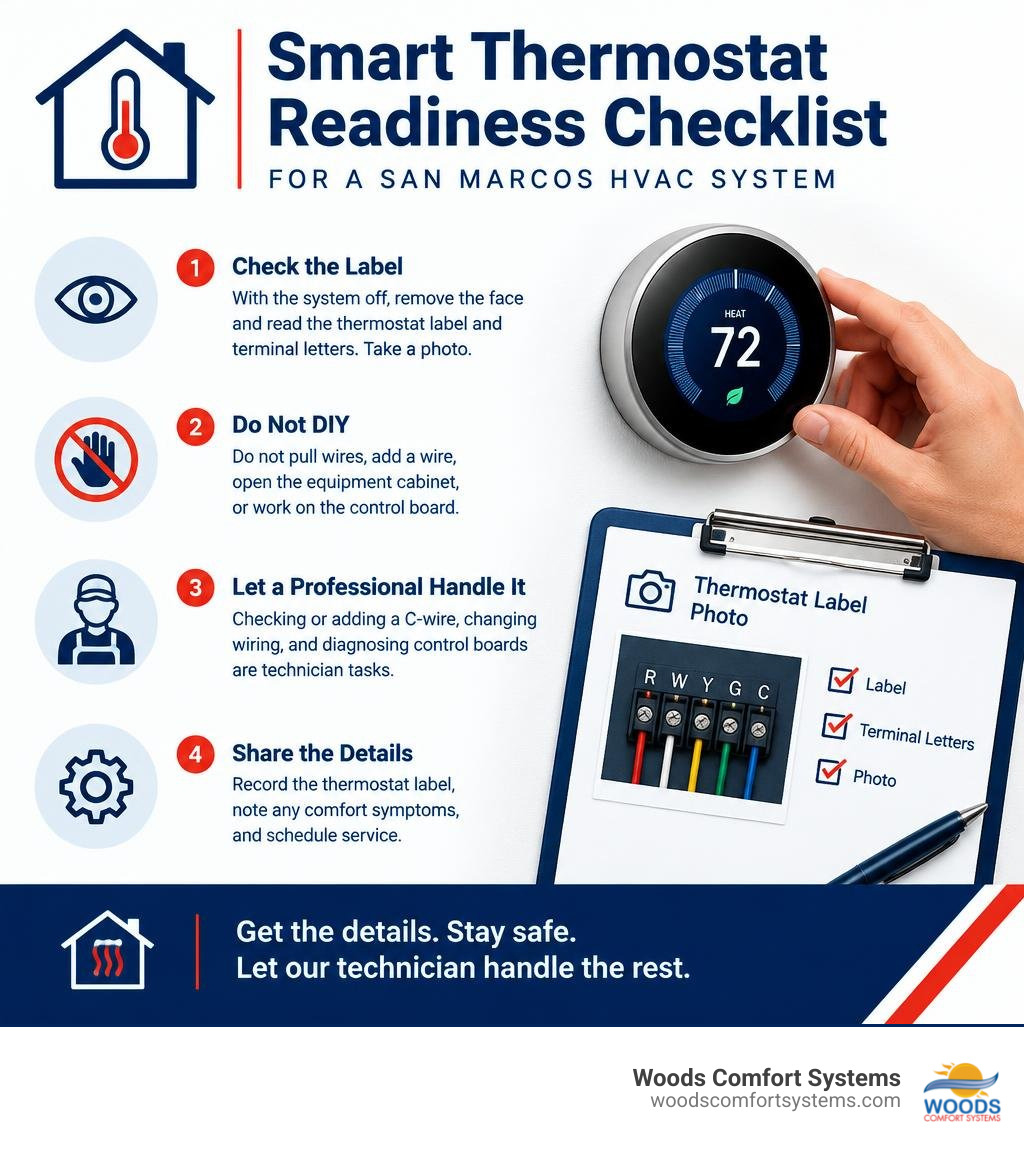
To assess smart thermostat HVAC compatibility before making a purchase, start with the safe homeowner checks described above and share the thermostat details with our technician.
If the system still does not respond, do not continue troubleshooting inside the unit. Our technician can inspect electrical connections, control components, and system operation. Homeowners with heat pumps can also learn about professional heat pump service before scheduling an evaluation.
Setbacks for Heating Season
As heating season approaches, use gradual schedule changes instead of large temperature swings. A modest setback while the home is asleep or away can help maintain comfort without asking the system to recover too aggressively. Homes with heat pumps may need especially careful scheduling, because a sharp increase in the set temperature can change how the system recovers.
Choose a comfortable routine, monitor how the home responds, and avoid repeated manual changes throughout the day. If recovery is slow, comfort varies by room, or the system behaves unexpectedly, our technician can review the thermostat settings and HVAC operation. For more context on persistent operation concerns, see our heat pump troubleshooting guide.
Professional Installation and Configuration in San Marcos, TX
Professional installation starts with an evaluation of the existing thermostat controls and HVAC equipment. Woods Comfort Systems can confirm whether the system is a good candidate for a smart thermostat, identify the right configuration, and test operation after installation. This prevents guesswork around electrical connections and protects the heating and cooling equipment.
What Our Technician Does
Our technician checks the control wiring, verifies the equipment’s operating stages, and reviews whether the thermostat can work with any zoning or advanced control features already in the home. The technician also confirms that heating and cooling calls operate correctly after setup. Homeowners do not need to work on gas connections, electrical components, sealed parts, or HVAC control boards.
A professional visit is helpful when a thermostat does not hold a schedule, the home has uneven temperatures, or a system needs more than a basic control replacement. Routine service can also catch airflow and performance concerns before they affect comfort. Learn more about maintenance plans for ongoing HVAC care.
A Recent Service Call in New Braunfels
In a New Braunfels home, the upstairs rooms stayed warm while the thermostat ran on manual scheduling. Our technician programmed zoning controls, which balanced temperatures between the floors. The visit focused on correcting the control schedule and zoning operation so the home could maintain more consistent comfort from one level to the next. This case shows why thermostat settings and zone controls should be considered together when some rooms do not feel the same as others. It also shows why a professional review can be more useful than repeated manual adjustments at the thermostat.
When to Schedule Service
Schedule service if the thermostat screen is blank, the system does not respond to a setting change, comfort differs sharply between rooms, or the equipment turns on and off more often than expected. A homeowner can describe the symptoms, note when they occur, and confirm safe basics such as a clean filter and open vents. Our technician does the diagnostic and corrective work inside the equipment.
New thermostat installation can also be a good time to review the condition of the system. If the equipment is older or has ongoing performance concerns, our technician can explain practical next steps and available options, including financing options when appropriate. Woods Comfort Systems offers after-hours emergency service for urgent heating and cooling problems, and its NATE-certified technicians can provide a professional evaluation.
Avoid These Common DIY Mistakes
Do not force wires into terminals, reuse unknown jumpers, or remove equipment access panels to trace thermostat problems. Do not attempt to alter wiring at the indoor or outdoor unit. Those steps can damage controls or create an electrical risk.
Instead, keep the thermostat area accessible, save photos of the visible labels, and let the technician know about recent comfort changes. That information supports a more efficient service visit while keeping homeowner troubleshooting within safe limits.
Smart Thermostat Questions From Homeowners
Can a smart thermostat help if one room is always warmer than the rest?
A smart thermostat may improve scheduling and temperature control, but it cannot solve every room-to-room comfort issue by itself. Uneven temperatures can also involve airflow, ductwork, zoning, insulation, or equipment performance, so a professional evaluation is the best next step.
Should I replace my thermostat if the screen is blank?
Check the thermostat setting, filter, breaker or service switch, and make sure the system is not in an intentional off mode. If the screen remains blank or the system will not respond, schedule service rather than opening equipment panels or handling wiring.
Is it safe to change thermostat settings every day?
Daily schedule changes are safe, but frequent large adjustments can make it harder to judge how the system is performing. Set a comfortable routine, make gradual changes when needed, and contact a technician if the home does not maintain the selected temperature.
What information should I have ready before a thermostat appointment?
A photo of the thermostat face and visible terminal labels can be helpful if the system has been switched off at the thermostat. It is also useful to note which rooms feel uncomfortable, when the issue started, and whether the filter, vents, outdoor-unit area, breaker, and service switch have already been checked safely.
Can a smart thermostat be added during regular HVAC service?
Yes, a thermostat evaluation can be included when the technician is already reviewing system performance or completing maintenance. The technician can confirm compatibility, discuss the control features that fit the home, and install or configure the thermostat correctly if appropriate.
Conclusion
A smart thermostat can make it easier to manage daily comfort, but the best results come from matching the control to the HVAC system and having it installed correctly. Homeowners can handle simple checks such as reviewing the thermostat display, replacing a filter, opening vents, confirming the breaker or service switch, and clearing debris around the outdoor unit. When the concern involves wiring, gas equipment, electrical components, sealed parts, or HVAC controls, our technician does this work. A careful approach helps protect the equipment, supports more reliable comfort, and gives the technician clear details to use when recommending the next step.
A professional evaluation can confirm whether a thermostat upgrade fits the home’s equipment and comfort goals. It can also identify system issues that a new thermostat alone will not solve, including airflow problems, zoning concerns, or operating issues that need service.
Written by Chris Woods, Owner, Woods Comfort Systems. Chris is the third generation of the Woods family in Texas HVAC and has led Woods Comfort Systems in San Marcos since 2010.
Woods Comfort Systems is family-owned since 1956 and brings three generations of the Woods family’s HVAC experience to every visit. Schedule professional HVAC service for expert thermostat guidance, repair, maintenance, or installation support.
Woods Comfort Systems · 1900 Dutton Dr, San Marcos, TX 78666 · (512) 253-8927