

AC Unit Warranty What Is Covered: The Basics
Homeowners often search AC unit warranty what is covered when a new system needs repair and they want to know which costs may be their responsibility. Warranty terms vary by manufacturer and installer, but most coverage falls into a few clear categories.
What a standard AC warranty typically covers:
- Manufacturer defects in parts such as the compressor, coils, and fan motors
- Replacement parts that fail because of defects in materials or workmanship
- Extended parts coverage when the system is registered by the manufacturer’s deadline
What most AC warranties do not cover:
- Labor costs unless a separate labor warranty applies
- Damage caused by improper installation
- Normal wear and tear
- Refrigerant-related repairs when they are excluded by the warranty terms
- Repairs linked to skipped maintenance
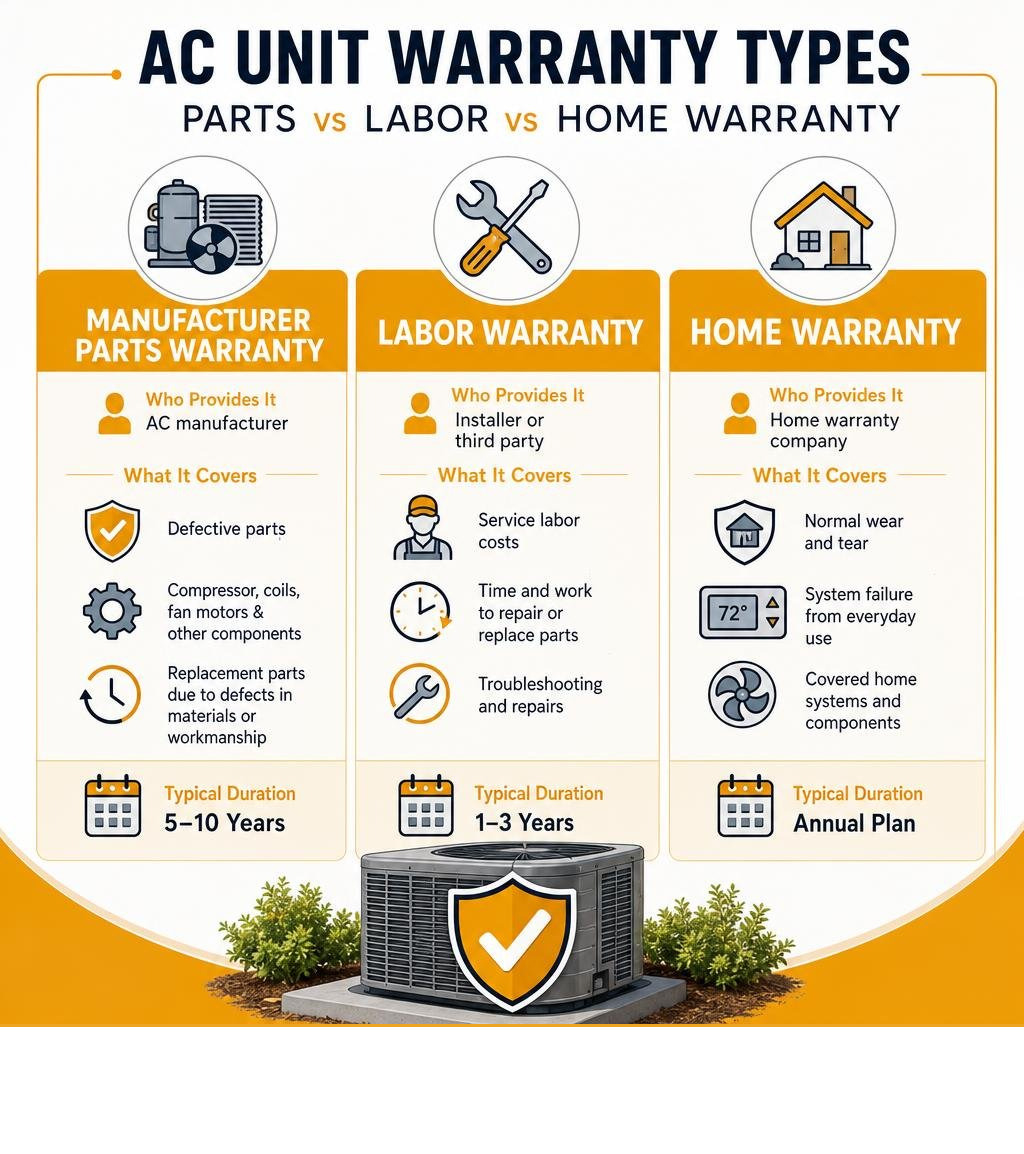
The main types of AC warranty:
| Warranty Type | Who Provides It | What It Covers | Typical Duration |
|---|---|---|---|
| Manufacturer Parts Warranty | AC manufacturer | Defective parts | Varies by product and registration |
| Labor Warranty | Installer or third party | Service labor costs | Varies by agreement |
| Home Warranty | Home warranty company | Eligible wear-related repairs | Annual plan |
A new AC system is a long-term investment, so it helps to review coverage before a problem occurs. Proper AC installation can also help protect warranty coverage from the start. For a step-by-step overview, see installation day expectations.
Woods Comfort Systems serves San Marcos and Central Texas / Hill Country communities, including Austin, New Braunfels, Kyle, Buda, and Wimberley. As a family-owned company since 1956 and three generations of the Woods family, the team helps homeowners understand their options without overstating what a warranty will cover.
What Manufacturer Parts Warranties Usually Cover
When you purchase a new central AC system, it typically includes a manufacturer parts warranty. If an eligible component fails because of a defect in materials or workmanship, the manufacturer may provide the replacement part under its written terms.
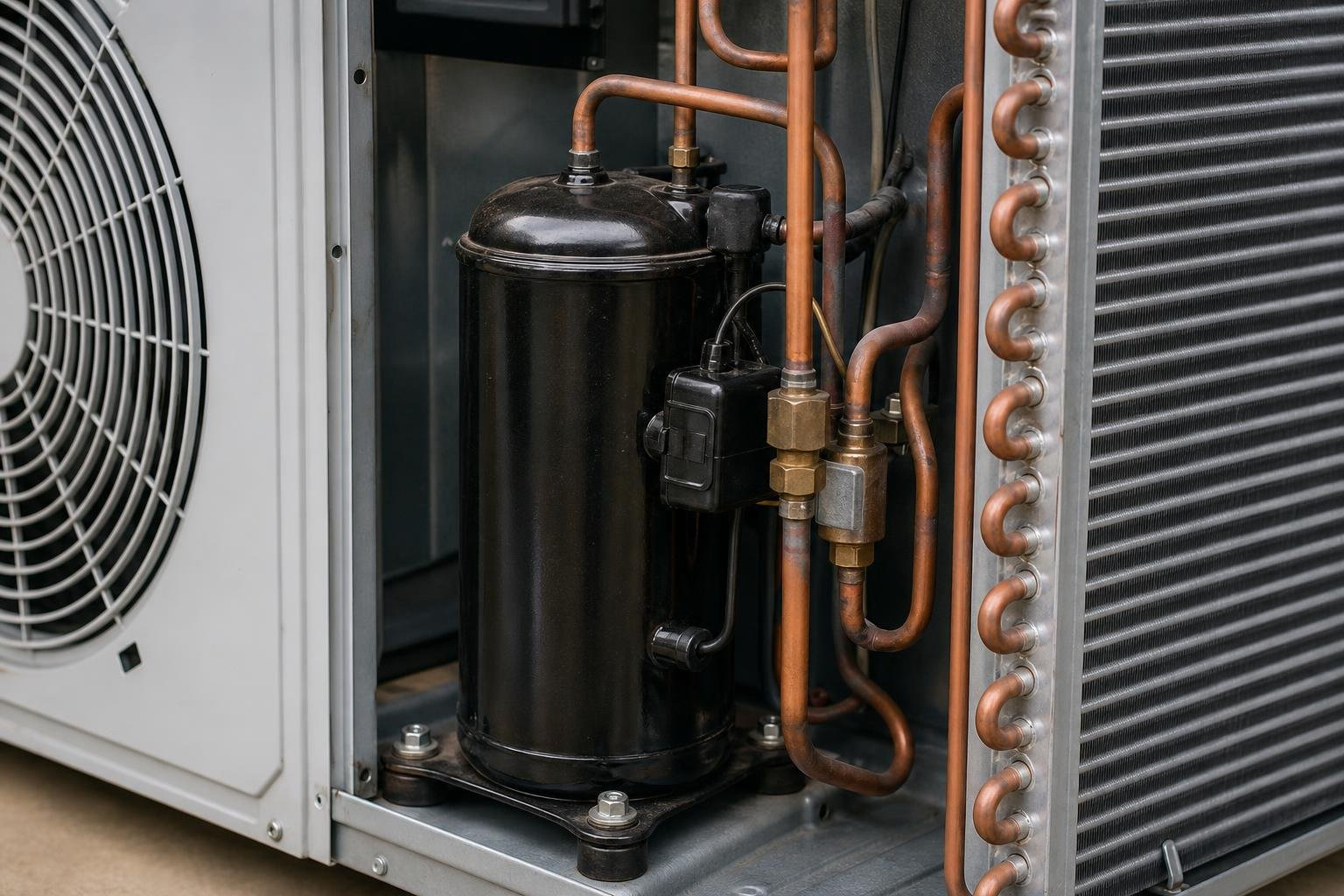
The core mechanical parts commonly covered under a standard manufacturer warranty include:
- The compressor: This component circulates refrigerant between the indoor and outdoor coils.
- Evaporator and condenser coils: These components move heat into and out of the home.
- Fan motors: Outdoor and indoor motors keep air moving through the system.
- Electrical components: Capacitors, contactors, relays, and control boards may be covered when an eligible defect causes failure.
What is covered depends on the written warranty and the cause of the failure. Damage from a power surge, lightning, physical impact, or another outside cause is commonly excluded.
Parts vs. Labor Warranties
A manufacturer parts warranty generally covers the replacement component, not the technician’s diagnostic work, removal of the failed part, installation of the new part, or system testing. A homeowner may have a separate installer labor warranty or an optional extended labor agreement, but those are distinct from manufacturer parts coverage.
Professional AC maintenance gives our technician an opportunity to identify developing issues before they disrupt comfort. For seasonal planning, review when to schedule tune-ups.
Registration and Extended Coverage
A new system often has basic coverage automatically, while registration can extend certain parts coverage. Check the registration deadline in the warranty documents and keep the confirmation with your installation paperwork. Missing the deadline can reduce the available coverage period.
Common Exclusions and What Can Void Your AC Warranty
A manufacturer warranty is not unconditional. Improper installation, unapproved repairs, mismatched equipment, and neglected maintenance can affect whether a claim is accepted.
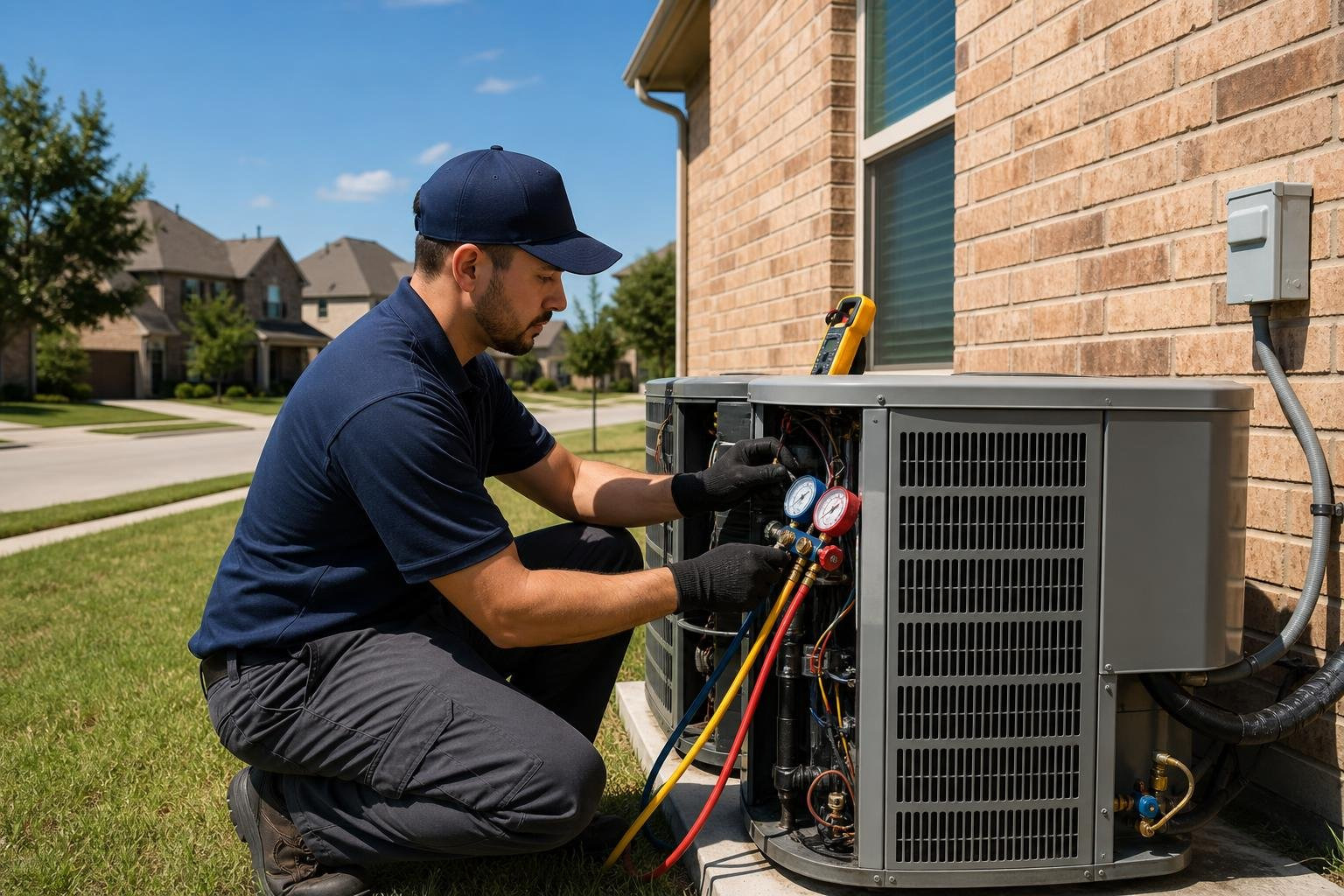
Professional installation helps protect warranty coverage. For gas, electrical components, or sealed refrigerant parts, our technician does this.
Other common exclusions include:
- Unapproved refrigerants: Using a refrigerant that is not approved for the system can damage components and affect coverage.
- Mismatched components: Indoor and outdoor equipment must be compatible and installed as a matched system.
- Neglect and missed maintenance: A claim may be denied when the failure is tied to conditions that routine service could have addressed.
Keep these records together so coverage can be verified more easily if a repair is needed.
The Role of Professional Maintenance
Annual tune-ups can help document routine maintenance if a manufacturer asks for it during a warranty review. ENERGY STAR also recommends regular maintenance, including changing or cleaning filters and having cooling equipment maintained, to help systems run efficiently. Read its heating and cooling guidance for the official recommendations.
According to the U.S. Department of Energy, replacing a dirty, clogged filter with a clean one can lower an air conditioner’s energy consumption by 5% to 15%. Keep a dated record of filter changes and professional visits with the warranty paperwork. These records can help document routine maintenance if a manufacturer requests support during a warranty review.
Routine service supports reliable operation and may help prevent issues that are otherwise mistaken for warranty failures. Homeowners can learn more about AC system lifespan and use maintenance plans to keep service records organized.
A Recent Maintenance Visit in San Marcos
Recently, we helped a homeowner in San Marcos whose system was running constantly but was not cooling effectively. The system had a refrigerant leak that reduced capacity and strained operation. Our technician repaired the leak, restored refrigerant levels, and optimized airflow. After that work, the home achieved more consistent temperatures and improved efficiency, reducing run time and energy use.
What to Do When Your AC Stops Working Under Warranty
When an AC system stops cooling or will not turn on, begin with a few safe homeowner checks before requesting service. Confirm that the thermostat is set to cool and adjusted below the indoor temperature. Check the air filter and replace it if it is visibly dirty or restricting airflow. Verify that the appropriate breaker or disconnect switch has not been turned off, and clear leaves, grass, and other debris from around the outdoor unit. Do not remove panels, handle wiring, or attempt work on electrical components or sealed refrigerant parts. Our technician does this.
Next, locate the installation invoice, equipment model and serial numbers, warranty certificate, and registration confirmation. Those records help identify the system and show whether the system was registered. Contact the installing contractor to explain the symptoms and arrange a professional evaluation. If another contractor is needed, provide the same documentation before the visit.
During service, our technician diagnoses the failed part and explains the cause of the problem. The visit can clarify which replacement parts may be eligible for manufacturer coverage and which work, such as diagnosis, removal, installation, testing, or other non-covered repairs, may remain the homeowner’s responsibility under the written terms. Avoid authorizing a major repair until the warranty details and available options are clear. For longer-term planning, an AC lifespan guide can help homeowners understand when repair and replacement conversations may become more relevant.
How Professional Installation Protects Your Warranty
Professional installation helps protect warranty coverage because the system must be installed as a complete, compatible setup. The indoor and outdoor equipment need to be matched so the components can operate together as intended. Correct sizing also matters. Equipment that is not suited to the home or airflow needs may experience uneven comfort, unnecessary strain, or performance concerns that complicate later service.
Installation quality includes verifying airflow, securing electrical connections, and confirming that controls and safety components operate correctly. Refrigerant handling is performed by our NATE-certified technicians because the system must be charged and sealed according to the equipment requirements. Homeowners should not attempt adjustments to electrical or sealed refrigerant components. Our technician does this.
Keep these records together. These documents help establish when the system was installed and make warranty questions easier to address. If a concern arises, the written warranty and the installation records provide the clearest starting point for determining whether a failed part may be eligible for manufacturer coverage. Professional installation supports reliable operation from the beginning while helping preserve the documentation needed for a warranty claim.
Home Warranties vs. Manufacturer Warranties for AC Systems
A manufacturer warranty is tied to the AC equipment and generally addresses eligible defects in materials or workmanship. A home warranty is a separate service contract that may help with certain covered repairs caused by normal wear, subject to its own exclusions, service fees, coverage limits, and approval process.
Review both agreements carefully before assuming a repair or replacement is covered. If the system has a major problem, AC repair services can identify the cause and explain the practical repair options.
When a Full Replacement May Be Considered
Manufacturer coverage usually addresses the eligible failed component rather than replacing an entire system. A home warranty may address replacement only when its provider determines that a covered system cannot be repaired under the contract terms.
When a major repair raises replacement questions, this guide on repair or replacement can help homeowners prepare for the conversation.
Transferring Your AC Warranty When Selling Your Home
A remaining AC warranty can be a useful selling point, but it may not automatically transfer to a new owner. Transfer rules vary by manufacturer, product, registration status, and the deadline stated in the warranty documents.
Before closing, the seller should gather the relevant records and share them with the buyer. The buyer should review the written terms promptly and complete any required transfer paperwork within the manufacturer’s deadline.
Transfer Requirements to Check
Ask whether the warranty is transferable, whether it reverts to a different coverage level after a sale, and whether proof of professional installation or maintenance is required. Confirm the process directly with the manufacturer rather than relying on an old warranty certificate or a verbal assurance.
Warranty Tips for Central Texas Homeowners
Central Texas cooling seasons can keep AC equipment working hard for much of the year, making routine care and clear records especially useful. Before summer arrives, review past service notes and confirm that any recommended maintenance has been completed. A spring or fall visit can create a simple paper trail that shows when the system was professionally checked, which can be helpful if a warranty question comes up later.
Weather can also affect warranty questions. Power surges, lightning, and storm damage are commonly excluded from manufacturer coverage because they come from outside causes. After a storm, keep the outdoor unit clear of leaves, grass, and other yard debris so airflow is not restricted. If there is visible damage, unusual operation, or a loss of cooling, avoid opening panels or handling electrical equipment. Ask our technician about protection options that may fit the home, and review homeowners insurance to understand what it may cover after a weather-related event.
A move is another time to plan ahead. If the home will be sold, start the warranty-transfer process early instead of waiting until closing. Review the written terms, gather the relevant records, and confirm whether the manufacturer requires a form, a deadline, or other documentation. Taking these steps early can make the transition clearer for both the seller and buyer and reduce last-minute uncertainty about the remaining coverage.
Frequently Asked Questions About AC Warranties
What documents should I keep after a new AC installation?
Keep the installation invoice, manufacturer registration confirmation, model and serial numbers, warranty certificate, and maintenance records together. These documents can make it easier to confirm coverage and support a claim.
Can I transfer a warranty if I buy a home with an existing AC system?
Possibly, but transfer rules depend on the manufacturer’s written terms and the timing of the sale. Ask the seller for the original paperwork and verify the process as soon as possible.
What can I safely check before scheduling service?
Homeowners can check the thermostat, filter, breaker or disconnect switch, open vents, and debris around the outdoor unit. For gas, electrical, or sealed-system work, our technician does this.
Should I keep records of annual tune-ups?
Yes. Service records show that the system received professional attention and can be useful when a manufacturer asks for maintenance documentation. They also give our technician a clearer history when diagnosing a problem.
What should I ask before approving a non-warranty repair?
Ask what caused the failure, whether the repair affects warranty coverage, and whether the repair requires an authorized professional. Request a clear explanation of the recommended work and any available manufacturer claim process.
Conclusion
Understanding the written terms, registering the equipment on time, and keeping professional maintenance records can help homeowners protect the coverage available to them. When a problem involves gas, electrical components, or sealed refrigerant parts, schedule professional service instead of attempting a repair.
Written by Chris Woods, Owner, Woods Comfort Systems. Chris is the third generation of the Woods family in Texas HVAC and has led Woods Comfort Systems in San Marcos since 2010.
Woods Comfort Systems is family-owned since 1956, with three generations of the Woods family serving local homeowners. With 4.9 stars on Google, the team provides straightforward guidance and dependable help when an AC warranty question turns into a comfort problem. To schedule service, contact our team.
Woods Comfort Systems · 1900 Dutton Dr, San Marcos, TX 78666 · (512) 253-8927