


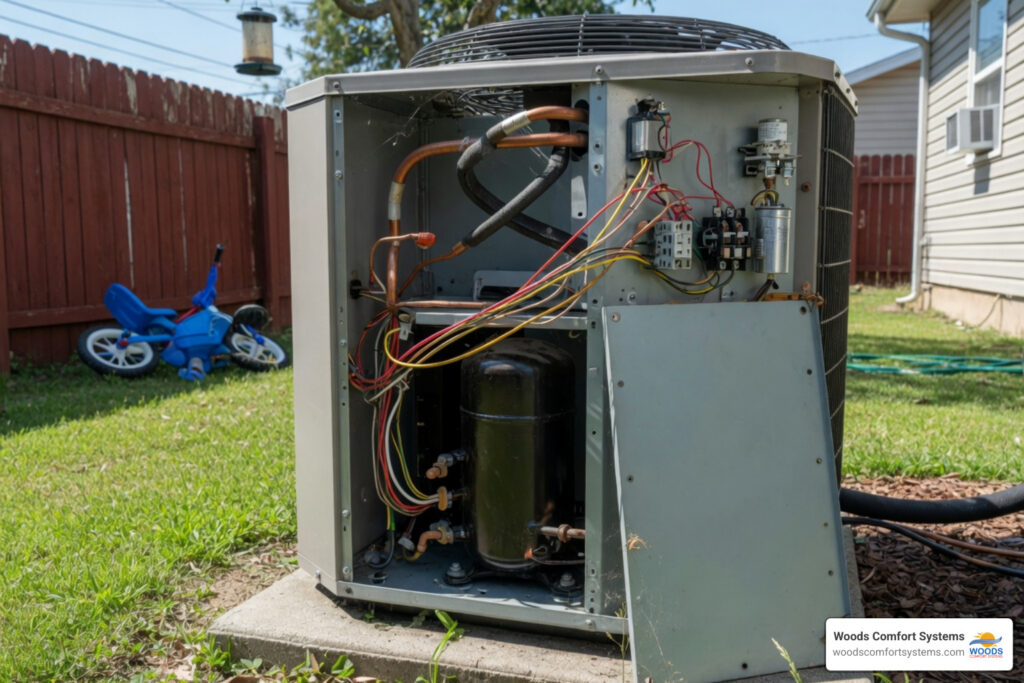
Why AC Short Cycling Causes Serious Problems for Your Home’s Comfort
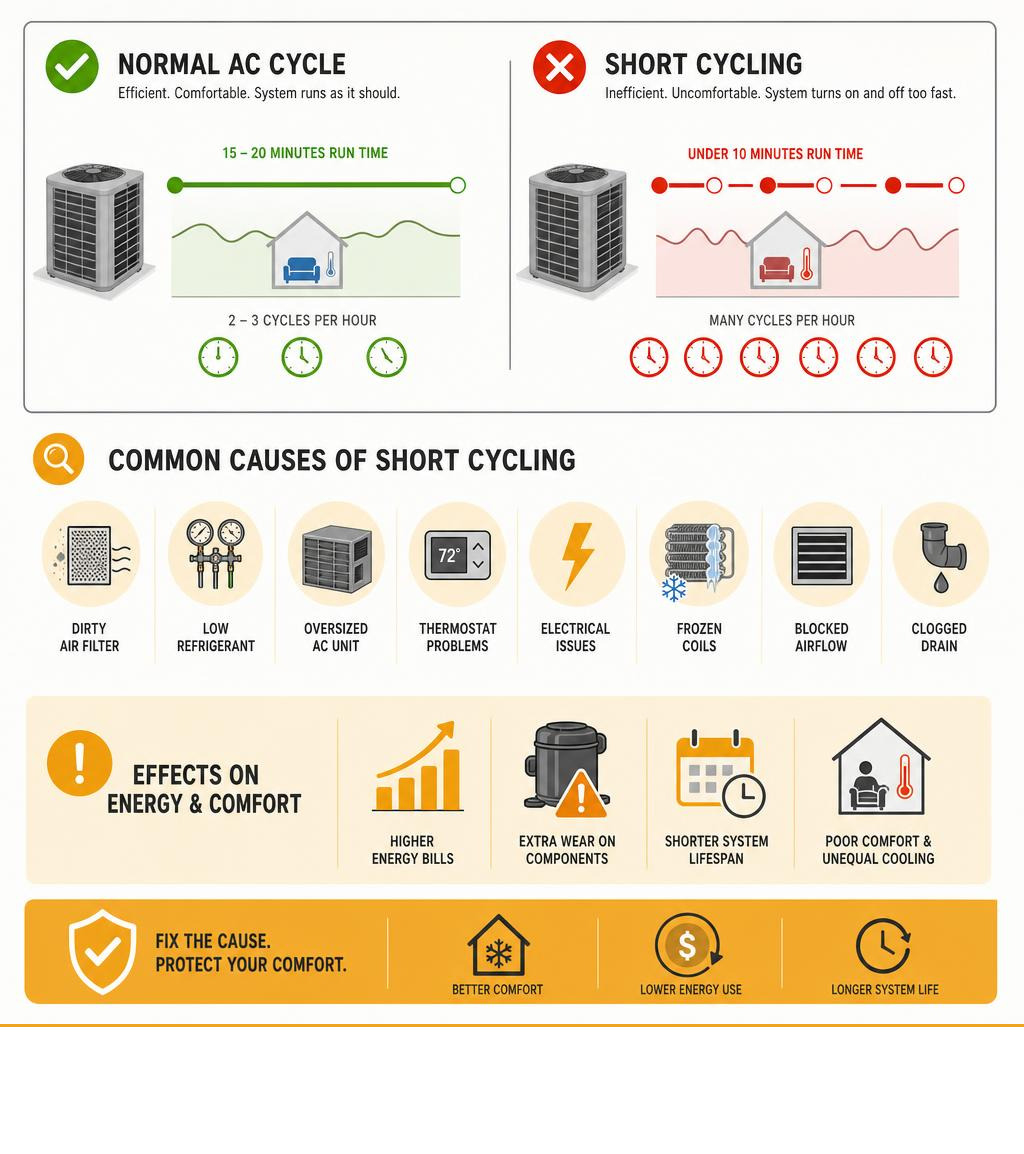
The most common AC short cycling causes are dirty or clogged air filters, low refrigerant levels, an oversized AC unit, thermostat problems, electrical faults, frozen evaporator coils, and blocked airflow. Here is a quick overview:
| Cause | Why It Triggers Short Cycling |
|---|---|
| Dirty air filter | Blocks airflow, causes overheating and shutdown |
| Low refrigerant | Triggers safety shutoff to protect the compressor |
| Oversized AC unit | Cools too fast, shuts off before removing humidity |
| Thermostat malfunction or poor placement | Sends incorrect temperature signals |
| Electrical issues (failed capacitor, wiring) | Interrupts normal system operation |
| Frozen evaporator coils | Restricts airflow, forces safety shutoff |
| Blocked vents or return air | Reduces airflow, causes overheating |
| Clogged condensate drain | Triggers float switch, shuts system down |
If your air conditioner keeps turning on and off every few minutes without ever fully cooling your home, something is wrong. A normal AC cycle runs for 15 to 20 minutes and completes 2 to 3 cycles per hour. Short cycling means your system shuts off in under 10 minutes and starts right back up again, repeating the pattern. This is not just uncomfortable. It drives up your energy bills, puts extra stress on your compressor, and shortens the life of your entire system.
I’m Chris Woods, owner of Woods Comfort Systems, a third-generation HVAC company serving Central Texas since 1956. Over the decades, our team has diagnosed and repaired hundreds of short cycling AC units, and understanding the root AC short cycling causes is the first step toward protecting your home and your investment.
What is AC Short Cycling and Why is it Bad?
At its core, AC short cycling is an operational glitch where your cooling system is trapped in a rapid loop of starting up and shutting down. Under normal conditions, your system turns on, runs for a steady block of time to lower the temperature evenly, and then rests. This measured cooling cycle is vital for several reasons, but the most important is humidity control.
An AC unit does not just cool the air. It also dehumidifies your home by pulling moisture out of the air as it passes over the cold evaporator coils. This dehumidification process takes time. If your system runs for only five to eight minutes at a time, the coils never get a chance to properly drain the airborne moisture. As a result, your home remains sticky, clammy, and uncomfortable, even if the thermometer on the wall says it is cool.
Aside from poor comfort, short cycling is incredibly expensive. Think of your AC unit like a car. Your vehicle burns the most fuel when you are stop-and-go driving in city traffic, rather than cruising down the highway. Similarly, your AC compressor draws the most electrical current during its startup phase. When the system is forced to start up and shut down constantly, your energy bills can skyrocket by 30 percent or more.
Additionally, this constant starting and stopping accelerates wear and tear, dramatically shortening your system lifespan. The compressor is the heart of your system, and it is also one of the most expensive components to replace. Frequent cycling can easily slash several years off your system’s life, turning a minor issue into an early and costly replacement. For a deeper look at how normal operation compares to this issue, you can read the Lennox guide on understanding air conditioner short cycling.
| Operational Aspect | Normal Cycling | Short Cycling |
|---|---|---|
| Run Time per Cycle | 15 to 20 minutes | Less than 10 minutes (often 3 to 5 minutes) |
| Cycles per Hour | 2 to 3 cycles | 6 or more cycles |
| Humidity Control | Excellent (system has time to pull moisture from air) | Poor (leaves indoor air feeling sticky and clammy) |
| Energy Consumption | Optimized and highly efficient | Extremely high (due to frequent startup power draws) |
| Component Wear | Standard, manageable wear | Accelerated (high risk of premature compressor failure) |
Common AC Short Cycling Causes and Their Impact
When your AC starts behaving erratically, it is usually trying to protect itself. Modern systems are equipped with safety switches designed to shut down the compressor before permanent damage occurs. If you notice these rapid cycles, it is a clear warning sign that needs immediate system diagnostics. Ignoring these early warnings can lead to major component failures, so it is helpful to recognize the signs your AC unit is close to a breakdown before you are left without cooling in the middle of a Texas summer.
Below, we break down the most common AC short cycling causes that we encounter in homes throughout San Marcos, TX, and the surrounding communities.
Clogged Air Filters as Primary AC Short Cycling Causes
If you ask any experienced HVAC technician about the most common culprit behind a cycling system, they will point directly to a dirty filter. When your air filter is clogged with dust, pet dander, and pollen, it acts like a wall, severely restricting the airflow entering your system.
Without a steady stream of warm return air flowing over the evaporator coil, the temperature of the coil drops rapidly. This lack of airflow can cause the coil to freeze over or trigger the high-limit switch, forcing the system to shut down to prevent overheating or freezing. Once the system turns off, the safety switch resets, the system tries to start again, and the cycle repeats. Keeping your filters clean is one of the easiest ways to keep your home comfortable, and understanding how airflow restrictions impact your system can help explain why your AC system is not cooling your home efficiently.
Low Refrigerant Levels and Leaks
Refrigerant is the lifeblood of your air conditioner. It absorbs the heat from your indoor air and carries it outside. A common misconception is that air conditioners consume refrigerant over time. In reality, your system operates on a closed loop, meaning any drop in refrigerant levels is caused by a refrigerant leak.
When your system is low on refrigerant, the pressure inside the lines drops. This low pressure causes the evaporator coil to run incredibly cold, often leading to frozen coils. Additionally, modern AC units feature low-pressure safety switches. When the pressure drops below a safe threshold, the switch cuts power to the compressor to protect it from running dry and overheating. When you are dealing with low refrigerant or a leak, your AC compressor needs immediate repair in San Marcos, TX to prevent permanent, irreversible damage to the heart of your system.
Oversized Air Conditioning Units
When it comes to air conditioners, bigger is not always better. In fact, an oversized AC unit is one of the most frustrating and permanent AC short cycling causes a homeowner can face. If a system has too much cooling capacity for the square footage of your home, it will blast cold air into the rooms and satisfy the thermostat in a matter of minutes.
While this rapid cooling might sound like a good thing, it prevents the system from running long enough to remove humidity. The result is a home that feels cold, damp, and clammy. Because the system cools the house so quickly, it shuts down almost immediately, only to turn back on a few minutes later when the heavy, humid air warms the space back up. Proper system sizing is critical during installation, and you can learn more about how improper unit capacity affects your home by reviewing the Trane glossary on HVAC short cycling causes.
Thermostat Malfunctions and Poor Placement
Sometimes, the air conditioner itself is perfectly fine, but it is receiving bad information from the brain of the system, the thermostat. A malfunctioning thermostat or one with dying batteries can send erratic signals to your AC, causing it to kick on and off rapidly.
However, poor thermostat location is often the real issue. If your thermostat is installed in direct sunlight, near a drafty window, or right next to a cooling register, its temperature sensor will be easily tricked. For example, if a cold blast of air from a nearby vent hits the thermostat, it will think the house is cooled and shut the system down. Minutes later, as the surrounding air settles, the thermostat realizes the house is actually warm and turns the system back on. This constant cycle is one of the top reasons your AC is not cooling in San Marcos, TX homes evenly.
Electrical and Wiring Issues
Your air conditioner relies on a complex network of electrical connections to start and run smoothly. If there is a breakdown anywhere in this electrical path, short cycling is a common result.
The most frequent electrical failure we see is a failed capacitor. The capacitor acts like a temporary battery, delivering the high-voltage electrical boost your compressor and fan motors need to start up. If a capacitor is weak or failing, it may struggle to keep the compressor running, causing it to drop out mid-cycle. Loose wiring, corroded contacts, or a malfunctioning control board can also interrupt the electrical signals, leading to rapid cycling. If you notice your AC making clicking or buzzing sounds, it is a strong indicator of an underlying electrical issue that needs professional attention.
Frozen Evaporator Coils and Airflow Restrictions
We have mentioned frozen coils a few times, but they deserve their own focus because they are both a cause and a symptom of short cycling. When your evaporator coil is covered in ice, it physically blocks the air from passing through. This creates a severe airflow restriction, which causes the system to overheat and shut down.
A dirty coil can also lead to this failure. Over time, a fine layer of dust can bypass your filter and settle on the wet coils, creating an insulating blanket that prevents the refrigerant from absorbing heat. This dust buildup restricts airflow and causes the system to cycle rapidly. To protect your equipment, it is important to understand how a dirty AC coil can lead to system failure and why regular cleaning is so vital.
Clogged Condensate Drain Lines
Your air conditioner removes an incredible amount of water from the air, especially during hot, humid Texas summers. This water collects in a drain pan and flows out of your home through a condensate drain line.
Because this line is dark and damp, algae and mold can easily grow inside, leading to a clogged drain line. To prevent water from backing up and flooding your ceilings or closets, modern systems are equipped with a safety float switch. When the water level in the pan rises, the float switch trips and immediately cuts power to the AC. If the water drains away slowly, the switch may reset, allowing the system to start back up, only to shut down again as soon as the water rises. If you suspect a water backup, taking prompt action to resolve an AC unit clogged condensate drain line can save you from both short cycling and extensive water damage.
How to Prevent and Troubleshoot System Issues
While many AC short cycling causes require the tools and training of a professional technician, there are several simple troubleshooting steps homeowners can take to keep their systems running smoothly.
- Check the Air Filter: Inspect your air filter once a month. If you hold it up to a light and cannot see any light passing through, replace it immediately.
- Inspect Your Vents: Walk through your home and make sure all supply vents and return grilles are completely open and unobstructed by furniture, curtains, or rugs.
- Check Thermostat Batteries: If your thermostat has a digital screen, try replacing the batteries with fresh ones to ensure it is sending strong, consistent signals to your HVAC unit.
- Examine the Outdoor Unit: Keep the area around your outdoor condenser clean. Clear away grass clippings, leaves, and weeds, and maintain at least two feet of clear space around the entire unit.
Regular preventative maintenance is the absolute best way to prevent short cycling before it starts. By scheduling professional tune-ups twice a year, you can catch minor issues like weak capacitors, tiny refrigerant leaks, or dirty coils before they spiral into major system failures. If you are trying to decide whether your current unit is worth saving, learning when to repair or replace your AC in San Marcos, TX can help you make an informed decision.
Professional Solutions for AC Short Cycling Causes
If you have replaced your filter, verified your vents are open, and your system is still cycling rapidly, it is time to call in the professionals. Attempting to fix refrigerant leaks, electrical issues, or compressor problems without the proper training and licensing can be dangerous and may void your system’s warranty.
A certified technician has the diagnostic tools to pinpoint the exact cause of the issue. Whether it is performing a detailed load calculation to verify proper system sizing, sealing a hard-to-find refrigerant leak, or replacing a failing control board, a professional can restore your system’s efficiency safely. If your system is showing signs of distress, being proactive and recognizing the signs your AC system is headed for trouble in San Marcos, TX can prevent an unexpected breakdown on the hottest day of the year.
Frequently Asked Questions About AC Short Cycling
What is AC short cycling?
AC short cycling is an abnormal operating pattern where an air conditioner turns on and off rapidly without completing a full cooling cycle. While a healthy cycle lasts 15 to 20 minutes, a short cycling system typically runs for less than 10 minutes, and sometimes as little as 3 to 5 minutes, before shutting down prematurely.
Can a dirty filter cause my AC to short cycle?
Yes, a dirty air filter is one of the most common causes of short cycling. A clogged filter blocks the airflow entering your system, which can cause the evaporator coils to freeze or trigger safety switches that shut the system down to prevent overheating.
How do I stop my AC from short cycling?
You can start by checking and replacing your air filter, ensuring all indoor vents are open and unblocked, and replacing the batteries in your thermostat. If these simple steps do not resolve the issue, you should contact a professional technician to diagnose more complex issues like refrigerant leaks or electrical faults.
Will I need a new AC unit if it keeps turning on and off?
Not necessarily. Many causes of short cycling, such as dirty filters, clogged drain lines, or faulty capacitors, are simple and inexpensive to repair. However, if your system is short cycling because it was improperly sized during installation, replacing the unit with a correctly sized system may be the only permanent solution.
How long should a normal AC cycle run?
Under normal conditions, a properly sized air conditioning unit should run for 15 to 20 minutes at a time to maintain consistent temperatures and properly dehumidify your home. During extreme Texas heat waves, the system may run for longer periods to keep up with the cooling demand.
Is AC short cycling dangerous?
While it is not usually an immediate safety hazard, ignoring short cycling can lead to catastrophic system failures, such as a burned-out compressor. Additionally, the constant electrical restarts can strain your home’s electrical system, occasionally tripping breakers or causing wiring damage.
Can short cycling raise my electric bill?
Yes, short cycling can cause a massive spike in your monthly utility costs. Because an air conditioner draws the most electricity during its startup phase, a system that starts and stops constantly uses significantly more power than one that runs for steady, balanced cycles.
Does an oversized AC cause short cycling?
Yes, an oversized system is a primary cause of short cycling. Because the unit has too much cooling capacity for the space, it cools the home incredibly quickly and shuts off before it can complete a proper cycle or remove humidity, leading to a cold but clammy indoor environment.
Why does short cycling make my home feel humid?
An air conditioner needs to run for a sustained period of time to draw moisture out of the air. When a system short cycles, the run times are too short to allow the condensation to collect on the coils and drain away, leaving the humidity trapped inside your home.
When should I call a professional for AC short cycling?
You should call a professional HVAC technician if you have replaced your air filter and verified your vents are open, but the system continues to cycle rapidly. Issues involving refrigerant leaks, electrical wiring, frozen coils, or compressor failures require specialized tools and expertise to repair safely.
Conclusion
Dealing with a short cycling air conditioner can be frustrating, especially during the peak of a hot Texas summer. Understanding the most common AC short cycling causes can help you take fast action to protect your home’s comfort, reduce your energy bills, and extend the lifespan of your cooling system. Whether the fix is as simple as swapping out a dirty air filter or requires a professional repair, addressing the problem early is key to avoiding costly compressor damage.
Whether you need fast AC repairs, seasonal HVAC maintenance, or a complete system replacement, our team at Woods Comfort Systems is ready to help. Schedule your professional AC repair services today to restore your home’s comfort and efficiency.