

Why Early Fall Is a Smart Time to Replace Your AC
The best time to replace AC equipment in San Marcos and nearby Central Texas communities is often early fall, especially September and October, when the weather is milder and homeowners have time to make a thoughtful decision before the next long cooling season. Late winter is another good planning window, but fall can be especially practical after a demanding summer has revealed how reliably the system handled the heat.
Quick Answer: When to Plan an AC Replacement
| Time of Year | Why It Works |
|---|---|
| September to October | Milder weather, more scheduling flexibility, and time to prepare for the next cooling season |
| February to March | A second planning window before Central Texas heat returns |
| Peak summer | Limited flexibility when emergency calls are common |
Here are the main reasons to plan ahead:
- Early fall gives homeowners a chance to evaluate comfort issues after the hottest weather.
- A replacement can be scheduled around the household rather than during an urgent breakdown.
- A new system can be tested before the next sustained period of high temperatures.
- Homeowners can compare system options, ask questions, and prepare the home without rushing.
A system does not have to stop running before a replacement conversation makes sense. Uneven temperatures, repeated repair visits, unusual sounds, weak airflow, or difficulty keeping rooms comfortable are all reasons to arrange a professional evaluation.
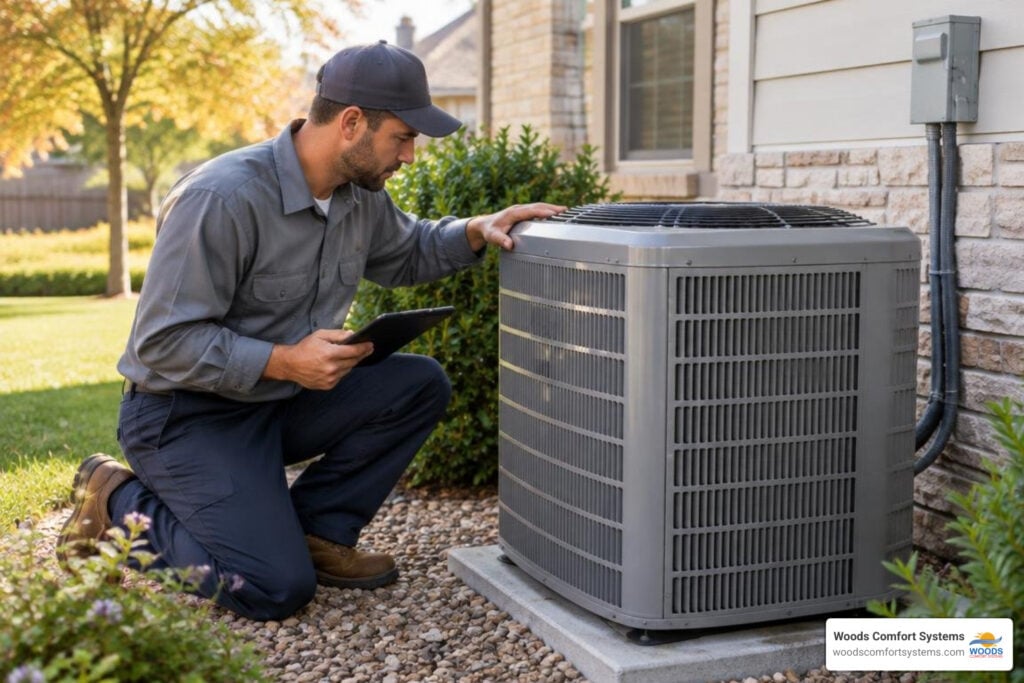
Chris Woods, Owner of Woods Comfort Systems, has helped Central Texas homeowners make practical AC decisions for years. This guide explains when a replacement may be appropriate, what a technician evaluates, and how to prepare for a smoother installation.

Why Fall Is the Best Time to Replace AC in Central Texas

Shoulder season is the period between the most demanding weather extremes. In Central Texas, early fall is often the first choice because homeowners can reflect on how their equipment performed during summer and arrange work before another heavy-use season arrives. Late winter offers a second opportunity to plan before spring temperatures rise.
During these calmer periods, it is easier to schedule an in-home visit, discuss comfort concerns, and decide whether repair or replacement better fits the condition of the existing system. A well-planned appointment also gives the installation team time to understand the home and prepare for the work.
Milder weather matters for the household, too. If an existing system needs to be shut down during the installation process, comfortable outdoor conditions can make the transition easier. Homeowners can also ask questions without the pressure of an immediate cooling emergency.
For an overview of available home-comfort support, explore our AC service options. When replacement is the right next step, our AC installation options explain how Woods Comfort Systems can help.
Planning Ahead for Central Texas Weather
Cooling season can begin early and last well into fall across San Marcos and Hill Country communities. If the system struggled with airflow, consistency, or reliability over the summer, early fall is a useful time to document those concerns and schedule a technician visit.
Beyond a few basic safe checks, this work belongs with a professional.
Our NATE-certified technicians evaluate the equipment, controls, airflow, and condition of the system, then explain the practical options for the home. For additional planning ideas, read our energy-efficient AC guide.
Avoiding a Rushed Replacement Decision
A replacement decision is easier when it is not made during a sudden failure. Planning in fall lets homeowners gather service history, note rooms that are difficult to keep comfortable, and consider the timing that works best for the household.
It also creates room for a clear conversation about installation expectations, equipment choices, and preparation. The goal is not to replace a system prematurely. It is to make a well-supported decision before a problem becomes more disruptive.
Key Signs Your Air Conditioner May Need Replacement
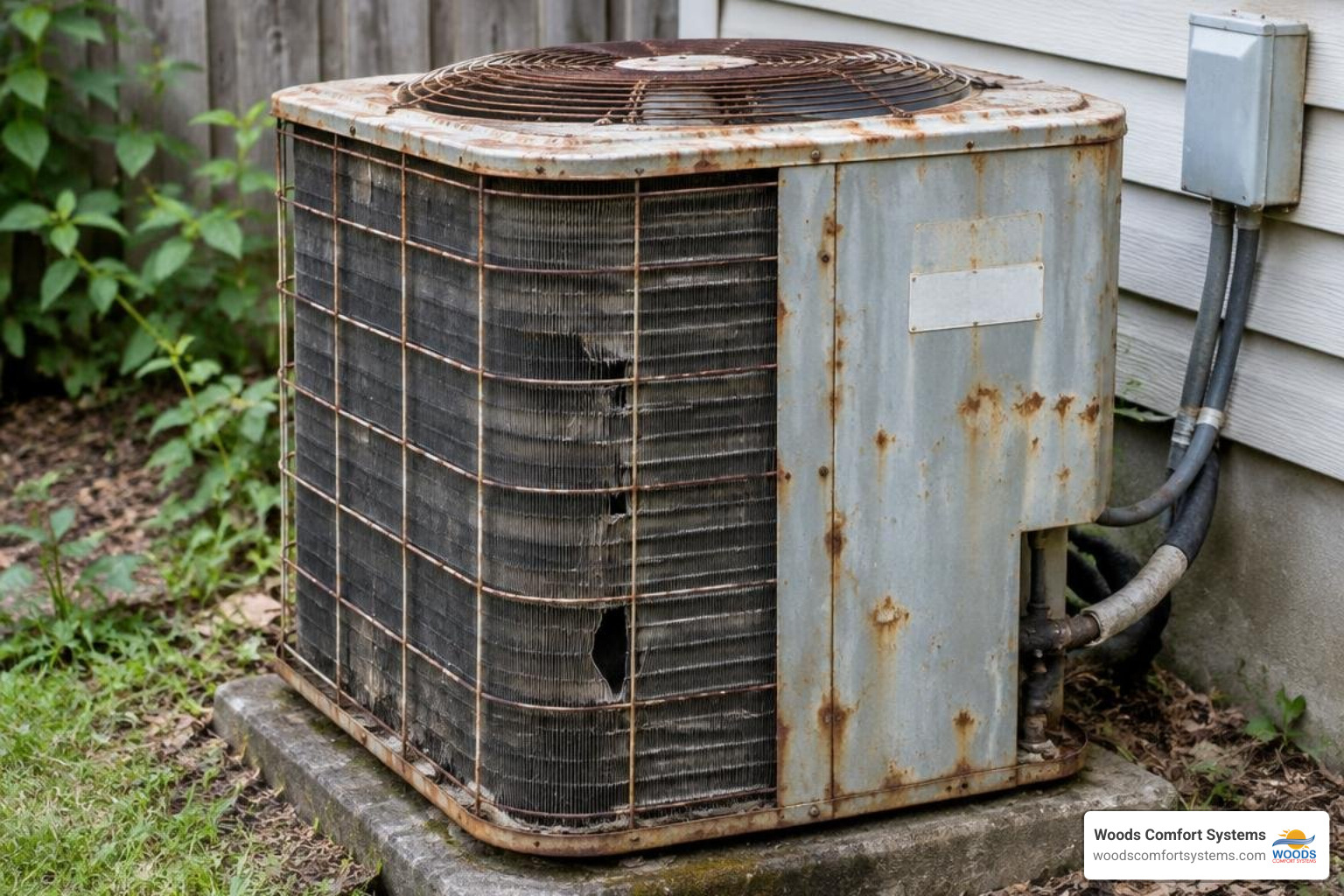
An older AC can continue running while showing signs that its reliability or comfort performance is declining. Paying attention to those signs gives homeowners time to arrange an evaluation rather than waiting for a complete interruption in cooling.
Common concerns include:
- Rooms that stay warmer or more humid than the rest of the home
- Weak or inconsistent airflow from supply vents
- New grinding, rattling, or squealing sounds
- More frequent repair visits
- Difficulty keeping the home comfortable during normal use
- Dust buildup or indoor humidity concerns that seem harder to manage
Start with the safe homeowner checks: confirm the thermostat setting, replace the filter if it is dirty, check the breaker or service switch, open blocked vents, and clear loose debris around the outdoor unit. Do not remove panels, handle wiring, work with gas connections, or attempt sealed-system work. Our technician does this work and can identify the cause of the problem.
For more signs to watch for, read our signs of AC trouble.
Evaluating System Age, Service History, and Comfort
Age matters, but it is only one part of the decision. A technician also considers how often the system needs attention, whether repairs are becoming more involved, how evenly the home cools, and whether the equipment still supports the household’s comfort goals.
Older systems can become harder to service, and our technician explains the available options. That conversation should account for the system’s condition, the home’s airflow needs, and the homeowner’s plans for the property.
If you are researching the typical service life of cooling equipment in this region, our AC lifespan guide offers useful local context.
A Recent AC Replacement in Bee Cave
We assisted a family in Bee Cave whose older AC required frequent repairs, and declining efficiency made replacement the better option. After installing a new system matched to the home’s airflow needs, cooling became quieter and more reliable while their energy bills decreased. This situation illustrates why a replacement recommendation should be based on the condition of the equipment and how the home is actually performing, rather than on one issue alone. A technician can review the system, discuss the homeowner’s concerns, and explain the next steps clearly.
Repair or Replace: How to Make the Decision
When an air conditioner begins having problems, the right question is not simply whether it can be repaired. The more useful question is whether the system is still delivering dependable comfort and whether the repair addresses the underlying issue. For many homeowners, the best time to replace AC equipment is before a recurring problem becomes a disruption.
A professional evaluation looks at the condition of the equipment, its repair history, airflow, comfort concerns, and how the system is operating in the home. One isolated issue may be repairable, while repeated problems or declining performance can point toward replacement.
For a closer look at the decision, read our repair or replace guide.
Questions to Discuss With a Technician
Bring a short record of what you have noticed. Helpful details include when the problem occurs, which rooms feel different, whether the issue is intermittent, and what steps you have already taken. Mention any changes in noise, airflow, humidity, or cycling.
Stick to the basic safe checks covered in this guide and leave the rest to our technician.
A clear conversation helps the technician explain whether repair is a reasonable next step or whether replacement would provide a more dependable path forward.
What Our Technician Checks Before Recommending Replacement
Before recommending repair or replacement, our technician looks beyond a single symptom to understand how the entire cooling system is serving the home. System age and repair history provide useful context, especially when service visits have become more frequent or the equipment has been less dependable after periods of heavy use.
The evaluation also considers airflow and ductwork. Restricted airflow, leaky ducts, or rooms that stay too warm or humid can affect comfort even when the AC is still running. Our technician listens to the homeowner’s concerns, checks how air is moving through the home, and considers whether those concerns point to an equipment issue, an airflow issue, or a combination of both.
How the system handled the summer is another important part of the conversation. Difficulty maintaining steady comfort, unusual cycling, or uneven conditions between rooms can help identify patterns that are not obvious during a brief visit. Our technician also considers whether the current system size still fits the home and its comfort needs. This whole-home review supports a recommendation based on the system’s condition and the way the home performs, rather than on one isolated concern.
Planning Your New AC System
A replacement project goes more smoothly when the home and the household are prepared. Begin by noting comfort concerns, gathering recent service information, and choosing an appointment time that allows for an in-home evaluation.
Our technician evaluates the home to size the new system correctly. That evaluation considers the existing equipment, airflow, comfort concerns, and the way the home is used. It is not a decision based on square footage alone.
For guidance on selecting an efficient system, review the official ENERGY STAR replacement guidance. If a heat pump is worth considering for the home, explore our heat pump options.
Financing Options
Flexible financing options are available. Our team can explain the available process and help homeowners plan a replacement that fits their needs.
Preparing for Installation Day
A successful installation starts with clear access and a shared understanding of the work. Before the appointment, make space around indoor and outdoor equipment, secure pets, and let the team know about access considerations or comfort concerns in specific rooms.
The technician will review the plan, complete the installation work, and verify that the system is operating as intended. Homeowners should not attempt wiring, gas work, or sealed-system tasks. If questions arise after installation, contact the service team for help.
Frequently Asked Questions About AC Replacement
Can I replace only the outdoor AC unit?
In some situations, replacing only one part of a system may be possible, but it is not always the best fit. A technician should check compatibility, overall condition, and how the indoor and outdoor equipment work together before making a recommendation.
Should I replace my thermostat when I replace my AC?
A thermostat may be evaluated as part of the replacement visit, especially if it does not communicate well with the new equipment or does not support the controls the home needs. Our technician can explain whether the existing thermostat can remain in place.
How should I prepare my home for an AC installation appointment?
Clear a path to the indoor and outdoor equipment, secure pets, and share any access information with the team. It is also useful to mention rooms that have been difficult to keep comfortable so the technician can consider them during the visit.
Can a new AC help with uneven temperatures?
A replacement can be one part of improving uneven temperatures, but airflow, ductwork, insulation, and room layout may also affect comfort. A technician evaluates the whole situation before recommending the appropriate solution.
What should I do if my AC stops working before my appointment?
Check the thermostat setting, replace a dirty filter, confirm the breaker or service switch is on, open blocked vents, and clear loose debris around the outdoor unit. If the system still will not operate, leave electrical, gas, and sealed components to our technician.
Conclusion
Early fall, especially September and October, is often the strongest time to plan an AC replacement in Central Texas. It gives homeowners time to evaluate how their system performed during summer, discuss the home’s needs with a professional, and prepare before the next extended cooling season. Late winter remains a useful second option for homeowners who prefer to plan before spring.
Written by Chris Woods, Owner, Woods Comfort Systems. Chris is the third generation of the Woods family in Texas HVAC and has led Woods Comfort Systems in San Marcos since 2010.
Woods Comfort Systems has been family-owned since 1956 and is led by three generations of the Woods family. With 4.9 stars on Google, our team serves San Marcos and Central Texas homeowners with dependable home-comfort support. When you are ready to discuss your system, schedule AC service with our team.
Woods Comfort Systems · 1900 Dutton Dr, San Marcos, TX 78666 · (512) 253-8927